Saudi Arabia Glass Ceramics Market Size, Share & Growth Rate
The Saudi Arabia Glass Ceramics Market was estimated at USD 321 Million in 2025 and is projected to reach USD 414 Million by 2032, growing at a CAGR of 3.7% from 2026 to 2032. This growth trajectory is primarily fueled by the rising demand for high-performance materials capable of enduring extreme thermal and mechanical stresses. Furthermore, the increasing consumer preference for durable and aesthetically appealing home products is significantly bolstering market expansion, particularly within the residential sector.
Saudi Arabia Glass Ceramics Market Year-wise Growth Rate and Key Drivers
This graph highlights how the Saudi Arabia Glass Ceramics Market has steadily grown over the years, supported by major growth factors.
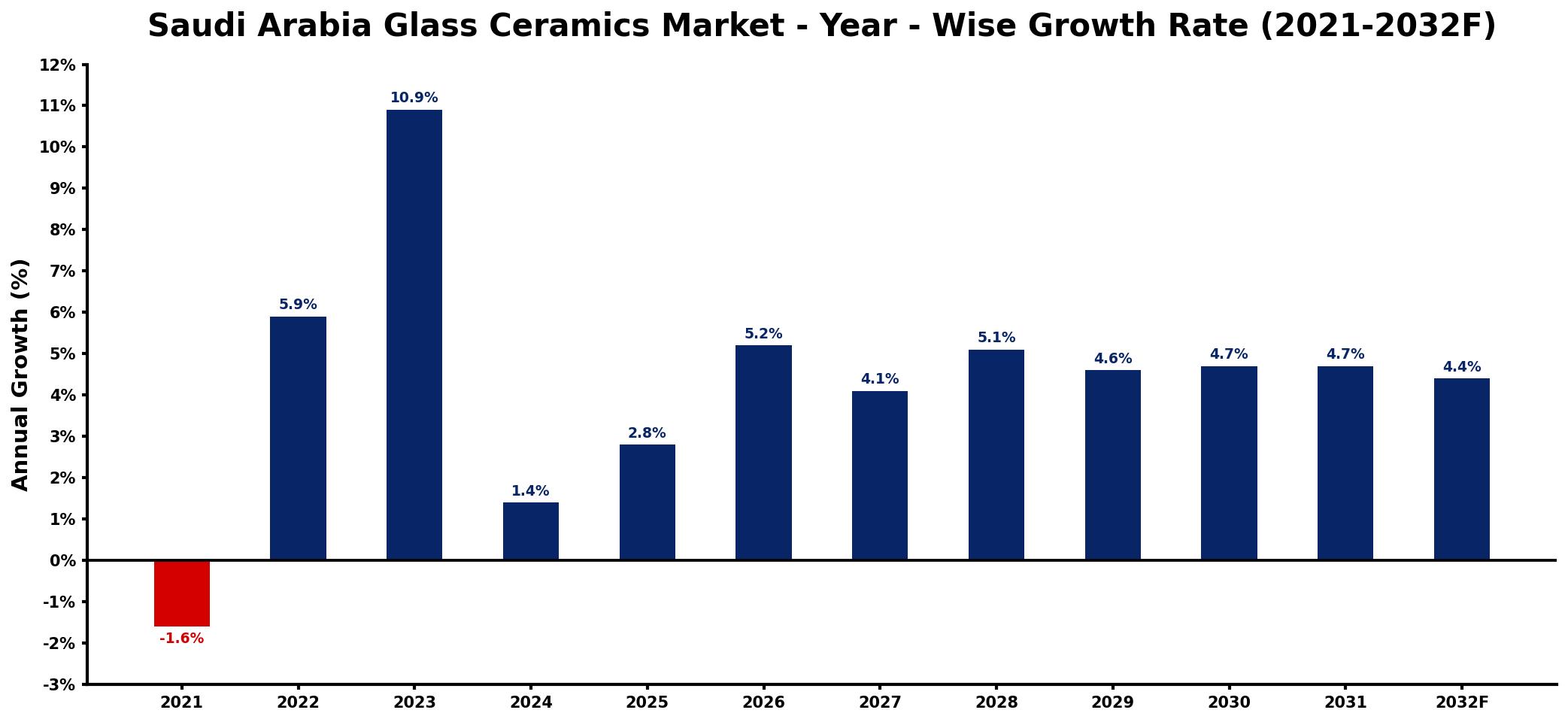
The table below presents the year‑wise growth rates along with the key drivers influencing the market
| Year | Growth Rate | Major Drivers |
| 2021 | -1.6% | decrease in construction activities |
| 2022 | 5.9% | increased demand for luxury housing |
| 2023 | 10.9% | growing architectural design trends |
| 2024 | 1.4% | rising investments in infrastructure |
| 2025 | 2.8% | expansion of retail sector projects |
| 2026 | 5.2% | enhanced focus on sustainability practices |
| 2027 | 4.1% | growth in tourism and hospitality |
| 2028 | 5.1% | increased consumer spending power |
| 2029 | 4.6% | development of smart city initiatives |
| 2030 | 4.7% | innovations in building materials |
| 2031 | 4.7% | expanding manufacturing base activity |
| 2032 | 4.4% | growing popularity of home renovations |
Note: Market size estimations and growth projections presented in this report are based on 6Wresearch's proprietary forecasting methodology, utilizing the latest available industry data, government publications, and primary research inputs.
Saudi Arabia Glass Ceramics Market Synopsis
The glass ceramics market in Saudi Arabia is rapidly evolving, driven by innovations that blend the best properties of glass and ceramics. As consumers seek materials that provide both durability and style, glass ceramics are being embraced in various sectors, including cookware and interior design.
This market reflects a keen adaptability to the demands of modern applications, especially given Saudi Arabia's unique climatic conditions. The balance between glass's fragility and ceramics' strength positions glass ceramics as a vital component in industries requiring high thermal and mechanical resilience.
Saudi Arabia Glass Ceramics Market Key Takeaways
- The market is witnessing growth due to rising consumer interest in durable household products.
- Technological advancements are enhancing production techniques, expanding application possibilities.
- COVID-19 has shifted demand dynamics, leading to increased interest in residential improvement projects.
- Key sectors driving demand include cookware, construction, and electronics.
- Education about the unique properties of glass ceramics remains essential for consumer engagement.
Evaluation of Restraints in Saudi Arabia Glass Ceramics Market
Despite its promising outlook, the Saudi Arabia glass ceramics market faces certain challenges. The development of advanced production techniques remains a significant hurdle, particularly for intricate designs. This technical complexity can limit the variety of products offered in the market, potentially stifling innovation. Additionally, there exists a knowledge gap among consumers regarding the benefits and unique attributes of glass ceramics, which may hinder wider adoption. Addressing these issues through targeted educational initiatives and investment in technology will be crucial for market growth.
Saudi Arabia Glass Ceramics Market Trends
Emerging trends in the Saudi Arabia glass ceramics market include an increased focus on sustainability and eco-friendliness. Manufacturers are actively seeking methods to reduce their carbon footprint and optimize resource usage. Furthermore, the trend towards smart home technology is influencing the development of innovative glass ceramic products designed to integrate seamlessly with advanced household systems. Aesthetics also play a significant role, as consumers lean towards stylish designs that enhance their living spaces.
Saudi Arabia Glass Ceramics Market Opportunities
The opportunities for growth in the Saudi Arabia glass ceramics market are abundant. As urbanization continues to rise, there is a growing demand for high-quality construction materials that offer both aesthetic appeal and durability. Additionally, the expanding electronics sector presents a compelling avenue for innovation, as manufacturers look to develop specialized glass ceramic products suitable for high-tech applications. Investments in R&D can unlock new markets and applications, further propelling the industry forward.
Government Initiatives in the Saudi Arabia Glass Ceramics Market
The Saudi government has initiated several programs aimed at promoting innovation and sustainability in various manufacturing sectors, including glass ceramics. Investments in infrastructure and technological development are part of broader efforts to enhance the country's industrial capabilities. Additionally, policies supporting energy efficiency and environmentally friendly practices are likely to have a favorable impact on the glass ceramics market, encouraging the adoption of sustainable materials.
Future Insights of the Saudi Arabia Glass Ceramics Market
Looking ahead to 2026-2032, the Saudi Arabia glass ceramics market is poised for significant expansion. The continuous advancements in production technologies will likely enhance product offerings, allowing for more complex designs and applications. As consumer awareness regarding the benefits of glass ceramics increases, demand is expected to rise in both residential and industrial sectors. Additionally, the integration of digital technologies within manufacturing processes could streamline production, ultimately benefiting both manufacturers and consumers.
Saudi Arabia Glass Ceramics Market Latest Developments (2025 - 2026)
In recent months, the Saudi Arabia glass ceramics market has seen a notable increase in the introduction of innovative product lines designed for home and industrial use. Manufacturers are expanding their offerings to include environmentally friendly options that align with sustainability trends. Additionally, collaborations between companies and technology providers are paving the way for enhanced manufacturing techniques and the development of smart glass ceramics tailored for advanced applications.
Saudi Arabia Glass Ceramics Market - Key Attractiveness of the Report
- 10 Years of Market Numbers
- Historical Data Starting from 2022 to 2025
- Base Year: 2025
- Forecast Data until 2032
- Key Performance Indicators Impacting the Market
- Major Upcoming Developments and Projects
Key Highlights of the Report:
- Saudi Arabia Glass Ceramics Market Outlook
- Market Size of Saudi Arabia Glass Ceramics Market, 2025
- Forecast of Saudi Arabia Glass Ceramics Market, 2032
- Historical Data and Forecast of Saudi Arabia Glass Ceramics Revenues & Volume for the Period 2022-2032F
- Saudi Arabia Glass Ceramics Market Trend Evolution
- Saudi Arabia Glass Ceramics Market Drivers and Challenges
- Saudi Arabia Glass Ceramics Price Trends
- Saudi Arabia Glass Ceramics Porter's Five Forces
- Saudi Arabia Glass Ceramics Industry Life Cycle
- Historical Data and Forecast of Saudi Arabia Glass Ceramics Market Revenues & Volume By Material for the Period 2022-2032F
- Historical Data and Forecast of Saudi Arabia Glass Ceramics Market Revenues & Volume By Lithium for the Period 2022-2032F
- Historical Data and Forecast of Saudi Arabia Glass Ceramics Market Revenues & Volume By Mangnesium for the Period 2022-2032F
- Historical Data and Forecast of Saudi Arabia Glass Ceramics Market Revenues & Volume By Zinc for the Period 2022-2032F
- Historical Data and Forecast of Saudi Arabia Glass Ceramics Market Revenues & Volume By Application for the Period 2022-2032F
- Historical Data and Forecast of Saudi Arabia Glass Ceramics Market Revenues & Volume By Building and Construction for the Period 2022-2032F
- Historical Data and Forecast of Saudi Arabia Glass Ceramics Market Revenues & Volume By Electrical & Electronics for the Period 2022-2032F
- Historical Data and Forecast of Saudi Arabia Glass Ceramics Market Revenues & Volume By Healthcare for the Period 2022-2032F
- Historical Data and Forecast of Saudi Arabia Glass Ceramics Market Revenues & Volume By Aerospace for the Period 2022-2032F
- Historical Data and Forecast of Saudi Arabia Glass Ceramics Market Revenues & Volume By Optical for the Period 2022-2032F
- Saudi Arabia Glass Ceramics Import Export Trade Statistics
- Market Opportunity Assessment By Material
- Market Opportunity Assessment By Application
- Saudi Arabia Glass Ceramics Top Companies Market Share
- Saudi Arabia Glass Ceramics Competitive Benchmarking By Technical and Operational Parameters
- Saudi Arabia Glass Ceramics Company Profiles
- Saudi Arabia Glass Ceramics Key Strategic Recommendations






































