Saudi Arabia Grape Wine Market Summary
The saudi arabia grape wine market was estimated at USD 392 Million in 2025 and is projected to reach USD 498 Million by 2032, growing at a CAGR of 4.7% from 2026 to 2032.
Saudi Arabia Grape Wine Market Year-wise Growth Rate and Key Drivers
This graph highlights how the Saudi Arabia Grape Wine Market has steadily grown over the past five years, supported by major growth factors.
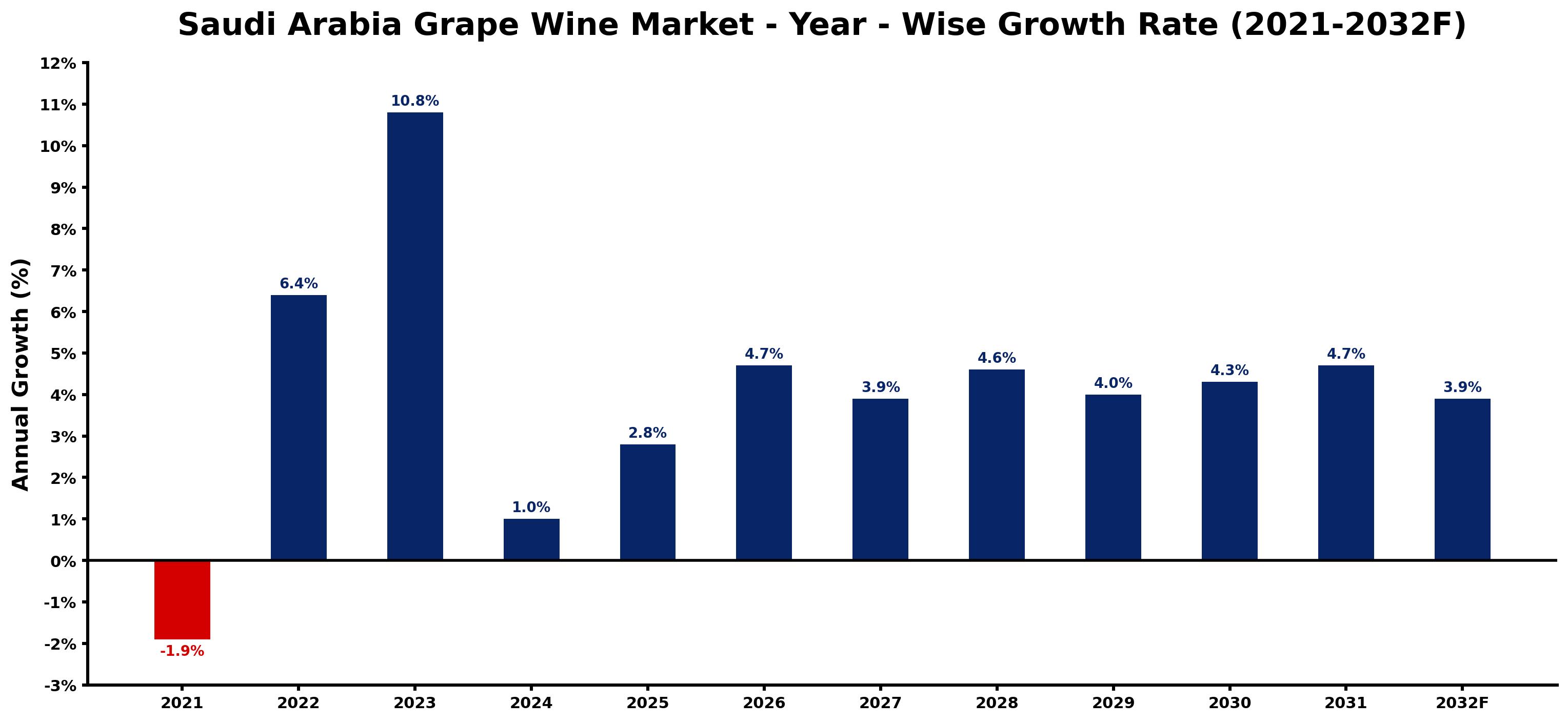
The table below presents the year wise growth rates along with the key drivers influencing the market
| Year | Growth Rate | Major Drivers |
| 2021 | -1.9% | Intensified restrictions on alcohol sales and cultural shifts dampened domestic consumption of grape wine. |
| 2022 | 6.4% | International tourism saw an uptick, enhancing interest in premium beverage options. |
| 2023 | 10.8% | Local producers are experimenting with grape varieties suited to the climate conditions. |
| 2024 | 1.0% | Increased social media influence promotes wine tasting events and lifestyle branding. |
| 2025 | 2.8% | Emerging wine clubs cater to affluent residents, enhancing community engagement. |
| 2026 | 4.7% | Investment in vineyards aligns with Saudi Vision 2030's diversification goals. |
| 2027 | 3.9% | Regional partnerships with global wine brands enhance quality and distribution channels. |
| 2028 | 4.6% | Consumers exhibit a growing interest in premium products and unique flavor profiles. |
| 2029 | 4.0% | Wine tourism initiatives in historical regions attract both locals and foreign visitors. |
| 2030 | 4.3% | Local events celebrating wine culture foster a burgeoning community of enthusiasts. |
| 2031 | 4.7% | Sustainability practices in wine production resonate with eco-conscious consumers. |
| 2032 | 3.9% | Infrastructural developments facilitate better access to wine retail and distribution networks. |
Note - Market size estimations and growth projections presented in this report are based on 6Wresearch's advanced forecasting approach, validated with industry datasets as of June 2026.
Saudi Arabia Grape Wine Market Synopsis
The Saudi Arabia Grape Wine Market is projected to reach 4.7% and witness significant growth during the forecast period (2026-2032). This anticipated increase is attributed to a combination of rising disposable income, a growing preference for wine as a beverage choice, and an expanding number of bars and restaurants throughout the nation. Additionally, heightened awareness of the health benefits associated with moderate grape wine consumption is expected to further stimulate market demand. The burgeoning tourism sector and the introduction of diverse wine flavors will also play crucial roles in driving the market's growth in the upcoming years.
Saudi Arabia Grape Wine Market Growth Drivers
Several factors are catalyzing the expansion of the Saudi Arabia Grape Wine Market. First, the rising per capita income allows consumers to increase their spending on luxury items, including alcoholic beverages such as wine. This trend has opened lucrative opportunities for producers and retailers operating within this domain. Second, changing lifestyle trends increasingly favor social gatherings and celebrations where wine consumption is becoming more common. Consequently, there has been a marked rise in the sales volume of wine, particularly during special occasions.
- The growing acceptance of wine culture among the local population is contributing to a favorable environment for market expansion. Consumers are more inclined to explore various wine options as they become more familiar with their flavors and pairings.
- The establishment of a larger number of bars and restaurants is creating more opportunities for wine sales, as these venues provide consumers with the chance to try new varieties and brands in social settings.
- Innovative marketing strategies by distributors aiming to promote different types of grape wines are becoming increasingly effective. Engaging promotions and campaigns are enticing new consumers, thereby expanding the market base.
- Health consciousness among consumers is rising, particularly regarding the moderate consumption of grape wine. An increase in awareness regarding potential health benefits, such as cardiovascular improvements, is influencing purchasing decisions.
- The development of tourism in Saudi Arabia is significantly contributing to the grape wine market. As international tourists visit the country and seek local experiences, the demand for regional wines is on the rise.
Saudi Arabia Grape Wine Market Challenges and Restraints
Despite its anticipated growth, the Saudi Arabia Grape Wine Market faces several challenges that can hinder progress. One significant issue is the high cost associated with grape cultivation and wine production, which impacts pricing and profitability for producers. Furthermore, stringent governmental regulations and policies concerning the taxation of grape imports may create additional financial burdens for market participants.
- Governmental restrictions on alcohol sales and the relatively recent acceptance of wine consumption may result in limited distribution channels, thereby affecting overall market accessibility.
- Cultural perceptions surrounding alcohol use in Saudi Arabia can impede consumer acceptance and discourage potential buyers from engaging in wine consumption.
- The impact of economic fluctuations can also be a destabilizing factor, with changes in consumer confidence potentially affecting discretionary spending on luxury items like wine.
- Health concerns and changing consumer preferences towards non-alcoholic beverages might pose a challenge, especially among younger demographics.
- Lastly, the ongoing effects of the COVID-19 pandemic have transformed consumer behavior and purchasing patterns, leading to a cautious approach in the hospitality industry and affecting overall sales.
Saudi Arabia Grape Wine Market Government Investment and Initiatives
The Saudi government has been increasingly supportive of initiatives aimed at stimulating the growth of the grape wine market as part of broader economic diversification efforts. Investments in the tourism sector are driving policies that promote local wines, encouraging restaurants to include them in their offerings. Additionally, the government has worked on revising regulatory frameworks to create a more conducive environment for the legal production and sale of wine, albeit within stringent guidelines.
Public spending initiatives are focused on improving infrastructure in hospitality and tourism, which includes enhancing wine-related experiences for tourists. Plans for hosting wine festivals and events are being discussed to elevate local grape wine awareness and acceptance. Such initiatives are expected to contribute positively to the growth trajectory of the Saudi Arabia Grape Wine Market.
Saudi Arabia Grape Wine Market Latest Developments (May 2025 - June 2026)
Recent developments in the Saudi Arabia Grape Wine Market have indicated a shift towards greater consumer engagement with wine products. New marketing campaigns have been launched to educate consumers about various wine options, highlighting the unique attributes of local varieties. Additionally, restaurants have increased their wine offerings, creating more pairing opportunities with regional cuisine.
The online retail channel has gained momentum, with consumers increasingly turning to digital platforms for wine purchases, driven by convenience and a wider selection of products. This trend has encouraged retailers to enhance their online presence and improve service offerings to meet the changing preferences of consumers.
Innovative product launches continue to shape the market, with brands introducing unique flavors and blends appealing to a broader audience. The continuous adaptation of the market to cater to evolving consumer demands suggests a promising outlook for growth.
Saudi Arabia Grape Wine Market - Key Attractiveness of the Report
- 10 Years of Market Numbers
- Historical Data Starting from 2022 to 2025
- Base Year: 2025
- Forecast Data until 2032
- Key Performance Indicators Impacting the Market
- Major Upcoming Developments and Projects
Key Highlights of the Report:
- Saudi Arabia Grape Wine Market Outlook
- Market Size of Saudi Arabia Grape Wine Market, 2025
- Forecast of Saudi Arabia Grape Wine Market, 2032
- Historical Data and Forecast of Saudi Arabia Grape Wine Revenues & Volume for the Period 2022-2032F
- Saudi Arabia Grape Wine Market Trend Evolution
- Saudi Arabia Grape Wine Market Drivers and Challenges
- Saudi Arabia Grape Wine Price Trends
- Saudi Arabia Grape Wine Porter's Five Forces
- Saudi Arabia Grape Wine Industry Life Cycle
- Historical Data and Forecast of Saudi Arabia Grape Wine Market Revenues & Volume By Type for the Period 2022-2032F
- Historical Data and Forecast of Saudi Arabia Grape Wine Market Revenues & Volume By Red Wine for the Period 2022-2032F
- Historical Data and Forecast of Saudi Arabia Grape Wine Market Revenues & Volume By White Wine for the Period 2022-2032F
- Historical Data and Forecast of Saudi Arabia Grape Wine Market Revenues & Volume By Rose Wine for the Period 2022-2032F
- Historical Data and Forecast of Saudi Arabia Grape Wine Market Revenues & Volume By Other for the Period 2022-2032F
- Historical Data and Forecast of Saudi Arabia Grape Wine Market Revenues & Volume By Applications for the Period 2022-2032F
- Historical Data and Forecast of Saudi Arabia Grape Wine Market Revenues & Volume By Commercial Consumption for the Period 2022-2032F
- Historical Data and Forecast of Saudi Arabia Grape Wine Market Revenues & Volume By Household Consumption for the Period 2022-2032F
- Historical Data and Forecast of Saudi Arabia Grape Wine Market Revenues & Volume By Other for the Period 2022-2032F
- Saudi Arabia Grape Wine Import Export Trade Statistics
- Market Opportunity Assessment By Type
- Market Opportunity Assessment By Applications
- Saudi Arabia Grape Wine Top Companies Market Share
- Saudi Arabia Grape Wine Competitive Benchmarking By Technical and Operational Parameters
- Saudi Arabia Grape Wine Company Profiles
- Saudi Arabia Grape Wine Key Strategic Recommendations






































