Saudi Arabia Insurance Telematics Market Size & Growth Rate (2026-2032)
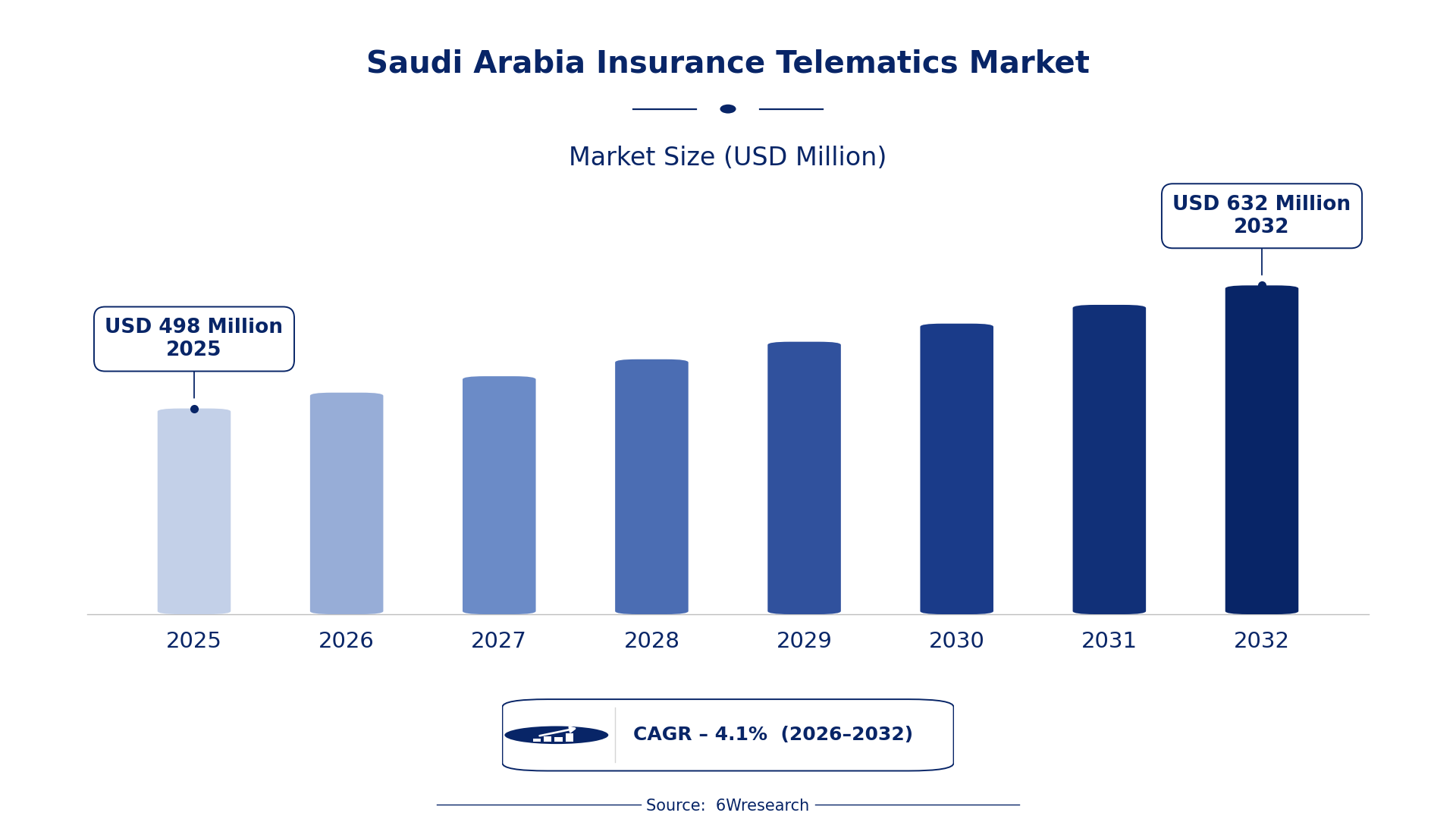
The Saudi Arabia Insurance Telematics Market was estimated at USD 498 Million in 2025 and is projected to reach USD 632 Million by 2032, growing at a CAGR of 4.1% from 2026 to 2032.
Saudi Arabia Insurance Telematics Market Synopsis
The rapid adoption of connected car technology is the strongest force currently shaping the Saudi Arabia Insurance Telematics Market. Insurers are increasingly utilizing telematics solutions to gather detailed data on driving behavior, which enhances their ability to create precise pricing models and assess risks effectively.
This trend is accompanied by a growing demand for personalized insurance products that cater to individual driving patterns. As a result, insurance providers in Saudi Arabia are focusing on data-driven strategies to improve underwriting accuracy, reduce claims, and ultimately, enhance customer satisfaction.
Saudi Arabia Insurance Telematics Market Year-wise Growth Rate and Key Drivers
This graph illustrates the annual growth rates of the Saudi Arabia Insurance Telematics Market from 2021 to 2032, highlighting a steady upward trajectory and projected expansion over the forecast period.
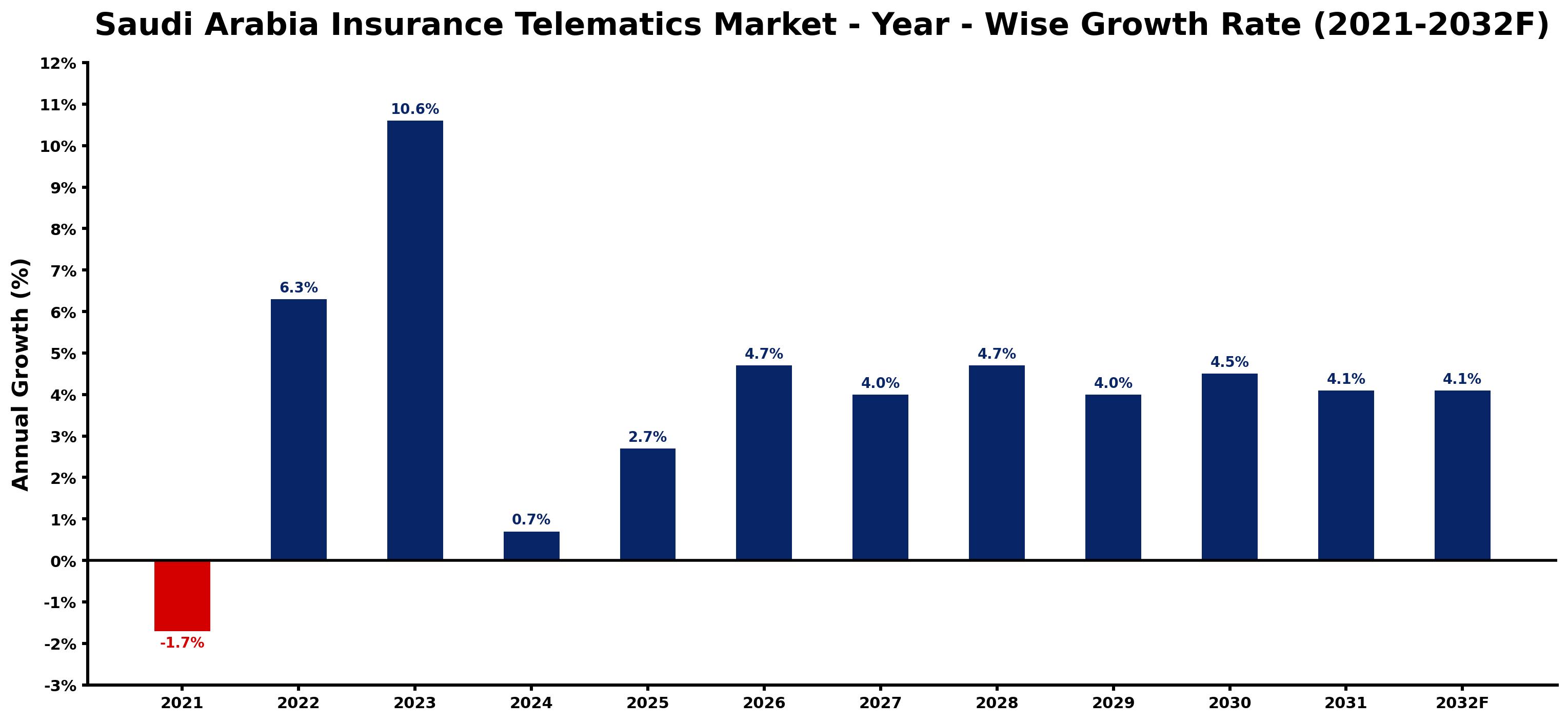
The table below presents the year‑wise growth rates along with the key drivers influencing the market
| Year | Growth Rate | Major Drivers |
| 2021 | -1.7% | Regulatory constraints from Saudi Central Bank policies. |
| 2022 | 6.3% | Implementation of Saudi Vision 2030 promoting smart insurance solutions. |
| 2023 | 10.6% | Increased consumer awareness of telematics benefits for safety. |
| 2024 | 0.7% | Growth in smartphone penetration enhancing telematics app utilization. |
| 2025 | 2.7% | Introduction of regulations encouraging usage-based insurance models. |
| 2026 | 4.7% | Supportive government policies for digital transformation in insurance. |
| 2027 | 4.0% | Increasing number of connected vehicles on Saudi roads. |
| 2028 | 4.7% | Integration of telematics in fleet management for cost savings. |
| 2029 | 4.0% | Rising investments in vehicle safety technologies by insurers. |
| 2030 | 4.5% | Partnerships between insurers and tech firms driving innovation. |
| 2031 | 4.1% | Surge in younger drivers valuing telematics-based insurance options. |
| 2032 | 4.1% | Increased competition among insurers incentivizing telematics adoption. |
Note: Market size estimations and growth projections presented in this report are based on 6Wresearch's proprietary forecasting methodology, utilizing the latest available industry data, government publications, and primary research inputs.
Saudi Arabia Insurance Telematics Market Key Takeaways
Below are some of the specific key takeaways from the market, including:
- The integration of telematics is leading to more accurate risk assessments in the automotive insurance sector.
- Drivers are increasingly interested in usage-based insurance models that reflect their actual driving behavior.
- Data privacy and regulatory challenges remain crucial issues for insurers implementing telematics solutions.
- COVID-19 accelerated the adoption of telematics, as insurers sought better ways to evaluate risk amid changing driving patterns.
- Key insurance players are focusing on enhancing customer engagement through personalized offerings enabled by telematics data.
Evaluation of Restraints in Saudi Arabia Insurance Telematics Market
Despite the promising growth, several restraints hinder the full potential of the Saudi Arabia Insurance Telematics Market. One major challenge is the complexity involved in collecting and analyzing vast amounts of data from connected vehicles. Insurers must ensure data accuracy while developing effective telematics-based risk assessments. on top of that, regulatory and privacy concerns pose significant hurdles as companies navigate the delicate balance between innovation and compliance. These factors create a cautious approach among some insurers, slowing the market's progress.
Saudi Arabia Insurance Telematics Market Trends
Current trends indicate a shift toward more personalized insurance products, driven by advancements in telematics technology. Insurers are increasingly focusing on user experience, offering tailored policies that align with individual driving behaviors. The rise of smart vehicles is further pushing the demand for data analytics solutions that can enhance risk assessment processes. Additionally, the integration of artificial intelligence in telematics applications is expected to optimize claims management and underwriting practices.
Saudi Arabia Insurance Telematics Market Opportunities
Growth opportunities in the Saudi Arabia Insurance Telematics Market are abundant, particularly in usage-based insurance (UBI). As consumers become more aware of the benefits of telematics, insurers can capitalize on this trend by developing innovative pricing models that reward safe driving. Collaborations between insurance companies and automotive manufacturers are also on the rise, which can lead to enhanced telematics solutions and improved customer acquisition strategies. on top of that, the increasing digital literacy of the population presents avenues for insurers to leverage mobile applications that facilitate real-time policy management and engagement.
Government Initiatives in the Saudi Arabia Insurance Telematics Market
The Saudi Arabian government is actively shaping the Insurance Telematics Market through various initiatives aimed at modernizing the insurance sector and enhancing regulatory frameworks. By promoting digital transformation, the government is paving the way for innovative insurance solutions that can drive market growth. The emphasis on consumer protection and data privacy is also a priority, as regulatory bodies work to establish guidelines that support the integration of telematics technologies.
- A recently completed initiative involved the introduction of a national digital infrastructure upgrade program to enhance connectivity for telematics applications.
- Currently ongoing is a regulatory review process aimed at creating a framework for data privacy and security in telematics usage, ensuring consumer protection.
- A planned public-private initiative expects to expand the reach of telematics solutions in the automotive sector by 2027, promoting wider adoption among insurers.
- The government is also set to launch educational programs focused on raising awareness about usage-based insurance among consumers in early 2026.
- An initiative to standardize telematics data reporting practices is in the pipeline, anticipated to be rolled out by late 2026.
Future Insights of the Saudi Arabia Insurance Telematics Market
From 2026 to 2032, the Saudi Arabia Insurance Telematics Market is expected to continue its upward trajectory, driven by ongoing technological advancements and changing consumer preferences. The increasing penetration of connected vehicles will likely expand the volume of data available to insurers, enabling them to refine their risk models and pricing strategies. As data analytics capabilities improve, insurers will find new ways to engage customers, fostering loyalty through personalized insurance offerings. on top of that, collaboration with technology partners will enhance the development of innovative telematics solutions, solidifying the market's growth potential.
Saudi Arabia Insurance Telematics Market Latest Developments
Recent activity in the Saudi Arabia Insurance Telematics Market reveals a strong push toward adopting innovative solutions and partnerships. Companies are recognizing the importance of leveraging telematics data to enhance their offerings. This focus on technology integration suggests a dynamic shift in how insurance products are being developed and marketed.
- A leading regional operator launched a new telematics-based insurance product in Q3 2025, aimed at rewarding safe driving behaviors among policyholders.
- In early 2025, a major technology vendor entered into a partnership with several insurers to develop advanced analytics platforms for improved risk assessment.
- Ongoing efforts to enhance customer engagement through a mobile application for real-time driving feedback and policy management began in mid-2025 and are still underway.
- A rollout expected to begin in late 2026 will introduce an integrated telematics solution designed for commercial vehicles, enhancing fleet management capabilities.
- In Q1 2026, a pilot program will be launched to test a new user-friendly interface for telematics data reporting, aimed at simplifying compliance for insurers.
Saudi Arabia Insurance Telematics Market - Key Attractiveness of the Report
- 10 Years of Market Numbers
- Historical Data Starting from 2022 to 2025
- Base Year: 2025
- Forecast Data until 2032
- Key Performance Indicators Impacting the Market
- Major Upcoming Developments and Projects
Key Highlights of the Report:
- Saudi Arabia Insurance Telematics Market Outlook
- Market Size of Saudi Arabia Insurance Telematics Market, 2025
- Forecast of Saudi Arabia Insurance Telematics Market, 2032
- Historical Data and Forecast of Saudi Arabia Insurance Telematics Revenues & Volume for the Period 2022-2032F
- Saudi Arabia Insurance Telematics Market Trend Evolution
- Saudi Arabia Insurance Telematics Market Drivers and Challenges
- Saudi Arabia Insurance Telematics Price Trends
- Saudi Arabia Insurance Telematics Porter's Five Forces
- Saudi Arabia Insurance Telematics Industry Life Cycle
- Historical Data and Forecast of Saudi Arabia Insurance Telematics Market Revenues & Volume By End User for the Period 2022-2032F
- Historical Data and Forecast of Saudi Arabia Insurance Telematics Market Revenues & Volume By Small for the Period 2022-2032F
- Historical Data and Forecast of Saudi Arabia Insurance Telematics Market Revenues & Volume By Medium Enterprises for the Period 2022-2032F
- Historical Data and Forecast of Saudi Arabia Insurance Telematics Market Revenues & Volume By Large Enterprises for the Period 2022-2032F
- Historical Data and Forecast of Saudi Arabia Insurance Telematics Market Revenues & Volume By Deployment Type for the Period 2022-2032F
- Historical Data and Forecast of Saudi Arabia Insurance Telematics Market Revenues & Volume By Cloud for the Period 2022-2032F
- Historical Data and Forecast of Saudi Arabia Insurance Telematics Market Revenues & Volume By On-Premises for the Period 2022-2032F
- Historical Data and Forecast of Saudi Arabia Insurance Telematics Market Revenues & Volume By Organization Size for the Period 2022-2032F
- Historical Data and Forecast of Saudi Arabia Insurance Telematics Market Revenues & Volume By Small and Medium Enterprises (SMEs) for the Period 2022-2032F
- Historical Data and Forecast of Saudi Arabia Insurance Telematics Market Revenues & Volume By Large Enterprises for the Period 2022-2032F
- Saudi Arabia Insurance Telematics Import Export Trade Statistics
- Market Opportunity Assessment By End User
- Market Opportunity Assessment By Deployment Type
- Market Opportunity Assessment By Organization Size
- Saudi Arabia Insurance Telematics Top Companies Market Share
- Saudi Arabia Insurance Telematics Competitive Benchmarking By Technical and Operational Parameters
- Saudi Arabia Insurance Telematics Company Profiles
- Saudi Arabia Insurance Telematics Key Strategic Recommendations






































