Saudi Arabia Mineral Oil Market: Import Trend Analysis
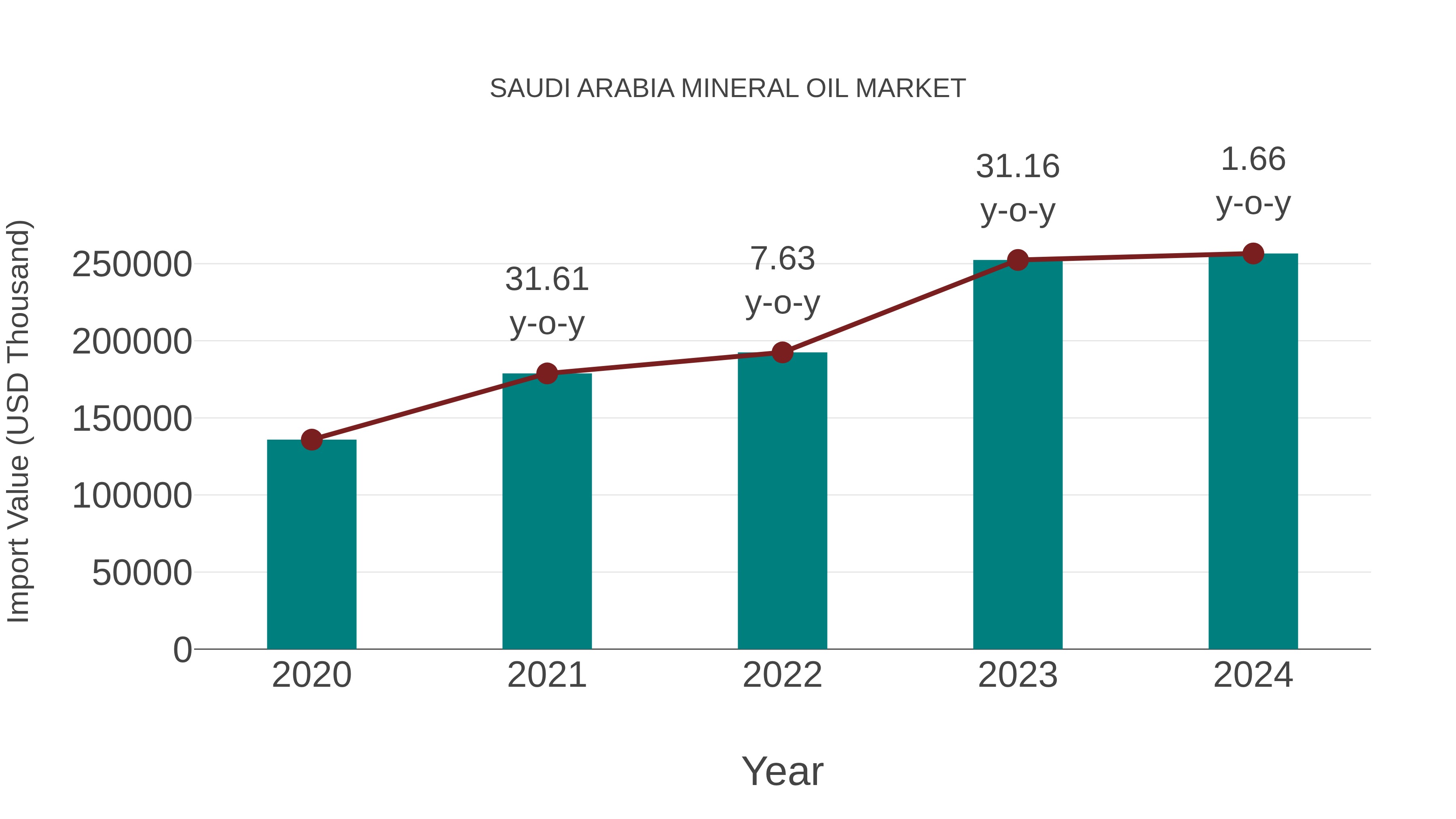
In the Saudi Arabia mineral oil market, the import trend exhibited a growth rate of 1.66% from 2023 to 2024, with a compound annual growth rate (CAGR) of 17.23% for the period 2020-2024. This import momentum can be attributed to sustained demand for mineral oil products in various industries, indicating market stability despite global economic fluctuations.
Saudi Arabia Mineral Oil Market Synopsis
The Saudi Arabia mineral oil market is fundamental to the petrochemical and industrial sectors.Mineral oil is used in various industrial applications, including lubricants, hydraulic fluids, and as a base material for chemical processes.Key market players supply mineral oil to manufacturing facilities, automotive industries, and chemical companies.As industrial activities and petrochemical production thrive in Saudi Arabia, the demand for mineral oil may remain significant.
Drivers of the Market
The Saudi Arabia mineral oil market is expected to witness growth due to the broad industrial applications of mineral oils.These oils are used as lubricants, hydraulic fluids, and process oils in various industries, including manufacturing, automotive, and machinery.The country`s industrial growth and the need for efficient machinery operation will drive the demand for mineral oils.Additionally, the expanding automotive sector and construction activities will further bolster market growth.
Challenges of the Market
The Saudi Arabia mineral oil market encounters challenges primarily related to petrochemical production and environmental concerns.Mineral oil is used in various industrial applications, and market players must address environmental regulations and sustainability requirements.Ensuring the availability of high-quality and responsibly sourced mineral oil products is crucial.Moreover, competition from alternative lubricants and international mineral oil suppliers adds complexity to the market dynamics.The need for sustainable sourcing practices and compliance with environmental standards in mineral oil production poses challenges for the industry.
COVID-19 Impact on the Market
The mineral oil market in Saudi Arabia experienced fluctuations during the COVID-19 pandemic, affecting various sectors, including cosmetics and industrial applications.Mineral oil is used in a range of products, from skincare to lubricants.As industrial activities and consumer demand for personal care products normalized post-pandemic, the market for mineral oil began to stabilize and recover.The pandemic emphasized the versatility of mineral oil in multiple applications.
Key Players in the Market
Key players in the Saudi mineral oil market include state-owned Saudi Arabia Oil Company (Saudi Aramco) and other major petroleum companies.Saudi Aramco is a leading producer and exporter of mineral oil, playing a pivotal role in the global energy industry.
Key Highlights of the Report:
- Saudi Arabia Mineral Oil Market Outlook
- Market Size of Saudi Arabia Mineral Oil Market, 2023
- Forecast of Saudi Arabia Mineral Oil Market, 2030
- Historical Data and Forecast of Saudi Arabia Mineral Oil Revenues & Volume for the Period 2020-2030
- Saudi Arabia Mineral Oil Market Trend Evolution
- Saudi Arabia Mineral Oil Market Drivers and Challenges
- Saudi Arabia Mineral Oil Price Trends
- Saudi Arabia Mineral Oil Porter's Five Forces
- Saudi Arabia Mineral Oil Industry Life Cycle
- Historical Data and Forecast of Saudi Arabia Mineral Oil Market Revenues & Volume By Grade for the Period 2020-2030
- Historical Data and Forecast of Saudi Arabia Mineral Oil Market Revenues & Volume By Technical Oil for the Period 2020-2030
- Historical Data and Forecast of Saudi Arabia Mineral Oil Market Revenues & Volume By White Oil for the Period 2020-2030
- Historical Data and Forecast of Saudi Arabia Mineral Oil Market Revenues & Volume By Application for the Period 2020-2030
- Historical Data and Forecast of Saudi Arabia Mineral Oil Market Revenues & Volume By Baby Oil for the Period 2020-2030
- Historical Data and Forecast of Saudi Arabia Mineral Oil Market Revenues & Volume By Cosmetics for the Period 2020-2030
- Historical Data and Forecast of Saudi Arabia Mineral Oil Market Revenues & Volume By Skin Care Products for the Period 2020-2030
- Historical Data and Forecast of Saudi Arabia Mineral Oil Market Revenues & Volume By Hair Care Products for the Period 2020-2030
- Historical Data and Forecast of Saudi Arabia Mineral Oil Market Revenues & Volume By Consumer Goods for the Period 2020-2030
- Historical Data and Forecast of Saudi Arabia Mineral Oil Market Revenues & Volume By Others for the Period 2020-2030
- Saudi Arabia Mineral Oil Import Export Trade Statistics
- Market Opportunity Assessment By Grade
- Market Opportunity Assessment By Application
- Saudi Arabia Mineral Oil Top Companies Market Share
- Saudi Arabia Mineral Oil Competitive Benchmarking By Technical and Operational Parameters
- Saudi Arabia Mineral Oil Company Profiles
- Saudi Arabia Mineral Oil Key Strategic Recommendations






































