Saudi Arabia Ornamental Fish Market Size, Share & Growth Rate
The Saudi Arabia Ornamental Fish Market was estimated at USD 480 Million in 2025 and is projected to reach USD 613 Million by 2032, growing at a CAGR of 3.6% from 2026 to 2032. This growth trajectory is largely fueled by the increasing popularity of aquarium keeping as a leisure activity, which has gained momentum among various demographics across the nation. Urbanization and rising disposable income levels are enabling more households to invest in decorative aquatic pets, thereby expanding the market significantly.
Saudi Arabia Ornamental Fish Market Year-wise Growth Rate and Key Drivers
This graph highlights how the Saudi Arabia Ornamental Fish Market has steadily grown over the years, supported by major growth factors.
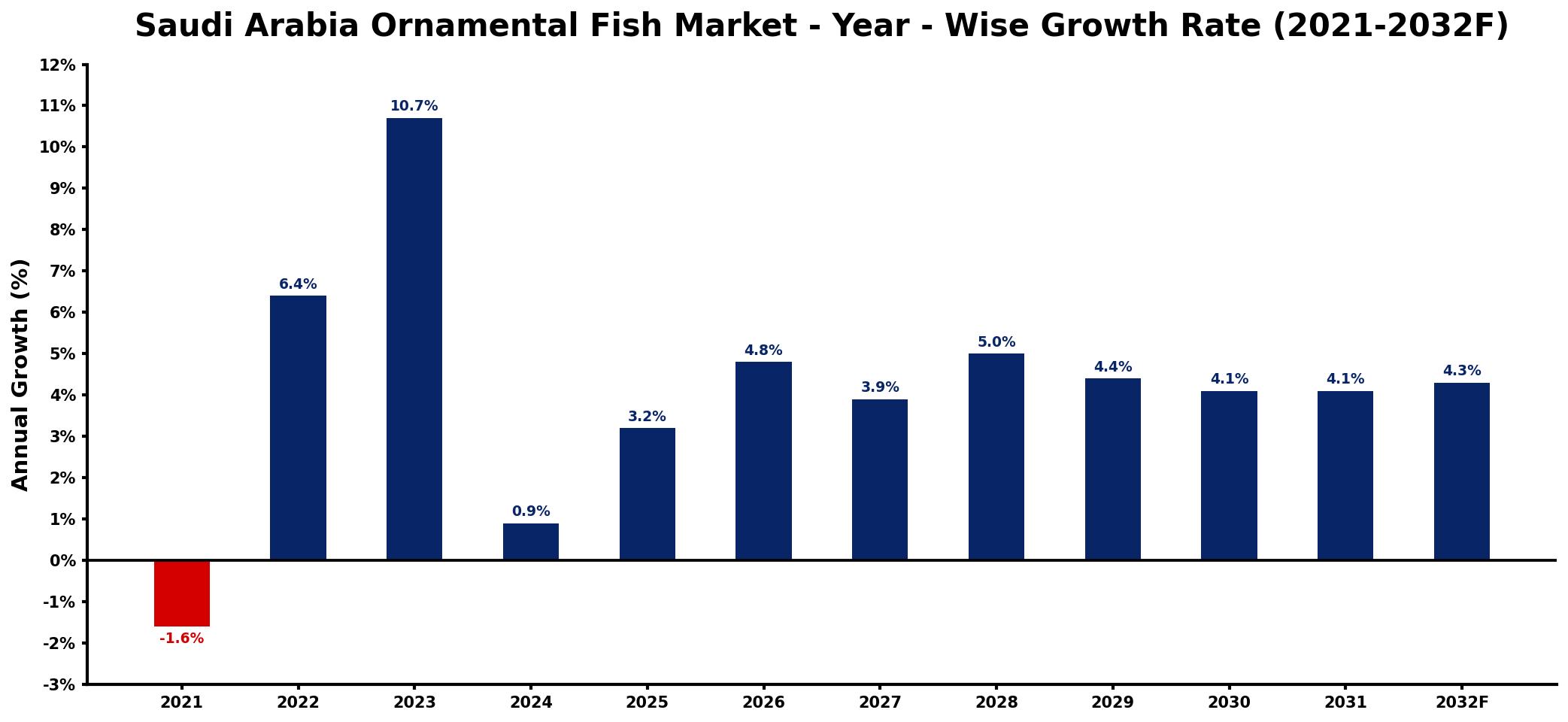
The table below presents the year‑wise growth rates along with the key drivers influencing the market
| Year | Growth Rate | Major Drivers |
| 2021 | -1.6% | decrease in consumer interest |
| 2022 | 6.4% | increased urban gardening trends |
| 2023 | 10.7% | rise in home aquarium popularity |
| 2024 | 0.9% | expansion of local suppliers |
| 2025 | 3.2% | growing tourism and hospitality sector |
| 2026 | 4.8% | increased awareness of aquascaping |
| 2027 | 3.9% | growth in pet ownership rates |
| 2028 | 5.0% | emergence of online retail platforms |
| 2029 | 4.4% | increased domestic production output |
| 2030 | 4.1% | increased investments in aquaculture |
| 2031 | 4.1% | improved processing technologies adoption |
| 2032 | 4.3% | rising end-use demand growth |
Note: Market size estimations and growth projections presented in this report are based on 6Wresearch's proprietary forecasting methodology, utilizing the latest available industry data, government publications, and primary research inputs.
Saudi Arabia Ornamental Fish Market Synopsis
The ornamental fish market in Saudi Arabia is experiencing a vibrant surge, influenced by an emerging community of aquarium hobbyists and a growing appreciation for aesthetic living spaces. Consumers are increasingly drawn to the vibrant colors and unique patterns of ornamental fish, using them as both pets and decorative elements in homes and offices.
As urban living spaces become more compact and consumers seek innovative ways to enhance their environments, the ornamental fish market presents a unique opportunity for both personal expression and tranquility. Suppliers are responding with a diverse range of species and necessary accessories to ensure the health and well-being of these aquatic creatures, further driving market growth.
Saudi Arabia Ornamental Fish Market Key Takeaways
- Strong growth trajectory driven by increased disposable income and urbanization.
- Urban consumers increasingly view ornamental fish as both pets and home décor.
- A burgeoning community of hobbyists is fueling demand for diverse species.
- Suppliers are enhancing their offerings with accessories to support fish health.
- Online sales and delivery services are becoming essential for market adaptation.
Evaluation of Restraints in Saudi Arabia Ornamental Fish Market
Despite the promising outlook, the ornamental fish market in Saudi Arabia grapples with challenges related to the health of the fish during transportation and in domestic environments. Ensuring that the specific habitat and dietary needs of various species are met requires significant expertise and resources. Moreover, compliance with regulations concerning the importation and trade of ornamental fish is crucial to preventing the introduction of invasive species, which could further limit market expansion.
Saudi Arabia Ornamental Fish Market Trends
Several trends are shaping the ornamental fish market in Saudi Arabia. The rise in online shopping platforms has made it easier for consumers to access a wider variety of fish and related products. Additionally, the increasing integration of technology in aquarium maintenance, such as smart tanks equipped with monitoring systems, is attracting tech-savvy buyers. Furthermore, sustainability is becoming a key consideration, with a growing awareness among consumers regarding responsible sourcing and breeding practices.
Saudi Arabia Ornamental Fish Market Opportunities
The market offers substantial growth and investment opportunities, particularly in the realm of e-commerce. As more consumers turn to online platforms for purchasing ornamental fish and related products, businesses that invest in digital marketing and robust logistics can capture significant market share. Additionally, developing educational resources and community-building initiatives for aquarium enthusiasts can foster loyalty and promote sustainable practices among hobbyists, further enhancing growth prospects.
Government Initiatives in the Saudi Arabia Ornamental Fish Market
The Saudi government has been increasingly focused on diversifying the economy and promoting sustainable industries, which includes the ornamental fish sector. Initiatives aimed at enhancing awareness around biodiversity and the importance of responsible fishkeeping are being promoted through public campaigns. Furthermore, regulations supporting the legal trade of ornamental fish and ensuring the health of aquatic species are being strengthened to bolster consumer confidence and protect local ecosystems.
Future Insights of the Saudi Arabia Ornamental Fish Market
Looking ahead to 2026-2032, the Saudi Arabia Ornamental Fish Market is poised for notable expansion as consumer interest in personalized and aesthetic home environments continues to rise. Innovations in aquarium technology and a greater focus on sustainability will likely play crucial roles in shaping the future landscape of this market. Additionally, as urban areas continue to grow and more people seek meaningful leisure activities, ornamental fishkeeping will solidify its position as a favored hobby, driving demand for diverse aquatic species.
Saudi Arabia Ornamental Fish Market Latest Developments (2025 - 2026)
Recent industry developments reflect a trend towards increased online sales channels, with retailers enhancing their digital platforms to meet evolving consumer preferences. Notably, there has been a focus on improving the logistics of fish transportation to ensure better health outcomes for fish. Additionally, suppliers are increasingly engaging in community outreach efforts to educate consumers about fish care and sustainable practices, which is further invigorating interest in ornamental fishkeeping.
Saudi Arabia Ornamental Fish Market - Key Attractiveness of the Report
- 10 Years of Market Numbers
- Historical Data Starting from 2022 to 2025
- Base Year: 2025
- Forecast Data until 2032
- Key Performance Indicators Impacting the Market
- Major Upcoming Developments and Projects
Key Highlights of the Report:
- Saudi Arabia Ornamental Fish Market Outlook
- Market Size of Saudi Arabia Ornamental Fish Market, 2025
- Forecast of Saudi Arabia Ornamental Fish Market, 2032
- Historical Data and Forecast of Saudi Arabia Ornamental Fish Revenues & Volume for the Period 2022-2032F
- Saudi Arabia Ornamental Fish Market Trend Evolution
- Saudi Arabia Ornamental Fish Market Drivers and Challenges
- Saudi Arabia Ornamental Fish Price Trends
- Saudi Arabia Ornamental Fish Porter's Five Forces
- Saudi Arabia Ornamental Fish Industry Life Cycle
- Historical Data and Forecast of Saudi Arabia Ornamental Fish Market Revenues & Volume By Product for the Period 2022-2032F
- Historical Data and Forecast of Saudi Arabia Ornamental Fish Market Revenues & Volume By Tropical Freshwater for the Period 2022-2032F
- Historical Data and Forecast of Saudi Arabia Ornamental Fish Market Revenues & Volume By Temperate for the Period 2022-2032F
- Historical Data and Forecast of Saudi Arabia Ornamental Fish Market Revenues & Volume By Marine for the Period 2022-2032F
- Historical Data and Forecast of Saudi Arabia Ornamental Fish Market Revenues & Volume By Application for the Period 2022-2032F
- Historical Data and Forecast of Saudi Arabia Ornamental Fish Market Revenues & Volume By Commercial for the Period 2022-2032F
- Historical Data and Forecast of Saudi Arabia Ornamental Fish Market Revenues & Volume By Household for the Period 2022-2032F
- Saudi Arabia Ornamental Fish Import Export Trade Statistics
- Market Opportunity Assessment By Product
- Market Opportunity Assessment By Application
- Saudi Arabia Ornamental Fish Top Companies Market Share
- Saudi Arabia Ornamental Fish Competitive Benchmarking By Technical and Operational Parameters
- Saudi Arabia Ornamental Fish Company Profiles
- Saudi Arabia Ornamental Fish Key Strategic Recommendations






































