Saudi Arabia Personal Hygiene Market: Import Trend Analysis
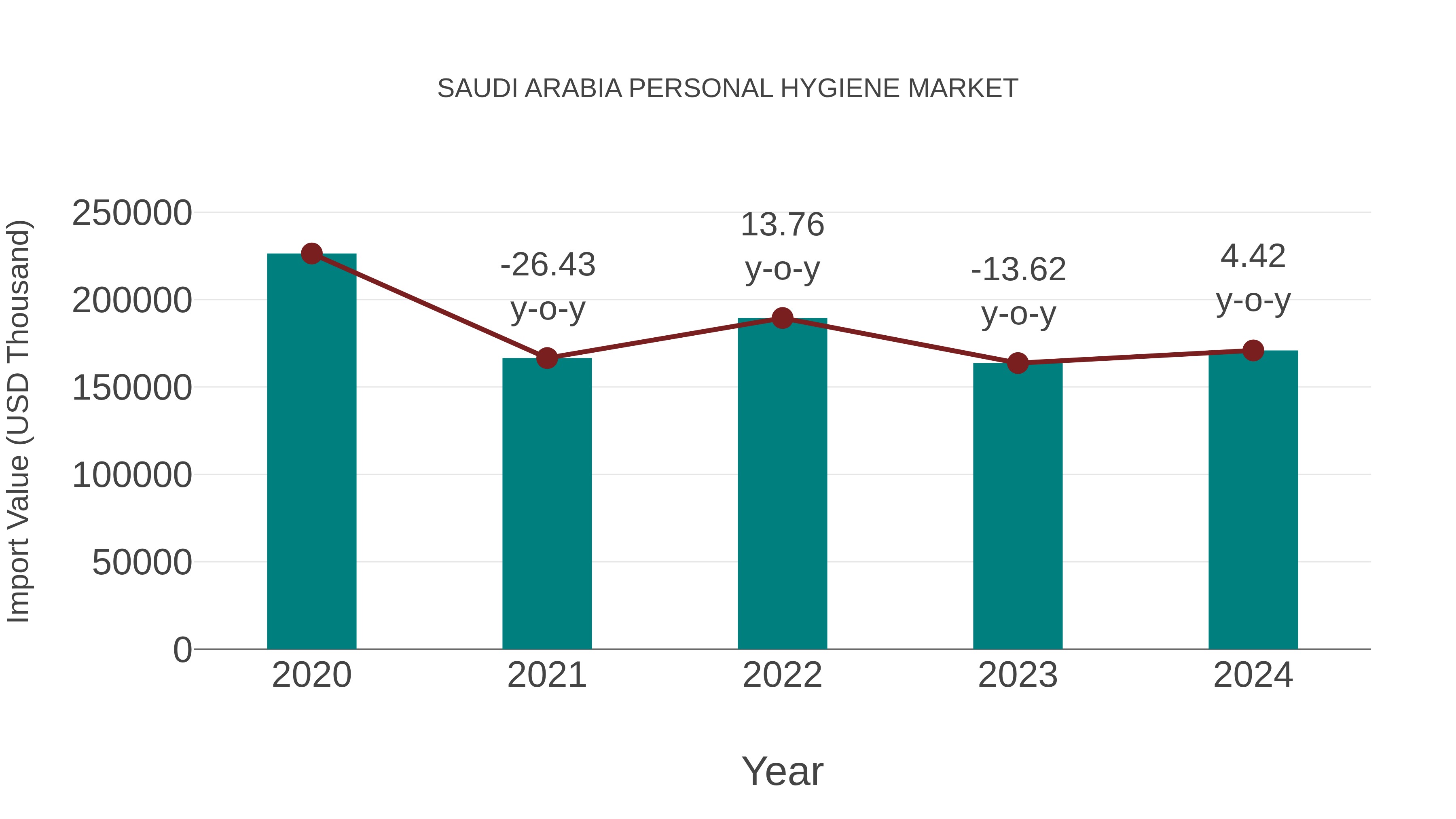
In the Saudi Arabia personal hygiene market, the import trend showed a growth rate of 4.42% from 2023 to 2024, contrasting with a compound annual growth rate (CAGR) of -6.79% from 2020 to 2024. This shift in momentum could be attributed to evolving consumer preferences or changes in trade policies impacting market stability.
Saudi Arabia Personal Hygiene Market Synopsis
The personal hygiene market in Saudi Arabia is experiencing steady growth driven by factors such as increasing awareness about personal grooming, rising disposable income among consumers, and a growing focus on health and wellness. Products such as bath and shower products, deodorants, oral care, and feminine hygiene products are witnessing high demand in the market. International brands are gaining popularity due to their perceived quality and effectiveness, although local brands also have a strong presence. The market is characterized by intense competition among key players, leading to continuous product innovations and marketing strategies to attract consumers. With a large and young population that is increasingly health-conscious and willing to invest in personal care products, the Saudi Arabia personal hygiene market is expected to continue its growth trajectory in the coming years.
Saudi Arabia Personal Hygiene Market Trends
The personal hygiene market in Saudi Arabia is experiencing a shift towards natural and organic products, driven by increasing consumer awareness of health and environmental concerns. Consumers are increasingly seeking products that are free from harsh chemicals and are more sustainable. There is also a growing interest in innovative personal hygiene products such as waterless shampoo and eco-friendly packaging. The rise of e-commerce platforms has made it easier for consumers to access a wide range of personal hygiene products from both local and international brands, contributing to the market`s growth. Additionally, the COVID-19 pandemic has emphasized the importance of personal hygiene, leading to a surge in demand for hand sanitizers, disinfectants, and other hygiene products. Overall, the Saudi Arabia personal hygiene market is evolving towards more natural, sustainable, and innovative products to meet the changing consumer preferences.
Saudi Arabia Personal Hygiene Market Challenges
In the Saudi Arabia Personal Hygiene Market, several challenges are faced. These include cultural barriers and conservative attitudes towards certain personal hygiene products, which may limit the adoption of certain products in the market. The hot climate in Saudi Arabia also poses a challenge as it can lead to increased perspiration and the need for more frequent personal hygiene routines. Additionally, there may be limited availability of certain specialized personal hygiene products in the market, which could hinder consumer choices. Furthermore, price sensitivity among consumers and competition from both local and international brands are also key challenges faced by companies operating in the Saudi Arabia Personal Hygiene Market. Overall, navigating these challenges requires a deep understanding of local consumer preferences and market dynamics.
Saudi Arabia Personal Hygiene Market Investment Opportunities
The Saudi Arabia Personal Hygiene Market presents promising investment opportunities in segments such as skincare, hair care, oral care, and feminine hygiene products. With an increasing focus on health and wellness among the Saudi population, there is a growing demand for premium personal hygiene products that offer quality ingredients and innovative formulations. Additionally, the rise of online retail channels and a growing middle-class population with higher disposable income further contribute to the market`s attractiveness. Investing in established international brands or partnering with local distributors to introduce new products tailored to the preferences of Saudi consumers could be lucrative strategies for capitalizing on the market`s potential growth. Conducting thorough market research and understanding consumer preferences will be essential for successful entry and expansion in this competitive but promising market.
Jordan Agar Market Government Policies
The Saudi Arabian government has implemented various policies aimed at regulating and promoting the personal hygiene market in the country. These policies include enforcing strict quality standards for personal hygiene products to ensure consumer safety, promoting local manufacturing of personal hygiene items to boost domestic production and reduce reliance on imports, imposing regulations on advertising and labeling of personal hygiene products to protect consumers from false claims, and offering incentives to companies investing in research and development of innovative personal hygiene solutions. Additionally, the government has launched public awareness campaigns to educate the population on the importance of personal hygiene practices for overall health and well-being. These policies collectively contribute to the growth and development of the personal hygiene market in Saudi Arabia.
Saudi Arabia Personal Hygiene Market Future Outlook
The future outlook for the Saudi Arabia Personal Hygiene Market appears promising, driven by factors such as increasing awareness of personal hygiene practices, rising disposable income levels, and a growing population. Consumers are becoming more conscious of health and wellness, leading to a higher demand for products such as hand sanitizers, soaps, and skincare items. The market is also witnessing a shift towards natural and organic products, as consumers seek safer and environmentally friendly options. With the ongoing urbanization and modernization trends in the country, the personal hygiene market is expected to experience steady growth in the coming years, presenting opportunities for both local and international brands to expand their presence and offerings in the Saudi Arabian market.
Key Highlights of the Report:
- Saudi Arabia Personal Hygiene Market Outlook
- Market Size of Saudi Arabia Personal Hygiene Market, 2025
- Forecast of Saudi Arabia Personal Hygiene Market, 2032
- Historical Data and Forecast of Saudi Arabia Personal Hygiene Revenues & Volume for the Period 2022 - 2032F
- Saudi Arabia Personal Hygiene Market Trend Evolution
- Saudi Arabia Personal Hygiene Market Drivers and Challenges
- Saudi Arabia Personal Hygiene Price Trends
- Saudi Arabia Personal Hygiene Porter's Five Forces
- Saudi Arabia Personal Hygiene Industry Life Cycle
- Historical Data and Forecast of Saudi Arabia Personal Hygiene Market Revenues & Volume By Product for the Period 2022 - 2032F
- Historical Data and Forecast of Saudi Arabia Personal Hygiene Market Revenues & Volume By Soaps for the Period 2022 - 2032F
- Historical Data and Forecast of Saudi Arabia Personal Hygiene Market Revenues & Volume By Hand Sanitizers for the Period 2022 - 2032F
- Historical Data and Forecast of Saudi Arabia Personal Hygiene Market Revenues & Volume By Bath and Shower Products for the Period 2022 - 2032F
- Historical Data and Forecast of Saudi Arabia Personal Hygiene Market Revenues & Volume By Face Care Products for the Period 2022 - 2032F
- Historical Data and Forecast of Saudi Arabia Personal Hygiene Market Revenues & Volume By Other Products for the Period 2022 - 2032F
- Historical Data and Forecast of Saudi Arabia Personal Hygiene Market Revenues & Volume By Gender for the Period 2022 - 2032F
- Historical Data and Forecast of Saudi Arabia Personal Hygiene Market Revenues & Volume By Unisex for the Period 2022 - 2032F
- Historical Data and Forecast of Saudi Arabia Personal Hygiene Market Revenues & Volume By Male for the Period 2022 - 2032F
- Historical Data and Forecast of Saudi Arabia Personal Hygiene Market Revenues & Volume By Female for the Period 2022 - 2032F
- Historical Data and Forecast of Saudi Arabia Personal Hygiene Market Revenues & Volume By Distribution Channel for the Period 2022 - 2032F
- Historical Data and Forecast of Saudi Arabia Personal Hygiene Market Revenues & Volume By Retail Pharmacies for the Period 2022 - 2032F
- Historical Data and Forecast of Saudi Arabia Personal Hygiene Market Revenues & Volume By Hospital based Pharmacies for the Period 2022 - 2032F
- Historical Data and Forecast of Saudi Arabia Personal Hygiene Market Revenues & Volume By Supermarkets for the Period 2022 - 2032F
- Historical Data and Forecast of Saudi Arabia Personal Hygiene Market Revenues & Volume By E-commerce for the Period 2022 - 2032F
- Saudi Arabia Personal Hygiene Import Export Trade Statistics
- Market Opportunity Assessment By Product
- Market Opportunity Assessment By Gender
- Market Opportunity Assessment By Distribution Channel
- Saudi Arabia Personal Hygiene Top Companies Market Share
- Saudi Arabia Personal Hygiene Competitive Benchmarking By Technical and Operational Parameters
- Saudi Arabia Personal Hygiene Company Profiles
- Saudi Arabia Personal Hygiene Key Strategic Recommendations






































