Saudi Arabia Pickled Cucumber Market: Import Trend Analysis
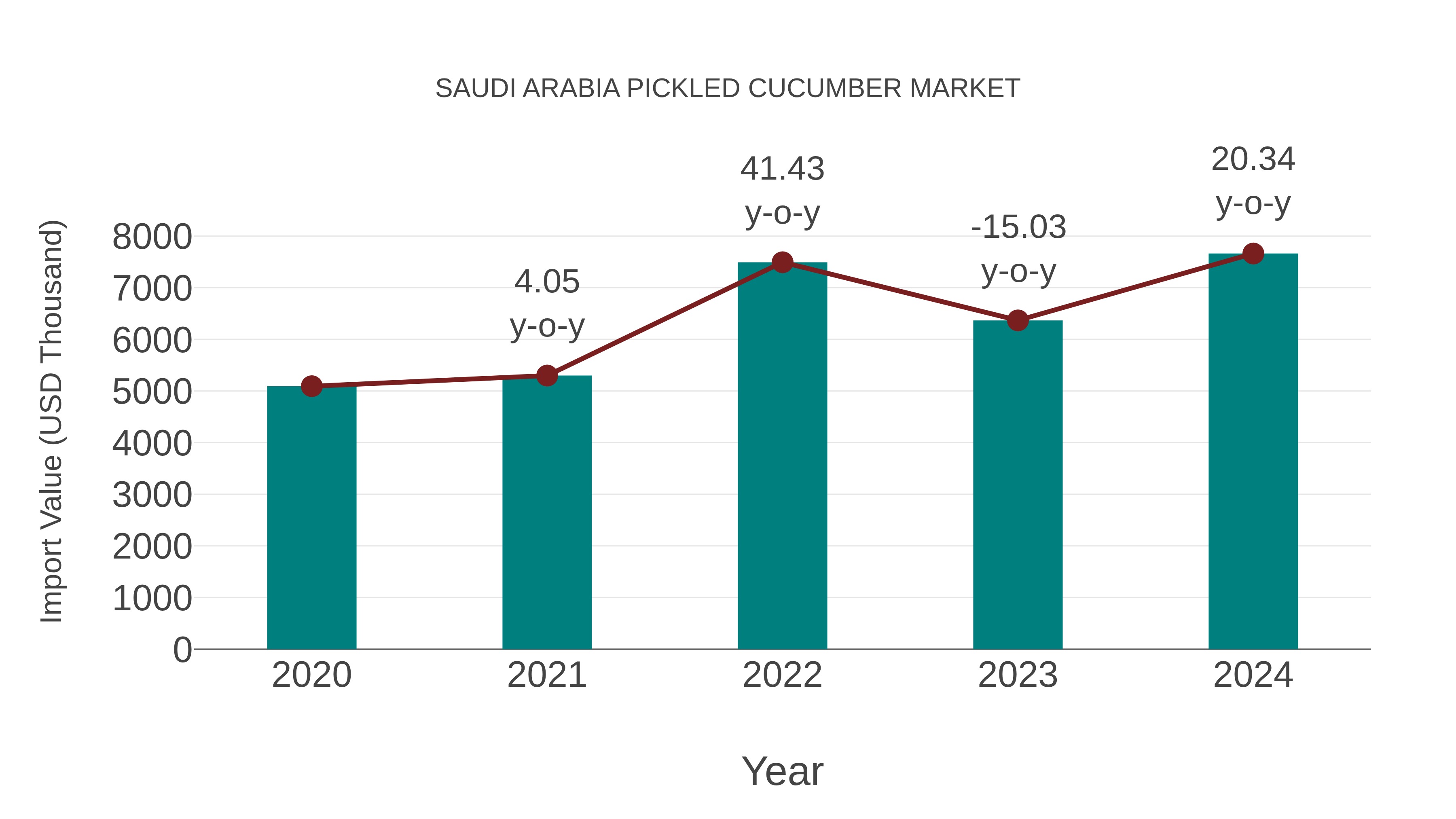
Saudi Arabia`s import trend for pickled cucumbers experienced significant growth from 2023 to 2024, with a growth rate of 20.34%. The compound annual growth rate (CAGR) for the period 2020-2024 stood at 10.76%. This upward import momentum can be attributed to shifting consumer preferences towards convenience foods and increased demand for pickled products in the region.
Saudi Arabia Pickled Cucumber Market Synopsis
The Saudi Arabia pickled cucumber market has shown steady growth as pickled cucumbers, commonly known as pickles, remain a popular accompaniment to meals and a versatile ingredient in various dishes. Pickles are cherished for their tangy and flavorful profile, which adds a unique taste dimension to a variety of cuisines. They are often consumed as a side dish, added to sandwiches, or used to enhance the taste of salads and appetizers. The market`s expansion is driven by the enduring appeal of pickles as a condiment and their role in enhancing the overall dining experience.
Drivers of the Market
The pickled cucumber market in Saudi Arabia is primarily driven by the rising popularity of convenience foods and the shift towards international cuisines. Busy lifestyles have led to a higher demand for ready-to-eat products like pickled cucumbers that can be consumed without extensive preparation. Furthermore, the growing interest in diverse flavors and the incorporation of pickled cucumbers in traditional and fusion dishes have contributed to the market`s expansion.
Opportunities of the Market
Challenges of the Market
The pickled cucumber market in Saudi Arabia encounters challenges tied to product differentiation and competition. To stand out in a saturated market, manufacturers must focus on unique flavors, high-quality ingredients, and appealing packaging. Maintaining the balance between traditional pickling methods and meeting modern health and safety standards is also a challenge.
COVID-19 Impact on the Market
The Saudi Arabia pickled cucumber market experienced a notable impact due to the COVID-19 pandemic. With restrictions on movement and changes in consumer behavior, there was a disruption in the supply chain and distribution channels for pickled cucumbers. As restaurants and foodservice establishments faced closures or reduced operations, the demand for these products decreased. However, the retail sector witnessed a surge in demand initially as consumers stocked up on essential items. The market gradually adjusted to the new normal with an increased emphasis on e-commerce and contactless deliveries. Despite challenges, the pickled cucumber market is expected to rebound as the pandemic recedes and consumer preferences stabilize.
Key Players in the Market
Key players in the Saudi Arabia pickled cucumber market consist of Almarai Company, Green Diamond Company, Al-Kabeer Group, Al-Safi Holding, and Sunbulah Group.
Key Highlights of the Report:
- Saudi Arabia Pickled Cucumber Market Outlook
- Market Size of Saudi Arabia Pickled Cucumber Market, 2025
- Forecast of Saudi Arabia Pickled Cucumber Market, 2032
- Historical Data and Forecast of Saudi Arabia Pickled Cucumber Revenues & Volume for the Period 2022-2032F
- Saudi Arabia Pickled Cucumber Market Trend Evolution
- Saudi Arabia Pickled Cucumber Market Drivers and Challenges
- Saudi Arabia Pickled Cucumber Price Trends
- Saudi Arabia Pickled Cucumber Porter's Five Forces
- Saudi Arabia Pickled Cucumber Industry Life Cycle
- Historical Data and Forecast of Saudi Arabia Pickled Cucumber Market Revenues & Volume By Type for the Period 2022-2032F
- Historical Data and Forecast of Saudi Arabia Pickled Cucumber Market Revenues & Volume By Whole Pickled Cucumber for the Period 2022-2032F
- Historical Data and Forecast of Saudi Arabia Pickled Cucumber Market Revenues & Volume By Pickled Cucumber Slice for the Period 2022-2032F
- Historical Data and Forecast of Saudi Arabia Pickled Cucumber Market Revenues & Volume By Application for the Period 2022-2032F
- Historical Data and Forecast of Saudi Arabia Pickled Cucumber Market Revenues & Volume By Households for the Period 2022-2032F
- Historical Data and Forecast of Saudi Arabia Pickled Cucumber Market Revenues & Volume By Restaurant for the Period 2022-2032F
- Historical Data and Forecast of Saudi Arabia Pickled Cucumber Market Revenues & Volume By Others for the Period 2022-2032F
- Saudi Arabia Pickled Cucumber Import Export Trade Statistics
- Market Opportunity Assessment By Type
- Market Opportunity Assessment By Application
- Saudi Arabia Pickled Cucumber Top Companies Market Share
- Saudi Arabia Pickled Cucumber Competitive Benchmarking By Technical and Operational Parameters
- Saudi Arabia Pickled Cucumber Company Profiles
- Saudi Arabia Pickled Cucumber Key Strategic Recommendations






































