Saudi Arabia Residential Boiler Market: Import Trend Analysis
In 2024, Saudi Arabia`s residential boiler market saw a notable increase in imports. The trend reflected a growing demand for heating solutions in the country. This surge in imports indicated a shift towards more efficient and advanced heating technologies in the residential sector.
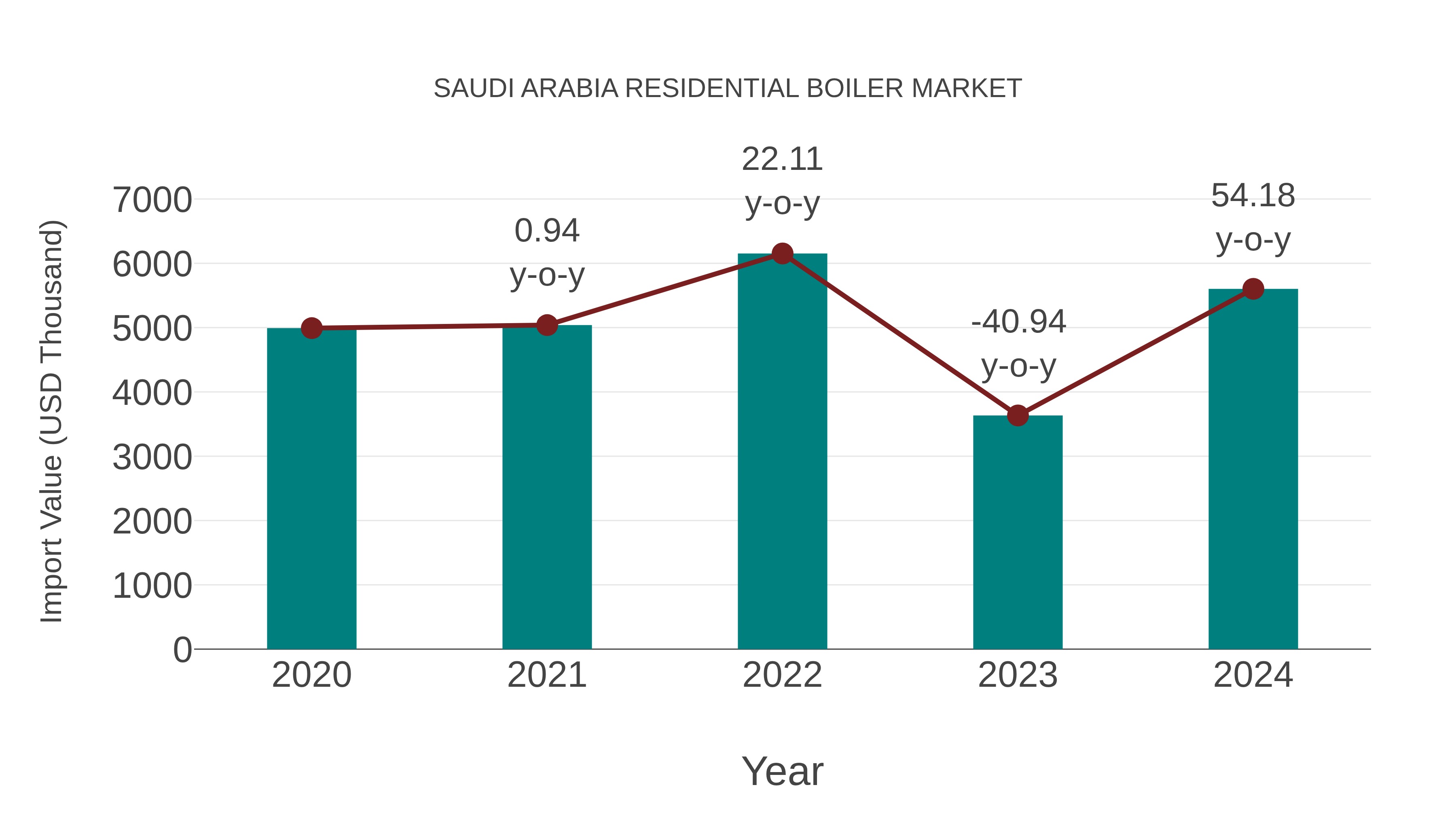
Saudi Arabia Residential Boiler Market Synopsis
The residential boiler market in Saudi Arabia caters to the heating needs of homes, apartments, and other residential structures. Boilers play a vital role in providing central heating and hot water for domestic use. The market`s growth is influenced by factors such as population growth, urbanization, and the preference for comfortable living conditions. Residential boiler manufacturers offer a variety of energy-efficient and environmentally friendly solutions to meet the demands of modern households while complying with safety and efficiency standards.
Drivers of the Market
In the Saudi Arabia residential boiler market, drivers include the need for efficient and comfortable heating solutions in residential buildings. As urbanization and housing development continue, the demand for reliable heating systems rises. The growing awareness of energy efficiency and sustainability further promotes the adoption of modern residential boilers. Additionally, government incentives to encourage energy-efficient technologies contribute to the growth of the residential boiler market in Saudi Arabia.
Challenges of the Market
The Saudi Arabia residential boiler market faces challenges in promoting the adoption of energy-efficient heating solutions. Overcoming traditional preferences for conventional heating methods and raising awareness about the benefits of residential boilers, including reduced energy consumption and lower operational costs, are crucial obstacles.
COVID-19 Impact on the Market
The COVID-19 pandemic had a mixed impact on the residential boiler market in Saudi Arabia. During lockdowns and movement restrictions, construction activities were temporarily halted, affecting the demand for new residential properties and subsequently residential boilers. Additionally, economic uncertainty led some consumers to postpone non-essential purchases, including home improvement projects. However, as people spent more time at home, there was an increased focus on home comfort, which benefitted the demand for heating solutions like residential boilers. Remote work trends also contributed to the need for reliable heating systems. The market experienced a slower recovery due to supply chain disruptions and uncertainty but regained momentum as restrictions eased and construction projects resumed.
Key Players in the Market
The Saudi Arabia residential boiler market is dominated by several key players such as Thermax Ltd., Viessmann Group, Daikin Industries Ltd., Bosch Thermotechnology, A.O. Smith Corporation, Honeywell International Inc., Weil-McLain, and Burnham Holdings Inc.
Key Highlights of the Report:
- Saudi Arabia Residential Boiler Market Outlook
- Market Size of Saudi Arabia Residential Boiler Market, 2025
- Forecast of Saudi Arabia Residential Boiler Market, 2032
- Historical Data and Forecast of Saudi Arabia Residential Boiler Revenues & Volume for the Period 2022-2032F
- Saudi Arabia Residential Boiler Market Trend Evolution
- Saudi Arabia Residential Boiler Market Drivers and Challenges
- Saudi Arabia Residential Boiler Price Trends
- Saudi Arabia Residential Boiler Porter's Five Forces
- Saudi Arabia Residential Boiler Industry Life Cycle
- Historical Data and Forecast of Saudi Arabia Residential Boiler Market Revenues & Volume By Type for the Period 2022-2032F
- Historical Data and Forecast of Saudi Arabia Residential Boiler Market Revenues & Volume By Water Tube Boiler for the Period 2022-2032F
- Historical Data and Forecast of Saudi Arabia Residential Boiler Market Revenues & Volume By Fire Tube Boiler for the Period 2022-2032F
- Historical Data and Forecast of Saudi Arabia Residential Boiler Market Revenues & Volume By Electric Boiler for the Period 2022-2032F
- Historical Data and Forecast of Saudi Arabia Residential Boiler Market Revenues & Volume By Fuel Type for the Period 2022-2032F
- Historical Data and Forecast of Saudi Arabia Residential Boiler Market Revenues & Volume By Coal Fired for the Period 2022-2032F
- Historical Data and Forecast of Saudi Arabia Residential Boiler Market Revenues & Volume By Oil Fired for the Period 2022-2032F
- Historical Data and Forecast of Saudi Arabia Residential Boiler Market Revenues & Volume By Gas Fired for the Period 2022-2032F
- Historical Data and Forecast of Saudi Arabia Residential Boiler Market Revenues & Volume By Others for the Period 2022-2032F
- Historical Data and Forecast of Saudi Arabia Residential Boiler Market Revenues & Volume By Technology for the Period 2022-2032F
- Historical Data and Forecast of Saudi Arabia Residential Boiler Market Revenues & Volume By Condensing for the Period 2022-2032F
- Historical Data and Forecast of Saudi Arabia Residential Boiler Market Revenues & Volume By Non-condensing for the Period 2022-2032F
- Saudi Arabia Residential Boiler Import Export Trade Statistics
- Market Opportunity Assessment By Type
- Market Opportunity Assessment By Fuel Type
- Market Opportunity Assessment By Technology
- Saudi Arabia Residential Boiler Top Companies Market Share
- Saudi Arabia Residential Boiler Competitive Benchmarking By Technical and Operational Parameters
- Saudi Arabia Residential Boiler Company Profiles
- Saudi Arabia Residential Boiler Key Strategic Recommendations






































