Saudi Arabia Soybean Meal Market: Import Trend Analysis
In 2024, Saudi Arabia`s soybean meal market experienced a declining import trend. This was attributed to factors such as shifts in consumer preferences and changes in domestic production capabilities. The market saw a decrease in soybean meal imports compared to previous years.
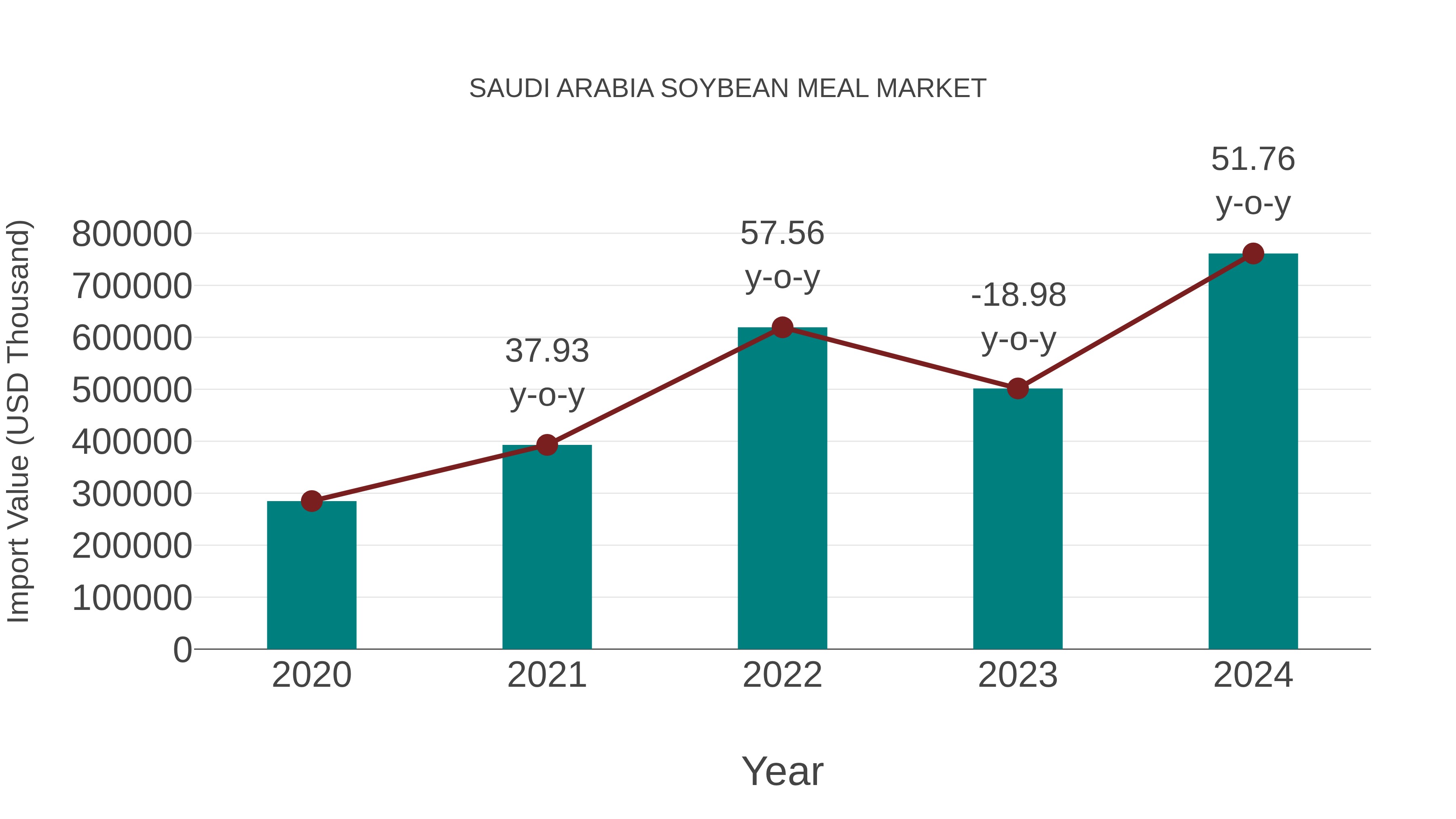
Saudi Arabia Soybean Meal Market Synopsis
Soybean meal is a vital component of Saudi Arabia livestock and poultry feed industry. As a rich source of protein, it contributes to the growth and development of animals. The soybean meal market is driven by the expanding livestock sector and the increasing demand for high-quality animal protein. The feed industry places a premium on balanced nutrition, and soybean meal offers an essential solution in formulating nutritious animal diets. This market is influenced by global soybean production trends, trade dynamics, and the need to ensure a consistent supply of soybean meal to support the country`s animal agriculture sector.
Drivers of the Market
The Saudi Arabia soybean meal market is primarily driven by its extensive use as a protein-rich feed ingredient in the livestock and poultry industries. As the demand for meat and dairy products rises, the need for high-quality animal feed also increases, supporting the growth of the soybean meal market.
Challenges of the Market
Challenges in the Saudi Arabia soybean meal market include the competition with alternative protein sources and the need to ensure the sustainability of soybean cultivation and processing. Developing efficient supply chains for soybean meal, addressing concerns about genetically modified organisms (GMOs), and promoting the nutritional benefits of soy-based products are complex challenges. Moreover, building public awareness and trust in the safety and advantages of soybean meal consumption are critical for market expansion.
COVID-19 Impact on the Market
The soybean meal market in Saudi Arabia encountered challenges during the COVID-19 pandemic. The closure of restaurants and reduced economic activity led to decreased demand for livestock products, which in turn affected the demand for soybean meal as animal feed. The livestock industry faced disruptions due to labor shortages and restrictions, impacting the entire supply chain. While the market faced challenges, the gradual recovery of the livestock industry contributed to a rebound in the demand for soybean meal. As the foodservice sector resumed operations, the market`s recovery gained momentum.
Key Players in the Market
In the Saudi Arabia soybean meal market, key players include Middle East Food Solutions Company (Mefsco), Saudi Vegetable Oil & Ghee Co., and United Farmers Holding Company. These companies play a significant role in processing and distributing soybean meal, a crucial ingredient in livestock and poultry feed.
Key Highlights of the Report:
- Saudi Arabia Soybean Meal Market Outlook
- Market Size of Saudi Arabia Soybean Meal Market, 2025
- Forecast of Saudi Arabia Soybean Meal Market, 2032
- Historical Data and Forecast of Saudi Arabia Soybean Meal Revenues & Volume for the Period 2022-2032F
- Saudi Arabia Soybean Meal Market Trend Evolution
- Saudi Arabia Soybean Meal Market Drivers and Challenges
- Saudi Arabia Soybean Meal Price Trends
- Saudi Arabia Soybean Meal Porter's Five Forces
- Saudi Arabia Soybean Meal Industry Life Cycle
- Historical Data and Forecast of Saudi Arabia Soybean Meal Market Revenues & Volume By Application for the Period 2022-2032F
- Historical Data and Forecast of Saudi Arabia Soybean Meal Market Revenues & Volume By Animal Feed for the Period 2022-2032F
- Historical Data and Forecast of Saudi Arabia Soybean Meal Market Revenues & Volume By Food Industry for the Period 2022-2032F
- Historical Data and Forecast of Saudi Arabia Soybean Meal Market Revenues & Volume By Beverage for the Period 2022-2032F
- Historical Data and Forecast of Saudi Arabia Soybean Meal Market Revenues & Volume By Healthcare Products for the Period 2022-2032F
- Saudi Arabia Soybean Meal Import Export Trade Statistics
- Market Opportunity Assessment By Application
- Saudi Arabia Soybean Meal Top Companies Market Share
- Saudi Arabia Soybean Meal Competitive Benchmarking By Technical and Operational Parameters
- Saudi Arabia Soybean Meal Company Profiles
- Saudi Arabia Soybean Meal Key Strategic Recommendations






































