Singapore Air Conditioner Market Growth Rate
According to 6Wresearch internal database and industry insights, the Singapore Air Conditioner Market is projected to grow at a compound annual growth rate (CAGR) of 7.9% during the forecast period 2026–2032.
Five-Year Growth Trajectory of the Singapore Air Conditioner Market with Core Drivers
Below mentioned are the evaluation of year wise growth rate along with key drivers:
| Year | Est. Annual Growth (%) | Growth Drivers |
| 2021 | 5.5% | Increasing urban housing demand and rising temperature levels. |
| 2022 | 5.9% | Development in residential construction and smart home adoption. |
| 2023 | 6.4% | Rise in commercial infrastructure and office spaces. |
| 2024 | 6.9% | Growing need for energy efficient cooling systems. |
| 2025 | 7.4% | Rising emphasis on green buildings and sustainable cooling solutions. |
Topics Covered in the Singapore Air Conditioner Market Report
The Singapore Air Conditioner Market report thoroughly covers the market by type and application. It provides an unbiased and detailed analysis of ongoing market trends, opportunities, challenges, and market drivers, helping stakeholders align their strategies with current and future market dynamics.
Singapore Air Conditioner Market Highlights
| Report Name | Singapore Air Conditioner Market |
| Forecast period | 2026–2032 |
| CAGR | 7.9% |
| Growing Sector | HVAC & Smart Infrastructure |
Singapore Air Conditioner Market Synopsis
The Singapore Air Conditioner Market is expected to undergo steady growth over the forecast period. This growth is proliferated by rising urbanization, rising temperatures, and increasing need for energy-efficient cooling systems. The government's push toward green buildings and sustainability initiatives is supporting the deployment of eco-friendly air conditioning technologies. Rise in commercial infrastructure such as offices, malls, and transportation hubs further supports demand. The incorporation of IoT-enabled smart air conditioning systems and developments in inverter technology are enhancing efficiency, decreasing power intake, and augmenting user comfort.
Evaluation of Growth Drivers in the Singapore Air Conditioner Market
Below mentioned are some prominent drivers and their influence on the Singapore Air Conditioner Market dynamics:
| Drivers | Primary Segments Affected | Why it matters (evidence) |
| Rising Urbanization | Residential | Increasing number of high-rise residential buildings boosts AC demand. |
| Green Building Initiatives | Commercial | Government push for energy-efficient infrastructure raises deployment of advanced AC systems. |
| Smart Technology Integration | Products | Rising need for IoT-enabled and automated cooling systems augments market growth. |
| Climate Conditions | All Segments | High humidity and temperature levels increase year-round demand for air conditioners. |
| Technological Advancements in HVAC Systems | Products | Persistent creative innovation in inverter technology enriches efficiency. |
The Singapore Air Conditioner Market Size is projected to grow at a compound annual growth rate (CAGR) of 7.9% from 2026 to 2032. The market growth is spurred by rising deployment of energy-efficient and smart air conditioning systems, rise of commercial and residential infrastructure, and increasing knowledge regarding sustainable cooling solutions. Increase in smart city projects and green buildings will further augment requirement. For enhanced indoor air quality solutions there is increasing replacement demand for outdated cooling systems and growing consumer inclination towards are expected to further support market expansion.
Evaluation of Restraints in the Singapore Air Conditioner Market
Below mentioned are some major restraints and their influence on the Singapore Air Conditioner Market dynamics:
| Restraints | Primary Segments Affected | What this means (evidence) |
| High Installation Costs | Residential & Commercial | Developed AC systems involve increased upfront prices. |
| Energy Consumption Concerns | All Segments | Growing electricity prices may discourage excessive usage. |
| Space Constraints | Residential | Limited space in compact housing limits installation of larger systems. |
| Regulatory Compliance | Products | Strict energy efficiency standards raises compliance costs. |
| Maintenance & Servicing Costs | Consumer Segment | Regular servicing can suppress long-term deployment among cost-sensitive users. |
Singapore Air Conditioner Market Challenges
The Singapore Air Conditioner Industry go through various challenges. These consist of high installation and maintenance costs associated with advanced systems, energy intake concerns owing to increasing electricity costs, and strict environmental regulations regarding refrigerants. Manufacturers face pressure to manage costs while meeting regulatory standards due to intense competition among established players and the constant need for technological advancements. Additionally, limited space in urban housing environments restricts the adoption of certain air conditioning systems.
Singapore Air Conditioner Market Trends
Several notable trends are shaping the Singapore Air Conditioner Market dynamics:
- Growth in Smart Air Conditioning Systems: Rising adoption of IoT-enabled AC systems that permit remote control, energy monitoring, and automation.
- Energy Efficient Technologies: To decrease electricity intake and carbon footprint there is growing demand for inverter and eco-friendly AC system.
- Green Building Integration: To support sustainable cooling solutions there is robust alignment with Singapore’s green building initiatives.
- Compact & Modular Designs: For urban apartments space-saving AC units are highly suitable , and hence, there is rising inclination towards them.
Investment Opportunities in the Singapore Air Conditioner Industry
Some notable investment opportunities in the Singapore Air Conditioner Market include:
- Smart HVAC Solutions Development: To augment efficiency and user experience, fund allocation in AI and IoT-based cooling systems helps in it and also enables predictive maintenance.
- Energy Efficient Product Innovation: Prospects in low-energy intake and environmentally friendly AC systems and it supports sustainability objectives.
- Commercial Infrastructure Expansion: Growth prospects in supplying AC systems to malls, offices, and transport hubs and it is proliferated by urban development.
Top 5 Leading Players in the Singapore Air Conditioner Market
Below is the list of prominent companies leading in the Singapore Air Conditioner Market:
1. Daikin Singapore
| Company Name | Daikin Singapore |
| Headquarters | Singapore |
| Established Year | 1973 |
| Official Website | Click Here |
Daikin Singapore is a dominant provider of advanced air conditioning solutions known for energy-efficient and smart HVAC technologies.
2. Mitsubishi Electric Asia
| Company Name | Mitsubishi Electric Asia |
| Headquarters | Singapore |
| Established Year | 1977 |
| Official Website | - |
Mitsubishi Electric Asia provides high-performance and durable air conditioning systems widely used in residential and commercial sectors.
3. Panasonic Asia Pacific
| Company Name | Panasonic Asia Pacific |
| Headquarters | Singapore |
| Established Year | 1972 |
| Official Website | Click Here |
Panasonic Asia Pacific gives innovative and eco-friendly air conditioning systems with advanced air purification features.
4. LG Electronics Singapore
| Company Name | LG Electronics Singapore |
| Headquarters | Singapore |
| Established Year | 1995 |
| Official Website | Click Here |
LG Electronics Singapore is recognised for its smart and energy-efficient air conditioners integrated with modern technology.
5. Samsung Electronics Singapore
| Company Name | Samsung Electronics Singapore |
| Headquarters | Singapore |
| Established Year | 1996 |
| Official Website | Click Here |
Samsung Electronics Singapore provides technologically advanced and stylish air conditioning systems catering to modern consumer needs.
Government Regulations in the Singapore Air Conditioner Market
According to Singapore government data, numerous regulatory frameworks have been implemented. They support energy efficiency and sustainability. Initiatives like the Green Mark Certification Scheme by the Building and Construction Authority (BCA) and the Singapore Green Plan 2030 has the objective to augment energy efficiency in buildings. R32 and phasing out high global warming potential (GWP) refrigerants are the regulations that support the use of eco-friendly refrigerants such as further encourage environmental sustainability objectives and industry transformation.
Future Insights of the Singapore Air Conditioner Market
The Singapore Air Conditioner Market Growth is poised to increase steadily. It is proliferated by technological developments, growing need for smart homes, and government sustainability initiatives. Rising deployment of eco-friendly refrigerants and AI-based cooling systems will augment market growth. The demand for advanced HVAC systems owing to growth of infrastructure projects and smart city developments. New growth avenues can be created owing to rising focus on energy optimization and integration of renewable energy sources with cooling systems.
Market Segmentation Analysis
The report offers a comprehensive study of the following market segments and their leading categories:
By Type – Ductless Air Conditioner to dominate the market:
According to Mansi Ahuja, Senior Research Analyst at 6Wresearch, ductless air conditioners are expected to lead the Singapore Air Conditioner Market Share due to their compact design, energy efficiency, and suitability for high-rise residential buildings.
By Application – Residential to dominate the market:
Residential segment is projected to lead the Singapore Air Conditioner Market share owing to increasing urban population, rising disposable income, and growing demand for comfortable living conditions.
Key Attractiveness of the Report
- 10 Years Market Numbers.
- Historical Data Starting from 2022 to 2025.
- Base Year: 2025.
- Forecast Data until 2032.
- Key Performance Indicators Impacting the Market.
- Major Upcoming Developments and Projects.
Key Highlights of the Report:
- Singapore Air Conditioner Market Outlook
- Market Size of Singapore Air Conditioner Market, 2025
- Forecast of Singapore Air Conditioner Market, 2032
- Historical Data and Forecast of Singapore Air Conditioner Revenues & Volume for the Period 2022 - 2032
- Singapore Air Conditioner Market Trend Evolution
- Singapore Air Conditioner Market Drivers and Challenges
- Singapore Air Conditioner Price Trends
- Singapore Air Conditioner Porter's Five Forces
- Singapore Air Conditioner Industry Life Cycle
- Historical Data and Forecast of Singapore Air Conditioner Market Revenues & Volume By Type for the Period 2022 - 2032
- Historical Data and Forecast of Singapore Air Conditioner Market Revenues & Volume By Room Air Conditioner for the Period 2022 - 2032
- Historical Data and Forecast of Singapore Air Conditioner Market Revenues & Volume By Ducted Air Conditioner for the Period 2022 - 2032
- Historical Data and Forecast of Singapore Air Conditioner Market Revenues & Volume By Ductless Air Conditioner for the Period 2022 - 2032
- Historical Data and Forecast of Singapore Air Conditioner Market Revenues & Volume By Centralized Air Conditioner for the Period 2022 - 2032
- Historical Data and Forecast of Singapore Air Conditioner Market Revenues & Volume By Application for the Period 2022 - 2032
- Historical Data and Forecast of Singapore Air Conditioner Market Revenues & Volume By Residential for the Period 2022 - 2032
- Historical Data and Forecast of Singapore Air Conditioner Market Revenues & Volume By Healthcare for the Period 2022 - 2032
- Historical Data and Forecast of Singapore Air Conditioner Market Revenues & Volume By Commercial & Retail for the Period 2022 - 2032
- Historical Data and Forecast of Singapore Air Conditioner Market Revenues & Volume By Transportation & Infrastructure for the Period 2022 - 2032
- Historical Data and Forecast of Singapore Air Conditioner Market Revenues & Volume By Hospitality for the Period 2022 - 2032
- Historical Data and Forecast of Singapore Air Conditioner Market Revenues & Volume By Others for the Period 2022 - 2032
- Singapore Air Conditioner Import Export Trade Statistics
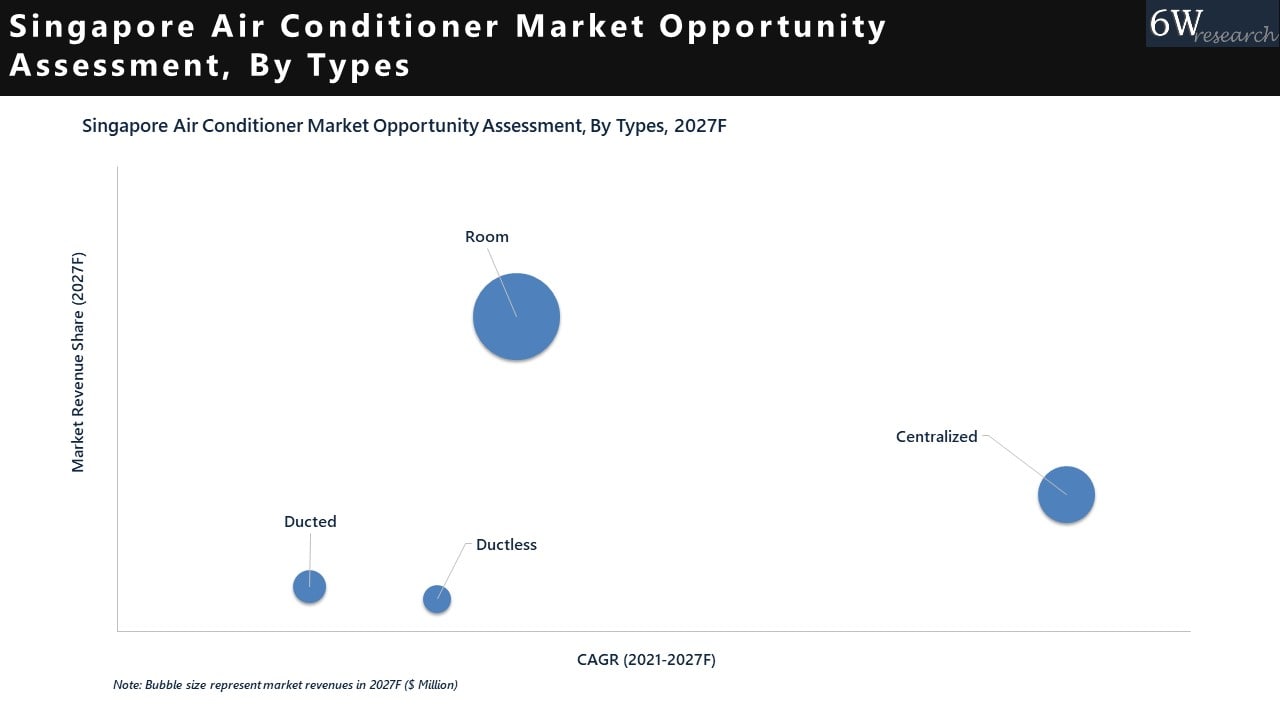
- Market Opportunity Assessment By Type
- Market Opportunity Assessment By Application
- Singapore Air Conditioner Top Companies Market Share
- Singapore Air Conditioner Competitive Benchmarking By Technical and Operational Parameters
- Singapore Air Conditioner Company Profiles
- Singapore Air Conditioner Key Strategic Recommendations
Market Covered
The report offers a comprehensive study of the subsequent market segments:
By Type
- Room Air Conditioner
- Ducted Air Conditioner
- Ductless Air Conditioner
- Centralized Air Conditioner
By Application
- Residential
- Healthcare
- Commercial & Retail
- Transportation & Infrastructure
- Hospitality
- Others