Singapore Cannula Market: Import Trend Analysis
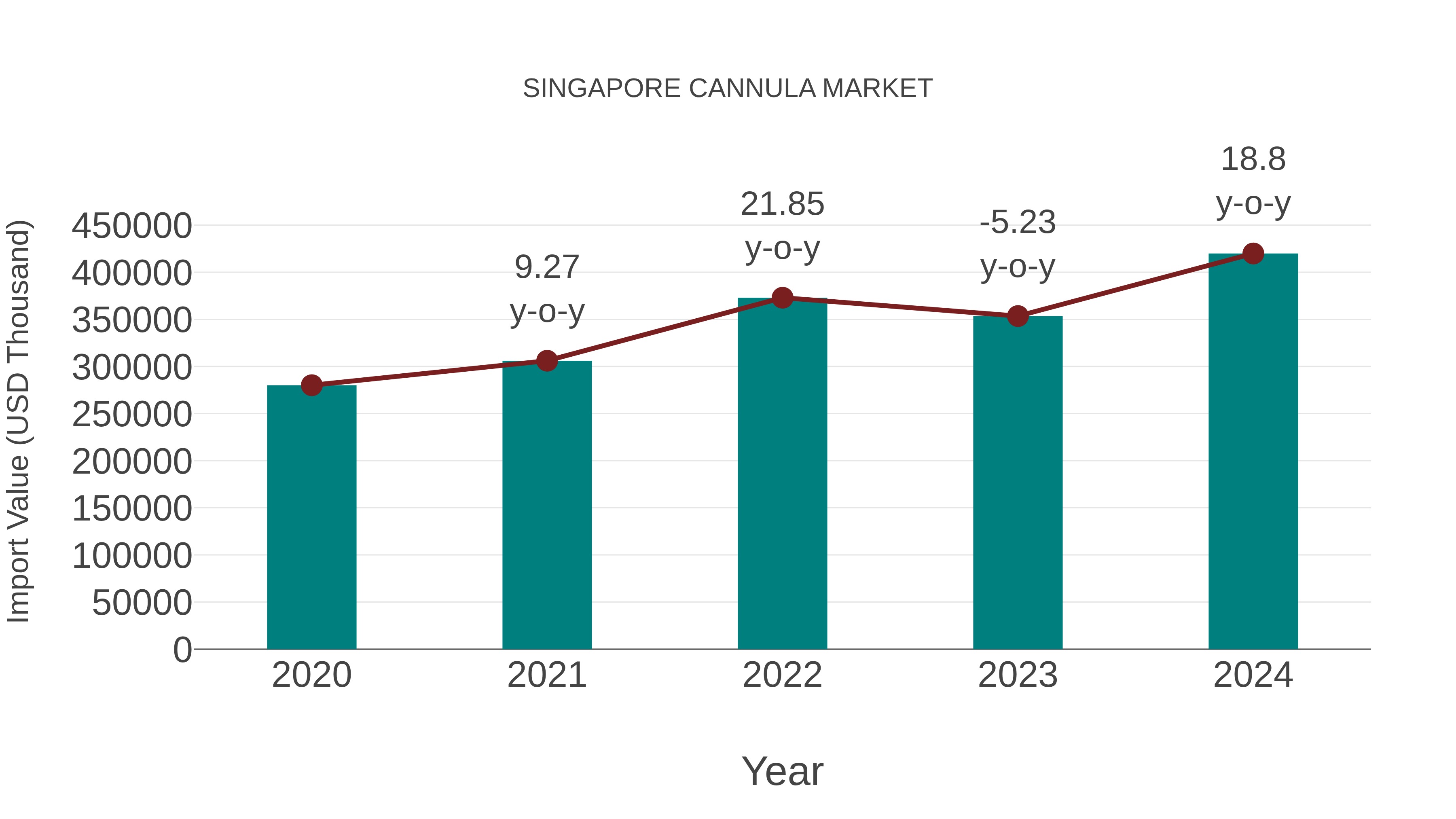
In 2024, Singapore`s import trend for the cannula market showed significant growth, with a rate of 18.8% compared to the previous year. The compound annual growth rate (CAGR) from 2020 to 2024 stood at 10.65%. This uptrend can be attributed to increased demand for medical supplies and improved market stability post-pandemic.
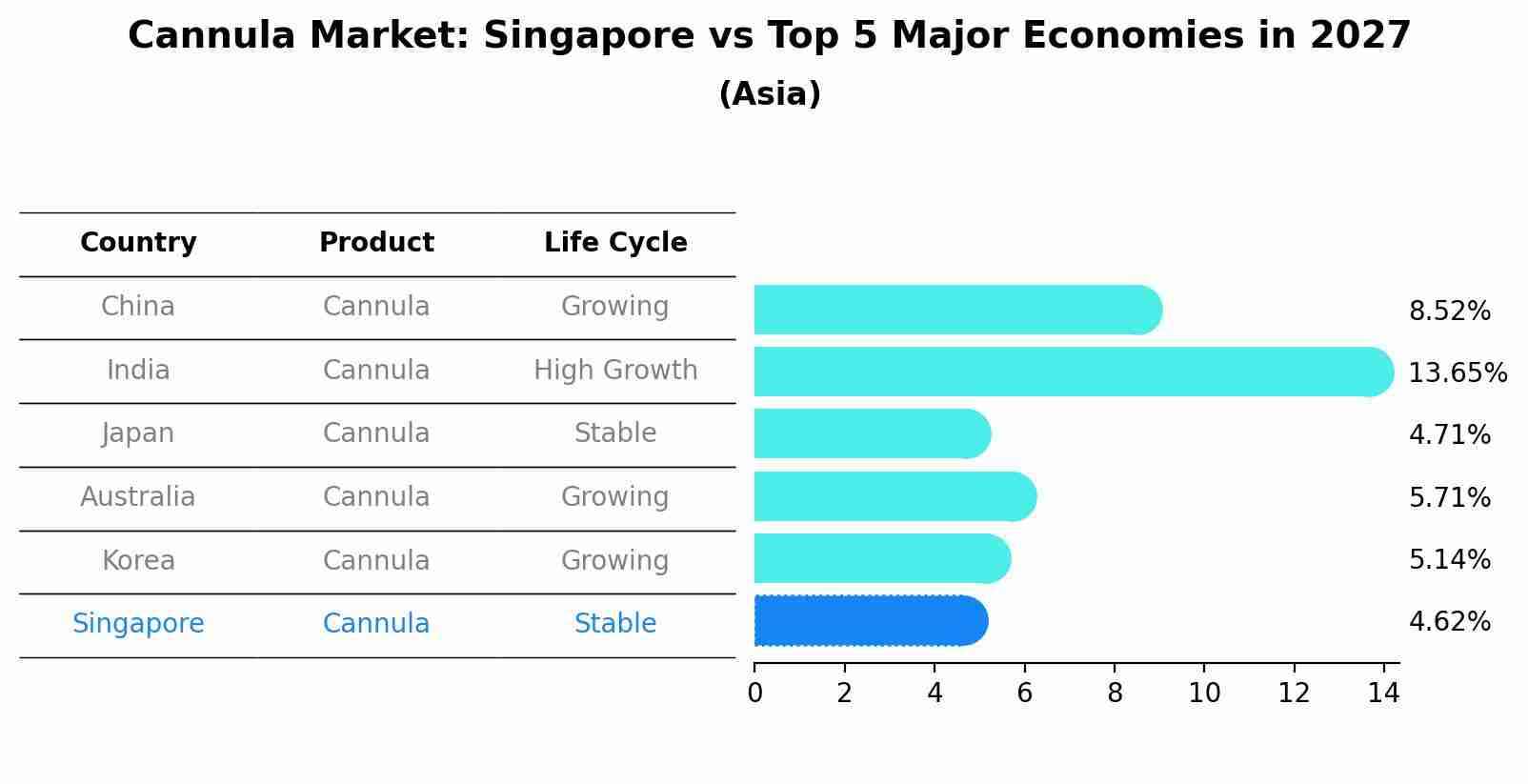
Cannula Market: Singapore vs Top 5 Major Economies in 2027 (Asia)
By 2027, the Cannula market in Singapore is anticipated to reach a growth rate of 4.62%, as part of an increasingly competitive Asia region, where China remains at the forefront, supported by India, Japan, Australia and South Korea, driving innovations and market adoption across sectors.
Singapore Cannula Market Synopsis
The Singapore cannula market is experiencing growth owing to its indispensable role in the healthcare sector. Cannulas are thin, flexible tubes used for a range of medical purposes, including intravenous therapy, oxygen delivery, and surgical procedures. With an aging population and a strong healthcare infrastructure, Singapore demand for medical devices, including cannulas, remains steady. The market benefits from advancements in medical technology and an emphasis on patient comfort and safety. As healthcare standards continue to rise, the cannula market in Singapore is expected to witness sustained growth, with opportunities for manufacturers offering innovative and high-quality products.
Drivers of the Market
The Singapore cannula market is expected to experience growth due to its use in the healthcare sector. Cannulas are thin, flexible tubes used for various medical purposes, including intravenous (IV) therapy and cosmetic procedures. With the healthcare industry continually evolving and expanding in Singapore, the demand for medical devices like cannulas is expected to increase. Additionally, advancements in medical technology and the aging population will contribute to market growth.
Challenges of the Market
The Singapore cannula market outlook presents several challenges. Firstly, the market is highly dependent on the healthcare sector, particularly medical procedures and surgeries. Changes in healthcare policies, budget constraints, and fluctuations in healthcare demand can impact the market`s performance. Additionally, the market faces competition from alternative medical devices and technologies, which can offer less invasive and more cost-effective solutions. Ensuring the highest standards of safety and quality is essential, as cannulas are medical devices subject to strict regulatory oversight. Manufacturers must adhere to these regulations and invest in research and development to enhance product performance. Supply chain management is crucial, as the market relies on the procurement of specialized materials and components, including medical-grade polymers and metals. Disruptions in the supply chain can disrupt production and lead to shortages. Moreover, as healthcare trends evolve towards outpatient procedures and minimally invasive surgery, cannula manufacturers must adapt and innovate to meet changing clinical needs. To succeed in the Singapore cannula market, companies should focus on quality, regulatory compliance, supply chain resilience, and responsiveness to healthcare trends and demands.
COVID-19 Impact on the Market
The Singapore cannula market, supplying medical devices used for various purposes, including intravenous therapy and blood collection, faced both challenges and opportunities during the COVID-19 pandemic. The increased demand for medical supplies and devices strained the supply chain initially. However, with the healthcare sector prioritizing critical care equipment, the market for cannulas remained stable. As healthcare systems adapt to changing needs and elective procedures resume, the cannula market is likely to recover and experience steady growth.
Key Players in the Market
The Singapore cannula market caters to the healthcare and medical device sectors. Key players like Becton, Dickinson and Company (BD), Medtronic plc, and Smiths Medical are at the forefront of providing high-quality cannula products. With the increasing healthcare needs of an aging population, these established players are set to shape the market`s outlook by continuously innovating and delivering reliable medical devices.
Key Highlights of the Report:
- Singapore Cannula Market Outlook
- Market Size of Singapore Cannula Market, 2025
- Forecast of Singapore Cannula Market, 2032
- Historical Data and Forecast of Singapore Cannula Revenues & Volume for the Period 2022-2032F
- Singapore Cannula Market Trend Evolution
- Singapore Cannula Market Drivers and Challenges
- Singapore Cannula Price Trends
- Singapore Cannula Porter's Five Forces
- Singapore Cannula Industry Life Cycle
- Historical Data and Forecast of Singapore Cannula Market Revenues & Volume By Product Type for the Period 2022-2032F
- Historical Data and Forecast of Singapore Cannula Market Revenues & Volume By Nasal cannula for the Period 2022-2032F
- Historical Data and Forecast of Singapore Cannula Market Revenues & Volume By Straight cannula for the Period 2022-2032F
- Historical Data and Forecast of Singapore Cannula Market Revenues & Volume By Winged cannula for the Period 2022-2032F
- Historical Data and Forecast of Singapore Cannula Market Revenues & Volume By Cannulas with wings and ports for the Period 2022-2032F
- Historical Data and Forecast of Singapore Cannula Market Revenues & Volume By Cannulas with integrated stop cock for the Period 2022-2032F
- Historical Data and Forecast of Singapore Cannula Market Revenues & Volume By Others for the Period 2022-2032F
- Historical Data and Forecast of Singapore Cannula Market Revenues & Volume By Material for the Period 2022-2032F
- Historical Data and Forecast of Singapore Cannula Market Revenues & Volume By Plastic for the Period 2022-2032F
- Historical Data and Forecast of Singapore Cannula Market Revenues & Volume By Silicone for the Period 2022-2032F
- Historical Data and Forecast of Singapore Cannula Market Revenues & Volume By Others for the Period 2022-2032F
- Historical Data and Forecast of Singapore Cannula Market Revenues & Volume By Patient for the Period 2022-2032F
- Historical Data and Forecast of Singapore Cannula Market Revenues & Volume By Adult for the Period 2022-2032F
- Historical Data and Forecast of Singapore Cannula Market Revenues & Volume By Paediatric for the Period 2022-2032F
- Historical Data and Forecast of Singapore Cannula Market Revenues & Volume By End-use for the Period 2022-2032F
- Historical Data and Forecast of Singapore Cannula Market Revenues & Volume By Hospitals for the Period 2022-2032F
- Historical Data and Forecast of Singapore Cannula Market Revenues & Volume By Ambulatory surgical centers for the Period 2022-2032F
- Historical Data and Forecast of Singapore Cannula Market Revenues & Volume By Diagnostic laboratories for the Period 2022-2032F
- Historical Data and Forecast of Singapore Cannula Market Revenues & Volume By Clinics for the Period 2022-2032F
- Historical Data and Forecast of Singapore Cannula Market Revenues & Volume By Others for the Period 2022-2032F
- Singapore Cannula Import Export Trade Statistics
- Market Opportunity Assessment By Product Type
- Market Opportunity Assessment By Material
- Market Opportunity Assessment By Patient
- Market Opportunity Assessment By End-use
- Singapore Cannula Top Companies Market Share
- Singapore Cannula Competitive Benchmarking By Technical and Operational Parameters
- Singapore Cannula Company Profiles
- Singapore Cannula Key Strategic Recommendations






































