Singapore Cocoa and Chocolate Market: Import Trend Analysis
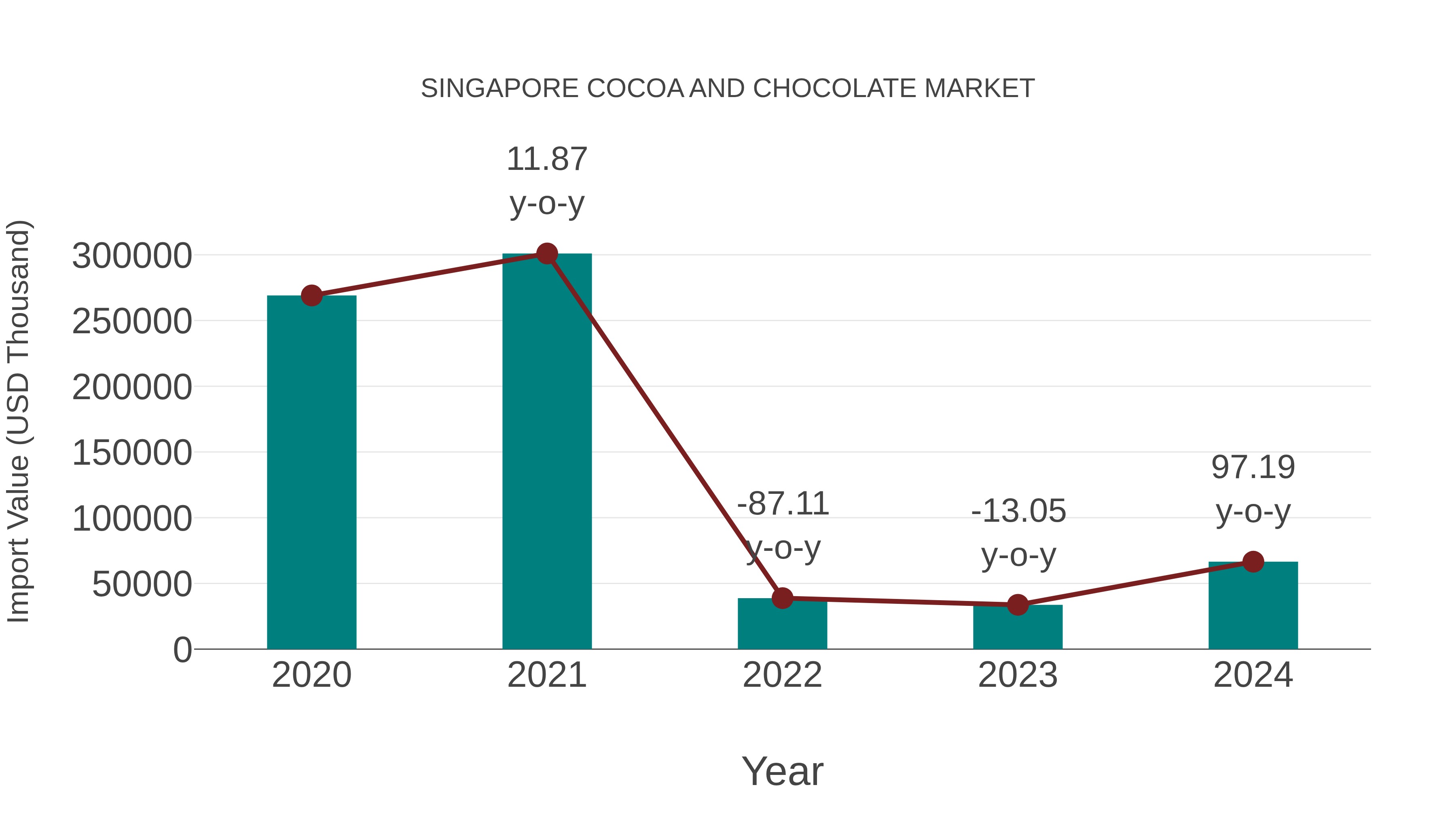
Singapore`s cocoa and chocolate market witnessed a notable import trend from 2023 to 2024, with a growth rate of 97.19%. However, the compound annual growth rate (CAGR) for 2020-2024 stood at -29.49%. This fluctuation could be attributed to shifting consumer preferences or changes in trade policies impacting import momentum.
Singapore Cocoa and Chocolate Market Overview
Chocolate is a beloved treat around the world, and Singapore is no exception. The country`s cocoa and chocolate market has been growing steadily. Chocolate products are not only consumed as indulgent treats but are also incorporated into various culinary creations and desserts. Premium and artisanal chocolates have gained a strong foothold in the market, as consumers seek unique and high-quality chocolate experiences. The market is also influenced by the demand for dark chocolate, which is associated with health benefits due to its high cocoa content.
Drivers of the Market
The Singapore cocoa and chocolate market is thriving, and a key driver of this market is the enduring love for chocolate among consumers. Chocolate is not only a beloved treat but also a versatile ingredient in various food and beverage products. The demand for premium and high-quality chocolate is on the rise, driven by consumers` willingness to indulge in fine chocolates with unique flavors and origins. Additionally, the health benefits associated with dark chocolate, such as its antioxidant properties, have contributed to its popularity in the health and wellness segment. The growth of the Singaporean food industry and the incorporation of chocolate in a wide range of products further boost the market.
Challenges of the Market
The Singapore cocoa and chocolate market faces challenges related to sustainability and changing consumer preferences. Cocoa sourcing and ethical production practices have become central concerns, as consumers increasingly demand transparent supply chains and environmentally friendly products. Furthermore, the growing popularity of dark chocolate and alternative sweeteners necessitates product diversification and innovation. Economic fluctuations and fluctuations in cocoa prices on the global market can also affect local businesses in the industry.
Covid-19 impact of the Market
The COVID-19 pandemic had an impact on the Singapore cocoa and chocolate market as consumer preferences for comfort foods evolved. With more people seeking indulgent and mood-enhancing treats, the demand for cocoa and chocolate products increased. Cocoa and chocolate were seen as sources of comfort and pleasure during challenging times. The market experienced a shift towards premium and artisanal chocolate products as consumers looked for high-quality options to satisfy their cravings.
Leading Players of the Market
Key players in the cocoa and chocolate market include Barry Callebaut, Mondelez International, and Nestl?. These companies produce cocoa and chocolate products for the confectionery and food industry in Singapore.
Key Highlights of the Report:
- Singapore Cocoa and Chocolate Market Outlook
- Market Size of Singapore Cocoa and Chocolate Market, 2025
- Forecast of Singapore Cocoa and Chocolate Market, 2032
- Historical Data and Forecast of Singapore Cocoa and Chocolate Revenues & Volume for the Period 2022-2032F
- Singapore Cocoa and Chocolate Market Trend Evolution
- Singapore Cocoa and Chocolate Market Drivers and Challenges
- Singapore Cocoa and Chocolate Price Trends
- Singapore Cocoa and Chocolate Porter's Five Forces
- Singapore Cocoa and Chocolate Industry Life Cycle
- Historical Data and Forecast of Singapore Cocoa and Chocolate Market Revenues & Volume By Type for the Period 2022-2032F
- Historical Data and Forecast of Singapore Cocoa and Chocolate Market Revenues & Volume By Dark Chocolate for the Period 2022-2032F
- Historical Data and Forecast of Singapore Cocoa and Chocolate Market Revenues & Volume By Milk Chocolate for the Period 2022-2032F
- Historical Data and Forecast of Singapore Cocoa and Chocolate Market Revenues & Volume By Filled Chocolate for the Period 2022-2032F
- Historical Data and Forecast of Singapore Cocoa and Chocolate Market Revenues & Volume By White Chocolate for the Period 2022-2032F
- Historical Data and Forecast of Singapore Cocoa and Chocolate Market Revenues & Volume By Application for the Period 2022-2032F
- Historical Data and Forecast of Singapore Cocoa and Chocolate Market Revenues & Volume By Food & Beverage for the Period 2022-2032F
- Historical Data and Forecast of Singapore Cocoa and Chocolate Market Revenues & Volume By Cosmetics for the Period 2022-2032F
- Historical Data and Forecast of Singapore Cocoa and Chocolate Market Revenues & Volume By Pharmaceuticals for the Period 2022-2032F
- Historical Data and Forecast of Singapore Cocoa and Chocolate Market Revenues & Volume By Nature for the Period 2022-2032F
- Historical Data and Forecast of Singapore Cocoa and Chocolate Market Revenues & Volume By Conventional for the Period 2022-2032F
- Historical Data and Forecast of Singapore Cocoa and Chocolate Market Revenues & Volume By Organic for the Period 2022-2032F
- Historical Data and Forecast of Singapore Cocoa and Chocolate Market Revenues & Volume By Distribution Channel for the Period 2022-2032F
- Historical Data and Forecast of Singapore Cocoa and Chocolate Market Revenues & Volume By Offline for the Period 2022-2032F
- Historical Data and Forecast of Singapore Cocoa and Chocolate Market Revenues & Volume By E-commerce for the Period 2022-2032F
- Singapore Cocoa and Chocolate Import Export Trade Statistics
- Market Opportunity Assessment By Type
- Market Opportunity Assessment By Application
- Market Opportunity Assessment By Nature
- Market Opportunity Assessment By Distribution Channel
- Singapore Cocoa and Chocolate Top Companies Market Share
- Singapore Cocoa and Chocolate Competitive Benchmarking By Technical and Operational Parameters
- Singapore Cocoa and Chocolate Company Profiles
- Singapore Cocoa and Chocolate Key Strategic Recommendations






































