Singapore Coconut Products Market: Import Trend Analysis
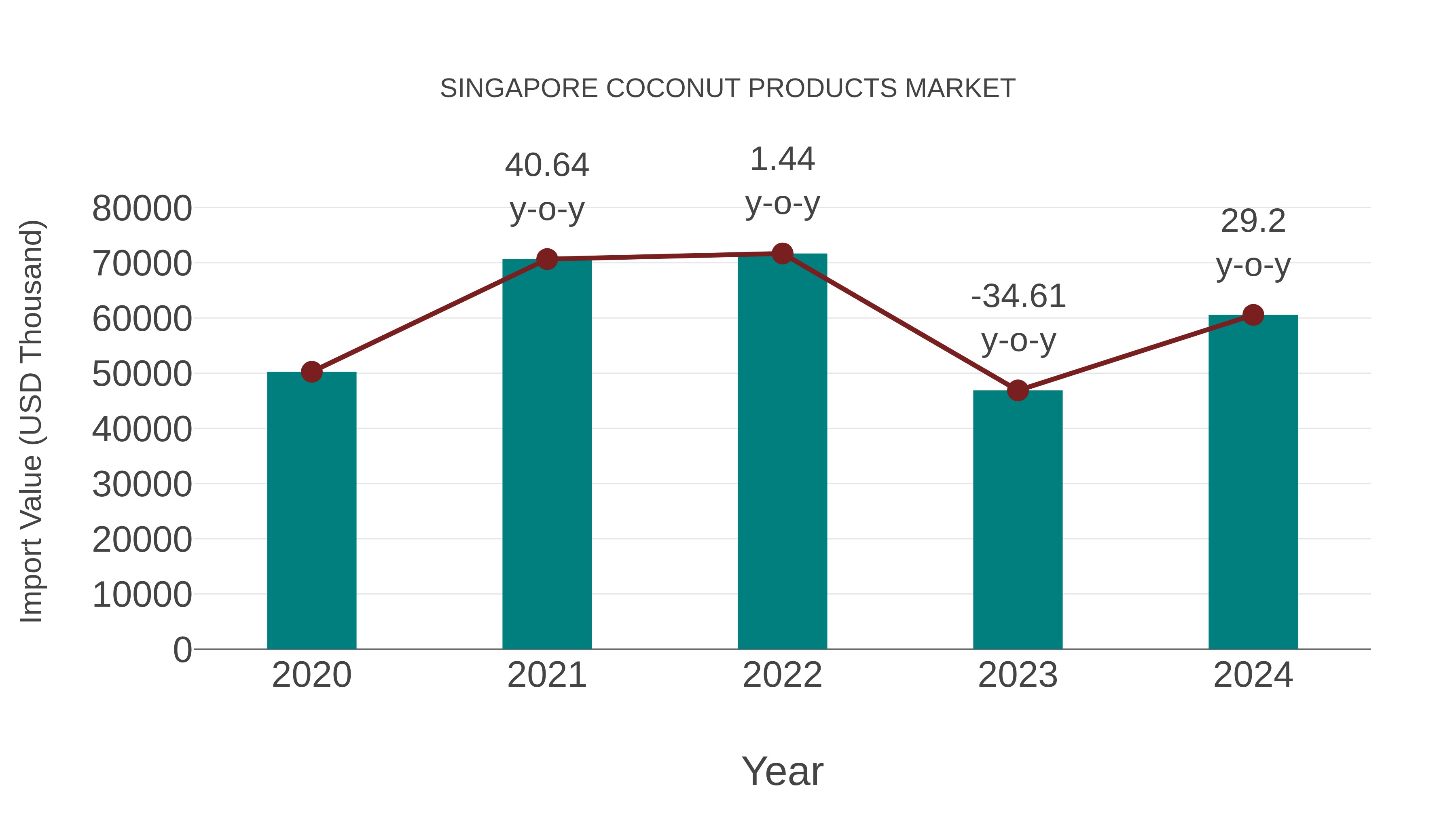
In the Singapore coconut products market, the import trend experienced significant growth from 2023 to 2024, with a notable increase of 29.2%. The compound annual growth rate (CAGR) for the period from 2020 to 2024 stood at 4.78%. This surge in import momentum can be attributed to shifting consumer preferences towards healthier alternatives and the expanding market demand for coconut-based products.
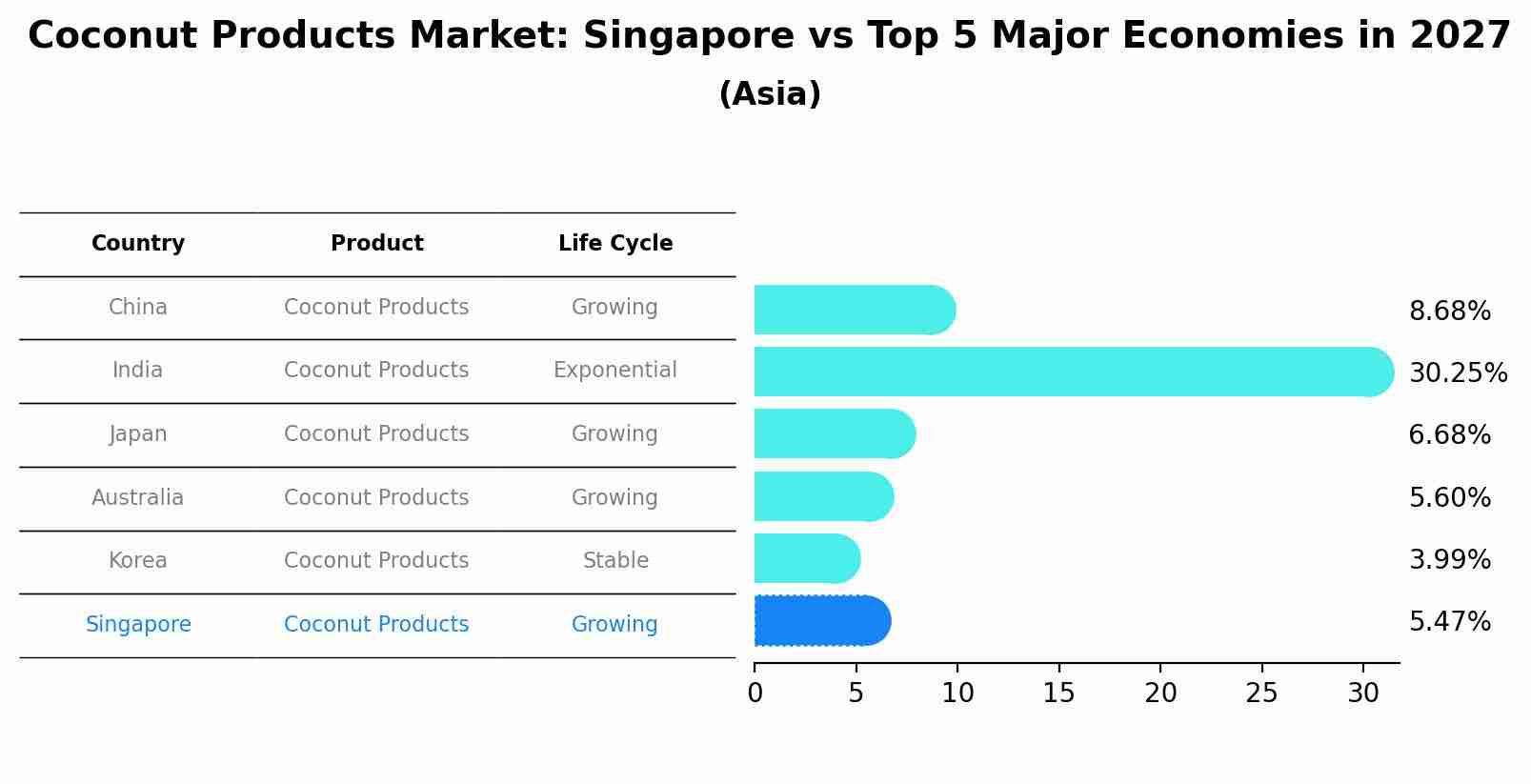
Coconut Products Market: Singapore vs Top 5 Major Economies in 2027 (Asia)
In the Asia region, the Coconut Products market in Singapore is projected to expand at a growing growth rate of 5.47% by 2027. The largest economy is China, followed by India, Japan, Australia and South Korea.
Singapore Coconut Products Market Synopsis
The Singapore coconut products market is driven by consumer interest in natural and tropical food choices. Coconut products offer potential culinary and health benefits. Market dynamics are influenced by product quality, sustainability efforts, and consumer demand for a variety of coconut-based products.
Drivers of the Market
The Singapore coconut products market is expected to experience steady growth in the coming years. This can be attributed to the increasing consumer demand for healthy and natural food options. Coconut-based products are gaining popularity due to their versatility and health benefits. They are used in various forms such as coconut oil, coconut water, and coconut milk, which are sought after for their nutritional value and culinary applications. The trend towards plant-based diets and the growing awareness of the health benefits of coconut products are likely to be significant growth drivers for this market.
Challenges of the Market
The coconut products market in Singapore confronts challenges concerning coconut sourcing, product diversity, and market preferences. Coconut products include a wide range of items, from coconut oil to coconut milk, and managing their supply chain while maintaining quality is crucial. Addressing concerns about coconut sourcing, product innovation, and meeting market preferences for coconut-based products are key challenges for market development.
COVID-19 Impact on the Market
The coconut products market in Singapore experienced fluctuations during the COVID-19 pandemic. With changes in consumer spending patterns and supply chain disruptions, the market faced challenges in terms of demand and sourcing of coconut products. Suppliers of coconut products adapted by emphasizing product quality and sustainability. The pandemic emphasized the significance of versatile and nutritious coconut-based products, influencing market strategies.
Key Players in the Market
Companies like Coconut King and Celebes Coconut Corporation are significant players in Singapore coconut products market. They offer a wide range of coconut-based products, including coconut oil and coconut milk, for culinary and industrial use.
Key Highlights of the Report:
- Singapore Coconut Products Market Outlook
- Market Size of Singapore Coconut Products Market, 2025
- Forecast of Singapore Coconut Products Market, 2032
- Historical Data and Forecast of Singapore Coconut Products Revenues & Volume for the Period 2022-2032F
- Singapore Coconut Products Market Trend Evolution
- Singapore Coconut Products Market Drivers and Challenges
- Singapore Coconut Products Price Trends
- Singapore Coconut Products Porter's Five Forces
- Singapore Coconut Products Industry Life Cycle
- Historical Data and Forecast of Singapore Coconut Products Market Revenues & Volume By Type for the Period 2022-2032F
- Historical Data and Forecast of Singapore Coconut Products Market Revenues & Volume By Coconut Water for the Period 2022-2032F
- Historical Data and Forecast of Singapore Coconut Products Market Revenues & Volume By Coconut Oil for the Period 2022-2032F
- Historical Data and Forecast of Singapore Coconut Products Market Revenues & Volume By Coconut Milk for the Period 2022-2032F
- Historical Data and Forecast of Singapore Coconut Products Market Revenues & Volume By Dried Coconut Products for the Period 2022-2032F
- Historical Data and Forecast of Singapore Coconut Products Market Revenues & Volume By Others for the Period 2022-2032F
- Historical Data and Forecast of Singapore Coconut Products Market Revenues & Volume By Application for the Period 2022-2032F
- Historical Data and Forecast of Singapore Coconut Products Market Revenues & Volume By Food for the Period 2022-2032F
- Historical Data and Forecast of Singapore Coconut Products Market Revenues & Volume By Beverage for the Period 2022-2032F
- Historical Data and Forecast of Singapore Coconut Products Market Revenues & Volume By Cosmetics for the Period 2022-2032F
- Historical Data and Forecast of Singapore Coconut Products Market Revenues & Volume By Others for the Period 2022-2032F
- Historical Data and Forecast of Singapore Coconut Products Market Revenues & Volume By Form for the Period 2022-2032F
- Historical Data and Forecast of Singapore Coconut Products Market Revenues & Volume By Solid for the Period 2022-2032F
- Historical Data and Forecast of Singapore Coconut Products Market Revenues & Volume By Liquid for the Period 2022-2032F
- Singapore Coconut Products Import Export Trade Statistics
- Market Opportunity Assessment By Type
- Market Opportunity Assessment By Application
- Market Opportunity Assessment By Form
- Singapore Coconut Products Top Companies Market Share
- Singapore Coconut Products Competitive Benchmarking By Technical and Operational Parameters
- Singapore Coconut Products Company Profiles
- Singapore Coconut Products Key Strategic Recommendations






































