Singapore Copper Forged Market: Import Trend Analysis
In the Singapore copper forged market, the import trend experienced a -4.13% growth rate from 2023 to 2024, with a compound annual growth rate (CAGR) of 24.49% from 2020 to 2024. This decline in import momentum in 2024 could be attributed to shifts in demand dynamics or market stabilization efforts.
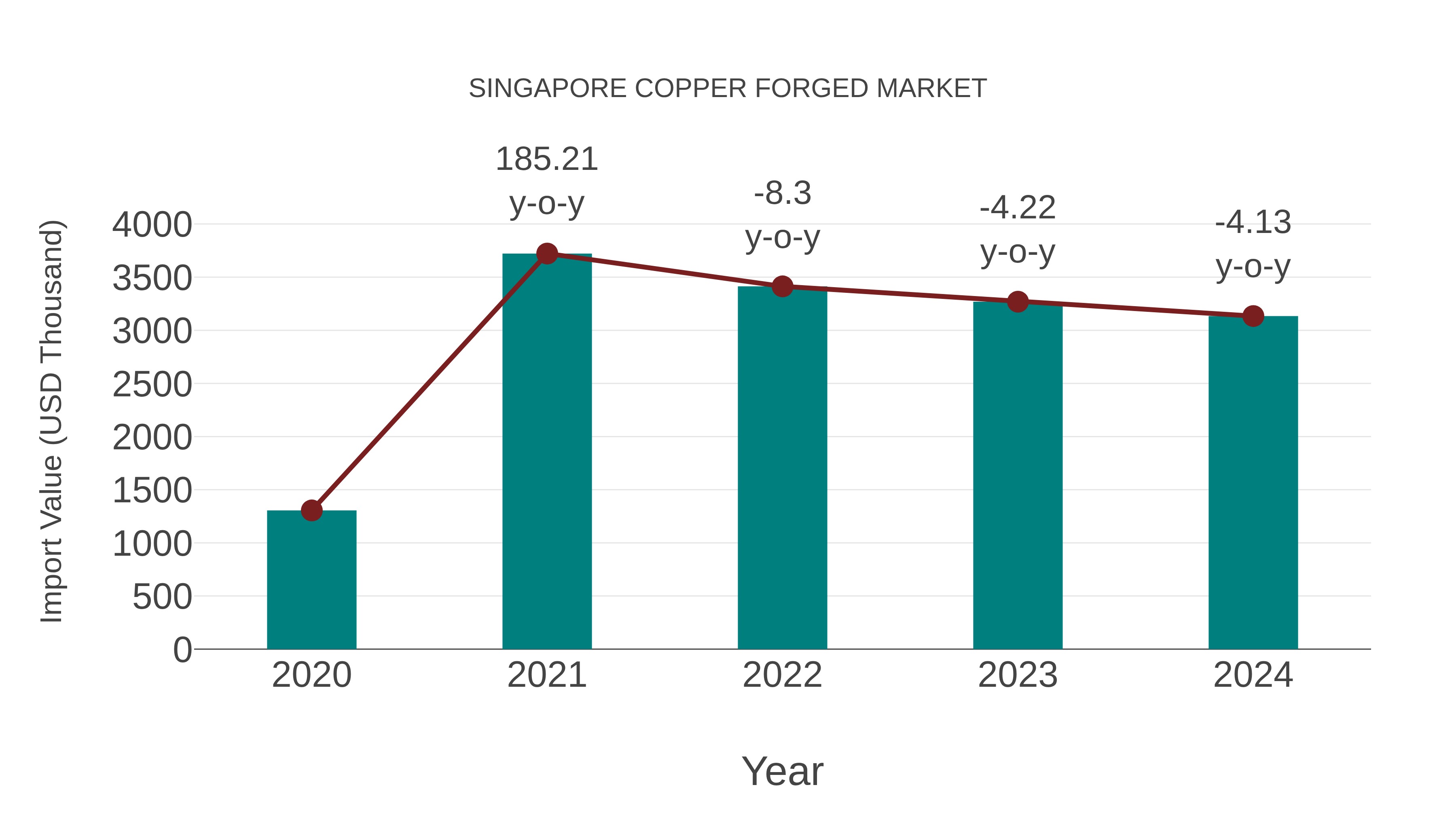
Singapore Copper Forged Market Synopsis
Singapore is a major importer of copper and its derivatives. Copper forging, which involves shaping metal into components by applying compressive forces using specialized tools, has become an important industry in the country due to its demand for products with superior strength and durability. This market is expected to grow at a CAGR of 5% during the forecast period of 2020-2026.
Market Drivers
The increasing demand for copper forged parts from various industries such as automotive, electrical & electronics and construction are driving the growth of this market. Additionally, the growing use of automated production technologies like 3D printing is also providing impetus to this sector???s expansion in Singapore. Furthermore, government initiatives such as tax incentives are encouraging companies to invest more heavily in research & development activities related to forging processes and new materials being developed for higher performance end-products that can be used across multiple industries or applications around the world.
Market challenges
The high cost associated with setting up a copper forging facility poses one of the biggest challenges facing this industry in Singapore. Additionally, fluctuations in raw material prices due to changing global economic conditions present another challenge that must be addressed by investors seeking opportunities within this sector. Furthermore, stringent environmental regulations imposed by government agencies can restrict access to resources required for efficient production processes leading potential delays or increased costs incurred while complying with these regulations if necessary.
Key players
Major players operating within Singapore Copper Forging Market include F&M Forge Pte Ltd., Nantong Huayang Metal Products Co., Ltd., Tungsten Metals Company (Pte) Ltd., MTB Industries (SG) Pte Ltd., KKH Precision Engineering Pte Ltd.
Covid-19 Impact
Due to Covid-19 pandemic lockdowns imposed on businesses around Singapore have had an adverse impact on most sectors including copper forging as it disrupted both international trade flows resulting from supply chain disruptions as well decreased domestic consumption pressure brought about by weakened consumer sentiment among individuals hit hard financially due job losses during those times when economic activity was paused temporarily or severely reduced.Nevertheless, there were certain positive impacts felt too such as low interest rates making investments more attractive and improved digital connectivity between businesses allowing them work remotely even though there was still considerable uncertainty surrounding how long it would take before everything could go back completely normal again.
Key Highlights of the Report:
- Singapore Copper Forged Market Outlook
- Market Size of Singapore Copper Forged Market, 2023
- Forecast of Singapore Copper Forged Market, 2030
- Historical Data and Forecast of Singapore Copper Forged Revenues & Volume for the Period 2020-2030
- Singapore Copper Forged Market Trend Evolution
- Singapore Copper Forged Market Drivers and Challenges
- Singapore Copper Forged Price Trends
- Singapore Copper Forged Porter's Five Forces
- Singapore Copper Forged Industry Life Cycle
- Historical Data and Forecast of Singapore Copper Forged Market Revenues & Volume By Product Types for the Period 2020-2030
- Historical Data and Forecast of Singapore Copper Forged Market Revenues & Volume By Closed Die Forging for the Period 2020-2030
- Historical Data and Forecast of Singapore Copper Forged Market Revenues & Volume By Open Die Forging for the Period 2020-2030
- Historical Data and Forecast of Singapore Copper Forged Market Revenues & Volume By Rolled Ring Forging for the Period 2020-2030
- Historical Data and Forecast of Singapore Copper Forged Market Revenues & Volume By Applications for the Period 2020-2030
- Historical Data and Forecast of Singapore Copper Forged Market Revenues & Volume By Automotive for the Period 2020-2030
- Historical Data and Forecast of Singapore Copper Forged Market Revenues & Volume By Aerospace for the Period 2020-2030
- Historical Data and Forecast of Singapore Copper Forged Market Revenues & Volume By Oil & Gas for the Period 2020-2030
- Historical Data and Forecast of Singapore Copper Forged Market Revenues & Volume By Construction for the Period 2020-2030
- Historical Data and Forecast of Singapore Copper Forged Market Revenues & Volume By Agriculture for the Period 2020-2030
- Historical Data and Forecast of Singapore Copper Forged Market Revenues & Volume By Others for the Period 2020-2030
- Singapore Copper Forged Import Export Trade Statistics
- Market Opportunity Assessment By Product Types
- Market Opportunity Assessment By Applications
- Singapore Copper Forged Top Companies Market Share
- Singapore Copper Forged Competitive Benchmarking By Technical and Operational Parameters
- Singapore Copper Forged Company Profiles
- Singapore Copper Forged Key Strategic Recommendations






































