Singapore Corticosteroids Market: Import Trend Analysis
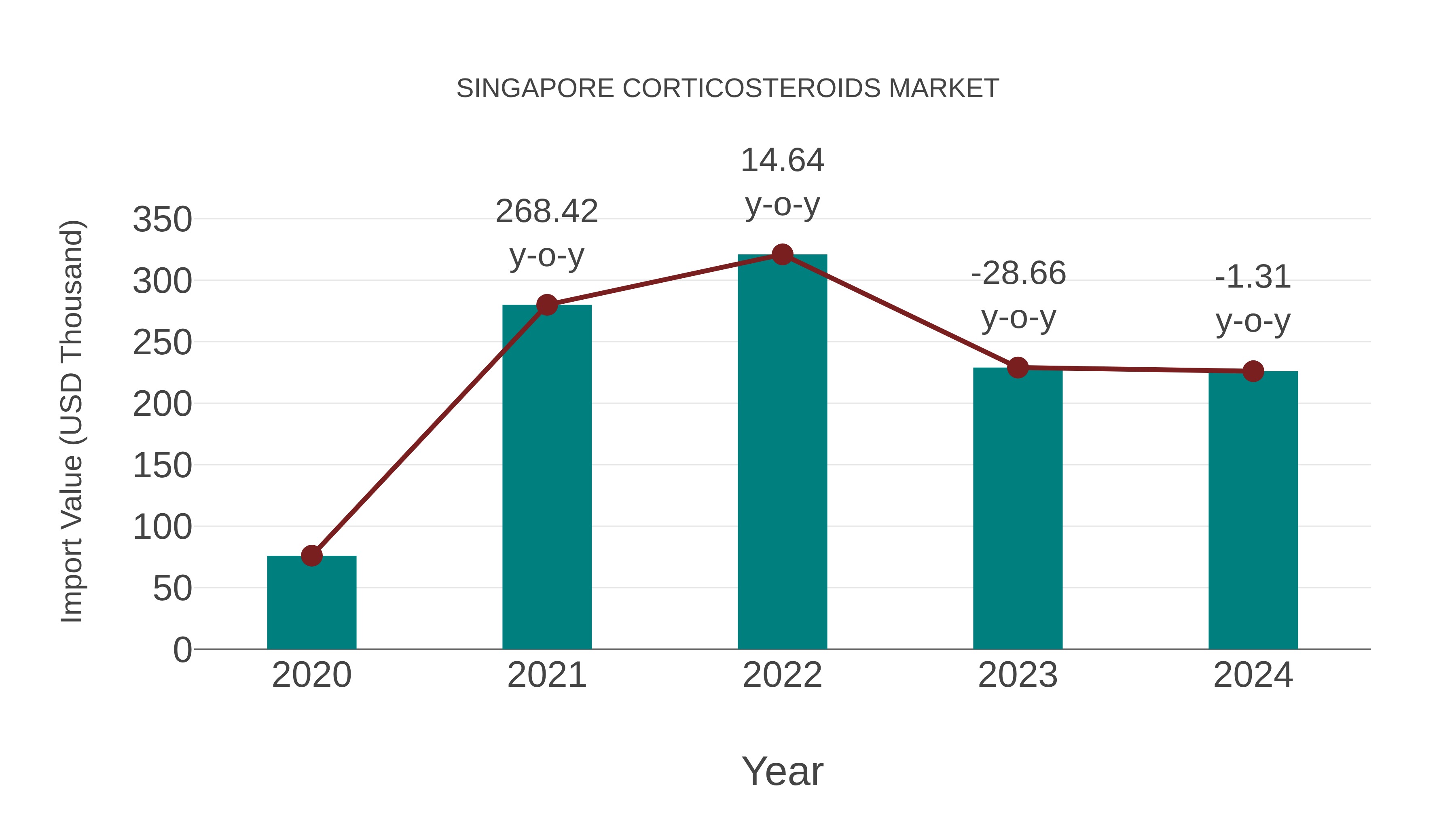
In the Singapore corticosteroids market, the import trend experienced a slight decline from 2023 to 2024, with a growth rate of -1.31%. However, the compound annual growth rate (CAGR) for the period of 2020-2024 stood at an impressive 31.32%. This shift in import momentum could be attributed to evolving demand patterns or changes in market dynamics.
Singapore Corticosteroids Market Synopsis
The Singapore corticosteroids market caters to the pharmaceutical and healthcare sectors, providing medications for various inflammatory and immune-related conditions. Market dynamics are influenced by healthcare regulations, product quality, and adherence to safety and efficacy standards to meet the specific needs of patients and healthcare providers.
Drivers of the Market
The Singapore corticosteroids market is poised for growth as these pharmaceuticals find applications in the treatment of inflammatory and autoimmune conditions. Corticosteroids serve as essential anti-inflammatory agents. As the prevalence of inflammatory diseases and conditions increases, the demand for corticosteroid-based treatments is likely to rise, supporting market growth.
Challenges of the Market
The corticosteroids market in Singapore faces challenges concerning pharmaceutical regulations, safety concerns, and market dynamics. Corticosteroids are used for various medical conditions, and ensuring their safe use, prescription control, and availability is essential. Managing pharmaceutical regulations, addressing concerns about potential misuse, and competing in a dynamic healthcare market are key challenges for market development.
COVID-19 Impact on the Market
The corticosteroids market in Singapore demonstrated resilience during the COVID-19 pandemic, with sustained demand in the pharmaceutical sector. Corticosteroids continued to be crucial in various medications. Suppliers adapted by offering a wide range of corticosteroid formulations and maintaining product quality. The pandemic underscored the significance of these drugs in healthcare, influencing market strategies.
Key Players in the Market
Corticosteroids are used in various medical treatments. Key players in this market include pharmaceutical companies like GSK and AstraZeneca.
Key Highlights of the Report:
- Singapore Corticosteroids Market Outlook
- Market Size of Singapore Corticosteroids Market, 2025
- Forecast of Singapore Corticosteroids Market, 2032
- Historical Data and Forecast of Singapore Corticosteroids Revenues & Volume for the Period 2022-2032F
- Singapore Corticosteroids Market Trend Evolution
- Singapore Corticosteroids Market Drivers and Challenges
- Singapore Corticosteroids Price Trends
- Singapore Corticosteroids Porter's Five Forces
- Singapore Corticosteroids Industry Life Cycle
- Historical Data and Forecast of Singapore Corticosteroids Market Revenues & Volume By Application for the Period 2022-2032F
- Historical Data and Forecast of Singapore Corticosteroids Market Revenues & Volume By Skin Allergies for the Period 2022-2032F
- Historical Data and Forecast of Singapore Corticosteroids Market Revenues & Volume By Rhuematology Indications for the Period 2022-2032F
- Historical Data and Forecast of Singapore Corticosteroids Market Revenues & Volume By Endocrinology for the Period 2022-2032F
- Historical Data and Forecast of Singapore Corticosteroids Market Revenues & Volume By Acute Respiratory Diseases for the Period 2022-2032F
- Historical Data and Forecast of Singapore Corticosteroids Market Revenues & Volume By Others for the Period 2022-2032F
- Historical Data and Forecast of Singapore Corticosteroids Market Revenues & Volume By End User for the Period 2022-2032F
- Historical Data and Forecast of Singapore Corticosteroids Market Revenues & Volume By Hospitals for the Period 2022-2032F
- Historical Data and Forecast of Singapore Corticosteroids Market Revenues & Volume By Clinics for the Period 2022-2032F
- Historical Data and Forecast of Singapore Corticosteroids Market Revenues & Volume By Research Institutes for the Period 2022-2032F
- Historical Data and Forecast of Singapore Corticosteroids Market Revenues & Volume By Others for the Period 2022-2032F
- Singapore Corticosteroids Import Export Trade Statistics
- Market Opportunity Assessment By Application
- Market Opportunity Assessment By End User
- Singapore Corticosteroids Top Companies Market Share
- Singapore Corticosteroids Competitive Benchmarking By Technical and Operational Parameters
- Singapore Corticosteroids Company Profiles
- Singapore Corticosteroids Key Strategic Recommendations






































