Singapore Cosmetic Pigments Market: Import Trend Analysis
In the Singapore cosmetic pigments market, the import trend showed a growth rate of 12.42% from 2023 to 2024, contrasting with a -0.41% CAGR for 2020-2024. This shift in import momentum may be attributed to evolving consumer preferences or changes in trade policies impacting market stability.
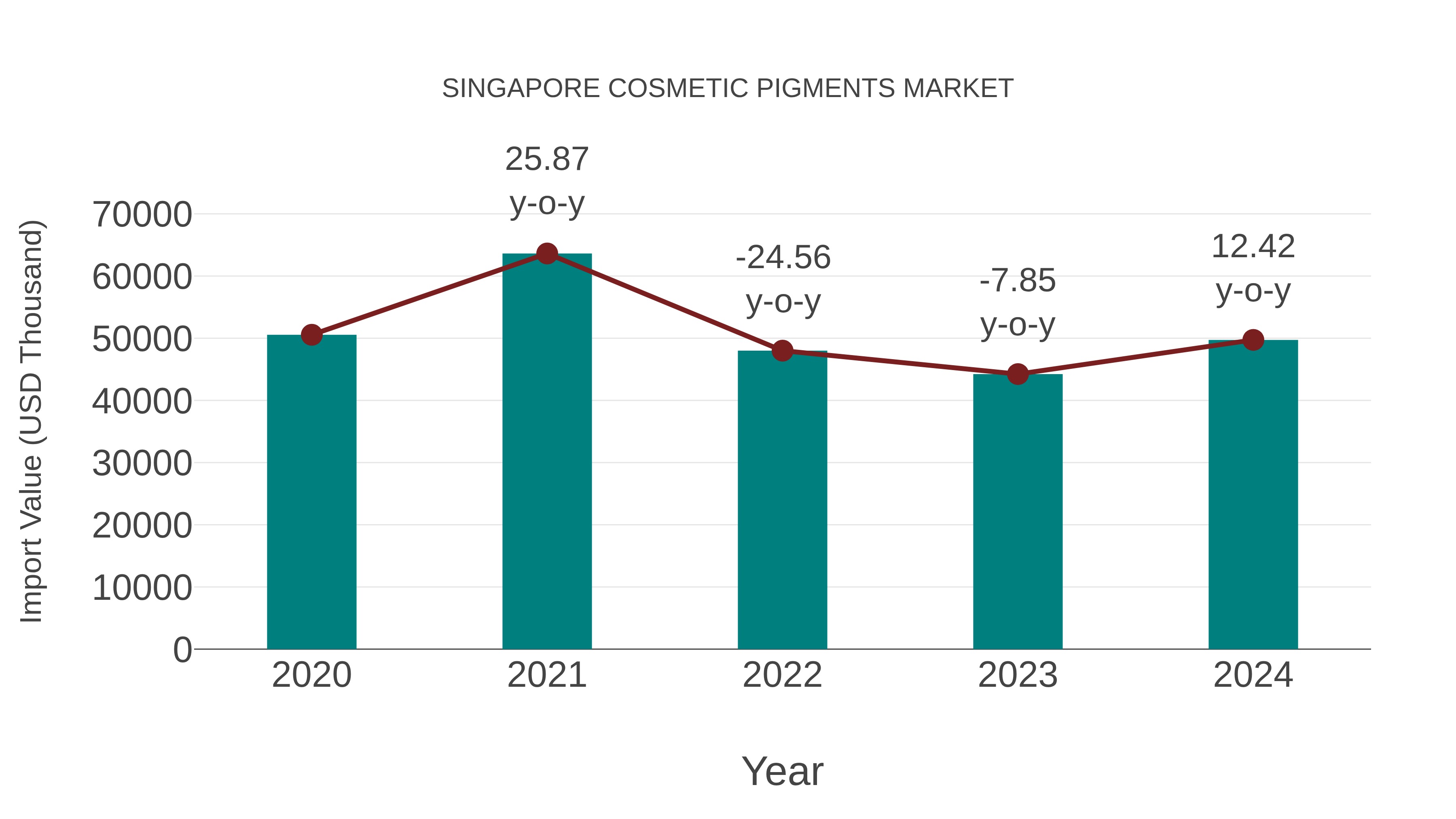
Singapore Cosmetic Pigments Market Overview
The Singapore cosmetic pigments market is driven by the booming cosmetics and personal care industry in the region. Cosmetic pigments are essential ingredients used to impart color, shine, and visual effects in various beauty and personal care products. The market is experiencing growth due to the increasing demand for cosmetic products and the rising preference for enhanced aesthetics. Singapore, being a hub for fashion and beauty trends, witnesses a continuous influx of new cosmetic products, making it essential for manufacturers to incorporate innovative and high-quality pigments into their formulations. Consumers` desire for natural and organic cosmetics has also influenced the market, leading to the development of eco-friendly and safe cosmetic pigments.
Drivers of the Market
The cosmetic pigments market in Singapore is primarily driven by the beauty and personal care industry`s rapid growth. As consumers become more beauty-conscious and are inclined towards personalized and vibrant cosmetics, there is a rising demand for high-quality and innovative cosmetic pigments. The market`s growth is also influenced by the surge in the skincare and makeup segments, where pigments are used to create unique and long-lasting cosmetic products. Additionally, advancements in color technology and an inclination towards natural and sustainable ingredients have also contributed to the market`s expansion.
Challenges of the Market
The Singapore Cosmetic Pigments Market faces challenges related to regulatory compliance and consumer preferences. Regulatory bodies often update standards and regulations for cosmetic ingredients, which require manufacturers to adapt and reformulate products. Furthermore, changing consumer preferences for natural and sustainable cosmetic pigments present challenges for market players who need to innovate and develop eco-friendly alternatives.
Covid-19 impact of the Market
The cosmetic pigments market in Singapore experienced a shift in consumer behavior during the pandemic. With lockdowns and restrictions on social activities, there was a temporary dip in cosmetic usage. However, there was a growing interest in skincare and self-care products, leading to opportunities for cosmetic pigment manufacturers to cater to this changing consumer focus. The market also witnessed a surge in demand for sustainable and eco-friendly pigments.
Leading Players of the Market
Key players in the Singapore cosmetic pigments market include Merck KGaA, Sun Chemical, and Sensient Technologies. They provide a wide range of pigments and colorants used in cosmetics and personal care products.
Key Highlights of the Report:
- Singapore Cosmetic Pigments Market Outlook
- Market Size of Singapore Cosmetic Pigments Market, 2025
- Forecast of Singapore Cosmetic Pigments Market, 2032
- Historical Data and Forecast of Singapore Cosmetic Pigments Revenues & Volume for the Period 2022-2032F
- Singapore Cosmetic Pigments Market Trend Evolution
- Singapore Cosmetic Pigments Market Drivers and Challenges
- Singapore Cosmetic Pigments Price Trends
- Singapore Cosmetic Pigments Porter's Five Forces
- Singapore Cosmetic Pigments Industry Life Cycle
- Historical Data and Forecast of Singapore Cosmetic Pigments Market Revenues & Volume By Elemental Composition for the Period 2022-2032F
- Historical Data and Forecast of Singapore Cosmetic Pigments Market Revenues & Volume By Inorganic Pigments for the Period 2022-2032F
- Historical Data and Forecast of Singapore Cosmetic Pigments Market Revenues & Volume By Organic Pigments for the Period 2022-2032F
- Historical Data and Forecast of Singapore Cosmetic Pigments Market Revenues & Volume By Type for the Period 2022-2032F
- Historical Data and Forecast of Singapore Cosmetic Pigments Market Revenues & Volume By Special Effect Pigments for the Period 2022-2032F
- Historical Data and Forecast of Singapore Cosmetic Pigments Market Revenues & Volume By Surface-Treated Pigments for the Period 2022-2032F
- Historical Data and Forecast of Singapore Cosmetic Pigments Market Revenues & Volume By Nano Pigments for the Period 2022-2032F
- Historical Data and Forecast of Singapore Cosmetic Pigments Market Revenues & Volume By Natural Colorants for the Period 2022-2032F
- Historical Data and Forecast of Singapore Cosmetic Pigments Market Revenues & Volume By Application for the Period 2022-2032F
- Historical Data and Forecast of Singapore Cosmetic Pigments Market Revenues & Volume By Facial Makeup for the Period 2022-2032F
- Historical Data and Forecast of Singapore Cosmetic Pigments Market Revenues & Volume By Eye Makeup for the Period 2022-2032F
- Historical Data and Forecast of Singapore Cosmetic Pigments Market Revenues & Volume By Lip Products for the Period 2022-2032F
- Historical Data and Forecast of Singapore Cosmetic Pigments Market Revenues & Volume By Nail Products for the Period 2022-2032F
- Historical Data and Forecast of Singapore Cosmetic Pigments Market Revenues & Volume By Hair Color Products for the Period 2022-2032F
- Historical Data and Forecast of Singapore Cosmetic Pigments Market Revenues & Volume By Special effect & Special Purpose Products for the Period 2022-2032F
- Historical Data and Forecast of Singapore Cosmetic Pigments Market Revenues & Volume By Others for the Period 2022-2032F
- Singapore Cosmetic Pigments Import Export Trade Statistics
- Market Opportunity Assessment By Elemental Composition
- Market Opportunity Assessment By Type
- Market Opportunity Assessment By Application
- Singapore Cosmetic Pigments Top Companies Market Share
- Singapore Cosmetic Pigments Competitive Benchmarking By Technical and Operational Parameters
- Singapore Cosmetic Pigments Company Profiles
- Singapore Cosmetic Pigments Key Strategic Recommendations






































