Singapore Dairy Cream Market: Import Trend Analysis
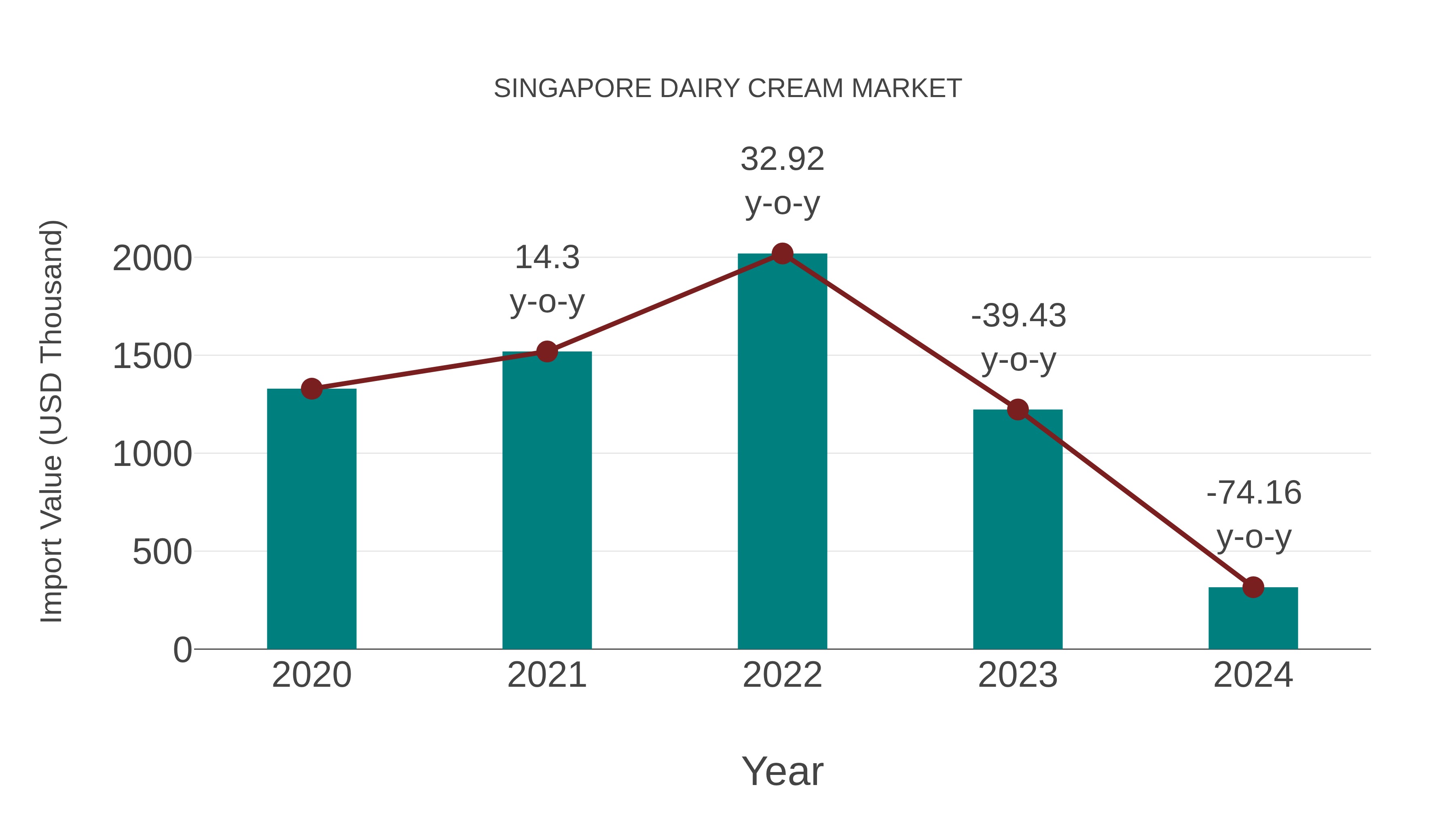
In the Singapore dairy cream market, the import trend saw a significant decline from 2023 to 2024, with a growth rate of -74.16%. The compound annual growth rate (CAGR) for imports between 2020 and 2024 stood at -30.17%. This sharp decline in import momentum could be attributed to shifting consumer preferences, changes in trade policies, or market saturation impacting demand dynamics.
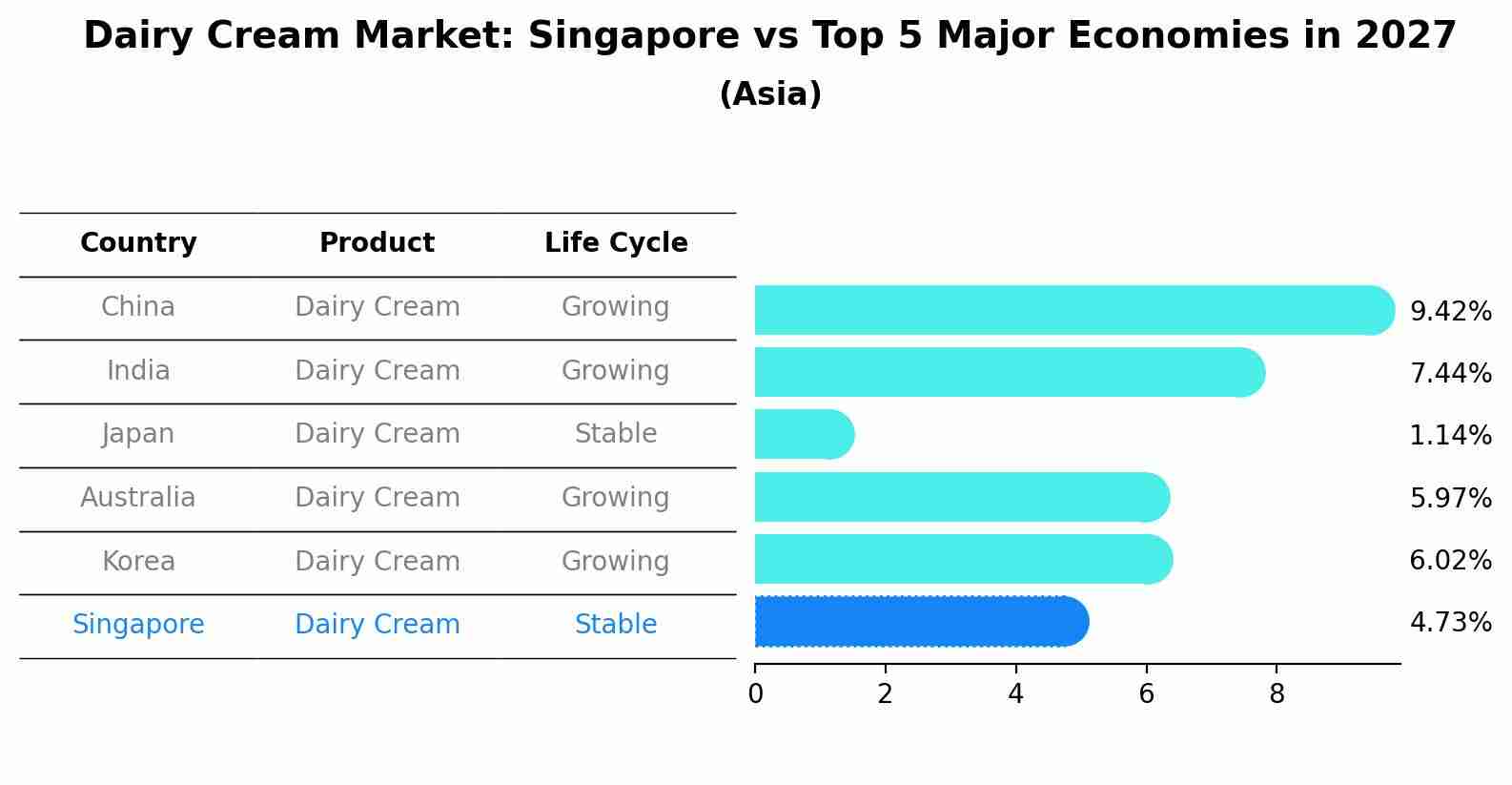
Dairy Cream Market: Singapore vs Top 5 Major Economies in 2027 (Asia)
In the Asia region, the Dairy Cream market in Singapore is projected to expand at a stable growth rate of 4.73% by 2027. The largest economy is China, followed by India, Japan, Australia and South Korea.
Singapore Dairy Cream Market Synopsis
The dairy cream market in Singapore is witnessing growth as the demand for premium desserts, coffee accompaniments, and culinary ingredients increases. Dairy cream, known for its rich texture and versatile applications, is a staple in both commercial and home kitchens. The market`s expansion is driven by the rising popularity of baking and cooking at home, as well as the growth of the caf? culture. Collaboration between dairy producers, foodservice establishments, and retailers is essential to ensure consistent quality, availability, and innovative packaging solutions that cater to the evolving preferences of consumers.
Drivers of the Market
The cotton linters market in Singapore is influenced by the thriving textile industry and the demand for high-quality raw materials. Cotton linters, a byproduct of cotton ginning, find applications in various industries, including paper manufacturing, cosmetics, and pharmaceuticals. The pharmaceutical sector`s growth, in particular, drives the demand for cotton linters as they are used in the production of capsules and tablets. Additionally, the paper industry`s demand for specialty papers and non-woven materials further supports the market`s growth.
Challenges of the Market
The dairy cream market in Singapore confronts challenges related to changing dietary preferences and the rise of dairy alternatives. As more consumers opt for plant-based diets or are lactose intolerant, traditional dairy cream faces competition from non-dairy cream alternatives made from soy, almond, or coconut. Additionally, the perishable nature of dairy cream poses logistical challenges for storage and distribution. Keeping products fresh while minimizing waste is a constant concern for manufacturers and retailers.
COVID-19 Impact on the Market
The Singapore dairy cream market faced challenges during the COVID-19 pandemic due to disruptions in the foodservice industry. As restaurants and cafes scaled down operations or temporarily closed, the demand for dairy cream in the foodservice sector decreased. However, there was a surge in home baking and cooking, leading to increased retail sales of dairy cream. Consumers turned to homemade desserts and dishes, driving the demand for baking ingredients. As the pandemic situation evolved, the market witnessed a shift in sales channels and product packaging to cater to changing consumer preferences.
Key Players in the Market
Companies like FrieslandCampina and Nestl? may be significant players in the dairy cream market in Singapore.
Key Highlights of the Report:
- Singapore Dairy Cream Market Outlook
- Market Size of Singapore Dairy Cream Market, 2025
- Forecast of Singapore Dairy Cream Market, 2032
- Historical Data and Forecast of Singapore Dairy Cream Revenues & Volume for the Period 2022-2032F
- Singapore Dairy Cream Market Trend Evolution
- Singapore Dairy Cream Market Drivers and Challenges
- Singapore Dairy Cream Price Trends
- Singapore Dairy Cream Porter's Five Forces
- Singapore Dairy Cream Industry Life Cycle
- Historical Data and Forecast of Singapore Dairy Cream Market Revenues & Volume By Type for the Period 2022-2032F
- Historical Data and Forecast of Singapore Dairy Cream Market Revenues & Volume By Fresh Cream for the Period 2022-2032F
- Historical Data and Forecast of Singapore Dairy Cream Market Revenues & Volume By Thickened Cream/Heavy Cream for the Period 2022-2032F
- Historical Data and Forecast of Singapore Dairy Cream Market Revenues & Volume By Whipping Cream for the Period 2022-2032F
- Historical Data and Forecast of Singapore Dairy Cream Market Revenues & Volume By Sour Cream for the Period 2022-2032F
- Historical Data and Forecast of Singapore Dairy Cream Market Revenues & Volume By Other Types for the Period 2022-2032F
- Historical Data and Forecast of Singapore Dairy Cream Market Revenues & Volume By Distribution Channel for the Period 2022-2032F
- Historical Data and Forecast of Singapore Dairy Cream Market Revenues & Volume By Supermarkets/ Hypermarkets for the Period 2022-2032F
- Historical Data and Forecast of Singapore Dairy Cream Market Revenues & Volume By Convenince Stores for the Period 2022-2032F
- Historical Data and Forecast of Singapore Dairy Cream Market Revenues & Volume By Online Retail Stores for the Period 2022-2032F
- Historical Data and Forecast of Singapore Dairy Cream Market Revenues & Volume By Other Distribution Channels for the Period 2022-2032F
- Singapore Dairy Cream Import Export Trade Statistics
- Market Opportunity Assessment By Type
- Market Opportunity Assessment By Distribution Channel
- Singapore Dairy Cream Top Companies Market Share
- Singapore Dairy Cream Competitive Benchmarking By Technical and Operational Parameters
- Singapore Dairy Cream Company Profiles
- Singapore Dairy Cream Key Strategic Recommendations






































