Singapore Decentralized Identity Market Size & Growth Rate (2026-2032)
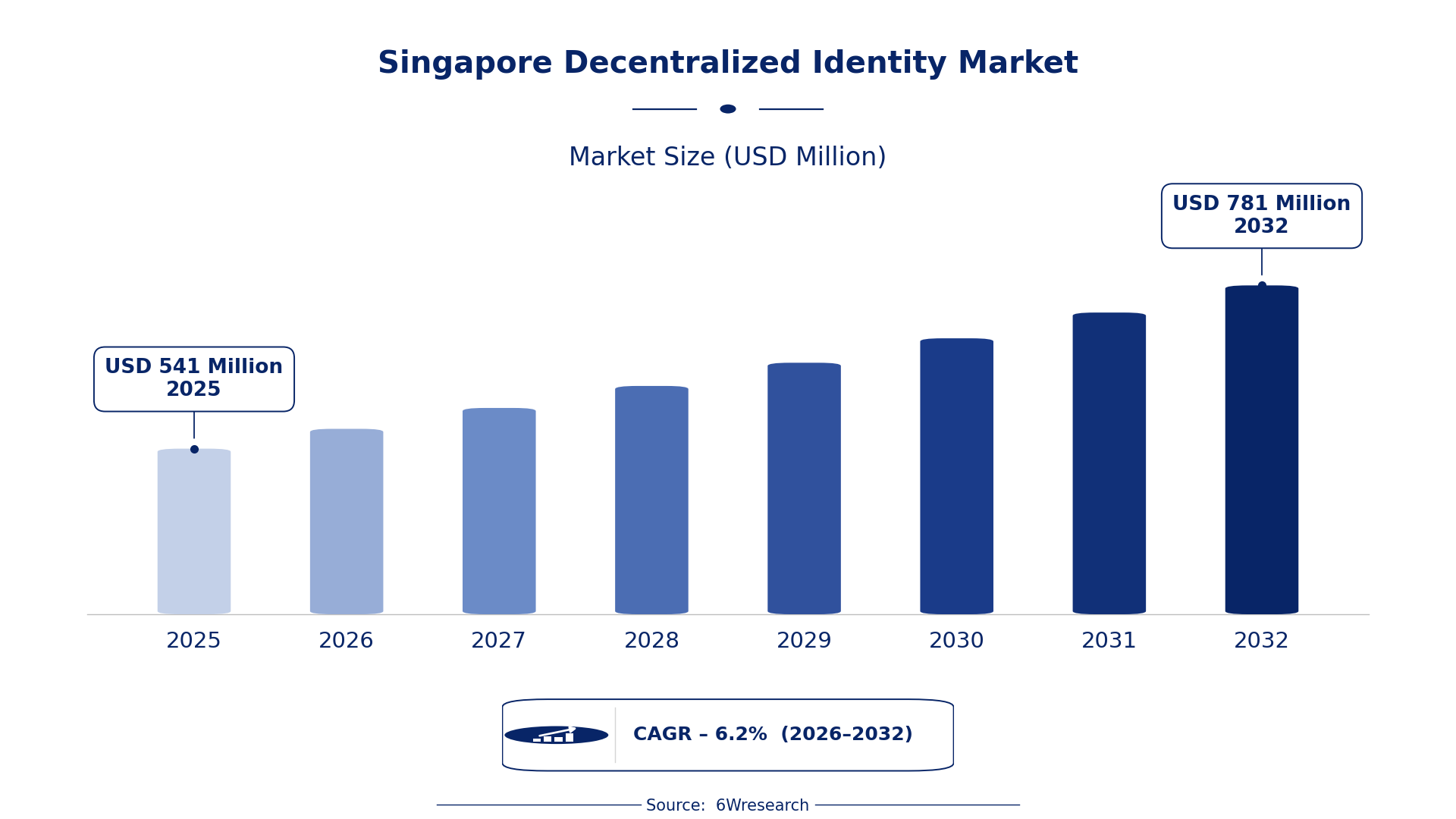
The Singapore Decentralized Identity Market was estimated at USD 541 Million in 2025 and is projected to reach USD 781 Million by 2032, growing at a CAGR of 6.2% from 2026 to 2032.
Singapore Decentralized Identity Market Synopsis
The Singapore Decentralized Identity market is rapidly evolving as individuals and organizations increasingly seek greater control over personal information. A shift towards decentralized identity solutions allows users to manage their identities without reliance on central authorities, addressing rising privacy and security concerns.
Amidst a digital era where data breaches are commonplace, Singapore's commitment to fostering trust in online transactions amplifies the relevance of decentralized identity technologies. This market reflects the nation's proactive approach to ensuring secure and privacy-centric methods for managing digital identities.
Singapore Decentralized Identity Market Year-wise Growth Rate and Key Drivers
This graph illustrates the annual growth rates of the Singapore Decentralized Identity Market from 2021 to 2032, highlighting a steady upward trajectory and projected expansion over the forecast period.
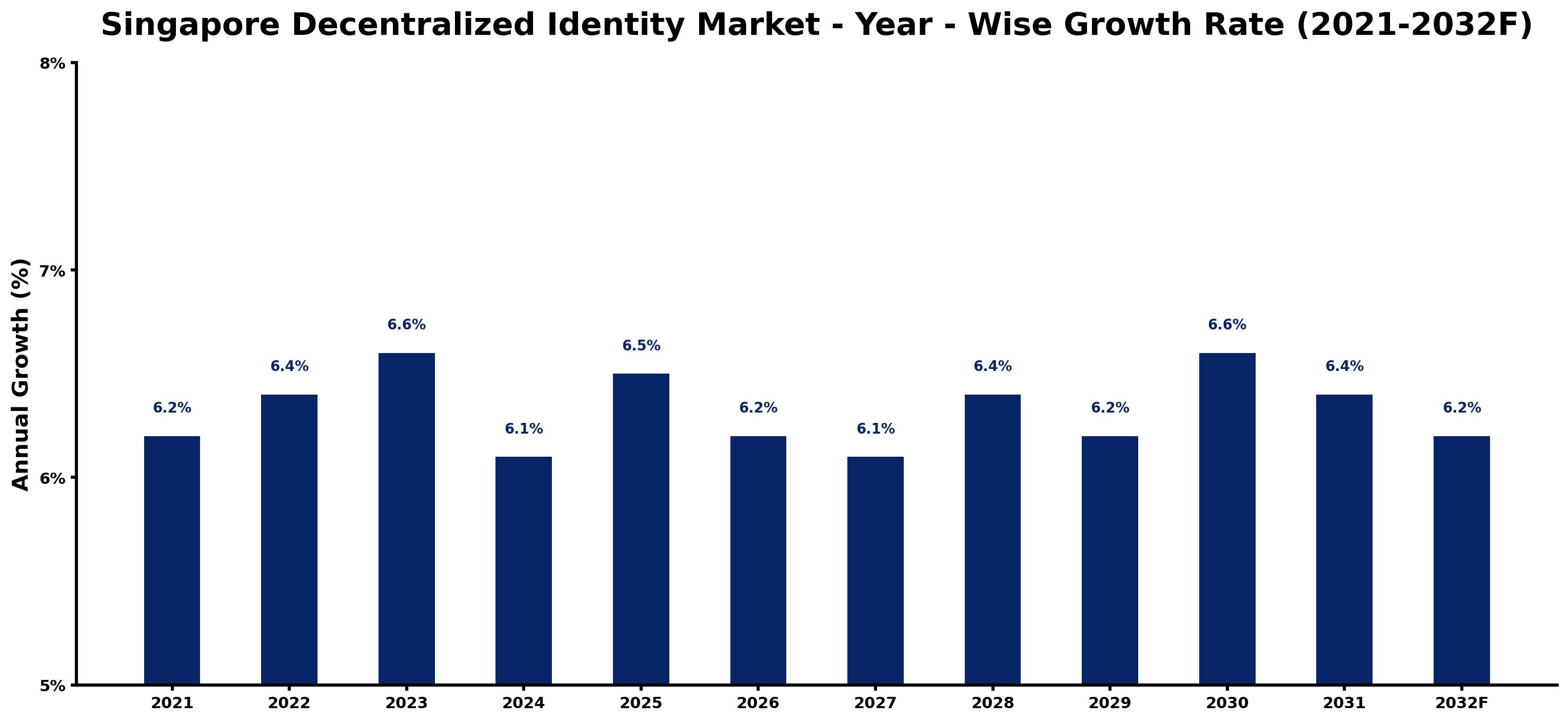
The table below presents the year‑wise growth rates along with the key drivers influencing the market
| Year | Growth Rate | Major Drivers |
| 2021 | 6.2% | Launch of Singapore's National Digital Identity initiative. |
| 2022 | 6.4% | Growing adoption of e-KYC solutions by local banks. |
| 2023 | 6.6% | Partnerships between tech firms and government for identity solutions. |
| 2024 | 6.1% | Increased focus on cybersecurity regulations by Singapore authorities. |
| 2025 | 6.5% | Boost from Singapore's Smart Nation initiative promoting digital identity. |
| 2026 | 6.2% | Demand surge for digital onboarding in healthcare sector. |
| 2027 | 6.1% | Enhancements in self-sovereign identity technologies being developed locally. |
| 2028 | 6.4% | Collaboration with regional partners for cross-border identity verification. |
| 2029 | 6.2% | Support from fintech sector for decentralized identity platforms. |
| 2030 | 6.6% | Implementation of privacy laws promoting user control over data. |
| 2031 | 6.4% | Adoption of decentralized identifiers in government services. |
| 2032 | 6.2% | Increased investments in blockchain technology for secure identities. |
Note: Market size estimations and growth projections presented in this report are based on 6Wresearch's proprietary forecasting methodology, utilizing the latest available industry data, government publications, and primary research inputs.
Singapore Decentralized Identity Market Key Takeaways
Below are some of the specific key takeaways from the market, including:
- Growing consumer demand for privacy-preserving identity solutions drives market expansion.
- Government initiatives are pivotal in fostering trust and acceptance of decentralized identity technologies.
- COVID-19 has accelerated the transition toward decentralized identity systems as online interactions surge.
- Interoperability challenges remain a concern, necessitating ongoing efforts in standardization.
- Education and awareness are critical to enhancing adoption among both individuals and organizations.
Evaluation of Restraints in Singapore Decentralized Identity Market
Despite its growth potential, the Singapore Decentralized Identity market faces hurdles that could impede progress. A significant challenge lies in achieving interoperability across various decentralized systems, as standards are still being developed. This gap creates uncertainty for users and organizations alike. Furthermore, there is a pressing need for educational campaigns to raise awareness about the benefits and functionalities of decentralized identity solutions. Many potential users remain hesitant, driven by concerns over privacy and the implications of sharing personal data in new formats. Regulatory compliance also poses an ongoing challenge, as the existing legal framework may not fully encompass the nuances of decentralized identity systems.
Singapore Decentralized Identity Market Trends
Several trends are shaping the Singapore Decentralized Identity market. A notable shift is the increasing reliance on blockchain technology, which offers transparency and security for identity management. Additionally, the rise of digital interactions during the pandemic has spurred interest in user-centric identity solutions. Companies are exploring collaborative frameworks that allow for seamless interoperability, aiming to address existing challenges. The demand for solutions that align with stringent data protection regulations further emphasizes the need for transparency and user control in identity management.
Singapore Decentralized Identity Market Opportunities
The opportunities within the Singapore Decentralized Identity market are abundant. Businesses can capitalize on the increasing need for secure and privacy-centric identity solutions. Investment in developing user-friendly platforms that facilitate data sharing while prioritizing privacy can attract a broader audience. Furthermore, partnerships between government bodies and technology providers offer a strategic avenue to enhance market adoption. Emerging sectors, such as e-commerce and online services, present additional avenues for decentralized identity applications, paving the way for innovative solutions tailored to specific industry needs.
Government Initiatives in the Singapore Decentralized Identity Market
The Singapore government is actively shaping the decentralized identity landscape through targeted initiatives that promote trust and engagement. Recognizing the importance of secure digital identity management, authorities are crafting policies that support technological innovation while addressing privacy concerns. The current regulatory posture aims to create a favorable environment for decentralized identity solutions to flourish, aligning with the nation's digital transformation goals.
- A recently completed initiative focused on updating digital identity verification standards to enhance security protocols.
- A current public sector project emphasizes collaboration with private sectors to develop interoperable decentralized identity frameworks.
- Ongoing workshops and seminars aim to raise awareness about decentralized identity solutions among businesses and consumers.
- A planned national framework is set to be introduced in 2026, which will streamline compliance requirements for decentralized identity applications.
- In 2025, the government launched a pilot program to test new decentralized identity technologies in public services.
Future Insights of the Singapore Decentralized Identity Market
From 2026 to 2032, the Singapore Decentralized Identity market is expected to experience significant evolution driven by technological advancements and regulatory developments. As users increasingly prioritize privacy and data security, decentralized identity solutions will likely play a crucial role in establishing a secure digital environment. Education will be key to user adoption, with both the government and industry stakeholders needing to work together to enhance public awareness. The emphasis on interoperability will also shape the future direction of the market, paving the way for more integrated and user-friendly identity solutions.
Singapore Decentralized Identity Market Latest Developments
In the past 12-14 months, the Singapore Decentralized Identity market has witnessed a surge in activity, reflecting a broader commitment to enhancing digital identity security. The focus has largely been on innovation and collaboration among stakeholders to improve user experience and address security concerns. Various initiatives have emerged, driving interest in decentralized identity technologies across multiple sectors.
- A major technology vendor announced an ongoing project to develop decentralized identity solutions tailored for the financial sector, expected to enhance transaction security by late 2025.
- A leading regional operator is currently working on a pilot program to integrate decentralized identity management within its existing customer service platforms.
- In early 2025, a consortium of tech companies launched a collaboration to create open standards for decentralized identity solutions, with aims to finalize their protocols by mid-2026.
- A recent initiative began to establish a framework for public-private partnerships in the development of decentralized identity technologies, promoting innovation within the market.
Singapore Decentralized Identity Market - Key Attractiveness of the Report
- 10 Years of Market Numbers
- Historical Data Starting from 2022 to 2025
- Base Year: 2025
- Forecast Data until 2032
- Key Performance Indicators Impacting the Market
- Major Upcoming Developments and Projects
Key Highlights of the Report:
- Singapore Decentralized Identity Market Outlook
- Market Size of Singapore Decentralized Identity Market, 2025
- Forecast of Singapore Decentralized Identity Market, 2032
- Historical Data and Forecast of Singapore Decentralized Identity Revenues & Volume for the Period 2022-2032F
- Singapore Decentralized Identity Market Trend Evolution
- Singapore Decentralized Identity Market Drivers and Challenges
- Singapore Decentralized Identity Price Trends
- Singapore Decentralized Identity Porter's Five Forces
- Singapore Decentralized Identity Industry Life Cycle
- Historical Data and Forecast of Singapore Decentralized Identity Market Revenues & Volume By Vertical for the Period 2022-2032F
- Historical Data and Forecast of Singapore Decentralized Identity Market Revenues & Volume By BFSI for the Period 2022-2032F
- Historical Data and Forecast of Singapore Decentralized Identity Market Revenues & Volume By Government for the Period 2022-2032F
- Historical Data and Forecast of Singapore Decentralized Identity Market Revenues & Volume By Healthcare and Life Sciences for the Period 2022-2032F
- Historical Data and Forecast of Singapore Decentralized Identity Market Revenues & Volume By Retail and eCommerce for the Period 2022-2032F
- Historical Data and Forecast of Singapore Decentralized Identity Market Revenues & Volume By Telecom and IT for the Period 2022-2032F
- Historical Data and Forecast of Singapore Decentralized Identity Market Revenues & Volume By Transport and Logistics for the Period 2022-2032F
- Historical Data and Forecast of Singapore Decentralized Identity Market Revenues & Volume By Real Estate for the Period 2022-2032F
- Historical Data and Forecast of Singapore BFSI Decentralized Identity Market Revenues & Volume By Others for the Period 2022-2032F
- Historical Data and Forecast of Singapore Decentralized Identity Market Revenues & Volume By Identity Type for the Period 2022-2032F
- Historical Data and Forecast of Singapore Decentralized Identity Market Revenues & Volume By Non- biometrics for the Period 2022-2032F
- Historical Data and Forecast of Singapore Decentralized Identity Market Revenues & Volume By Biometrics for the Period 2022-2032F
- Historical Data and Forecast of Singapore Decentralized Identity Market Revenues & Volume By End User for the Period 2022-2032F
- Historical Data and Forecast of Singapore Decentralized Identity Market Revenues & Volume By Enterprises for the Period 2022-2032F
- Historical Data and Forecast of Singapore Decentralized Identity Market Revenues & Volume By Individual for the Period 2022-2032F
- Historical Data and Forecast of Singapore Decentralized Identity Market Revenues & Volume By Organization Size for the Period 2022-2032F
- Historical Data and Forecast of Singapore Decentralized Identity Market Revenues & Volume By Large Enterprises for the Period 2022-2032F
- Historical Data and Forecast of Singapore Decentralized Identity Market Revenues & Volume By SMEs for the Period 2022-2032F
- Singapore Decentralized Identity Import Export Trade Statistics
- Market Opportunity Assessment By Vertical
- Market Opportunity Assessment By Identity Type
- Market Opportunity Assessment By End User
- Market Opportunity Assessment By Organization Size
- Singapore Decentralized Identity Top Companies Market Share
- Singapore Decentralized Identity Competitive Benchmarking By Technical and Operational Parameters
- Singapore Decentralized Identity Company Profiles
- Singapore Decentralized Identity Key Strategic Recommendations






































