Singapore Delicatessen Meats Market: Import Trend Analysis
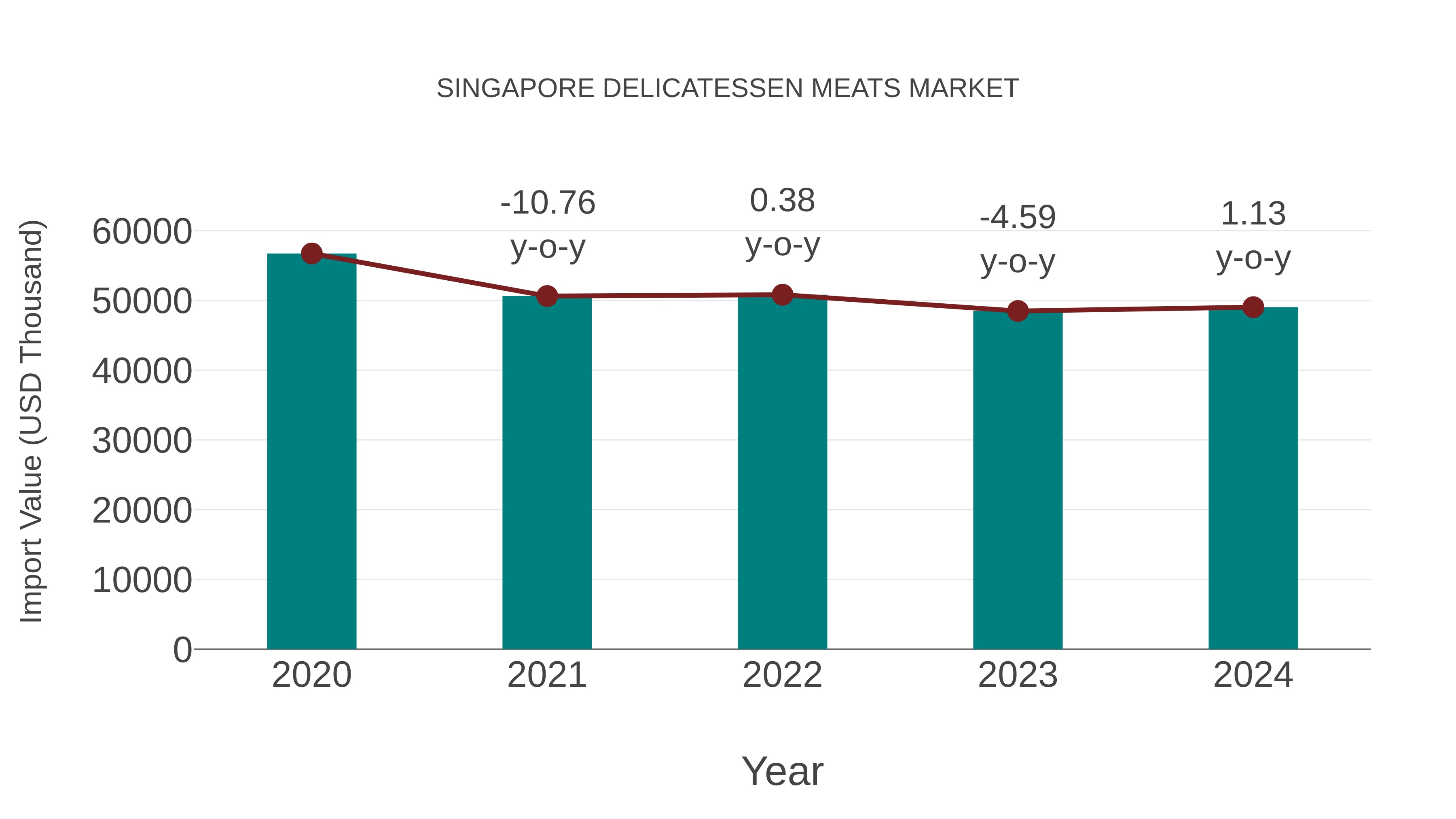
In 2024, Singapore`s import trend for delicatessen meats showed a growth rate of 1.13%, contrasting with a compound annual growth rate (CAGR) of -3.58% from 2020 to 2023. This shift in momentum could be attributed to evolving consumer preferences or changes in trade policies impacting the market`s stability.
Singapore Delicatessen Meats Market Synopsis
The Singapore Delicatessen Meats market is estimated to register a CAGR of 5.8% during the forecast period (2020-2026). The high demand for processed meat products, increasing health consciousness among consumers and rising popularity of halal food are major factors driving the growth of this market in Singapore.
Market Drivers
Growing Popularity Of Halal Food Products ??? A growing number of Muslims living in Singapore, has led to an increased consumption of halal certified delicatessen meat products such as bacon, ham and sausages. This factor is expected to drive the growth of the Singapore Delicatessen Meat Market over the forecast period. Increasing Health Consciousness Among Consumers ??? An increasing focus on healthy eating habits among consumers has resulted in greater demand for low fat/no fat meats and organic/natural processed meats made with no preservatives or chemicals added during the production process. This trend is expected to further accelerate with more health conscious people choosing these types of foods which will drive up sales figures over time. Rising Demand For Processed Meat Products - Processed meat products including bacon, sausage, ham ETC, have become increasingly popular in recent years due to their convenience and ease-of-preparation characteristics coupled with their rich flavor profiles that appeal to many consumers around them world today which leads us into another driver for this segment`s growth.
Market challenges
Price Competition From Imports: There is intense price competition between domestic suppliers and imported goods which can lead to lower profit margins if not managed correctly by manufacturers operating within this space thus curtailing profitability potentials going forward if not addressed promptly.Changing Consumer Preferences : With evolving consumer preferences, manufacturers need ensure they keep up with changing trends so they don???t miss out on key sales opportunities
Key players
Major players operating within Malaysia include Kee Song Group Berhad, Fook Woo Food Industries Sdn Bhd, Sek Yuen Food Products Sdn Bhd.
Covid-19 Impact
Supply Chain Disruptions : Due supply chain disruptions caused during pandemic, production levels have gone down resulting higher prices thereby affecting profitability margins significantly
Key Highlights of the Report:
- Singapore Delicatessen Meats Market Outlook
- Market Size of Singapore Delicatessen Meats Market, 2023
- Forecast of Singapore Delicatessen Meats Market, 2030
- Historical Data and Forecast of Singapore Delicatessen Meats Revenues & Volume for the Period 2020-2030
- Singapore Delicatessen Meats Market Trend Evolution
- Singapore Delicatessen Meats Market Drivers and Challenges
- Singapore Delicatessen Meats Price Trends
- Singapore Delicatessen Meats Porter's Five Forces
- Singapore Delicatessen Meats Industry Life Cycle
- Historical Data and Forecast of Singapore Delicatessen Meats Market Revenues & Volume By Product Type for the Period 2020-2030
- Historical Data and Forecast of Singapore Delicatessen Meats Market Revenues & Volume By Cured deli meat for the Period 2020-2030
- Historical Data and Forecast of Singapore Delicatessen Meats Market Revenues & Volume By Uncured deli meat for the Period 2020-2030
- Historical Data and Forecast of Singapore Delicatessen Meats Market Revenues & Volume By Applications for the Period 2020-2030
- Historical Data and Forecast of Singapore Delicatessen Meats Market Revenues & Volume By Restaurant for the Period 2020-2030
- Historical Data and Forecast of Singapore Delicatessen Meats Market Revenues & Volume By Customer for the Period 2020-2030
- Historical Data and Forecast of Singapore Delicatessen Meats Market Revenues & Volume By Retailer for the Period 2020-2030
- Historical Data and Forecast of Singapore Delicatessen Meats Market Revenues & Volume By Others for the Period 2020-2030
- Singapore Delicatessen Meats Import Export Trade Statistics
- Market Opportunity Assessment By Product Type
- Market Opportunity Assessment By Applications
- Singapore Delicatessen Meats Top Companies Market Share
- Singapore Delicatessen Meats Competitive Benchmarking By Technical and Operational Parameters
- Singapore Delicatessen Meats Company Profiles
- Singapore Delicatessen Meats Key Strategic Recommendations






































