Singapore Digital Signature Market Size & Growth Rate (2026-2032)
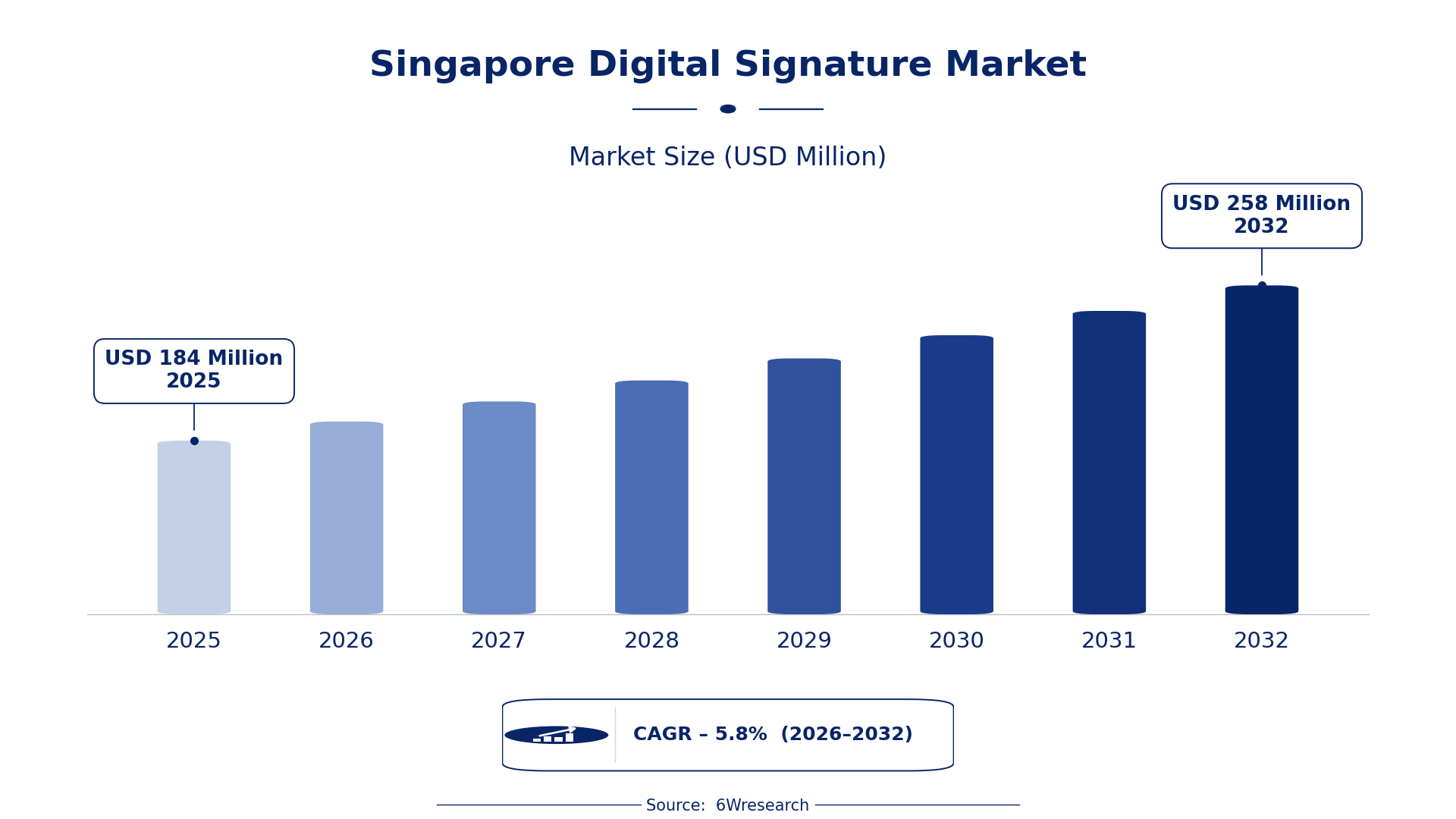
The Singapore Digital Signature Market was estimated at USD 184 Million in 2025 and is projected to reach USD 258 Million by 2032, growing at a CAGR of 5.8% from 2026 to 2032.
Singapore Digital Signature Market Synopsis
The demand for secure and legally binding methods of signing documents is rapidly rising in Singapore. Businesses are increasingly adopting digital signature solutions to facilitate transactions while ensuring compliance with regulatory frameworks.
As the push for digitalization intensifies, sectors like finance and healthcare are adopting these technologies to streamline operations. The rising volume of online transactions creates a fertile ground for digital signatures, making them indispensable for modern businesses.
Singapore Digital Signature Market Year-wise Growth Rate and Key Drivers
This graph illustrates the annual growth rates of the Singapore Digital Signature Market from 2021 to 2032, highlighting a steady upward trajectory and projected expansion over the forecast period.
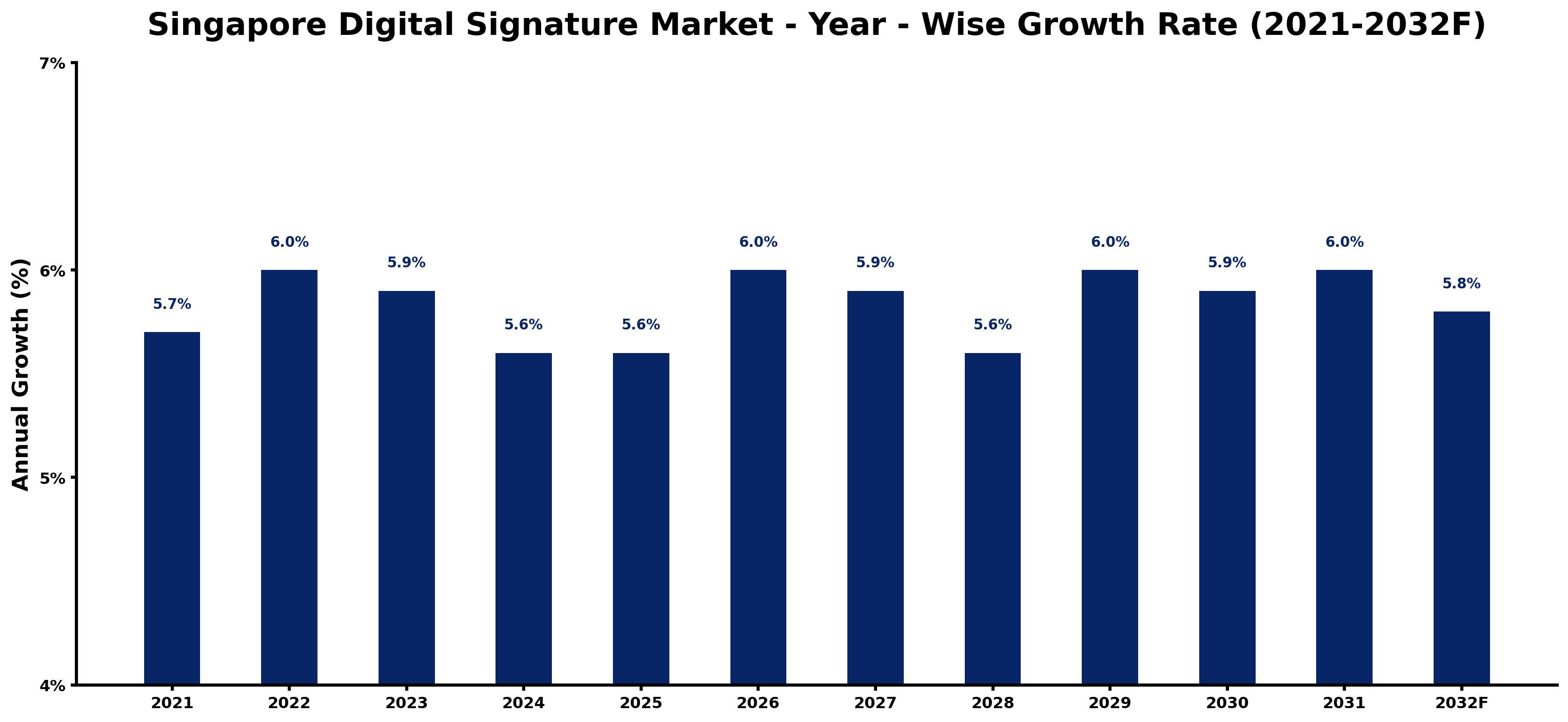
The table below presents the year‑wise growth rates along with the key drivers influencing the market
| Year | Growth Rate | Major Drivers |
| 2021 | 5.7% | Implementation of SESAs enhances digital transaction security. |
| 2022 | 6.0% | Increased adoption of e-government services fuels demand. |
| 2023 | 5.9% | Establishment of new cybersecurity regulations boosts digital signatures. |
| 2024 | 5.6% | Growing fintech startups require reliable digital signature solutions. |
| 2025 | 5.6% | Rising remote work culture drives need for digital identity verification. |
| 2026 | 6.0% | Government initiatives promote digital business transformation strategies. |
| 2027 | 5.9% | Legal recognition of digital signatures strengthens user confidence. |
| 2028 | 5.6% | Digital banking expansion necessitates secure transaction processes. |
| 2029 | 6.0% | Enhanced mobile app security encourages broader digital signature use. |
| 2030 | 5.9% | Proliferation of e-commerce accelerates digital authentication needs. |
| 2031 | 6.0% | Cloud-based solutions streamline integration of digital signatures. |
| 2032 | 5.8% | Public sector digitalization projects demand efficient signing solutions. |
Note: Market size estimations and growth projections presented in this report are based on 6Wresearch's proprietary forecasting methodology, utilizing the latest available industry data, government publications, and primary research inputs.
Singapore Digital Signature Market Key Takeaways
Below are some of the specific key takeaways from the market, including:
- The market is experiencing substantial growth due to increasing online transactions.
- Government support is crucial for fostering a secure digital signing environment.
- Challenges related to regulatory compliance and international standards persist.
- The impact of COVID-19 accelerated the shift towards digital signature solutions.
- Enhanced security measures are a top priority for service providers in the market.
Evaluation of Restraints in Singapore Digital Signature Market
While the Singapore Digital Signature market is on an upward trajectory, regulatory compliance remains a significant hurdle. Companies must ensure that their digital signature solutions meet various legal and technical standards, which can be complex and costly. Additionally, issues surrounding interoperability can lead to hesitancy among businesses looking to adopt digital signatures. Concerns about the potential for fraud also weigh heavily on decision-makers, as ensuring the authenticity of signatories is paramount to gaining trust in these digital tools.
Singapore Digital Signature Market Trends
Current trends indicate a growing preference for cloud-based digital signature solutions, driven by their scalability and flexibility. Organizations are increasingly looking for features such as mobile signing, which allows users to authenticate documents remotely. This is particularly relevant in a post-pandemic world where remote work is common.
Additionally, integration with existing enterprise systems is becoming more critical. Businesses are seeking solutions that can seamlessly integrate with their current workflows, enhancing efficiency and minimizing disruptions. The rise in cybersecurity threats is also prompting companies to invest in more secure digital signature solutions.
Singapore Digital Signature Market Opportunities
The Singapore Digital Signature market is ripe with growth opportunities, particularly in the SMB segment, where many companies have yet to adopt digital signing technology. Education and awareness initiatives can help drive this adoption. Furthermore, international expansion represents a significant opportunity, as Singaporean companies seek to engage with global markets. This will require solutions that meet varying regulatory requirements across countries.
Emerging sectors such as e-commerce and telehealth are also set to fuel demand, as these industries increasingly rely on fast and secure document verification processes. Investments in AI-driven authentication technologies will likely enhance the market, offering new solutions for fraud prevention and identity verification.
Government Initiatives in the Singapore Digital Signature Market
The Singapore government plays an integral role in shaping the digital signature market through various regulatory measures and support initiatives. The focus is on creating a secure framework for digital transactions, which directly impacts how businesses adopt these technologies. With the increasing emphasis on a digital economy, government initiatives are designed to boost public and private sector collaboration.
- A national digital infrastructure upgrade programme launched in 2023 aims to enhance the security of digital transactions.
- Current initiatives include ongoing workshops to educate businesses about legal requirements surrounding digital signatures.
- A regulatory framework was introduced in 2022 that mandates digital signatures for specific sectors like finance and healthcare.
- Planned public-private partnerships expected to increase accessibility to digital signature solutions by 2025.
- The government is currently developing a comprehensive guideline aimed at standardizing digital signature technology across industries.
Future Insights of the Singapore Digital Signature Market
Looking ahead to 2026-2032, the Singapore Digital Signature market is likely to witness accelerated growth as businesses continue to embrace digital transformation. The drive for efficiency and cost reduction will lead to broader adoption across various sectors. Emerging technologies, such as blockchain, may further revolutionize the way digital signatures are verified and managed, enhancing trust in electronic transactions.
As regulatory frameworks mature, we can expect to see an increase in compliance-driven initiatives, encouraging a standardization of practices. In the long term, the integration of AI and machine learning into digital signing processes will likely provide enhanced security and user experience, propelling the market forward.
Singapore Digital Signature Market Latest Developments
Over the last 12-14 months, the Singapore Digital Signature market has seen a surge in activity as organizations scramble to digitize processes in light of changing work environments. Companies are rolling out innovative solutions to address the growing demand for secure document signing.
- A new cloud-based digital signature platform was launched in early 2024, designed specifically for SMEs.
- A major technology vendor is currently rolling out an upgrade to its existing digital signing services, enhancing user authentication features.
- A partnership was formed in Q3 2023 between two leading firms to develop a more secure digital signature protocol.
- An initiative focused on integrating digital signatures into existing government platforms began in mid-2024 and is still ongoing.
- Upcoming in late 2025 is the introduction of a new regulatory guideline to streamline digital signature usage across industries.
Singapore Digital Signature Market - Key Attractiveness of the Report
- 10 Years of Market Numbers
- Historical Data Starting from 2022 to 2025
- Base Year: 2025
- Forecast Data until 2032
- Key Performance Indicators Impacting the Market
- Major Upcoming Developments and Projects
Key Highlights of the Report:
- Singapore Digital Signature Market Outlook
- Market Size of Singapore Digital Signature Market, 2025
- Forecast of Singapore Digital Signature Market, 2032
- Historical Data and Forecast of Singapore Digital Signature Revenues & Volume for the Period 2022-2032F
- Singapore Digital Signature Market Trend Evolution
- Singapore Digital Signature Market Drivers and Challenges
- Singapore Digital Signature Price Trends
- Singapore Digital Signature Porter's Five Forces
- Singapore Digital Signature Industry Life Cycle
- Historical Data and Forecast of Singapore Digital Signature Market Revenues & Volume By Component for the Period 2022-2032F
- Historical Data and Forecast of Singapore Digital Signature Market Revenues & Volume By Solutions for the Period 2022-2032F
- Historical Data and Forecast of Singapore Digital Signature Market Revenues & Volume By Services for the Period 2022-2032F
- Historical Data and Forecast of Singapore Digital Signature Market Revenues & Volume By Solution for the Period 2022-2032F
- Historical Data and Forecast of Singapore Digital Signature Market Revenues & Volume By Software for the Period 2022-2032F
- Historical Data and Forecast of Singapore Digital Signature Market Revenues & Volume By Hardware for the Period 2022-2032F
- Historical Data and Forecast of Singapore Digital Signature Market Revenues & Volume By Vertical for the Period 2022-2032F
- Historical Data and Forecast of Singapore Digital Signature Market Revenues & Volume By BFSI for the Period 2022-2032F
- Historical Data and Forecast of Singapore Digital Signature Market Revenues & Volume By Government for the Period 2022-2032F
- Historical Data and Forecast of Singapore Digital Signature Market Revenues & Volume By Defense for the Period 2022-2032F
- Historical Data and Forecast of Singapore Digital Signature Market Revenues & Volume By Legal for the Period 2022-2032F
- Historical Data and Forecast of Singapore Digital Signature Market Revenues & Volume By Real Estate for the Period 2022-2032F
- Historical Data and Forecast of Singapore Digital Signature Market Revenues & Volume By Organization Size for the Period 2022-2032F
- Historical Data and Forecast of Singapore Digital Signature Market Revenues & Volume By Large Enterprises for the Period 2022-2032F
- Historical Data and Forecast of Singapore Digital Signature Market Revenues & Volume By Small and Medium-Sized Enterprises (SMEs) for the Period 2022-2032F
- Historical Data and Forecast of Singapore Digital Signature Market Revenues & Volume By Deployment Mode for the Period 2022-2032F
- Historical Data and Forecast of Singapore Digital Signature Market Revenues & Volume By Cloud for the Period 2022-2032F
- Historical Data and Forecast of Singapore Digital Signature Market Revenues & Volume By On-Premises for the Period 2022-2032F
- Singapore Digital Signature Import Export Trade Statistics
- Market Opportunity Assessment By Component
- Market Opportunity Assessment By Solution
- Market Opportunity Assessment By Vertical
- Market Opportunity Assessment By Organization Size
- Market Opportunity Assessment By Deployment Mode
- Singapore Digital Signature Top Companies Market Share
- Singapore Digital Signature Competitive Benchmarking By Technical and Operational Parameters
- Singapore Digital Signature Company Profiles
- Singapore Digital Signature Key Strategic Recommendations






































