Singapore Double Glazing Glass Market: Import Trend Analysis
In 2024, Singapore`s import trend for the double glazing glass market showed a notable growth rate of 12.5% compared to the previous year. The compound annual growth rate (CAGR) for the period of 2020-2024 stood at 1.75%. This increase in import momentum can be attributed to a shifting demand towards energy-efficient construction materials in response to sustainability regulations and heightened environmental awareness.
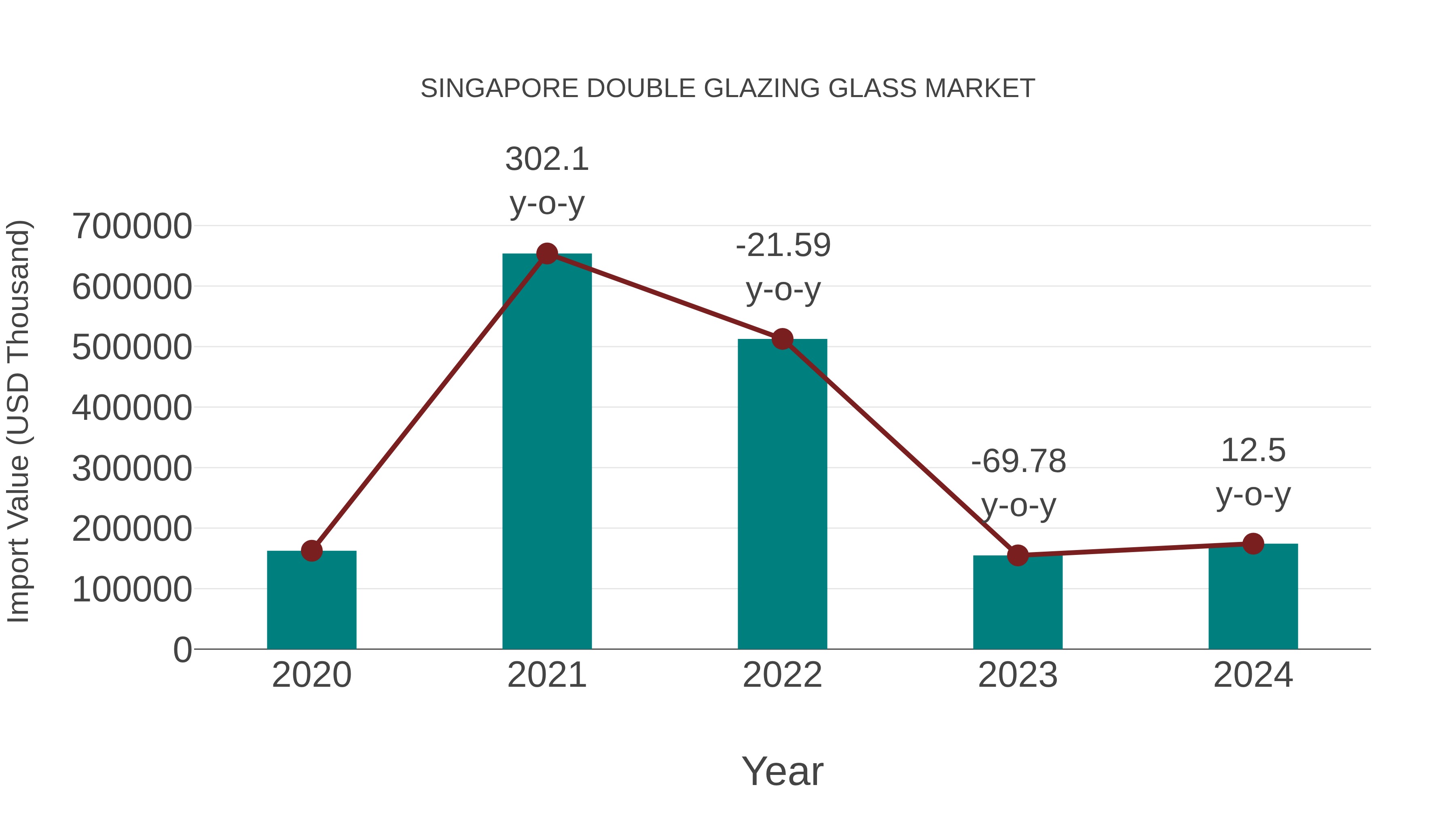
Singapore Double Glazing Glass Market Synopsis
The double glazing glass market in Singapore is poised for steady growth due to its energy-efficient and noise-reduction properties. Double glazing glass is extensively used in buildings to enhance thermal insulation and reduce external noise, contributing to a comfortable living and working environment. The market growth is driven by government initiatives to promote sustainable construction practices and reduce energy consumption. As environmental awareness increases and energy efficiency becomes a priority, the demand for double glazing glass is likely to remain strong in both residential and commercial sectors.
Drivers of the Market
The Singapore smart mirror market is experiencing robust growth due to several key drivers. Firstly, the increasing trend towards smart homes and connected devices is driving the demand for innovative and multifunctional mirrors. These smart mirrors can display information, provide weather updates, and even offer fitness tracking features. Secondly, the growing concern for personal grooming and appearance is pushing consumers to invest in smart mirrors with built-in lighting and magnification features. Additionally, the hospitality and retail sectors are adopting smart mirrors for interactive customer experiences, further boosting the market. Finally, government initiatives promoting technological innovation and sustainability are creating a favorable environment for the smart mirror industry to thrive.
Challenges of the Market
In the Singapore double glazing glass market, one of the key challenges is the high cost associated with the production and installation of double glazing glass. This can deter some consumers and builders from adopting this energy-efficient solution. Additionally, maintaining the insulation properties of double glazing glass over time is crucial, and any failure in the sealant or glass can result in reduced performance. Companies in this market need to address these cost and durability concerns while educating consumers about the long-term benefits of double glazing.
COVID-19 Impact on the Market
The double glazing glass market faced challenges due to construction slowdowns and reduced consumer spending. However, the market`s resilience lies in its energy efficiency benefits, which remained attractive to environmentally conscious consumers and businesses. As the economy recovers, the market is expected to regain momentum.
Key Players in the Market
The Singapore double glazing glass market is led by companies such as Pilkington Group Limited, Saint-Gobain, and Guardian Industries. These firms specialize in advanced glass technologies for energy efficiency and sound insulation.
Key Highlights of the Report:
- Singapore Double Glazing Glass Market Outlook
- Market Size of Singapore Double Glazing Glass Market, 2025
- Forecast of Singapore Double Glazing Glass Market, 2032
- Historical Data and Forecast of Singapore Double Glazing Glass Revenues & Volume for the Period 2022-2032F
- Singapore Double Glazing Glass Market Trend Evolution
- Singapore Double Glazing Glass Market Drivers and Challenges
- Singapore Double Glazing Glass Price Trends
- Singapore Double Glazing Glass Porter's Five Forces
- Singapore Double Glazing Glass Industry Life Cycle
- Historical Data and Forecast of Singapore Double Glazing Glass Market Revenues & Volume By Material for the Period 2022-2032F
- Historical Data and Forecast of Singapore Double Glazing Glass Market Revenues & Volume By Glass for the Period 2022-2032F
- Historical Data and Forecast of Singapore Double Glazing Glass Market Revenues & Volume By Frame and Spacer for the Period 2022-2032F
- Historical Data and Forecast of Singapore Double Glazing Glass Market Revenues & Volume By Sealant for the Period 2022-2032F
- Historical Data and Forecast of Singapore Double Glazing Glass Market Revenues & Volume By Others for the Period 2022-2032F
- Historical Data and Forecast of Singapore Double Glazing Glass Market Revenues & Volume By Thickness for the Period 2022-2032F
- Historical Data and Forecast of Singapore Double Glazing Glass Market Revenues & Volume By Less than 10mm for the Period 2022-2032F
- Historical Data and Forecast of Singapore Double Glazing Glass Market Revenues & Volume By 10mm to 12mm for the Period 2022-2032F
- Historical Data and Forecast of Singapore Double Glazing Glass Market Revenues & Volume By More than 12mm for the Period 2022-2032F
- Historical Data and Forecast of Singapore Double Glazing Glass Market Revenues & Volume By Application for the Period 2022-2032F
- Historical Data and Forecast of Singapore Double Glazing Glass Market Revenues & Volume By Window and Door for the Period 2022-2032F
- Historical Data and Forecast of Singapore Double Glazing Glass Market Revenues & Volume By Faade for the Period 2022-2032F
- Historical Data and Forecast of Singapore Double Glazing Glass Market Revenues & Volume By Applications for the Period 2022-2032F
- Singapore Double Glazing Glass Import Export Trade Statistics
- Market Opportunity Assessment By Material
- Market Opportunity Assessment By Thickness
- Market Opportunity Assessment By Application
- Singapore Double Glazing Glass Top Companies Market Share
- Singapore Double Glazing Glass Competitive Benchmarking By Technical and Operational Parameters
- Singapore Double Glazing Glass Company Profiles
- Singapore Double Glazing Glass Key Strategic Recommendations






































