Singapore Dynamic Application Security Testing Market Size & Growth Rate (2026-2032)
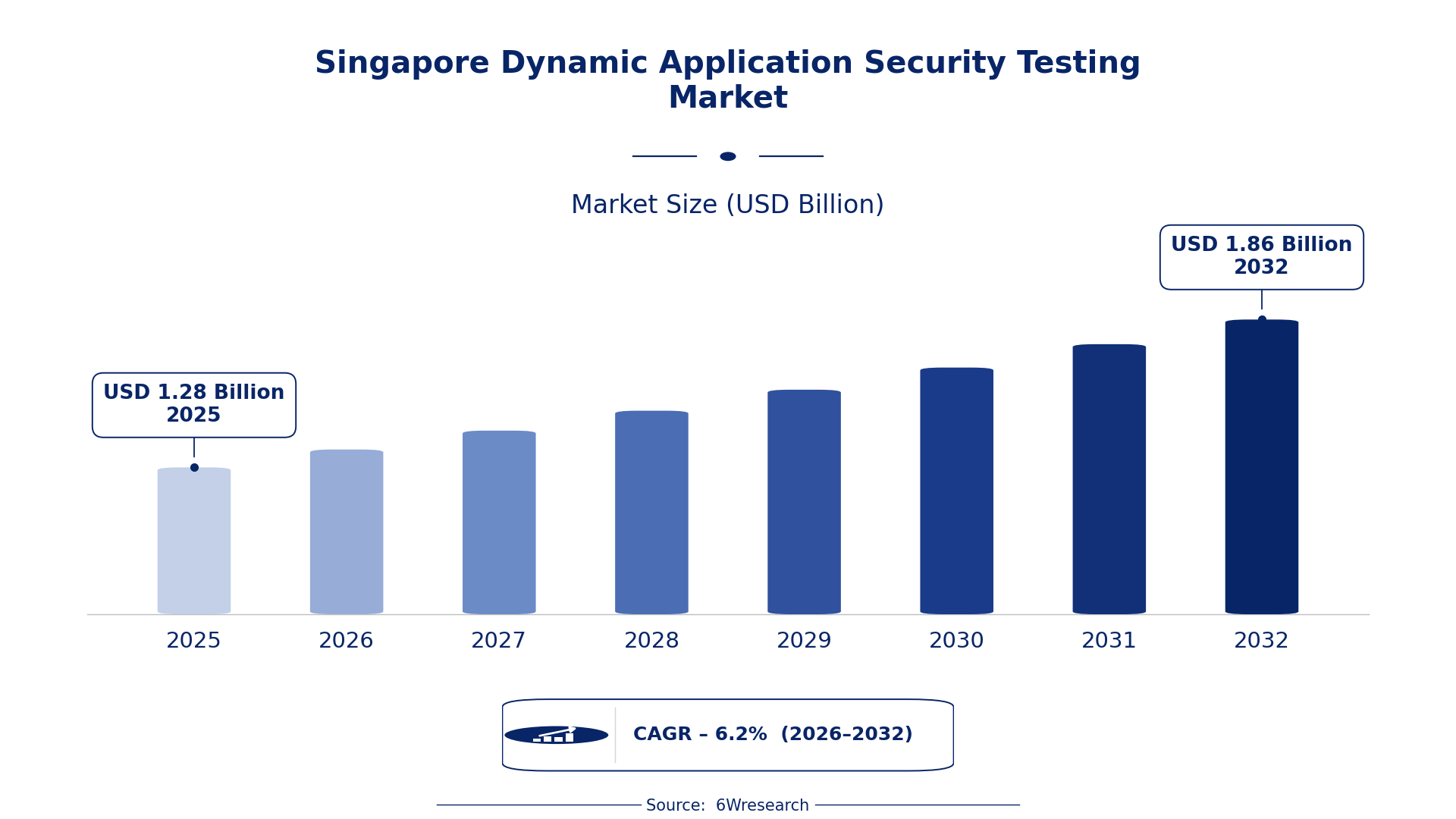
The Singapore Dynamic Application Security Testing Market was estimated at USD 1278 Million in 2025 and is projected to reach USD 1857 Million by 2032, growing at a CAGR of 6.2% from 2026 to 2032.
Singapore Dynamic Application Security Testing Market Synopsis
The rapid expansion of web and mobile applications is the most pressing force shaping the Singapore Dynamic Application Security Testing market today. Organizations are racing to deploy applications faster than ever, creating a fertile ground for security vulnerabilities that can be exploited by cybercriminals.
This high-stakes environment demands agile and effective security measures, making Dynamic Application Security Testing an essential component of any organization’s cybersecurity strategy. As businesses grapple with the dual pressures of rapid development and increasing cyber threats, the need for robust real-time testing solutions cannot be overstated.
Singapore Dynamic Application Security Testing Market Year-wise Growth Rate and Key Drivers
This graph illustrates the annual growth rates of the Singapore Dynamic Application Security Testing Market from 2021 to 2032, highlighting a steady upward trajectory and projected expansion over the forecast period.
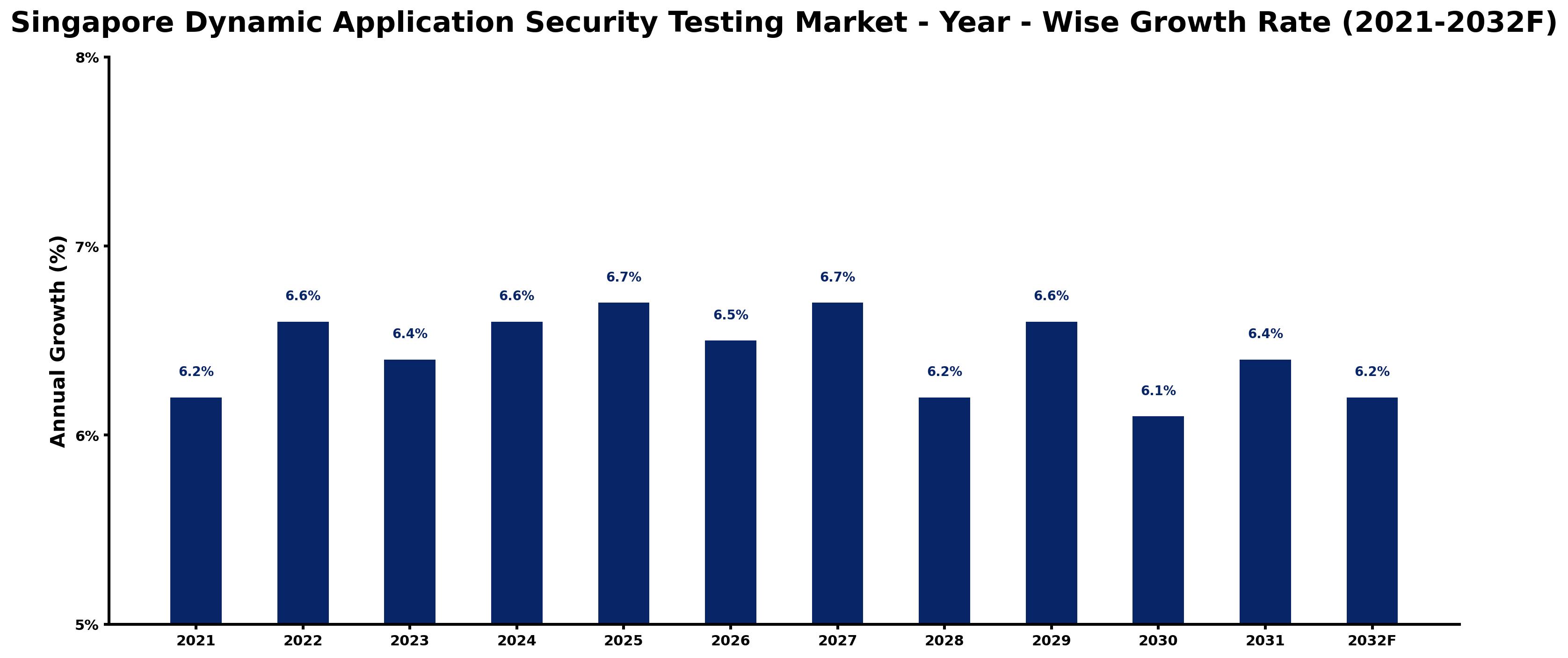
The table below presents the year‑wise growth rates along with the key drivers influencing the market
| Year | Growth Rate | Major Drivers |
| 2021 | 6.2% | Cybersecurity Agency of Singapore's enhanced application security mandates. |
| 2022 | 6.6% | Rise in fintech startups demanding rigorous application security checks. |
| 2023 | 6.4% | Government support for secure digital transformation initiatives. |
| 2024 | 6.6% | Growth in remote work policies increasing app security investments. |
| 2025 | 6.7% | Emergence of AI-driven security solutions tailored for local firms. |
| 2026 | 6.5% | Increased regulations on data protection and application security. |
| 2027 | 6.7% | Local enterprises prioritizing secure software development lifecycle practices. |
| 2028 | 6.2% | Demand for compliance with Singapore’s Personal Data Protection Act. |
| 2029 | 6.6% | Improved collaboration between tech firms and regulatory bodies. |
| 2030 | 6.1% | Adoption of zero trust models in local organizations. |
| 2031 | 6.4% | Rising e-commerce activities necessitating secure application frameworks. |
| 2032 | 6.2% | Increase in cyber threats fueling security testing investments. |
Note: Market size estimations and growth projections presented in this report are based on 6Wresearch's proprietary forecasting methodology, utilizing the latest available industry data, government publications, and primary research inputs.
Singapore Dynamic Application Security Testing Market Key Takeaways
Below are some of the specific key takeaways from the market, including:
- The increasing reliance on digital platforms accelerates demand for effective security solutions.
- Real-time vulnerability identification is critical for maintaining user trust and data security.
- Integration of security testing in CI/CD pipelines remains a complex challenge.
- Adoption of cloud-based DAST solutions is on the rise, driven by remote work trends.
- Investment in DAST tools surged in response to the heightened threat landscape post-pandemic.
Evaluation of Restraints in Singapore Dynamic Application Security Testing Market
Despite its growth trajectory, the Singapore Dynamic Application Security Testing market faces notable constraints. One of the primary hurdles is the need for seamless integration into existing development workflows. As organizations embrace agile methodologies, implementing DAST without hindering the development cycle remains a significant challenge.
Additionally, the tendency of DAST tools to generate a high volume of false positives can strain resources, requiring dedicated teams to sift through and validate findings. This not only leads to inefficiencies but can also cause frustration among developers, complicating security efforts further.
Singapore Dynamic Application Security Testing Market Trends
A few key trends are emerging in the Singapore Dynamic Application Security Testing market. Firstly, there is a noticeable shift towards automation in security testing processes. Organizations are increasingly looking for solutions that can not only identify vulnerabilities but also provide automated remediation suggestions.
on top of that, the adoption of DevSecOps practices is gaining momentum, which emphasizes embedding security into every stage of the software development lifecycle. This trend is likely to reshape how organizations approach application security in the coming years.
Singapore Dynamic Application Security Testing Market Opportunities
The Singapore Dynamic Application Security Testing market presents several avenues for growth. With increasing digital transformation initiatives, organizations are recognizing the necessity for stringent application security measures. This awareness opens doors for investments in innovative DAST solutions that can address the unique security challenges faced by various industries.
Additionally, as regulations surrounding data protection tighten, there is a growing demand for compliance-driven testing solutions. Companies can capitalize on this trend by offering tailored DAST services that cater to specific regulatory requirements, thereby enhancing their market position.
Government Initiatives in the Singapore Dynamic Application Security Testing Market
The Singaporean government is actively shaping the Dynamic Application Security Testing market through a range of initiatives aimed at improving cybersecurity resilience. Regulatory bodies have prioritized strengthening application security, fostering a culture of awareness and compliance across industries. These efforts reflect a broader commitment to safeguarding sensitive data and enhancing national security.
- A cybersecurity strategy launched in early 2025 emphasizes the necessity for enhanced application security measures across all sectors.
- Currently ongoing is a national training program aimed at equipping cybersecurity professionals with skills in dynamic application testing.
- In late 2025, the government is expected to introduce guidelines mandating security assessments for all public-facing applications.
- A public-private partnership is currently underway to develop a security testing framework tailored for local businesses.
- A planned initiative will focus on providing financial incentives for small and medium enterprises to invest in DAST solutions by 2026.
Future Insights of the Singapore Dynamic Application Security Testing Market
Looking towards 2026-2032, the Singapore Dynamic Application Security Testing market is set for significant evolution. As cyber threats continue to grow in sophistication, organizations will increasingly prioritize security at every stage of the application development lifecycle. This shift will likely spur demand for more integrated, automated testing solutions that not only identify vulnerabilities but also help streamline compliance with regulatory standards.
The future will also see a rise in collaborative security models, where vendors, organizations, and governmental bodies work in unison to fortify defenses. As businesses become more attuned to the importance of application security, investments in advanced testing solutions will accelerate, propelling the market forward.
Singapore Dynamic Application Security Testing Market Latest Developments
Recent months have seen a surge in activities within the Singapore Dynamic Application Security Testing market, as organizations adapt to an evolving threat landscape. Companies are investing heavily in updating their security infrastructures, resulting in a series of notable developments aimed at enhancing application protection.
- A major technology vendor launched an advanced DAST solution in early 2025, designed to integrate seamlessly with existing CI/CD workflows.
- In Q3 2025, a collaborative initiative between industry leaders focused on sharing insights and best practices for real-time application security testing became operational.
- A significant upgrade to a widely-used DAST tool was completed in mid-2025, enhancing its capabilities in detecting emerging vulnerabilities.
- Currently ongoing is a campaign by a prominent industry group to raise awareness of application security best practices among SMEs.
- Upcoming in late 2026 is a planned conference aimed at discussing the future of application security and showcasing cutting-edge DAST technologies.
Singapore Dynamic Application Security Testing Market - Key Attractiveness of the Report
- 10 Years of Market Numbers
- Historical Data Starting from 2022 to 2025
- Base Year: 2025
- Forecast Data until 2032
- Key Performance Indicators Impacting the Market
- Major Upcoming Developments and Projects
Key Highlights of the Report:
- Singapore Dynamic Application Security Testing Market Outlook
- Market Size of Singapore Dynamic Application Security Testing Market, 2025
- Forecast of Singapore Dynamic Application Security Testing Market, 2032
- Historical Data and Forecast of Singapore Dynamic Application Security Testing Revenues & Volume for the Period 2022-2032F
- Singapore Dynamic Application Security Testing Market Trend Evolution
- Singapore Dynamic Application Security Testing Market Drivers and Challenges
- Singapore Dynamic Application Security Testing Price Trends
- Singapore Dynamic Application Security Testing Porter's Five Forces
- Singapore Dynamic Application Security Testing Industry Life Cycle
- Historical Data and Forecast of Singapore Dynamic Application Security Testing Market Revenues & Volume By Type for the Period 2022-2032F
- Historical Data and Forecast of Singapore Dynamic Application Security Testing Market Revenues & Volume By Solution for the Period 2022-2032F
- Historical Data and Forecast of Singapore Dynamic Application Security Testing Market Revenues & Volume By Services for the Period 2022-2032F
- Historical Data and Forecast of Singapore Dynamic Application Security Testing Market Revenues & Volume By Application for the Period 2022-2032F
- Historical Data and Forecast of Singapore Dynamic Application Security Testing Market Revenues & Volume By Web for the Period 2022-2032F
- Historical Data and Forecast of Singapore Dynamic Application Security Testing Market Revenues & Volume By Mobile Security for the Period 2022-2032F
- Historical Data and Forecast of Singapore Dynamic Application Security Testing Market Revenues & Volume By Deployment Mode for the Period 2022-2032F
- Historical Data and Forecast of Singapore Dynamic Application Security Testing Market Revenues & Volume By On-Premises for the Period 2022-2032F
- Historical Data and Forecast of Singapore Dynamic Application Security Testing Market Revenues & Volume By Cloud for the Period 2022-2032F
- Historical Data and Forecast of Singapore Dynamic Application Security Testing Market Revenues & Volume By Organization Size for the Period 2022-2032F
- Historical Data and Forecast of Singapore Dynamic Application Security Testing Market Revenues & Volume By SMEs for the Period 2022-2032F
- Historical Data and Forecast of Singapore Dynamic Application Security Testing Market Revenues & Volume By Large Enterprises for the Period 2022-2032F
- Historical Data and Forecast of Singapore Dynamic Application Security Testing Market Revenues & Volume By Vertical for the Period 2022-2032F
- Historical Data and Forecast of Singapore Dynamic Application Security Testing Market Revenues & Volume By Government & Defense for the Period 2022-2032F
- Historical Data and Forecast of Singapore Dynamic Application Security Testing Market Revenues & Volume By BFSI for the Period 2022-2032F
- Historical Data and Forecast of Singapore Dynamic Application Security Testing Market Revenues & Volume By IT & Telecom for the Period 2022-2032F
- Historical Data and Forecast of Singapore Dynamic Application Security Testing Market Revenues & Volume By Healthcare for the Period 2022-2032F
- Historical Data and Forecast of Singapore Dynamic Application Security Testing Market Revenues & Volume By Retail for the Period 2022-2032F
- Historical Data and Forecast of Singapore Dynamic Application Security Testing Market Revenues & Volume By Manufacturing for the Period 2022-2032F
- Historical Data and Forecast of Singapore Dynamic Application Security Testing Market Revenues & Volume By Others for the Period 2022-2032F
- Singapore Dynamic Application Security Testing Import Export Trade Statistics
- Market Opportunity Assessment By Type
- Market Opportunity Assessment By Application
- Market Opportunity Assessment By Deployment Mode
- Market Opportunity Assessment By Organization Size
- Market Opportunity Assessment By Vertical
- Singapore Dynamic Application Security Testing Top Companies Market Share
- Singapore Dynamic Application Security Testing Competitive Benchmarking By Technical and Operational Parameters
- Singapore Dynamic Application Security Testing Company Profiles
- Singapore Dynamic Application Security Testing Key Strategic Recommendations






































