Singapore Eco Fibers Market: Import Trend Analysis
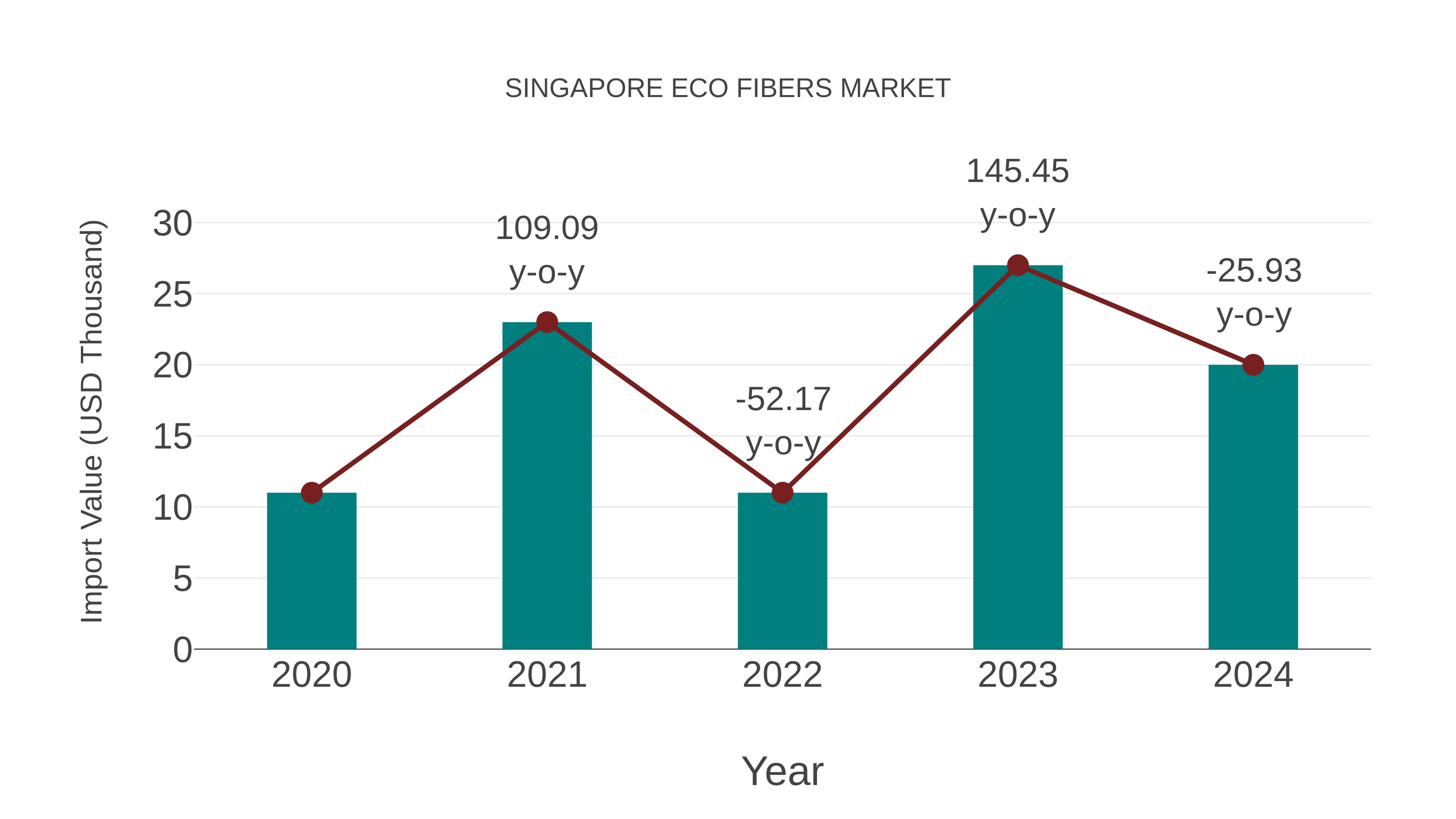
In the Singapore eco fibers market, the import trend experienced a decline from 2023 to 2024, with a growth rate of -25.93%. However, the compound annual growth rate (CAGR) for the period 2020-2024 stood at 16.12%. This shift could be attributed to changing consumer preferences, supply chain disruptions, or evolving trade policies impacting import momentum and market stability.
Singapore Eco Fibers Market Overview
The eco fibers market in Singapore has witnessed a remarkable surge in popularity as environmental consciousness grows. Eco fibers are known for their sustainable and eco-friendly attributes, making them a preferred choice for industries such as textiles and fashion. Singaporean consumers, too, have shown an increasing interest in products made from eco fibers due to their biodegradability and reduced environmental impact. This trend has led to a rise in the production and consumption of eco fibers, encouraging domestic and international companies to invest in this market segment.
Drivers of the Market
The Singapore Eco Fibers market is driven by the growing emphasis on sustainable and environmentally friendly textiles and materials. Eco fibers, including organic cotton, bamboo, and recycled materials, offer a more sustainable alternative to conventional fibers. As consumers and industries increasingly adopt eco-friendly practices, the demand for eco fibers is expected to increase, supporting a greener and more responsible textile industry.
Challenges of the Market
The Singapore Eco Fibers Market encounters challenges related to the need for sustainable and eco-friendly materials. Eco fibers, including natural and recycled fibers, are in demand as consumers prioritize sustainable products. Ensuring a reliable supply of eco fibers while addressing concerns about their environmental footprint is essential. The market must focus on sustainable sourcing, production, and waste reduction to meet the demand for eco-friendly fibers.
Covid-19 impact of the Market
The COVID-19 pandemic led to changes in the Singapore eco fibers market as the importance of sustainability and environmental consciousness grew. Eco fibers are used in textiles, fashion, and various consumer products. The pandemic emphasized the significance of sustainable and eco-friendly materials, leading to an increased focus on recycling and the use of natural and renewable fibers. Industries sought materials that could reduce the environmental footprint and meet consumer preferences for sustainable products. The market saw growing interest in eco fibers that align with environmental and ethical considerations.
Leading Players of the Market
Singapore eco fibers market has seen substantial growth, with key players like Lenzing AG playing a pivotal role. Lenzing is renowned for its sustainable and environmentally friendly fibers. They have made significant strides in the eco fibers industry, promoting sustainability and innovation.
Key Highlights of the Report:
- Singapore Eco Fibers Market Outlook
- Market Size of Singapore Eco Fibers Market, 2025
- Forecast of Singapore Eco Fibers Market, 2032
- Historical Data and Forecast of Singapore Eco Fibers Revenues & Volume for the Period 2022-2032F
- Singapore Eco Fibers Market Trend Evolution
- Singapore Eco Fibers Market Drivers and Challenges
- Singapore Eco Fibers Price Trends
- Singapore Eco Fibers Porter's Five Forces
- Singapore Eco Fibers Industry Life Cycle
- Historical Data and Forecast of Singapore Eco Fibers Market Revenues & Volume By Type for the Period 2022-2032F
- Historical Data and Forecast of Singapore Eco Fibers Market Revenues & Volume By Regenerated fibers for the Period 2022-2032F
- Historical Data and Forecast of Singapore Eco Fibers Market Revenues & Volume By Recycled fibers for the Period 2022-2032F
- Historical Data and Forecast of Singapore Eco Fibers Market Revenues & Volume By Organic fibers for the Period 2022-2032F
- Historical Data and Forecast of Singapore Eco Fibers Market Revenues & Volume By Application for the Period 2022-2032F
- Historical Data and Forecast of Singapore Eco Fibers Market Revenues & Volume By Textile/Clothing for the Period 2022-2032F
- Historical Data and Forecast of Singapore Eco Fibers Market Revenues & Volume By Household Furnishings for the Period 2022-2032F
- Historical Data and Forecast of Singapore Eco Fibers Market Revenues & Volume By Industrial for the Period 2022-2032F
- Historical Data and Forecast of Singapore Eco Fibers Market Revenues & Volume By Medical for the Period 2022-2032F
- Singapore Eco Fibers Import Export Trade Statistics
- Market Opportunity Assessment By Type
- Market Opportunity Assessment By Application
- Singapore Eco Fibers Top Companies Market Share
- Singapore Eco Fibers Competitive Benchmarking By Technical and Operational Parameters
- Singapore Eco Fibers Company Profiles
- Singapore Eco Fibers Key Strategic Recommendations






































