Singapore Electric and Acoustic Guitar Strings Market Size, Share & Growth Rate
The Singapore Electric and Acoustic Guitar Strings Market was estimated at USD 233 Million in 2025 and is projected to reach USD 254 Million by 2032, growing at a CAGR of 1.2% from 2026 to 2032. This steady growth is supported by a vibrant local music scene and the enduring popularity of guitar-driven genres. Additionally, as musicians increasingly seek high-quality, innovative products tailored to their sound preferences, the market is expected to evolve with new offerings, addressing the demands of both amateur and professional players.
Singapore Electric and Acoustic Guitar Strings Market Year-wise Growth Rate and Key Drivers
This graph highlights how the Singapore Electric and Acoustic Guitar Strings Market has steadily grown over the years, supported by major growth factors.
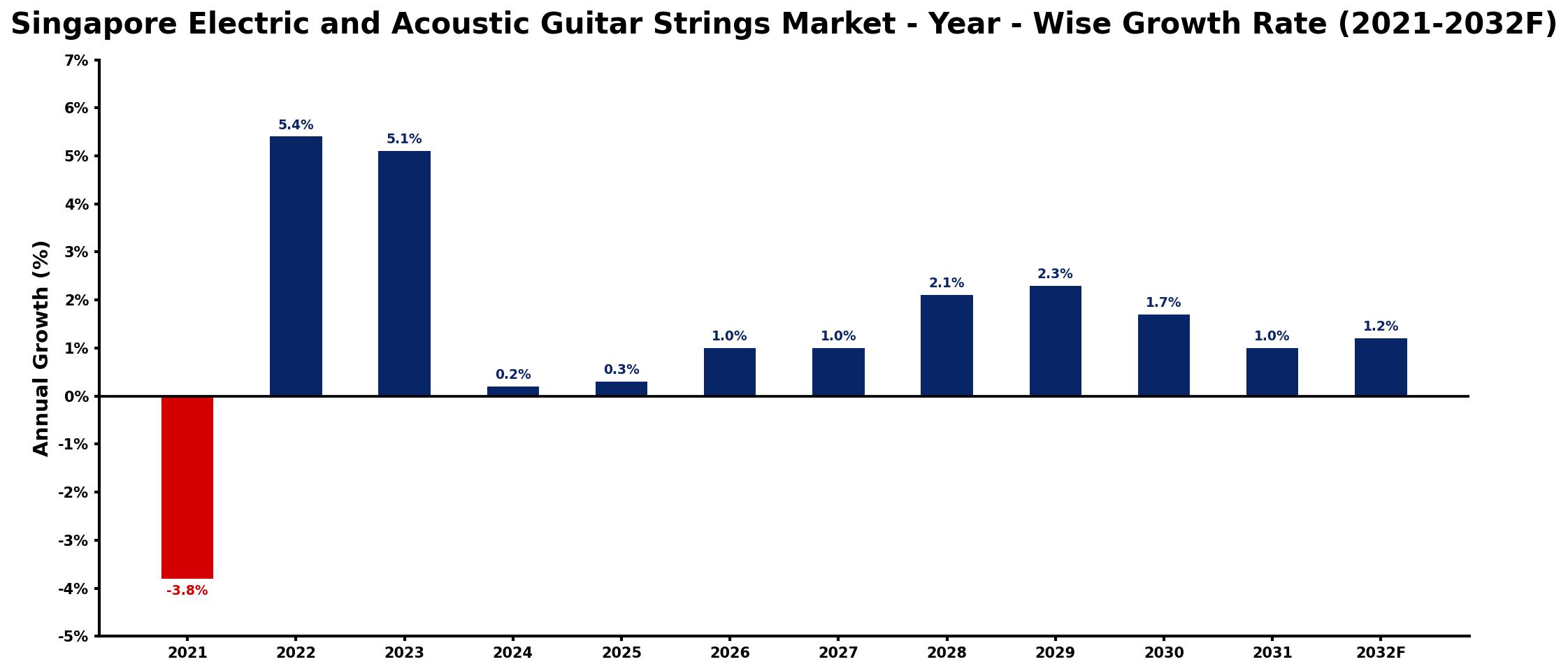
The table below presents the year‑wise growth rates along with the key drivers influencing the market
| Year | Growth Rate | Major Drivers |
| 2021 | -3.8% | decrease in consumer spending habits |
| 2022 | 5.4% | rise in music education programs |
| 2023 | 5.1% | growth in live music events |
| 2024 | 0.2% | increase in home recording studios |
| 2025 | 0.3% | surge in online music sales |
| 2026 | 1.0% | expansion of music streaming services |
| 2027 | 1.0% | expanding industrial usage applications |
| 2028 | 2.1% | increased overall sector activity |
| 2029 | 2.3% | growing commercial sector adoption |
| 2030 | 1.7% | rising demand from electronics |
| 2031 | 1.0% | increased pharmaceutical industry usage |
| 2032 | 1.2% | rising procurement volume requirements |
Note: Market size estimations and growth projections presented in this report are based on 6Wresearch's proprietary forecasting methodology, utilizing the latest available industry data, government publications, and primary research inputs.
Singapore Electric and Acoustic Guitar Strings Market Synopsis
In Singapore, the electric and acoustic guitar strings market is thriving, bolstered by a rich culture of musical appreciation and performance. Musicians of all skill levels contribute to the demand, as local venues and events showcase diverse musical talent, further fueling interest in quality guitar accessories.
Recent trends indicate a shift towards personalized musical experiences, pushing consumers to seek specific string types for optimal sound and playability. Technological advancements in string manufacturing and a growing inclination towards online shopping are also reshaping purchasing behaviors, expanding the market's reach and accessibility.
Singapore Electric and Acoustic Guitar Strings Market Key Takeaways
- Strong local music scene contributes to sustained demand for guitar strings.
- Technological innovations enhance product offerings, meeting diverse musician preferences.
- Shift towards online sales channels presents new opportunities for market penetration.
- Continuous adaptation to evolving music trends is essential for market growth.
- Growing interest among beginners indicates potential for increased market expansion.
Evaluation of Restraints in Singapore Electric and Acoustic Guitar Strings Market
While the Singapore Electric and Acoustic Guitar Strings Market is poised for growth, it faces several restraints that could impact its trajectory. The rapid changes in music trends and consumer preferences necessitate a swift adaptation by brands, particularly as digital music production becomes more prevalent. Furthermore, competition from global manufacturers poses a threat, potentially limiting local brands' market share. Maintaining consistent quality and durability in guitar strings is crucial, as musicians have increasingly high expectations for their equipment.
Singapore Electric and Acoustic Guitar Strings Market Trends
Current trends indicate a rising demand for specialty guitar strings that cater to specific playing styles and genres. As musicians become more discerning about sound quality, manufacturers are innovating with materials and designs to create strings that deliver distinct tones. Additionally, the growing popularity of online music platforms has encouraged more musicians to invest in high-quality instruments and accessories, including premium strings tailored for electric and acoustic guitars.
Singapore Electric and Acoustic Guitar Strings Market Opportunities
There are significant growth and investment opportunities in the Singapore Electric and Acoustic Guitar Strings Market. The surge in beginner musicians driven by online tutorials and social media influencers presents a chance for brands to introduce affordable yet high-quality products. Moreover, collaborations with local artists and music festivals can enhance brand visibility and consumer engagement. Companies that invest in sustainable production methods and eco-friendly materials may also tap into a growing market of environmentally-conscious consumers.
Government Initiatives in the Singapore Electric and Acoustic Guitar Strings Market
The Singapore government has implemented various initiatives aimed at promoting the arts and music education, which indirectly supports the guitar strings market. Programs encouraging musical literacy and public performances enhance community engagement with music. Furthermore, public spending on arts infrastructure provides musicians with platforms to showcase their talents, fostering a vibrant music culture that ultimately drives demand for musical instruments and accessories.
Future Insights of the Singapore Electric and Acoustic Guitar Strings Market
Looking ahead to 2026-2032, the Singapore Electric and Acoustic Guitar Strings Market is expected to evolve with the increasing integration of technology in music. As digital production techniques gain traction, traditional playing methods may shift, prompting brands to innovate and develop strings that accommodate both electric and acoustic applications. Additionally, the market's growth will likely be influenced by enhanced online retail strategies, making it easier for musicians to access a wider variety of products tailored to their needs.
Singapore Electric and Acoustic Guitar Strings Market Latest Developments (2025 - 2026)
Recent developments in the Singapore Electric and Acoustic Guitar Strings Market indicate a robust trend towards e-commerce, with several retailers launching dedicated online platforms to enhance customer experience. Simultaneously, collaborations between music schools and string manufacturers have emerged, promoting hands-on workshops that allow musicians to try out new products before purchase. Innovative marketing strategies, including social media campaigns showcasing artist endorsements, are also gaining traction, driving consumer interest and engagement.
Singapore Electric and Acoustic Guitar Strings Market - Key Attractiveness of the Report
- 10 Years of Market Numbers
- Historical Data Starting from 2022 to 2025
- Base Year: 2025
- Forecast Data until 2032
- Key Performance Indicators Impacting the Market
- Major Upcoming Developments and Projects
Key Highlights of the Report:
- Singapore Electric and Acoustic Guitar Strings Market Outlook
- Market Size of Singapore Electric and Acoustic Guitar Strings Market, 2025
- Forecast of Singapore Electric and Acoustic Guitar Strings Market, 2032
- Historical Data and Forecast of Singapore Electric and Acoustic Guitar Strings Revenues & Volume for the Period 2022-2032F
- Singapore Electric and Acoustic Guitar Strings Market Trend Evolution
- Singapore Electric and Acoustic Guitar Strings Market Drivers and Challenges
- Singapore Electric and Acoustic Guitar Strings Price Trends
- Singapore Electric and Acoustic Guitar Strings Porter's Five Forces
- Singapore Electric and Acoustic Guitar Strings Industry Life Cycle
- Historical Data and Forecast of Singapore Electric and Acoustic Guitar Strings Market Revenues & Volume By Product Type for the Period 2022-2032F
- Historical Data and Forecast of Singapore Electric and Acoustic Guitar Strings Market Revenues & Volume By Light, Custom Light for the Period 2022-2032F
- Historical Data and Forecast of Singapore Electric and Acoustic Guitar Strings Market Revenues & Volume By Extra Light for the Period 2022-2032F
- Historical Data and Forecast of Singapore Electric and Acoustic Guitar Strings Market Revenues & Volume By Application for the Period 2022-2032F
- Historical Data and Forecast of Singapore Electric and Acoustic Guitar Strings Market Revenues & Volume By Acoustic Guitar for the Period 2022-2032F
- Historical Data and Forecast of Singapore Electric and Acoustic Guitar Strings Market Revenues & Volume By Electric Guitar for the Period 2022-2032F
- Singapore Electric and Acoustic Guitar Strings Import Export Trade Statistics
- Market Opportunity Assessment By Product Type
- Market Opportunity Assessment By Application
- Singapore Electric and Acoustic Guitar Strings Top Companies Market Share
- Singapore Electric and Acoustic Guitar Strings Competitive Benchmarking By Technical and Operational Parameters
- Singapore Electric and Acoustic Guitar Strings Company Profiles
- Singapore Electric and Acoustic Guitar Strings Key Strategic Recommendations






































