Singapore Functional Apparel Market Size, Share & Growth Rate
The Singapore Functional Apparel Market was estimated at USD 965 Million in 2025 and is projected to reach USD 1404 Million by 2032, growing at a CAGR of 5.5% from 2026 to 2032. This growth trajectory is driven primarily by the increasing consumer inclination towards health and wellness, propelling demand for high-performance clothing that combines comfort and functionality. Additionally, a strong trend towards athleisure, where consumers seek stylish yet practical options, continues to bolster market dynamics.
Singapore Functional Apparel Market Year-wise Growth Rate and Key Drivers
This graph highlights how the Singapore Functional Apparel Market has steadily grown over the years, supported by major growth factors.
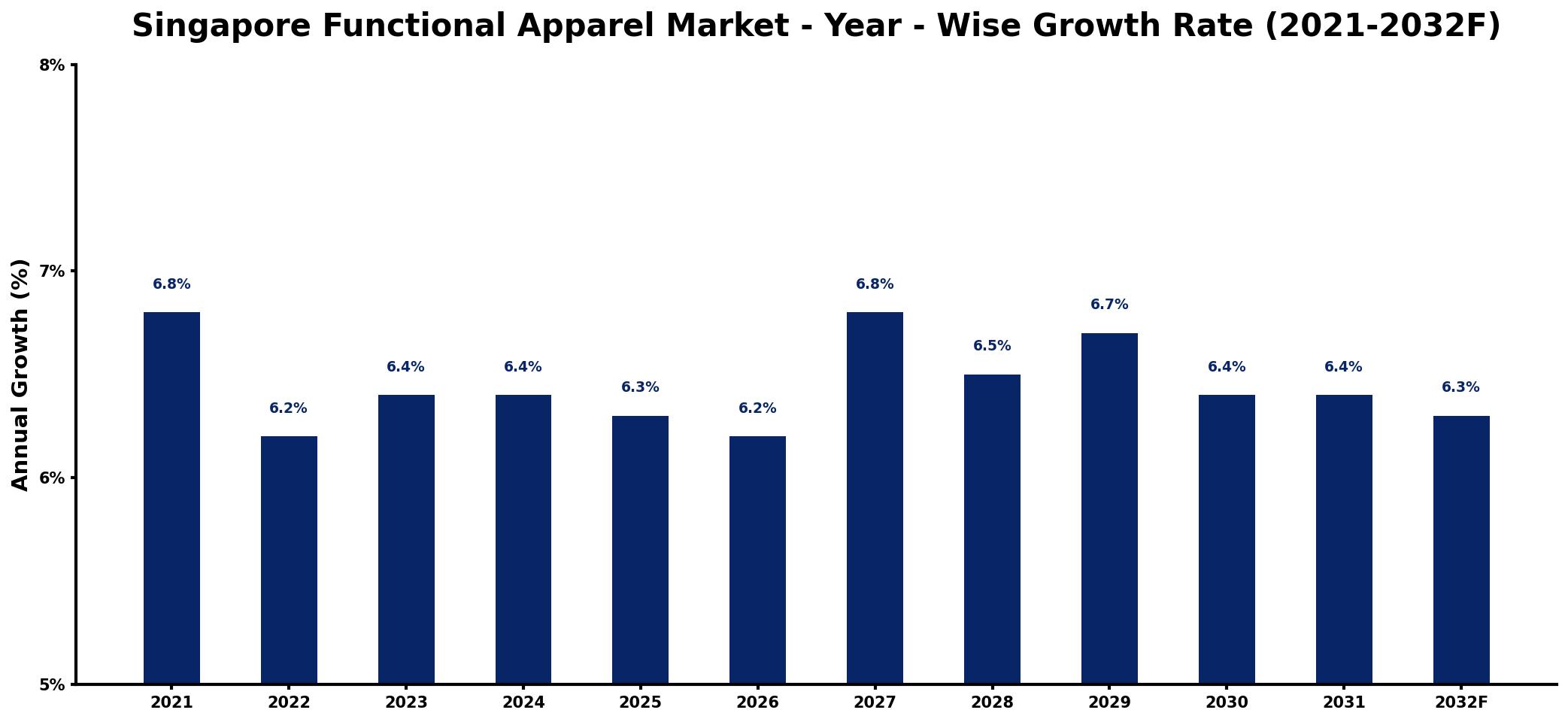
The table below presents the year‑wise growth rates along with the key drivers influencing the market
| Year | Growth Rate | Major Drivers |
| 2021 | 6.8% | Rising fitness awareness among consumers |
| 2022 | 6.2% | Increased online shopping adoption rates |
| 2023 | 6.4% | Growing interest in athleisure trends |
| 2024 | 6.4% | increased domestic production output |
| 2025 | 6.3% | Emerging technologies enhancing performance |
| 2026 | 6.2% | Investment in sustainable production methods |
| 2027 | 6.8% | Diverse collaborations with lifestyle brands |
| 2028 | 6.5% | Enhanced customization options for consumers |
| 2029 | 6.7% | Increase in outdoor recreational activities |
| 2030 | 6.4% | Focus on mental health initiatives |
| 2031 | 6.4% | Strengthened community fitness programs |
| 2032 | 6.3% | Growth in eco-conscious consumer preferences |
Note: Market size estimations and growth projections presented in this report are based on 6Wresearch's proprietary forecasting methodology, utilizing the latest available industry data, government publications, and primary research inputs.
Singapore Functional Apparel Market Synopsis
In Singapore, the functional apparel market has experienced a significant shift, with consumers actively embracing garments that enhance their lifestyle. The rising popularity of active and outdoor pursuits is reshaping preferences, making performance-driven clothing essential for both fitness and leisure.
This market segment, which includes activewear and athleisure, reflects a blend of style and performance, catering to a diverse consumer base. As awareness of the benefits of functional fabrics grows, including moisture-wicking and UV protection, manufacturers are challenged to innovate while keeping sustainability at the forefront of their practices.
Singapore Functional Apparel Market Key Takeaways
- The Singapore Functional Apparel Market is growing steadily, driven by increased consumer health consciousness.
- Innovative technologies in fabric development are enhancing product performance, meeting evolving consumer expectations.
- There is a notable shift towards athleisure, blending comfort and style for everyday wear.
- Competition is intense, with established brands and new entrants both vying for market share.
- Government initiatives are increasingly supporting sustainable practices in the fashion industry.
Evaluation of Restraints in Singapore Functional Apparel Market
Despite its promising growth, the Singapore Functional Apparel Market faces several restraints that could hinder progress. A key barrier is the need for consumer education about the functional benefits of specialized clothing, which remains a challenge for brands aiming to penetrate the market further. Additionally, the fast-paced nature of fashion trends can lead to rapid shifts in consumer preferences, complicating the innovation landscape. Manufacturers must find a balance between functionality, sustainability, and fashion to resonate with environmentally conscious shoppers while maintaining competitive pricing.
Singapore Functional Apparel Market Trends
Several current trends are influencing the Singapore Functional Apparel Market. The rise of digital fitness and online wellness communities is promoting demand for performance-oriented clothing that supports home workouts and outdoor activities. Additionally, increased focus on eco-friendly materials and ethical production processes aligns with consumer values, prompting brands to adopt sustainable practices. The blurring lines between traditional sportswear and casual wear are also driving growth in athleisure, reflecting a lifestyle-focused approach to apparel.
Singapore Functional Apparel Market Opportunities
Opportunities for growth in the Singapore Functional Apparel Market lie in the innovation of high-performance materials and sustainable manufacturing practices. As consumers continue to seek versatility in their wardrobes, investments in research and development can lead to groundbreaking fabrics that provide enhanced durability and functionality. Additionally, tapping into the growing e-commerce landscape presents brands with the chance to reach a wider audience, especially younger consumers who prefer shopping online.
Government Initiatives in the Singapore Functional Apparel Market
The Singapore government is actively promoting sustainability in the apparel industry through various policies and initiatives. Programs aimed at supporting green technology and sustainable manufacturing practices are gaining traction, encouraging companies to adopt environmentally friendly methods. There are also incentives for businesses that invest in innovation and technology, which align with the growing consumer demand for functional and sustainable apparel.
Future Insights of the Singapore Functional Apparel Market
Looking ahead to 2026-2032, the Singapore Functional Apparel Market is set to evolve as consumer preferences become more defined. The integration of advanced textiles that offer enhanced performance features, coupled with the increasing popularity of outdoor activities and fitness regimes, is likely to shape market growth. Moreover, the emphasis on sustainability will compel brands to innovate responsibly, ensuring that the functional apparel meets not just consumer needs but also environmental standards. This forward-looking approach will be pivotal for companies aiming to thrive in a competitive landscape.
Singapore Functional Apparel Market Latest Developments (2025 - 2026)
In recent months, the Singapore Functional Apparel Market has seen a surge in collaborative efforts between brands and technology firms to create innovative fabric solutions. Additionally, retailers are increasingly adopting omnichannel strategies, enhancing consumer engagement and accessibility. The focus on sustainable practices continues to gain momentum, with more brands committing to eco-friendly production methods, reflecting the evolving consumer demand for responsible fashion.
Singapore Functional Apparel Market - Key Attractiveness of the Report
- 10 Years of Market Numbers
- Historical Data Starting from 2022 to 2025
- Base Year: 2025
- Forecast Data until 2032
- Key Performance Indicators Impacting the Market
- Major Upcoming Developments and Projects
Key Highlights of the Report:
- Singapore Functional Apparel Market Outlook
- Market Size of Singapore Functional Apparel Market, 2025
- Forecast of Singapore Functional Apparel Market, 2032
- Historical Data and Forecast of Singapore Functional Apparel Revenues & Volume for the Period 2022-2032F
- Singapore Functional Apparel Market Trend Evolution
- Singapore Functional Apparel Market Drivers and Challenges
- Singapore Functional Apparel Price Trends
- Singapore Functional Apparel Porter's Five Forces
- Singapore Functional Apparel Industry Life Cycle
- Historical Data and Forecast of Singapore Functional Apparel Market Revenues & Volume By Product Type for the Period 2022-2032F
- Historical Data and Forecast of Singapore Functional Apparel Market Revenues & Volume By Sportswear for the Period 2022-2032F
- Historical Data and Forecast of Singapore Functional Apparel Market Revenues & Volume By Activewear for the Period 2022-2032F
- Historical Data and Forecast of Singapore Functional Apparel Market Revenues & Volume By Protective Clothing for the Period 2022-2032F
- Historical Data and Forecast of Singapore Functional Apparel Market Revenues & Volume By Others for the Period 2022-2032F
- Historical Data and Forecast of Singapore Functional Apparel Market Revenues & Volume By Application for the Period 2022-2032F
- Historical Data and Forecast of Singapore Functional Apparel Market Revenues & Volume By Sports Industry for the Period 2022-2032F
- Historical Data and Forecast of Singapore Functional Apparel Market Revenues & Volume By Outdoor Clothing for the Period 2022-2032F
- Historical Data and Forecast of Singapore Functional Apparel Market Revenues & Volume By Healthcare sector for the Period 2022-2032F
- Historical Data and Forecast of Singapore Functional Apparel Market Revenues & Volume By Distribution Channel for the Period 2022-2032F
- Historical Data and Forecast of Singapore Functional Apparel Market Revenues & Volume By Offline Store for the Period 2022-2032F
- Historical Data and Forecast of Singapore Functional Apparel Market Revenues & Volume By Online Store for the Period 2022-2032F
- Singapore Functional Apparel Import Export Trade Statistics
- Market Opportunity Assessment By Product Type
- Market Opportunity Assessment By Application
- Market Opportunity Assessment By Distribution Channel
- Singapore Functional Apparel Top Companies Market Share
- Singapore Functional Apparel Competitive Benchmarking By Technical and Operational Parameters
- Singapore Functional Apparel Company Profiles
- Singapore Functional Apparel Key Strategic Recommendations






































