Singapore Hospitality Furniture Market: Import Trend Analysis
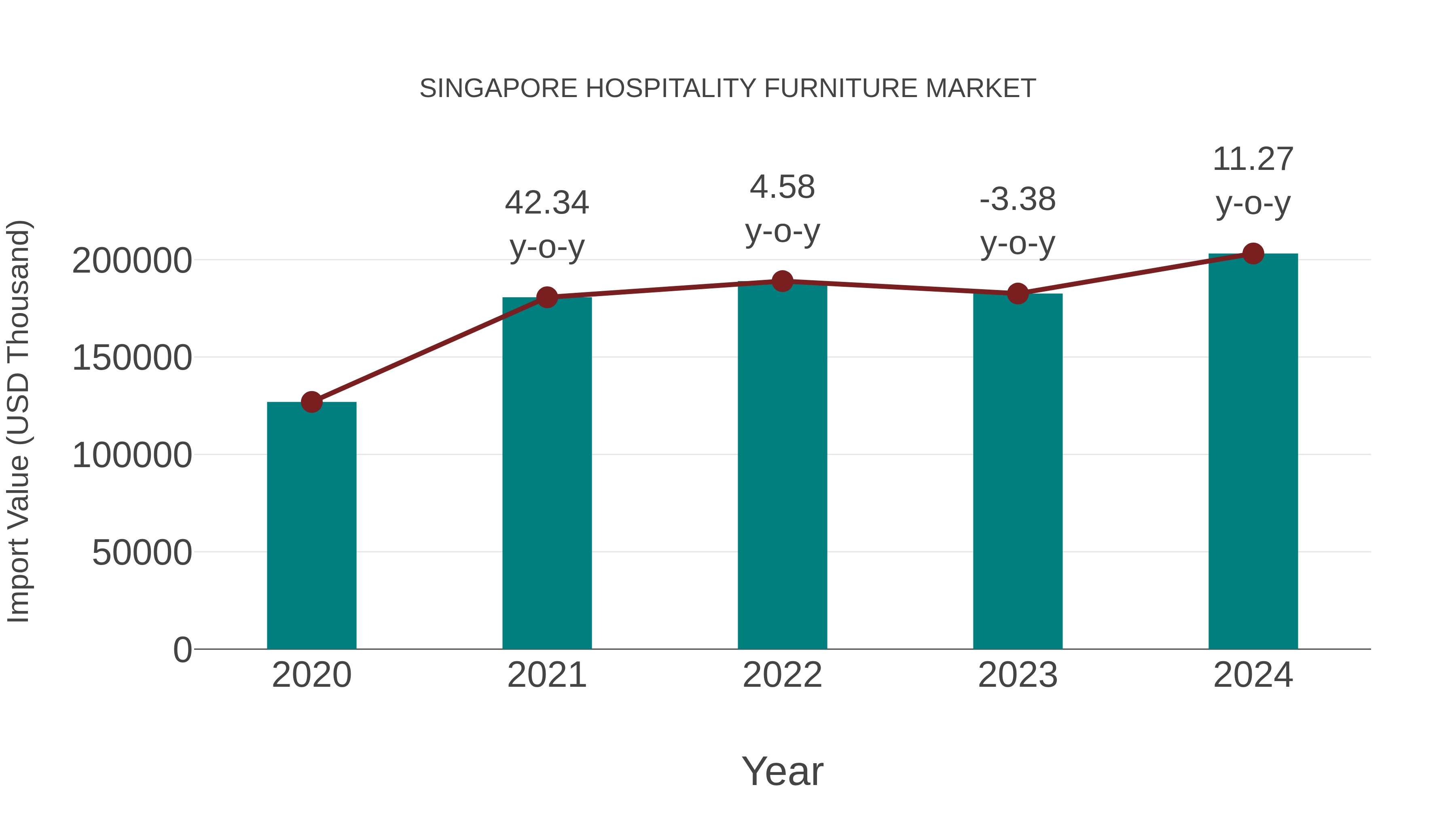
In the Singapore hospitality furniture market, the import trend exhibited notable growth from 2023 to 2024, with a growth rate of 11.27%. The compound annual growth rate (CAGR) for the period of 2020-2024 stood at 12.48%. This upward import momentum can be attributed to increased demand for high-quality furniture products in the hospitality sector, reflecting market stability and resilience post-pandemic.
Hospitality Furniture Market: Singapore vs Top 5 Major Economies in 2027 (Asia)
In the Asia region, the Hospitality Furniture market in Singapore is projected to expand at a stable growth rate of 0.02% by 2027. The largest economy is China, followed by India, Japan, Australia and South Korea.

Singapore Hospitality Furniture Market Synopsis
The hospitality furniture market in Singapore is expected to experience growth as the hospitality industry demands aesthetically pleasing and durable furniture for hotels, restaurants, and resorts. Hospitality furniture includes seating, tables, and room furnishings. The market`s expansion is driven by the growth of tourism and the need for stylish and comfortable furnishings in the hospitality sector.
Drivers of the Market
The growth of the Singapore hospitality furniture market is influenced by factors such as tourism and hospitality industry expansion, hotel and restaurant interior design trends, and guest experience enhancement. Hospitality furniture includes furnishings and decor items used in hotels, restaurants, resorts, and other hospitality establishments. Growth drivers include the demand for stylish and durable furniture for guest rooms and common areas, the use of sustainable and eco-friendly materials, and customized furniture solutions for hospitality projects. As the hospitality sector aims to create welcoming and memorable guest experiences, the hospitality furniture market is expected to grow, providing attractive and functional furnishings for the industry.
Challenges of the Market
The hospitality furniture market in Singapore encounters challenges related to design trends and supply chain disruptions. Keeping up with changing design trends in the hospitality industry is essential to meet the demands of hotels, restaurants, and other establishments. Additionally, managing supply chain disruptions, such as those caused by global events, is crucial to ensure timely delivery of furniture to hospitality clients.
COVID-19 Impact on the Market
The COVID-19 pandemic had a significant impact on the Singaporean hospitality furniture market. With travel restrictions and reduced tourism, the hospitality industry faced challenges. Many hotels and restaurants deferred furniture purchases and renovations. Manufacturers adapted by offering flexible and durable furniture solutions for hospitality businesses. The pandemic underscored the need for adaptability and resilience in the hospitality sector, influencing market strategies.
Key Players in the Market
Prominent manufacturers in the Singapore hospitality furniture market, including Marriott International, Inc., Hilton Worldwide Holdings Inc., and Accor SA, provide hospitality furnishings and interior design solutions for hotels, resorts, and hospitality establishments. Their expertise in hotel interiors and guest comfort makes them significant players in this sector.
Key Highlights of the Report:
- Singapore Hospitality Furniture Market Outlook
- Market Size of Singapore Hospitality Furniture Market, 2025
- Forecast of Singapore Hospitality Furniture Market, 2032
- Historical Data and Forecast of Singapore Hospitality Furniture Revenues & Volume for the Period 2022-2032F
- Singapore Hospitality Furniture Market Trend Evolution
- Singapore Hospitality Furniture Market Drivers and Challenges
- Singapore Hospitality Furniture Price Trends
- Singapore Hospitality Furniture Porter's Five Forces
- Singapore Hospitality Furniture Industry Life Cycle
- Historical Data and Forecast of Singapore Hospitality Furniture Market Revenues & Volume By Type for the Period 2022-2032F
- Historical Data and Forecast of Singapore Hospitality Furniture Market Revenues & Volume By Wooden Furniture for the Period 2022-2032F
- Historical Data and Forecast of Singapore Hospitality Furniture Market Revenues & Volume By Leather & Fabric Furniture for the Period 2022-2032F
- Historical Data and Forecast of Singapore Hospitality Furniture Market Revenues & Volume By Metal Furniture for the Period 2022-2032F
- Historical Data and Forecast of Singapore Hospitality Furniture Market Revenues & Volume By Others for the Period 2022-2032F
- Historical Data and Forecast of Singapore Hospitality Furniture Market Revenues & Volume By Applications for the Period 2022-2032F
- Historical Data and Forecast of Singapore Hospitality Furniture Market Revenues & Volume By Economy Hotel for the Period 2022-2032F
- Historical Data and Forecast of Singapore Hospitality Furniture Market Revenues & Volume By Extended-stay Hotel for the Period 2022-2032F
- Historical Data and Forecast of Singapore Hospitality Furniture Market Revenues & Volume By Full-service Hotel for the Period 2022-2032F
- Historical Data and Forecast of Singapore Hospitality Furniture Market Revenues & Volume By Luxury Hotel for the Period 2022-2032F
- Historical Data and Forecast of Singapore Hospitality Furniture Market Revenues & Volume By Others for the Period 2022-2032F
- Historical Data and Forecast of Singapore Hospitality Furniture Market Revenues & Volume By Industry Vertical for the Period 2022-2032F
- Historical Data and Forecast of Singapore Hospitality Furniture Market Revenues & Volume By Hotels & Restaurants for the Period 2022-2032F
- Historical Data and Forecast of Singapore Hospitality Furniture Market Revenues & Volume By Public Places for the Period 2022-2032F
- Historical Data and Forecast of Singapore Hospitality Furniture Market Revenues & Volume By Corporate Offices for the Period 2022-2032F
- Historical Data and Forecast of Singapore Hospitality Furniture Market Revenues & Volume By Others for the Period 2022-2032F
- Singapore Hospitality Furniture Import Export Trade Statistics
- Market Opportunity Assessment By Type
- Market Opportunity Assessment By Applications
- Market Opportunity Assessment By Industry Vertical
- Singapore Hospitality Furniture Top Companies Market Share
- Singapore Hospitality Furniture Competitive Benchmarking By Technical and Operational Parameters
- Singapore Hospitality Furniture Company Profiles
- Singapore Hospitality Furniture Key Strategic Recommendations






































