Singapore Insect Repellent Market: Import Trend Analysis
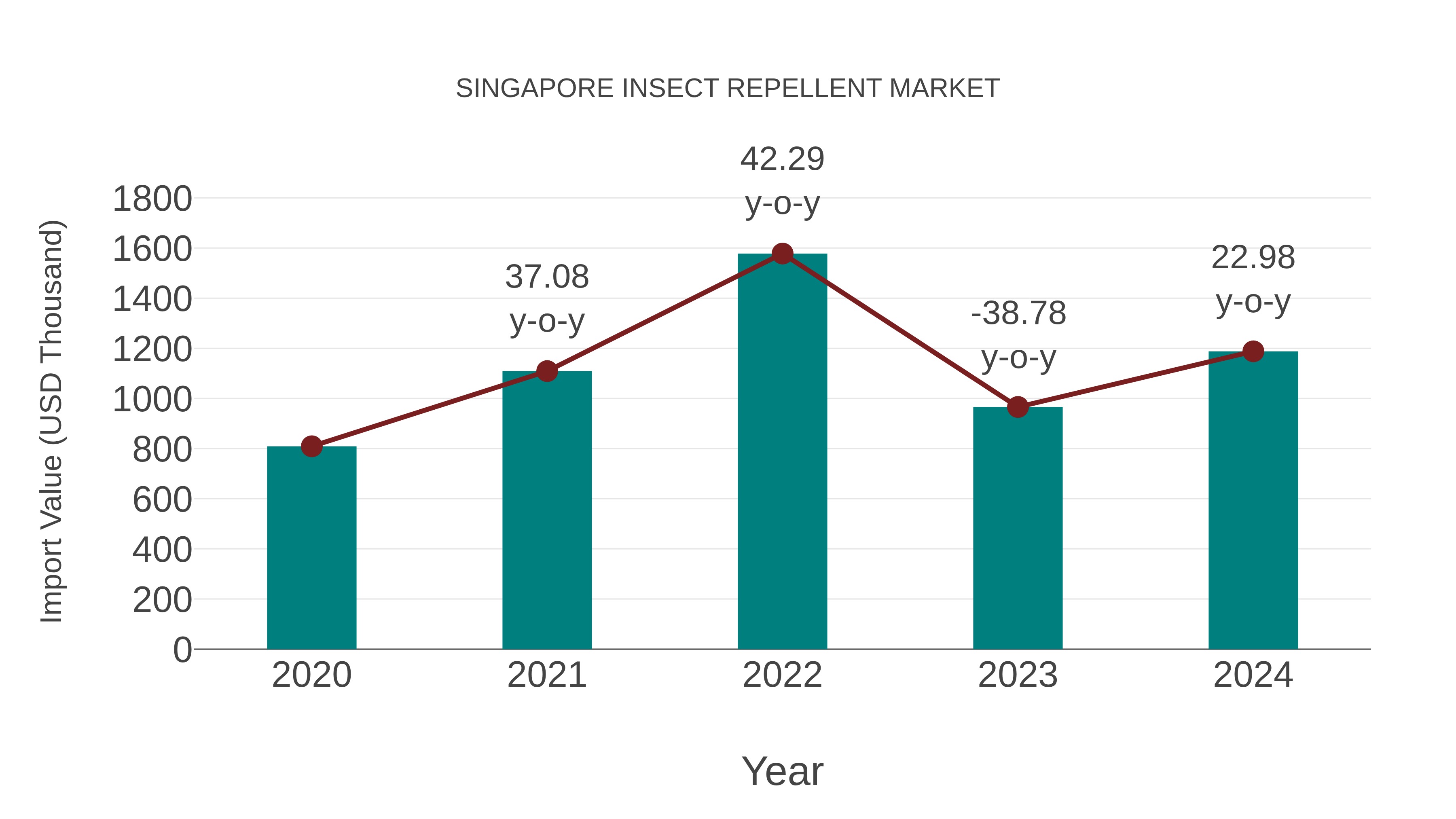
In the Singapore insect repellent market, the import trend showed a notable growth rate of 22.98% from 2023 to 2024, with a compound annual growth rate (CAGR) of 10.08% from 2020 to 2024. This uptrend may be attributed to increased consumer awareness of health and hygiene, driving demand for insect repellent products.
Singapore Insect Repellent Market Overview
The Singapore insect repellent market is characterized by a growing demand for natural and DEET-free products due to increasing health and environmental concerns. Key players in the market offer a variety of insect repellent products, including sprays, lotions, and patches, targeting different consumer preferences. The market is driven by factors such as rising awareness about mosquito-borne diseases like dengue and Zika, as well as an emphasis on outdoor activities such as hiking and camping. Retail channels like supermarkets, pharmacies, and online stores play a crucial role in the distribution of insect repellent products. With a focus on innovation and product development, the Singapore insect repellent market is expected to witness steady growth in the coming years as consumers prioritize protection against insect bites.
Singapore Insect Repellent Market Trends and Opportunities
The Singapore insect repellent market is experiencing a growth trend due to increasing awareness about mosquito-borne diseases like dengue and Zika. Consumers are seeking natural and DEET-free products, driving demand for botanical and essential oil-based repellents. The market is also witnessing a rise in innovative formulations such as wearable repellent devices and long-lasting products for outdoor activities. Opportunities exist for brands to capitalize on the demand for eco-friendly and skin-friendly solutions, as well as products specifically tailored for children and pets. With Singapore`s tropical climate and high incidence of mosquito-borne illnesses, there is a growing need for effective and safe insect repellents, presenting a promising landscape for market players to introduce new and advanced solutions.
Singapore Insect Repellent Market Challenges
In the Singapore Insect Repellent Market, one of the key challenges faced is the presence of strong competition among a variety of established brands and products. This leads to difficulty in distinguishing between different offerings and capturing consumer attention. Additionally, consumer preferences and concerns regarding the use of chemical-based repellents versus natural alternatives create a complex landscape for companies to navigate. Another challenge is the seasonal nature of demand, with peak periods during the rainy season and lower demand during drier months. Furthermore, the effectiveness of insect repellents against different types of insects and the need for continuous innovation to address evolving consumer preferences for convenience, safety, and effectiveness present ongoing challenges for companies operating in this market.
Singapore Insect Repellent Market Drivers
The Singapore Insect Repellent Market is primarily driven by factors such as increasing awareness about mosquito-borne diseases like dengue and Zika virus, leading to a growing demand for effective insect repellent products. The tropical climate in Singapore also contributes to a high prevalence of mosquitoes, further boosting the need for insect repellents. Additionally, the rising emphasis on outdoor activities and travel among the population has spurred the sales of insect repellents for personal protection. Innovation in product formulations, such as natural and DEET-free options, as well as convenient packaging formats, are also driving consumer preferences in the market. Overall, the combination of health concerns, climate conditions, lifestyle trends, and product innovations are key drivers shaping the growth of the insect repellent market in Singapore.
Singapore Insect Repellent Market Government Policies
The Singapore government regulates insect repellents under the Health Sciences Authority (HSA), which ensures that products are safe and effective for consumers. Insect repellents must be registered with the HSA before they can be sold in the market, and the authority conducts regular inspections to monitor compliance with regulations. The government also provides guidelines on the safe and proper use of insect repellents to protect public health. Additionally, there are restrictions on the types and concentrations of active ingredients allowed in insect repellents to ensure they are not harmful to humans or the environment. Overall, the government plays a crucial role in overseeing the Singapore Insect Repellent Market to safeguard consumer welfare and promote the use of safe and effective products.
Singapore Insect Repellent Market Future Outlook
The Singapore insect repellent market is poised for steady growth in the coming years, driven by increasing awareness about insect-borne diseases and the rising demand for natural and eco-friendly repellent products. The market is expected to witness a shift towards innovative and technologically advanced formulations that offer long-lasting protection against mosquitoes and other insects. With the growing emphasis on outdoor activities and travel, there is a rising need for effective insect repellents, further fueling market expansion. Additionally, the government`s proactive measures to control vector-borne diseases and the implementation of public health campaigns will contribute to the market`s growth. Overall, the Singapore insect repellent market is anticipated to experience a positive trajectory in the foreseeable future.
Key Highlights of the Report:
- Singapore Insect Repellent Market Outlook
- Market Size of Singapore Insect Repellent Market, 2025
- Forecast of Singapore Insect Repellent Market, 2032
- Historical Data and Forecast of Singapore Insect Repellent Revenues & Volume for the Period 2022 - 2032F
- Singapore Insect Repellent Market Trend Evolution
- Singapore Insect Repellent Market Drivers and Challenges
- Singapore Insect Repellent Price Trends
- Singapore Insect Repellent Porter's Five Forces
- Singapore Insect Repellent Industry Life Cycle
- Historical Data and Forecast of Singapore Insect Repellent Market Revenues & Volume By Type for the Period 2022 - 2032F
- Historical Data and Forecast of Singapore Insect Repellent Market Revenues & Volume By Mosquito Repellent for the Period 2022 - 2032F
- Historical Data and Forecast of Singapore Insect Repellent Market Revenues & Volume By Bugs Repellent for the Period 2022 - 2032F
- Historical Data and Forecast of Singapore Insect Repellent Market Revenues & Volume By Fly Repellent for the Period 2022 - 2032F
- Historical Data and Forecast of Singapore Insect Repellent Market Revenues & Volume By Others for the Period 2022 - 2032F
- Historical Data and Forecast of Singapore Insect Repellent Market Revenues & Volume By Product Type for the Period 2022 - 2032F
- Historical Data and Forecast of Singapore Insect Repellent Market Revenues & Volume By Vaporizers for the Period 2022 - 2032F
- Historical Data and Forecast of Singapore Insect Repellent Market Revenues & Volume By Spray for the Period 2022 - 2032F
- Historical Data and Forecast of Singapore Insect Repellent Market Revenues & Volume By Cream for the Period 2022 - 2032F
- Historical Data and Forecast of Singapore Insect Repellent Market Revenues & Volume By Others for the Period 2022 - 2032F
- Singapore Insect Repellent Import Export Trade Statistics
- Market Opportunity Assessment By Type
- Market Opportunity Assessment By Product Type
- Singapore Insect Repellent Top Companies Market Share
- Singapore Insect Repellent Competitive Benchmarking By Technical and Operational Parameters
- Singapore Insect Repellent Company Profiles
- Singapore Insect Repellent Key Strategic Recommendations






































