Singapore Leather Belts Market: Import Trend Analysis
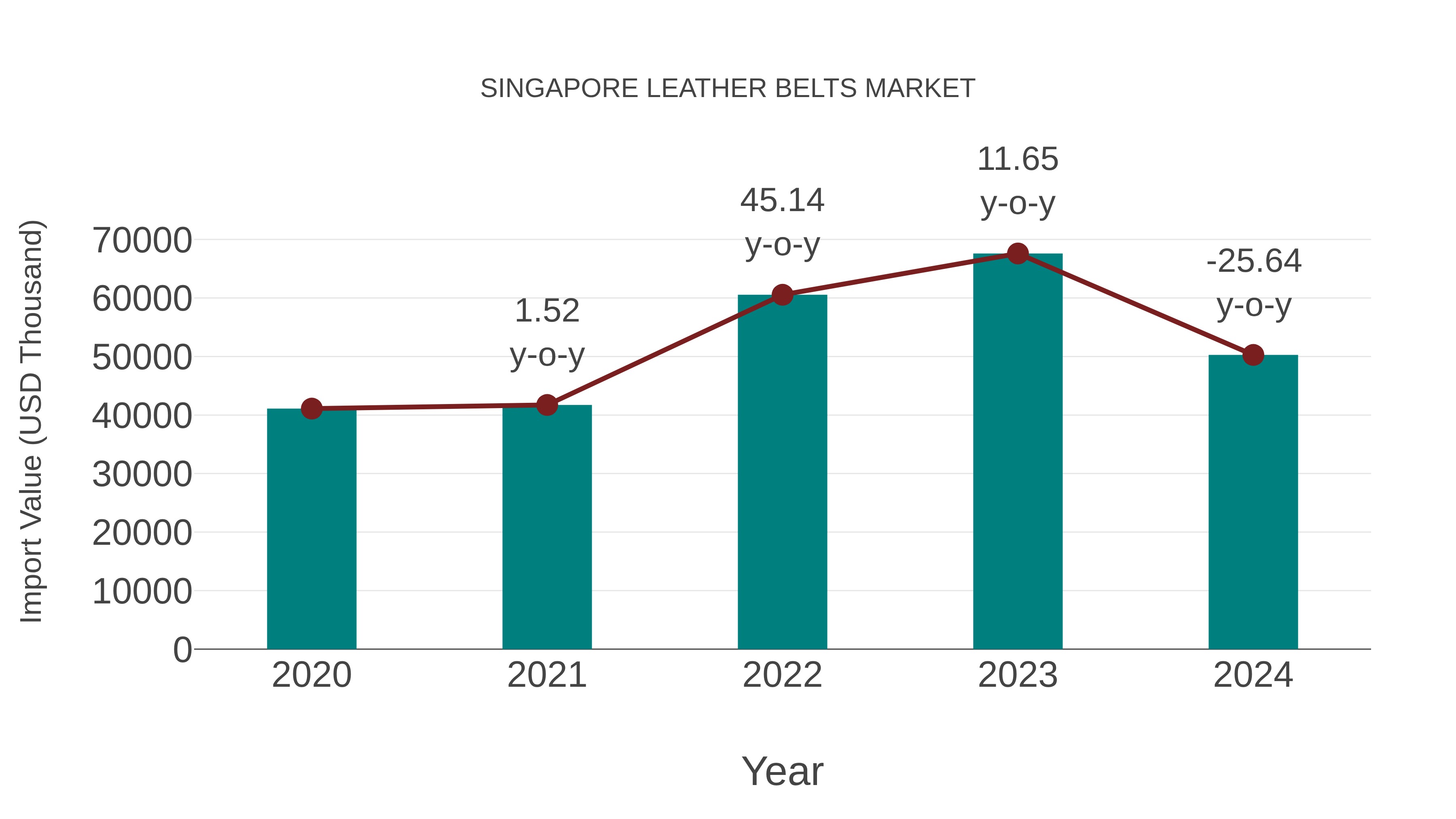
In the Singapore leather belts market, the import trend experienced a decline from 2023 to 2024, with a growth rate of -25.64%. However, the compound annual growth rate (CAGR) from 2020 to 2024 stood at 5.17%. This negative import momentum in 2024 may be attributed to shifting consumer preferences or changes in trade policies impacting market stability.
Singapore Leather Belts Market Synopsis
The Singapore leather belts market is expected to grow significantly over the forecast period of 2020-2026. This growth can be attributed to increasing demand for high-end fashion accessories, growing disposable incomes in Singapore, rising awareness regarding quality and luxurious products among consumers in the country, ETC Additionally, increased availability of online stores offering fashionable leather belts at competitive prices has further propelled growth opportunities for this market.
Market Drivers
Growing demand for luxury and premium fashion accessories among affluent consumers of Singapore have been driving the growth of Singapore leather belts market.Increasing disposable income levels coupled with changing lifestyle trends are also supporting steady expansion of this market across the country.The trend towards ecommerce shopping has enabled customers to buy variety in terms of product design as well as pricing thus encouraging more people to purchase expensive designer items including leather belts from online stores/websites.
Market challenges
High cost associated with branded and designer leather belt products may impede adoption rate amongst budget conscious or price sensitive buyers resulting into low sales volume which may restrict overall industry revenue generation potential.
Key players
Some prominent players operating within white goods space include Hugo Boss (LVMH), Salvatore Ferragamo, Dior, Gucci, Louis Vuitton (LVMH), Prada Group, Coach Inc., Michael Kors Holdings Ltd., Tory Burch LLC & Burberry Group plc.
Covid-19 Impact
The Covid 19 pandemic has had a significant negative impact on the Singapore Leather Belts Market due to reduced consumer spending power caused by job losses and economic uncertainty leading up to decreased demand for luxury goods like leather belts across various retail outlets throughout the region.Lockdown restrictions imposed by government authorities have resulted in disruption supply chain operations thereby hampering production & distribution activities within this sector resulting into short term declines observed during 2020.However, analysts expect an uptrend post 2021 driven by rise in consumer confidence & return towards pre crisis normalcy.
Key Highlights of the Report:
- Singapore Leather Belts Market Outlook
- Market Size of Singapore Leather Belts Market, 2023
- Forecast of Singapore Leather Belts Market, 2030
- Historical Data and Forecast of Singapore Leather Belts Revenues & Volume for the Period 2020-2030
- Singapore Leather Belts Market Trend Evolution
- Singapore Leather Belts Market Drivers and Challenges
- Singapore Leather Belts Price Trends
- Singapore Leather Belts Porter's Five Forces
- Singapore Leather Belts Industry Life Cycle
- Historical Data and Forecast of Singapore Leather Belts Market Revenues & Volume By Type for the Period 2020-2030
- Historical Data and Forecast of Singapore Leather Belts Market Revenues & Volume By Man for the Period 2020-2030
- Historical Data and Forecast of Singapore Leather Belts Market Revenues & Volume By Woman for the Period 2020-2030
- Historical Data and Forecast of Singapore Leather Belts Market Revenues & Volume By Application for the Period 2020-2030
- Historical Data and Forecast of Singapore Leather Belts Market Revenues & Volume By Business for the Period 2020-2030
- Historical Data and Forecast of Singapore Leather Belts Market Revenues & Volume By Leisure for the Period 2020-2030
- Historical Data and Forecast of Singapore Leather Belts Market Revenues & Volume By Other for the Period 2020-2030
- Singapore Leather Belts Import Export Trade Statistics
- Market Opportunity Assessment By Type
- Market Opportunity Assessment By Application
- Singapore Leather Belts Top Companies Market Share
- Singapore Leather Belts Competitive Benchmarking By Technical and Operational Parameters
- Singapore Leather Belts Company Profiles
- Singapore Leather Belts Key Strategic Recommendations






































