Singapore Metal Biocides Market: Import Trend Analysis
In 2024, Singapore`s metal biocides market saw a consistent upward import trend. Imports of metal biocides into Singapore increased steadily throughout the year, indicating a growing demand for these products within the market.
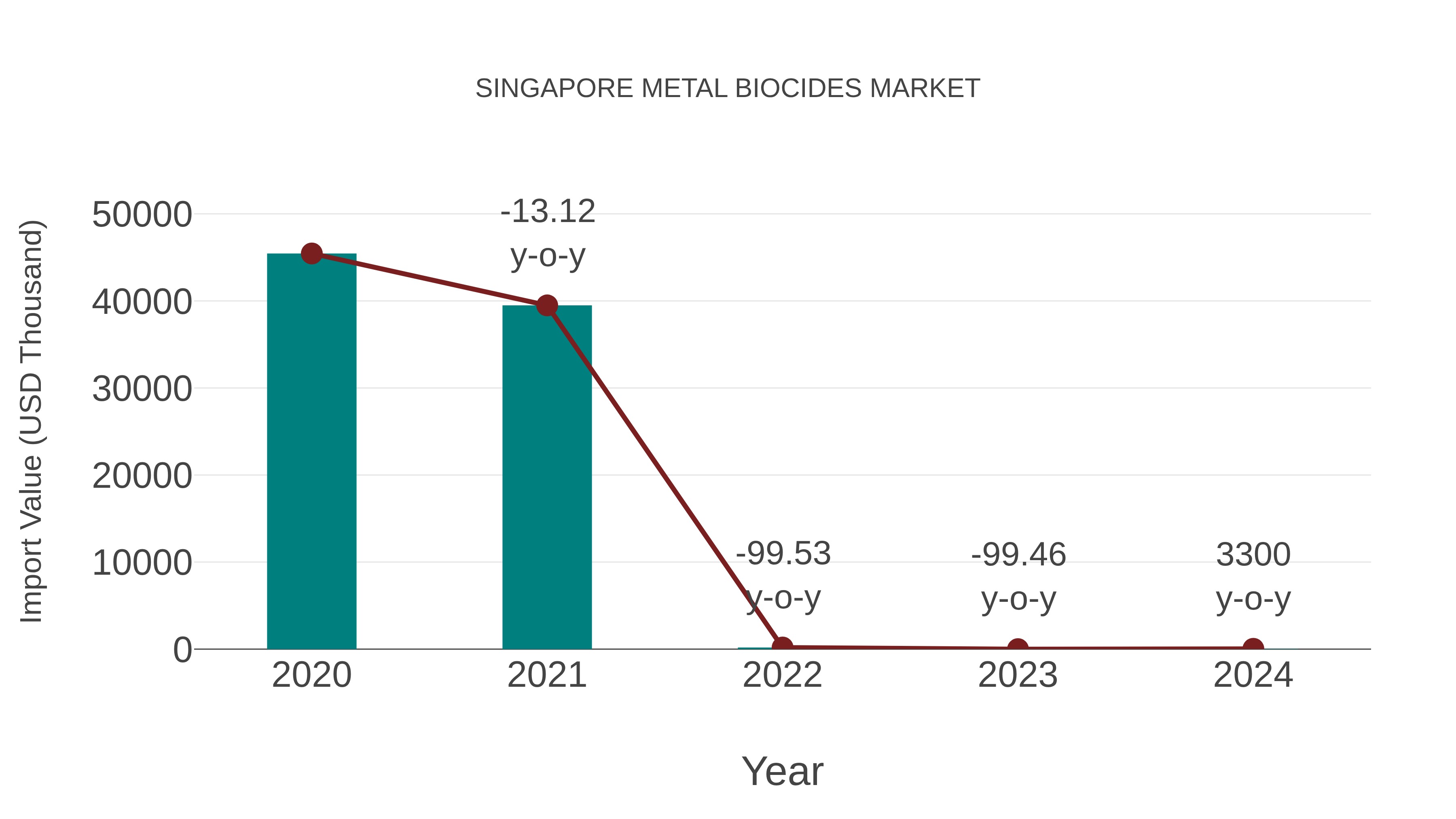
Singapore Metal Biocides Market Overview
The Singapore metal biocides market is essential for several industries, including water treatment, paints and coatings, and agriculture. Metal biocides are chemical agents used to control the growth of microorganisms, preventing corrosion, fouling, and contamination. This market has witnessed substantial growth in recent years, primarily driven by stringent regulations on water quality and an increasing awareness of the need for microbial control in various industrial processes. The versatility of metal biocides in different applications has led to extensive research and development in this sector, resulting in the introduction of innovative and efficient products. Singapore metal biocides market is poised to continue growing as industries strive to maintain product quality and safety standards.
Drivers of the Market
The Singapore metal biocides market is on the rise, driven by its applications in various industries, including water treatment, paints and coatings, and healthcare. Metal biocides are used to inhibit the growth of harmful microorganisms, making them vital for maintaining water quality and preventing microbial contamination in various products. The construction of water treatment facilities and the increasing use of biocides in paints and coatings have led to a growing demand for these products. As Singapore places a strong emphasis on sanitation and environmental protection, the metal biocides market is poised for expansion.
Challenges of the Market
Challenges in the metal biocides market include strict regulations on the use of biocides in various applications. Ensuring safety and compliance with these regulations can be complex. The market is also influenced by the performance of the industries it serves, such as water treatment, paints, and coatings. Environmental concerns related to biocide disposal and long-term effects further complicate the business landscape.
Covid-19 impact of the Market
The Singapore metal biocides market experienced disruptions due to the COVID-19 pandemic, impacting its use in various applications, including water treatment and antimicrobial products. Supply chain disruptions and production delays influenced the availability of metal biocides. Industries relying on these compounds for their operations, such as healthcare and disinfection, faced challenges. The market is expected to recover as global supply chains stabilize and demand increases.
Leading Players of the Market
The Singapore metal biocides market is characterized by the presence of key industry players like Lonza Group, Clariant, and Dow Chemical Company. These companies specialize in manufacturing metal biocides, which are essential for preventing microbial growth and maintaining product integrity in various industrial applications, including paints and coatings, water treatment, and more.
Key Highlights of the Report:
- Singapore Metal Biocides Market Outlook
- Market Size of Singapore Metal Biocides Market, 2025
- Forecast of Singapore Metal Biocides Market, 2032
- Historical Data and Forecast of Singapore Metal Biocides Revenues & Volume for the Period 2022-2032F
- Singapore Metal Biocides Market Trend Evolution
- Singapore Metal Biocides Market Drivers and Challenges
- Singapore Metal Biocides Price Trends
- Singapore Metal Biocides Porter's Five Forces
- Singapore Metal Biocides Industry Life Cycle
- Historical Data and Forecast of Singapore Metal Biocides Market Revenues & Volume By Type for the Period 2022-2032F
- Historical Data and Forecast of Singapore Metal Biocides Market Revenues & Volume By Silver for the Period 2022-2032F
- Historical Data and Forecast of Singapore Metal Biocides Market Revenues & Volume By Copper & Alloys for the Period 2022-2032F
- Historical Data and Forecast of Singapore Metal Biocides Market Revenues & Volume By Zinc for the Period 2022-2032F
- Historical Data and Forecast of Singapore Metal Biocides Market Revenues & Volume By End Use Industry for the Period 2022-2032F
- Historical Data and Forecast of Singapore Metal Biocides Market Revenues & Volume By Paints & Coatings for the Period 2022-2032F
- Historical Data and Forecast of Singapore Metal Biocides Market Revenues & Volume By Medical for the Period 2022-2032F
- Historical Data and Forecast of Singapore Metal Biocides Market Revenues & Volume By Textile for the Period 2022-2032F
- Historical Data and Forecast of Singapore Metal Biocides Market Revenues & Volume By Wood Preservation for the Period 2022-2032F
- Historical Data and Forecast of Singapore Metal Biocides Market Revenues & Volume By Foods & Beverages for the Period 2022-2032F
- Historical Data and Forecast of Singapore Metal Biocides Market Revenues & Volume By Pesticides Agriculture for the Period 2022-2032F
- Singapore Metal Biocides Import Export Trade Statistics
- Market Opportunity Assessment By Type
- Market Opportunity Assessment By End Use Industry
- Singapore Metal Biocides Top Companies Market Share
- Singapore Metal Biocides Competitive Benchmarking By Technical and Operational Parameters
- Singapore Metal Biocides Company Profiles
- Singapore Metal Biocides Key Strategic Recommendations






































