Singapore Methionine Market Size Growth Rate
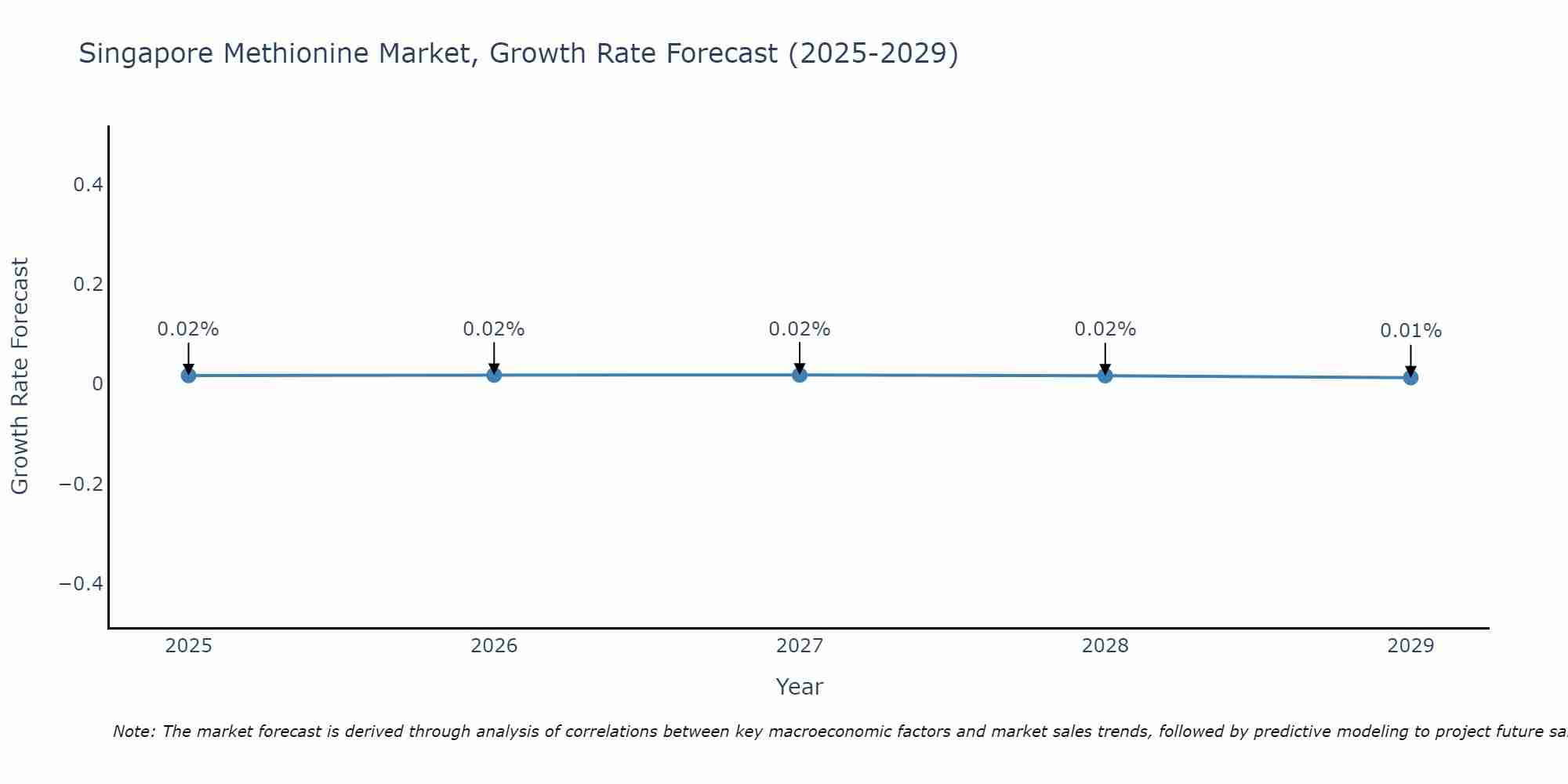
The Singapore Methionine Market is projected to witness mixed growth rate patterns during 2025 to 2029. Growth accelerates to 0.02% in 2027, following an initial rate of 0.02%, before easing to 0.01% at the end of the period.
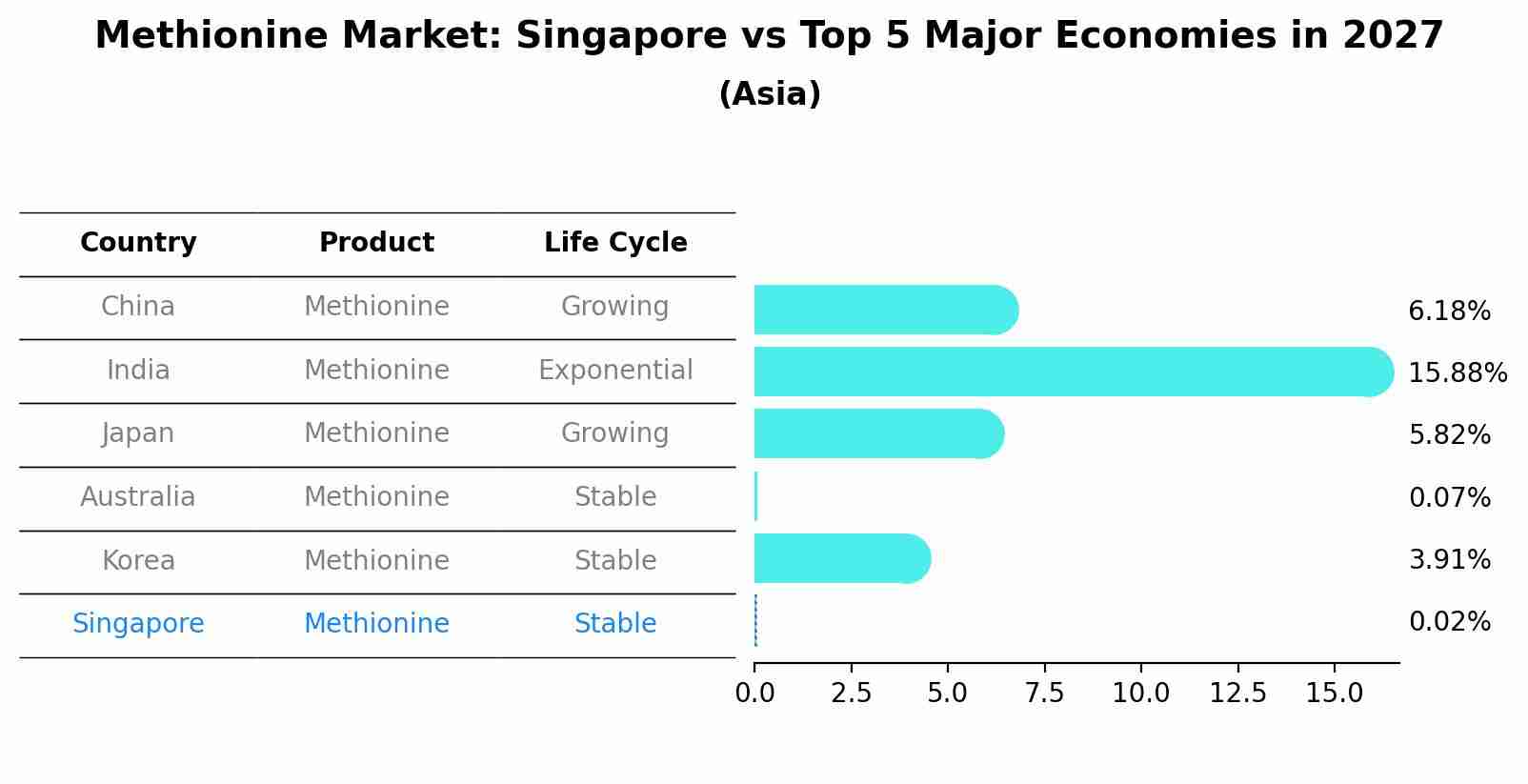
Methionine Market: Singapore vs Top 5 Major Economies in 2027 (Asia)
The Methionine market in Singapore is projected to grow at a stable growth rate of 0.02% by 2027, within the Asia region led by China, along with other countries like India, Japan, Australia and South Korea, collectively shaping a dynamic and evolving market environment driven by innovation and increasing adoption of emerging technologies.
Singapore Methionine Market Synopsis
Methionine is an essential amino acid used primarily in animal feed formulations to promote growth and improve the nutritional content of livestock and poultry. The Singapore methionine market is driven by the country`s livestock and aquaculture industries. As consumers demand high-quality and safe meat and seafood products, the need for methionine as a feed additive has increased.
Drivers of the Market
The Singapore methionine market is primarily driven by the rising demand for high-quality animal feed in the region. Methionine is an essential amino acid used as a feed additive to enhance the growth and health of livestock. With an increasing focus on animal nutrition and the production of meat, dairy, and poultry products, the demand for methionine has steadily increased. Additionally, Singapore strategic location and well-developed logistics infrastructure make it a key distribution hub for methionine products in Southeast Asia, further propelling market growth.
Challenges of the Market
Challenges in the Singapore methionine market include raw material availability and pricing. Methionine production relies on feedstock availability, which can fluctuate due to global supply and demand dynamics. Market players must manage supply chain risks associated with raw material sourcing. Regulatory compliance and quality assurance are critical, as methionine is widely used in animal feed. Ongoing research into alternative sources and production methods is necessary to ensure a stable supply.
COVID-19 Impact on the Market
The Singapore methionine market encountered challenges during the COVID-19 pandemic as disruptions in the supply chain affected feed production for the poultry and livestock industries. These industries experienced fluctuations in demand, impacting methionine consumption. As the food supply chain stabilized and demand for animal protein rebounded, the methionine market showed signs of recovery. Continued growth in the agriculture sector is expected to drive the market forward.
Key Players in the Market
Leading companies in the Singapore methionine market include Evonik Industries, Adisseo, and Novus International. These firms specialize in producing methionine, an essential amino acid used in animal nutrition and the feed industry.
Key Highlights of the Report:
- Singapore Methionine Market Outlook
- Market Size of Singapore Methionine Market, 2024
- Forecast of Singapore Methionine Market, 2031
- Historical Data and Forecast of Singapore Methionine Revenues & Volume for the Period 2021-2031
- Singapore Methionine Market Trend Evolution
- Singapore Methionine Market Drivers and Challenges
- Singapore Methionine Price Trends
- Singapore Methionine Porter's Five Forces
- Singapore Methionine Industry Life Cycle
- Historical Data and Forecast of Singapore Methionine Market Revenues & Volume By Raw Material for the Period 2021-2031
- Historical Data and Forecast of Singapore Methionine Market Revenues & Volume By Plant-based for the Period 2021-2031
- Historical Data and Forecast of Singapore Methionine Market Revenues & Volume By Animal-based for the Period 2021-2031
- Historical Data and Forecast of Singapore Methionine Market Revenues & Volume By Application for the Period 2021-2031
- Historical Data and Forecast of Singapore Methionine Market Revenues & Volume By Animal Feed for the Period 2021-2031
- Historical Data and Forecast of Singapore Methionine Market Revenues & Volume By Food & Dietary Supplements for the Period 2021-2031
- Historical Data and Forecast of Singapore Methionine Market Revenues & Volume By Pharmaceuticals for the Period 2021-2031
- Singapore Methionine Import Export Trade Statistics
- Market Opportunity Assessment By Raw Material
- Market Opportunity Assessment By Application
- Singapore Methionine Top Companies Market Share
- Singapore Methionine Competitive Benchmarking By Technical and Operational Parameters
- Singapore Methionine Company Profiles
- Singapore Methionine Key Strategic Recommendations






































