Singapore Neurology Devices Market Size Growth Rate
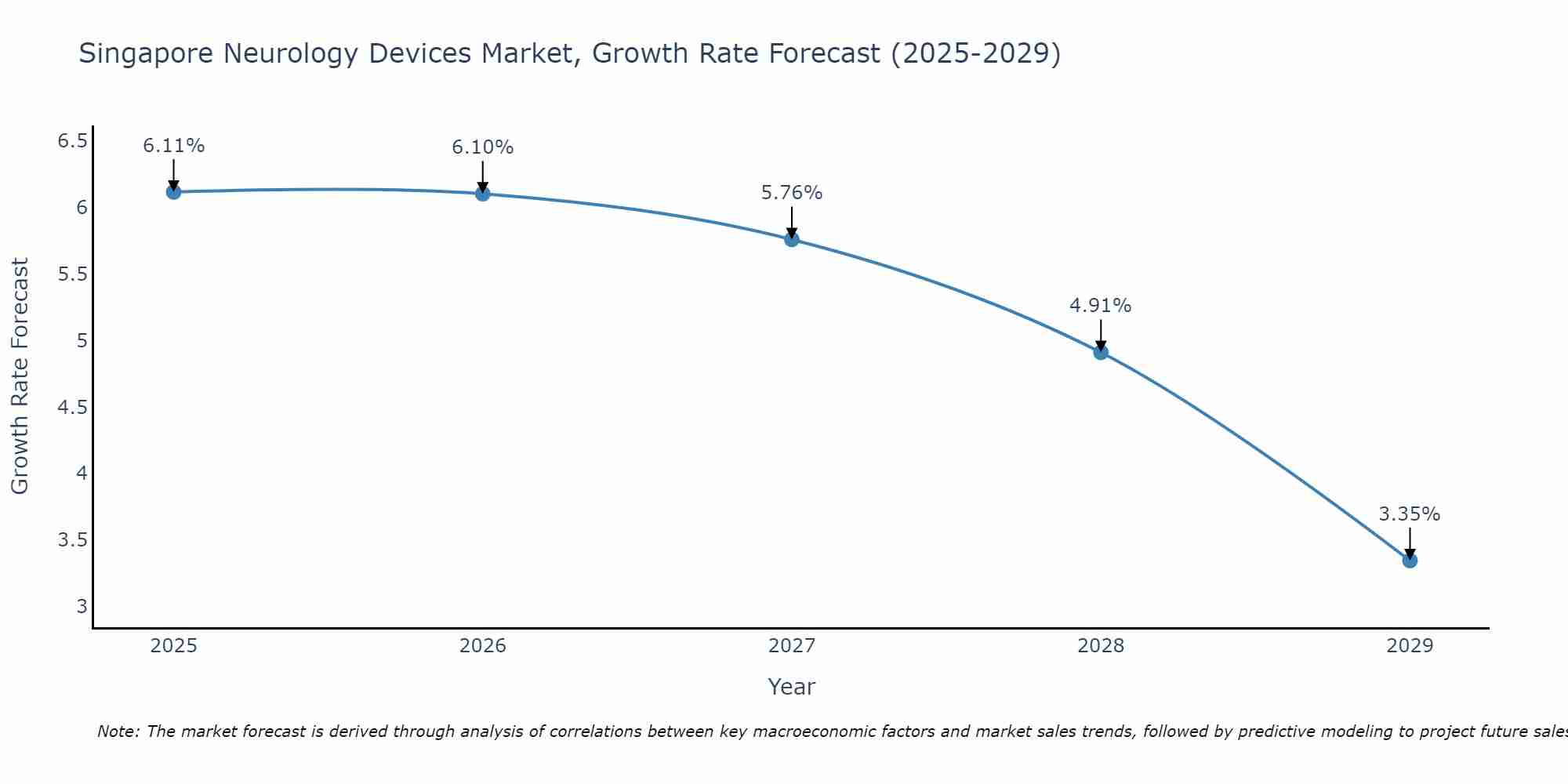
The Singapore Neurology Devices Market could see a tapering of growth rates over 2025 to 2029. Beginning strongly at 6.11% in 2025, growth softens to 3.35% in 2029.
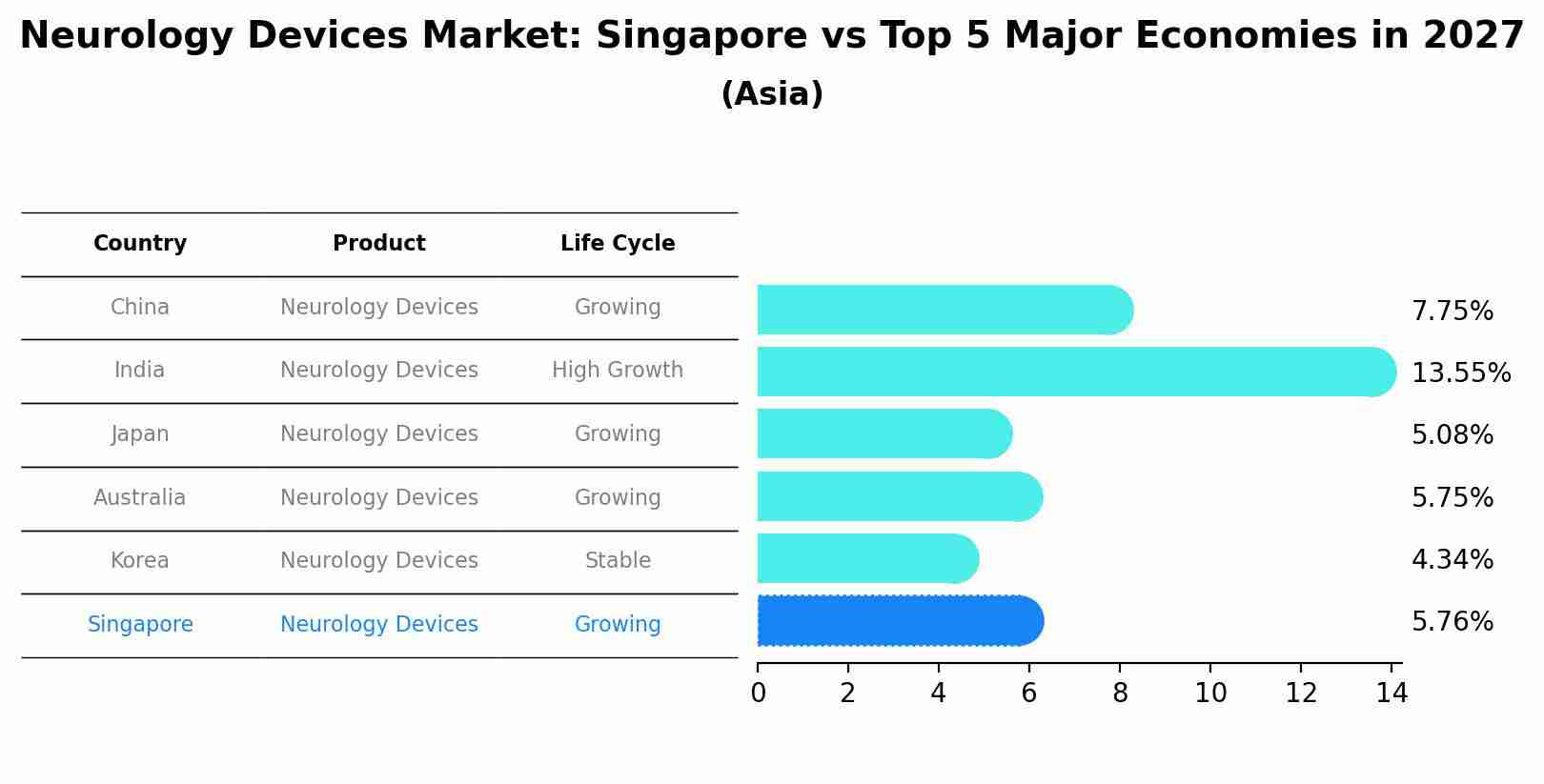
Neurology Devices Market: Singapore vs Top 5 Major Economies in 2027 (Asia)
Singapore's Neurology Devices market is anticipated to experience a growing growth rate of 5.76% by 2027, reflecting trends observed in the largest economy China, followed by India, Japan, Australia and South Korea.
Singapore Neurology Devices Market Synopsis
The neurology devices market in Singapore is anticipated to witness growth as the country`s healthcare sector addresses the rising prevalence of neurological disorders. Neurology devices encompass diagnostic and therapeutic equipment used in the diagnosis and treatment of neurological conditions. The market`s expansion is driven by advancements in neuroimaging and neurostimulation technologies.
Drivers of the Market
The Singapore neurology devices market experiences growth driven by factors such as the increasing prevalence of neurological disorders, advancements in neuroimaging and diagnostic technologies, and the rising demand for minimally invasive neurosurgical procedures. Neurology devices encompass a range of equipment used in the diagnosis and treatment of neurological conditions. Growth drivers include the aging population, the need for early and accurate diagnosis of neurological disorders, and the adoption of neurostimulation and neuromodulation therapies. As healthcare providers prioritize neurology diagnostics and interventions, the neurology devices market is expected to grow to address neurological healthcare needs.
Challenges of the Market
The Singapore neurology devices market may face challenges related to regulatory compliance and clinical validation. Neurology devices, such as EEG and TMS systems, are used for diagnostic and therapeutic purposes. Manufacturers must adhere to strict regulatory standards and invest in clinical research to demonstrate the efficacy and safety of their devices.
COVID-19 Impact on the Market
The neurology devices market in Singapore faced challenges during the COVID-19 pandemic. Elective procedures and in-person consultations were deferred, impacting the demand for neurology devices. However, as healthcare facilities adapted to the evolving situation, the market rebounded. The need for neurology devices in diagnosing and monitoring neurological conditions remained critical. Manufacturers responded by promoting telemedicine solutions and innovative devices for remote patient care.
Key Players in the Market
Key players like Medtronic plc, Abbott Laboratories, and Boston Scientific Corporation dominate the Singapore neurology devices market by offering a wide range of neurological medical devices, including neuromodulation devices, neurostimulators, and diagnostic equipment. Their expertise in neurology treatments and medical technologies establishes their market presence.
Key Highlights of the Report:
- Singapore Neurology Devices Market Outlook
- Market Size of Singapore Neurology Devices Market, 2024
- Forecast of Singapore Neurology Devices Market, 2031
- Historical Data and Forecast of Singapore Neurology Devices Revenues & Volume for the Period 2021-2031
- Singapore Neurology Devices Market Trend Evolution
- Singapore Neurology Devices Market Drivers and Challenges
- Singapore Neurology Devices Price Trends
- Singapore Neurology Devices Porter's Five Forces
- Singapore Neurology Devices Industry Life Cycle
- Historical Data and Forecast of Singapore Neurology Devices Market Revenues & Volume By Product for the Period 2021-2031
- Historical Data and Forecast of Singapore Neurology Devices Market Revenues & Volume By Neurostimulation Devices for the Period 2021-2031
- Historical Data and Forecast of Singapore Neurology Devices Market Revenues & Volume By Neurosurgery Devices for the Period 2021-2031
- Historical Data and Forecast of Singapore Neurology Devices Market Revenues & Volume By Interventional Neurology Devices for the Period 2021-2031
- Historical Data and Forecast of Singapore Neurology Devices Market Revenues & Volume By Cerebrospinal fluid management devices for the Period 2021-2031
- Historical Data and Forecast of Singapore Neurology Devices Market Revenues & Volume By Others for the Period 2021-2031
- Historical Data and Forecast of Singapore Neurology Devices Market Revenues & Volume By End User for the Period 2021-2031
- Historical Data and Forecast of Singapore Neurology Devices Market Revenues & Volume By Hospitals for the Period 2021-2031
- Historical Data and Forecast of Singapore Neurology Devices Market Revenues & Volume By Ambulatory surgery centers for the Period 2021-2031
- Historical Data and Forecast of Singapore Neurology Devices Market Revenues & Volume By Neurology clinics for the Period 2021-2031
- Singapore Neurology Devices Import Export Trade Statistics
- Market Opportunity Assessment By Product
- Market Opportunity Assessment By End User
- Singapore Neurology Devices Top Companies Market Share
- Singapore Neurology Devices Competitive Benchmarking By Technical and Operational Parameters
- Singapore Neurology Devices Company Profiles
- Singapore Neurology Devices Key Strategic Recommendations






































