Singapore Non-ferrous Metal Market: Import Trend Analysis
In 2024, Singapore`s non-ferrous metal market witnessed a steady increase in imports. The demand for non-ferrous metals remained robust, leading to a consistent upward trend in import volumes throughout the year.
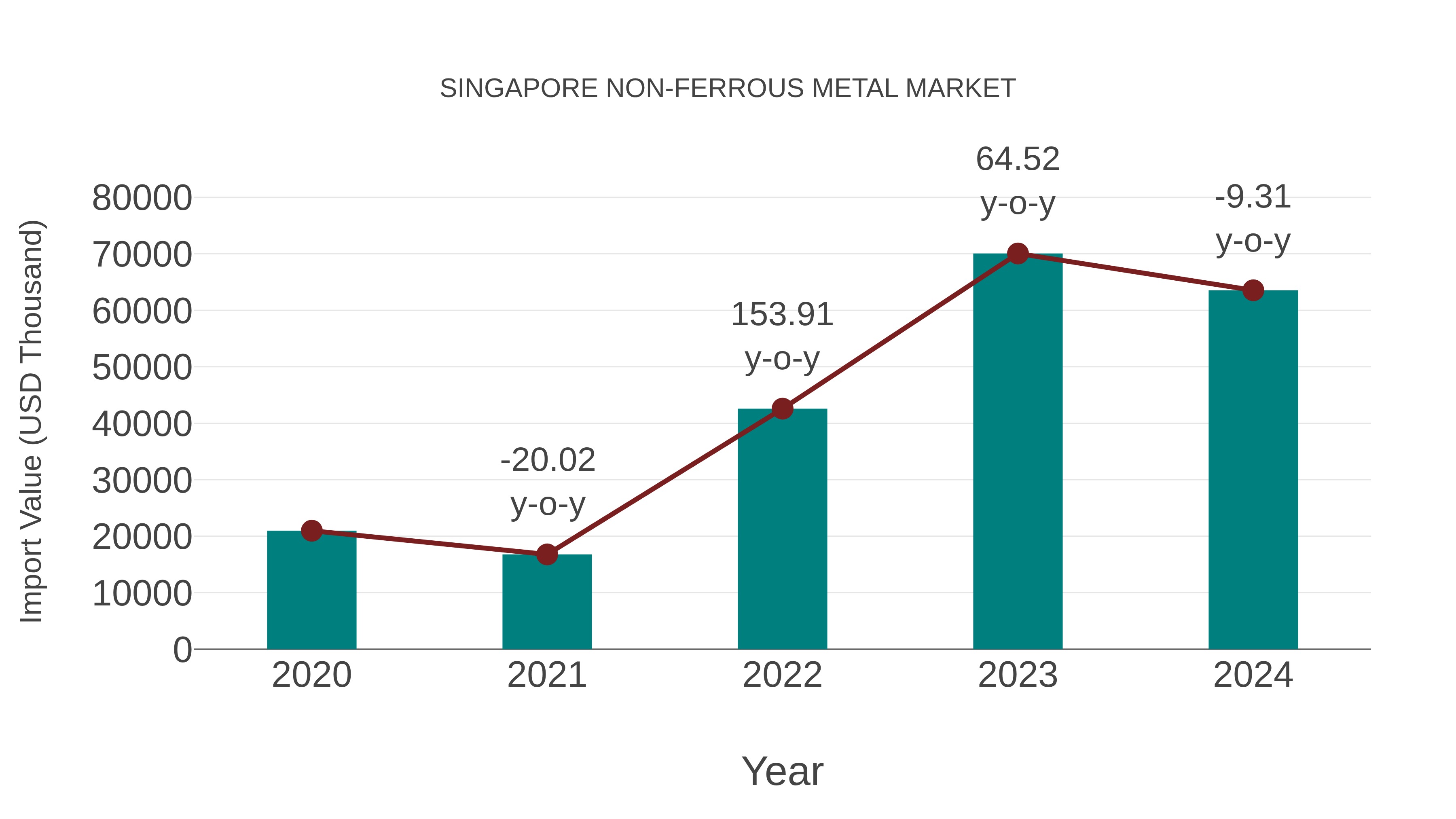
Singapore Non-ferrous Metal Market Synopsis
The Singapore Non-ferrous Metal Market is expected to grow at a compound annual growth rate of 5.2% during the forecast period from 2020 to 2026. The increasing demand for non-ferrous metals like aluminum, nickel and zinc in the automotive, aerospace, electrical & electronic industries are driving market growth in Singapore. Furthermore, growing demand for energy efficient materials such as copper and its alloys are projected to contribute significantly towards market growth over the forecasted period.
Market Drivers
Growing Automotive Industry ??? Rising sales of cars and other automobiles due to increased disposable income of consumers is resulting in greater demand for non-ferrous metals which has driven the market forward. Increasing Investments - Rise in investments by government bodies into research and development activities have also boosted the overall industrial sector which further leads to improved production levels that require more use of non???ferrous metal products.Growing Demand For Renewable Energy Sources ??? The rise in global temperature is leading countries across the world towards sustainable energy sources such as solar power or hydroelectricity which requires many components made out of Non-Ferrous Metals thus creating an upward trend in their demand thereby driving up this industry???s revenue figures
Market challenges
Volatility In Raw Material Prices ??? Fluctuation prices of raw materials used for producing Non Ferrous Metal Products poses a major challenge on its profitability margins hence hindering potential growth opportunities.Environmental Regulations And Taxes - Stringent regulations imposed by various governments across different nations impose taxes that make it difficult for companies within this industry to sustain profits levels while operating within set environmental standards making it challenging for potential entrants looking into entering this space.
Key players
Some key players operating within this space include Kobe Steel Ltd, Birla Copper Ltd., JFE Holdings Inc., Nippon Steel Corporation & Hindalco Industries Limited amongst others who dominate majority share within Asia???s Non Ferous Metals Sector.
Covid-19 Impact
The COVID19 pandemic has had a negative impact on most markets worldwide including Singapore Non Ferrous Metal Industry with reports predicting around 6 % reduction owing largely due global supply chain disruptions, lockdowns enforced by various governments & decrease consumer spending patterns.
Key Highlights of the Report:
- Singapore Non-ferrous Metal Market Outlook
- Market Size of Singapore Non-ferrous Metal Market, 2023
- Forecast of Singapore Non-ferrous Metal Market, 2030
- Historical Data and Forecast of Singapore Non-ferrous Metal Revenues & Volume for the Period 2020-2030
- Singapore Non-ferrous Metal Market Trend Evolution
- Singapore Non-ferrous Metal Market Drivers and Challenges
- Singapore Non-ferrous Metal Price Trends
- Singapore Non-ferrous Metal Porter's Five Forces
- Singapore Non-ferrous Metal Industry Life Cycle
- Historical Data and Forecast of Singapore Non-ferrous Metal Market Revenues & Volume By Types for the Period 2020-2030
- Historical Data and Forecast of Singapore Non-ferrous Metal Market Revenues & Volume By Aluminum for the Period 2020-2030
- Historical Data and Forecast of Singapore Non-ferrous Metal Market Revenues & Volume By Copper for the Period 2020-2030
- Historical Data and Forecast of Singapore Non-ferrous Metal Market Revenues & Volume By Lead for the Period 2020-2030
- Historical Data and Forecast of Singapore Non-ferrous Metal Market Revenues & Volume By Tin for the Period 2020-2030
- Historical Data and Forecast of Singapore Non-ferrous Metal Market Revenues & Volume By Nickel for the Period 2020-2030
- Historical Data and Forecast of Singapore Non-ferrous Metal Market Revenues & Volume By Titanium for the Period 2020-2030
- Historical Data and Forecast of Singapore Non-ferrous Metal Market Revenues & Volume By Zinc for the Period 2020-2030
- Historical Data and Forecast of Singapore Non-ferrous Metal Market Revenues & Volume By Applications for the Period 2020-2030
- Historical Data and Forecast of Singapore Non-ferrous Metal Market Revenues & Volume By Automobile Industry for the Period 2020-2030
- Historical Data and Forecast of Singapore Non-ferrous Metal Market Revenues & Volume By Electronic Power Industry for the Period 2020-2030
- Historical Data and Forecast of Singapore Non-ferrous Metal Market Revenues & Volume By Construction Industry for the Period 2020-2030
- Historical Data and Forecast of Singapore Non-ferrous Metal Market Revenues & Volume By Other for the Period 2020-2030
- Singapore Non-ferrous Metal Import Export Trade Statistics
- Market Opportunity Assessment By Types
- Market Opportunity Assessment By Applications
- Singapore Non-ferrous Metal Top Companies Market Share
- Singapore Non-ferrous Metal Competitive Benchmarking By Technical and Operational Parameters
- Singapore Non-ferrous Metal Company Profiles
- Singapore Non-ferrous Metal Key Strategic Recommendations






































