Singapore Oyster Market: Import Trend Analysis
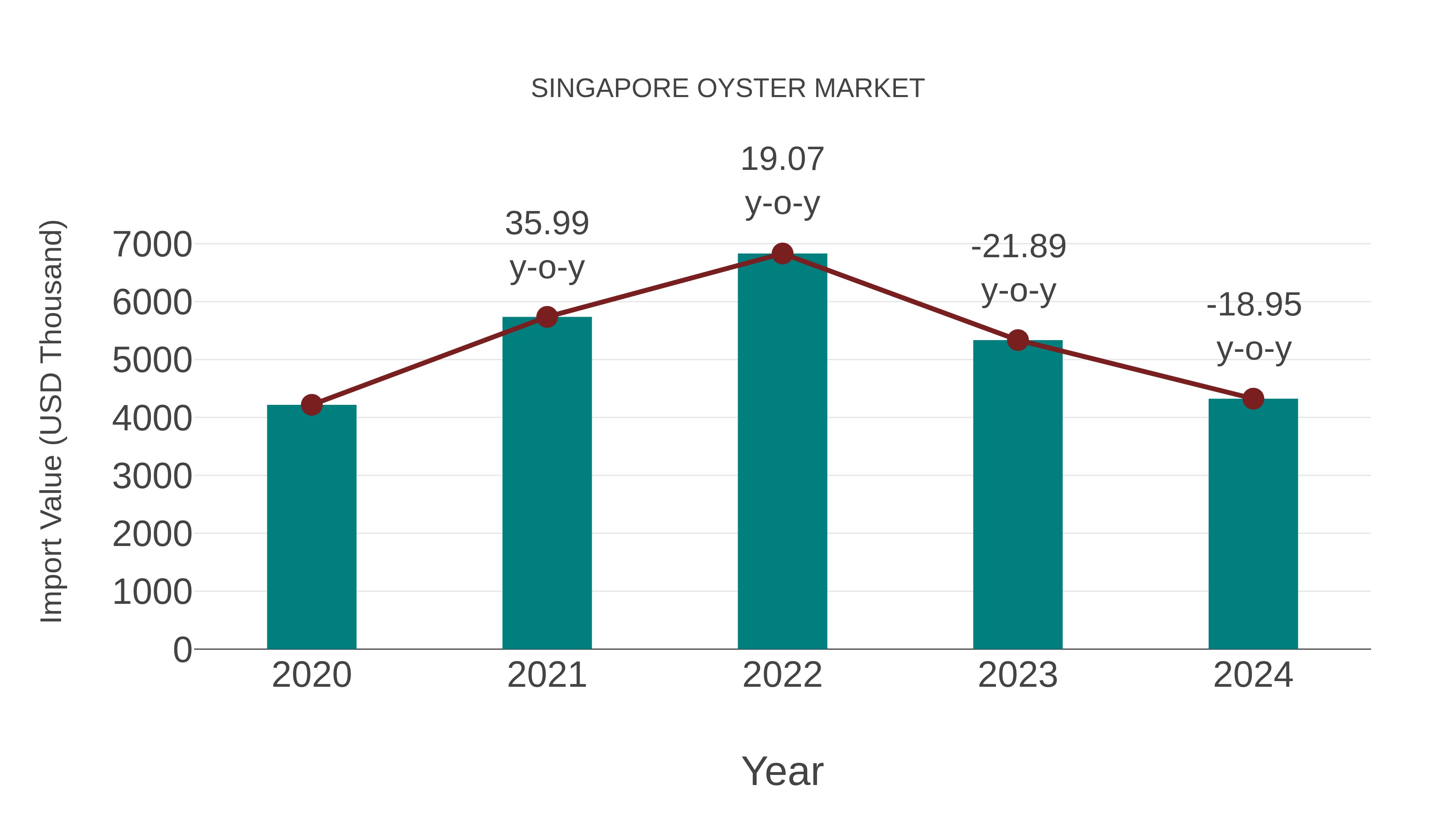
In 2024, Singapore`s oyster market saw a consistent upward trend in imports. The demand for oysters in Singapore increased steadily throughout the year, reflecting a growing preference for imported oysters among consumers and businesses in the market.
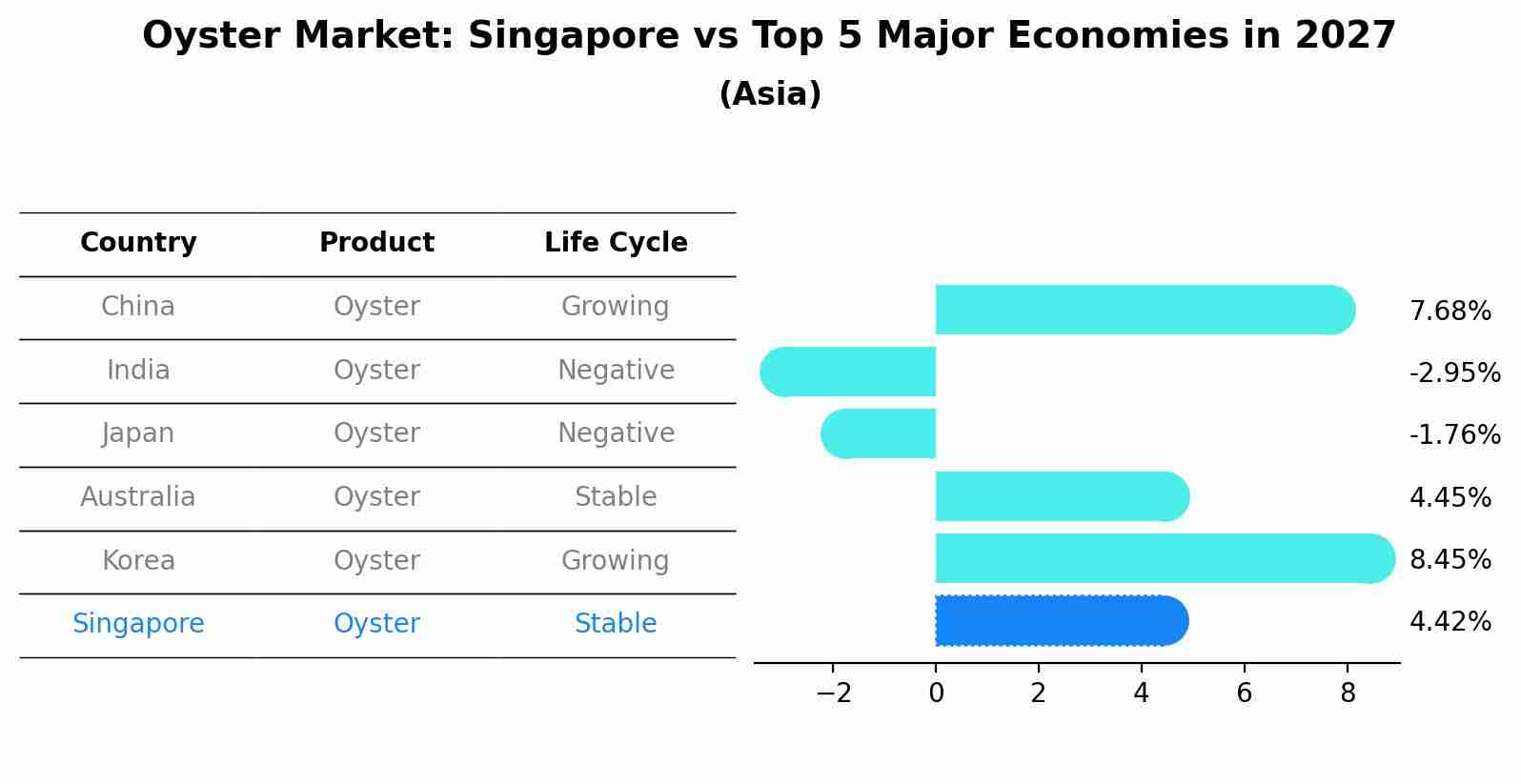
Oyster Market: Singapore vs Top 5 Major Economies in 2027 (Asia)
The Oyster market in Singapore is projected to grow at a stable growth rate of 4.42% by 2027, highlighting the country's increasing focus on advanced technologies within the Asia region, where China holds the dominant position, followed closely by India, Japan, Australia and South Korea, shaping overall regional demand.
Singapore Oyster Market Synopsis
The Singapore oyster market offers a range of oyster varieties, catering to seafood enthusiasts. Oysters are valued for their distinct flavor and versatility in culinary applications. Sustainability, quality assurance, and responsible sourcing practices will shape market dynamics as consumers seek high-quality oysters.
Drivers of the Market
The growth of the Singapore oyster market is influenced by factors such as seafood consumption, culinary diversity, and demand for shellfish. Oysters are prized for their delicate flavor and use in various preparations. Growth drivers include the demand for high-quality and freshly shucked oysters, innovations in oyster processing and distribution, and applications in oyster bars, seafood platters, and fine dining. As consumers appreciate diverse culinary experiences and premium seafood offerings, the oyster market is expected to grow, providing essential ingredients for seafood enthusiasts.
Challenges of the Market
The oyster market in Singapore confronts challenges concerning oyster sourcing, seafood sustainability, and consumer preferences. Oysters are a popular seafood choice, and managing their supply chain while adhering to responsible harvesting practices is crucial. Moreover, addressing concerns about oyster stock conservation, overharvesting, and adherence to sustainable seafood standards is important for market viability.
COVID-19 Impact on the Market
The oyster market in Singapore experienced changes during the COVID-19 pandemic. With disruptions in the foodservice sector and fluctuations in consumer preferences, the market adjusted to evolving demand for oyster products, including fresh and shucked oysters. Suppliers adapted by ensuring oyster availability and quality for both retail and culinary use. The pandemic accelerated the trend of home cooking and exploring gourmet seafood options, influencing market strategies.
Key Players in the Market
The Singapore oyster market is influenced by seafood suppliers like The Seafood Company and Hai Sia Seafood. These companies provide a variety of oyster products, ensuring a consistent supply to meet consumer preferences for this shellfish delicacy.
Key Highlights of the Report:
- Singapore Oyster Market Outlook
- Market Size of Singapore Oyster Market, 2025
- Forecast of Singapore Oyster Market, 2032
- Historical Data and Forecast of Singapore Oyster Revenues & Volume for the Period 2022-2032F
- Singapore Oyster Market Trend Evolution
- Singapore Oyster Market Drivers and Challenges
- Singapore Oyster Price Trends
- Singapore Oyster Porter's Five Forces
- Singapore Oyster Industry Life Cycle
- Historical Data and Forecast of Singapore Oyster Market Revenues & Volume By Oyster Type for the Period 2022-2032F
- Historical Data and Forecast of Singapore Oyster Market Revenues & Volume By Cupped Oyster for the Period 2022-2032F
- Historical Data and Forecast of Singapore Oyster Market Revenues & Volume By Pacific Cupped Oyster for the Period 2022-2032F
- Historical Data and Forecast of Singapore Oyster Market Revenues & Volume By American Cupped Oyster for the Period 2022-2032F
- Historical Data and Forecast of Singapore Oyster Market Revenues & Volume By Penguin Wing Oyster for the Period 2022-2032F
- Historical Data and Forecast of Singapore Oyster Market Revenues & Volume By Others for the Period 2022-2032F
- Historical Data and Forecast of Singapore Oyster Market Revenues & Volume By End User for the Period 2022-2032F
- Historical Data and Forecast of Singapore Oyster Market Revenues & Volume By Foodservice for the Period 2022-2032F
- Historical Data and Forecast of Singapore Oyster Market Revenues & Volume By Retail for the Period 2022-2032F
- Historical Data and Forecast of Singapore Oyster Market Revenues & Volume By Packaging Form for the Period 2022-2032F
- Historical Data and Forecast of Singapore Oyster Market Revenues & Volume By Fresh for the Period 2022-2032F
- Historical Data and Forecast of Singapore Oyster Market Revenues & Volume By Frozen for the Period 2022-2032F
- Historical Data and Forecast of Singapore Oyster Market Revenues & Volume By Canned for the Period 2022-2032F
- Historical Data and Forecast of Singapore Oyster Market Revenues & Volume By Others for the Period 2022-2032F
- Singapore Oyster Import Export Trade Statistics
- Market Opportunity Assessment By Oyster Type
- Market Opportunity Assessment By End User
- Market Opportunity Assessment By Packaging Form
- Singapore Oyster Top Companies Market Share
- Singapore Oyster Competitive Benchmarking By Technical and Operational Parameters
- Singapore Oyster Company Profiles
- Singapore Oyster Key Strategic Recommendations






































