Singapore Processed Meat Market: Import Trend Analysis
In 2024, Singapore`s processed meat market saw a notable increase in imports. The trend indicated a growing demand for imported processed meat products within the country.
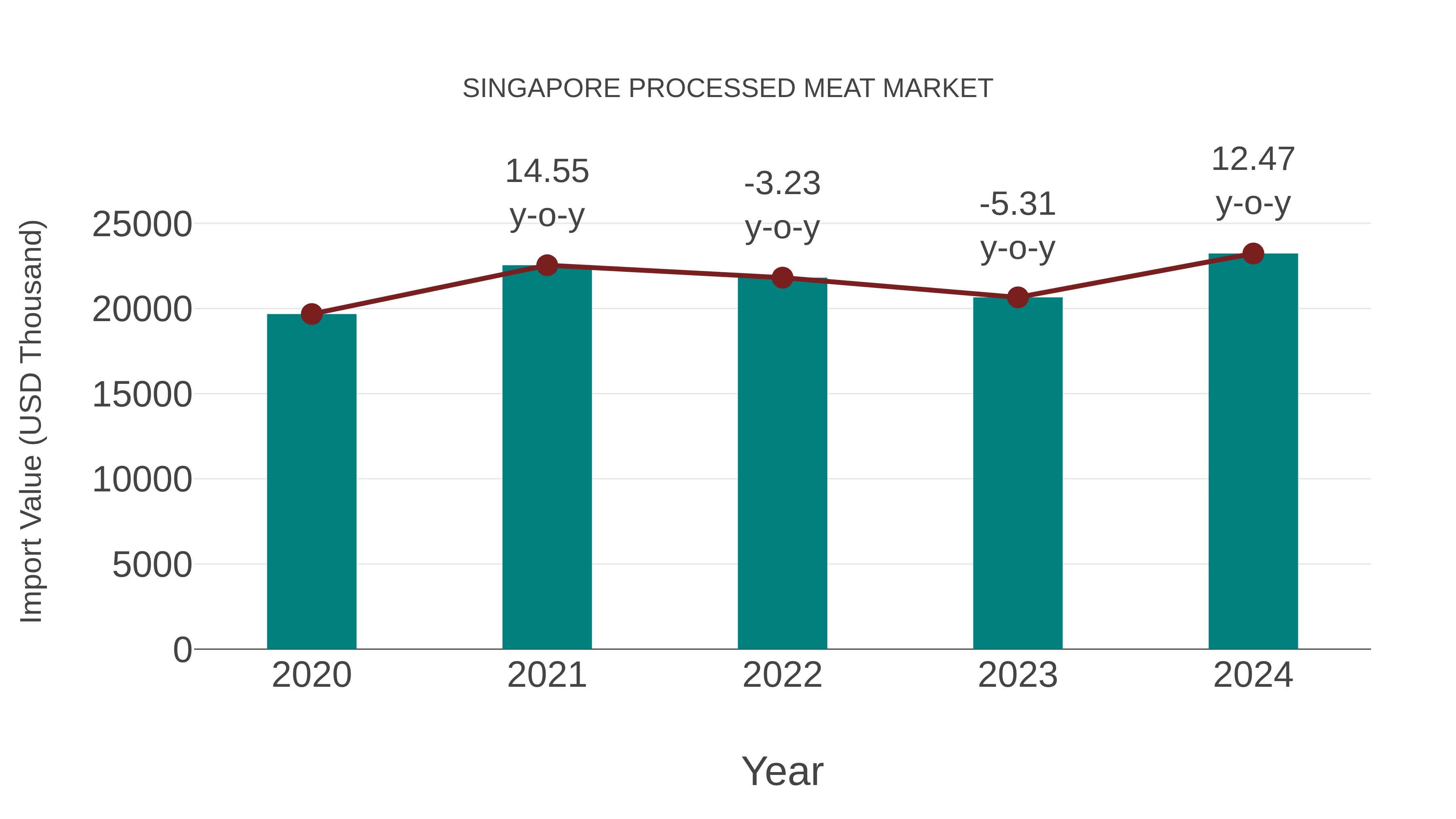
Singapore Export Potential Assessment For Processed Meat Market (Values in USD Thousand)
Singapore Processed Meat Market Synopsis
The Singapore processed meat market is expected to see sustained demand. Processed meat products cater to convenience-oriented consumers, and their popularity is influenced by urbanization and busy lifestyles. However, manufacturers should address health and nutrition concerns and explore opportunities for product diversification to maintain market relevance.
Drivers of the Market
The growth of the Singapore processed meat market is influenced by factors such as convenience foods, culinary diversity, and busy lifestyles. Processed meat products offer a range of ready-to-eat options for consumers. Growth drivers encompass the demand for flavorful and convenient meat products, innovations in meat processing and preservation, and applications in supermarkets, fast-food outlets, and home cooking. As diverse culinary preferences and hectic lifestyles persist, the processed meat market is poised for growth, providing essential options for quick and delicious meals.
Challenges of the Market
The processed meat market in Singapore encounters challenges concerning meat quality, safety, and consumer preferences. Processed meat products are widely consumed, and manufacturers must adhere to stringent food safety standards while offering a variety of flavorful options. Moreover, addressing concerns about meat sourcing, additives, and processing methods is essential for consumer trust and food safety.
COVID-19 Impact on the Market
The processed meat market in Singapore demonstrated resilience during the COVID-19 pandemic. While there were fluctuations in supply chains and consumer dining habits, processed meat products remained popular for their convenience and taste. Suppliers adapted by ensuring product quality, safety, and availability. The pandemic underscored the importance of versatile and ready-to-eat meat options, influencing market strategies.
Key Players in the Market
Companies like SATS and CP Foods are key players in the Singapore processed meat market. They offer a diverse range of processed meat products to cater to consumer preferences for convenience and flavor.
Key Highlights of the Report:
- Singapore Processed Meat Market Outlook
- Market Size of Singapore Processed Meat Market, 2025
- Forecast of Singapore Processed Meat Market, 2032
- Historical Data and Forecast of Singapore Processed Meat Revenues & Volume for the Period 2022-2032F
- Singapore Processed Meat Market Trend Evolution
- Singapore Processed Meat Market Drivers and Challenges
- Singapore Processed Meat Price Trends
- Singapore Processed Meat Porter's Five Forces
- Singapore Processed Meat Industry Life Cycle
- Historical Data and Forecast of Singapore Processed Meat Market Revenues & Volume By Meat Type for the Period 2022-2032F
- Historical Data and Forecast of Singapore Processed Meat Market Revenues & Volume By Poultry for the Period 2022-2032F
- Historical Data and Forecast of Singapore Processed Meat Market Revenues & Volume By Beef for the Period 2022-2032F
- Historical Data and Forecast of Singapore Processed Meat Market Revenues & Volume By Pork for the Period 2022-2032F
- Historical Data and Forecast of Singapore Processed Meat Market Revenues & Volume By Others for the Period 2022-2032F
- Historical Data and Forecast of Singapore Processed Meat Market Revenues & Volume By Product Type for the Period 2022-2032F
- Historical Data and Forecast of Singapore Processed Meat Market Revenues & Volume By Frozen for the Period 2022-2032F
- Historical Data and Forecast of Singapore Processed Meat Market Revenues & Volume By Chilled for the Period 2022-2032F
- Historical Data and Forecast of Singapore Processed Meat Market Revenues & Volume By Canned for the Period 2022-2032F
- Historical Data and Forecast of Singapore Processed Meat Market Revenues & Volume By Application for the Period 2022-2032F
- Historical Data and Forecast of Singapore Processed Meat Market Revenues & Volume By Commercial for the Period 2022-2032F
- Historical Data and Forecast of Singapore Processed Meat Market Revenues & Volume By Residential for the Period 2022-2032F
- Historical Data and Forecast of Singapore Processed Meat Market Revenues & Volume By Distribution Channel for the Period 2022-2032F
- Historical Data and Forecast of Singapore Processed Meat Market Revenues & Volume By HoReCa for the Period 2022-2032F
- Historical Data and Forecast of Singapore Processed Meat Market Revenues & Volume By Supermarkets/Hypermarkets for the Period 2022-2032F
- Historical Data and Forecast of Singapore Processed Meat Market Revenues & Volume By Convenience Stores for the Period 2022-2032F
- Historical Data and Forecast of Singapore Processed Meat Market Revenues & Volume By Independent Retailers for the Period 2022-2032F
- Historical Data and Forecast of Singapore Processed Meat Market Revenues & Volume By Others for the Period 2022-2032F
- Singapore Processed Meat Import Export Trade Statistics
- Market Opportunity Assessment By Meat Type
- Market Opportunity Assessment By Product Type
- Market Opportunity Assessment By Application
- Market Opportunity Assessment By Distribution Channel
- Singapore Processed Meat Top Companies Market Share
- Singapore Processed Meat Competitive Benchmarking By Technical and Operational Parameters
- Singapore Processed Meat Company Profiles
- Singapore Processed Meat Key Strategic Recommendations






































