Singapore Propane Market: Import Trend Analysis
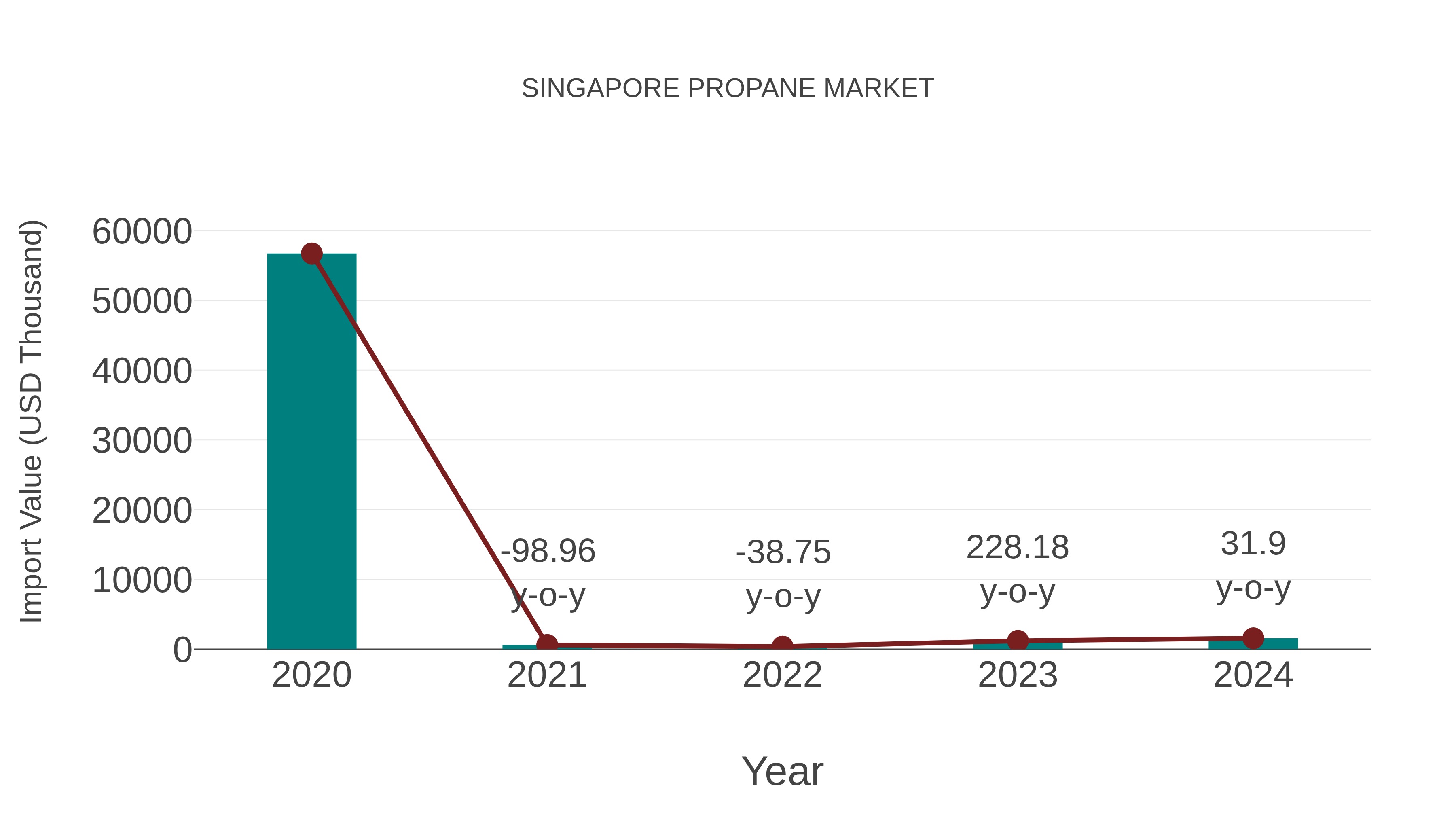
In 2024, Singapore`s propane market saw a steady increase in imports, driven by growing industrial demand. The country imported a significant volume of propane to meet its energy needs and support various sectors, indicating a reliance on imported propane for domestic consumption.
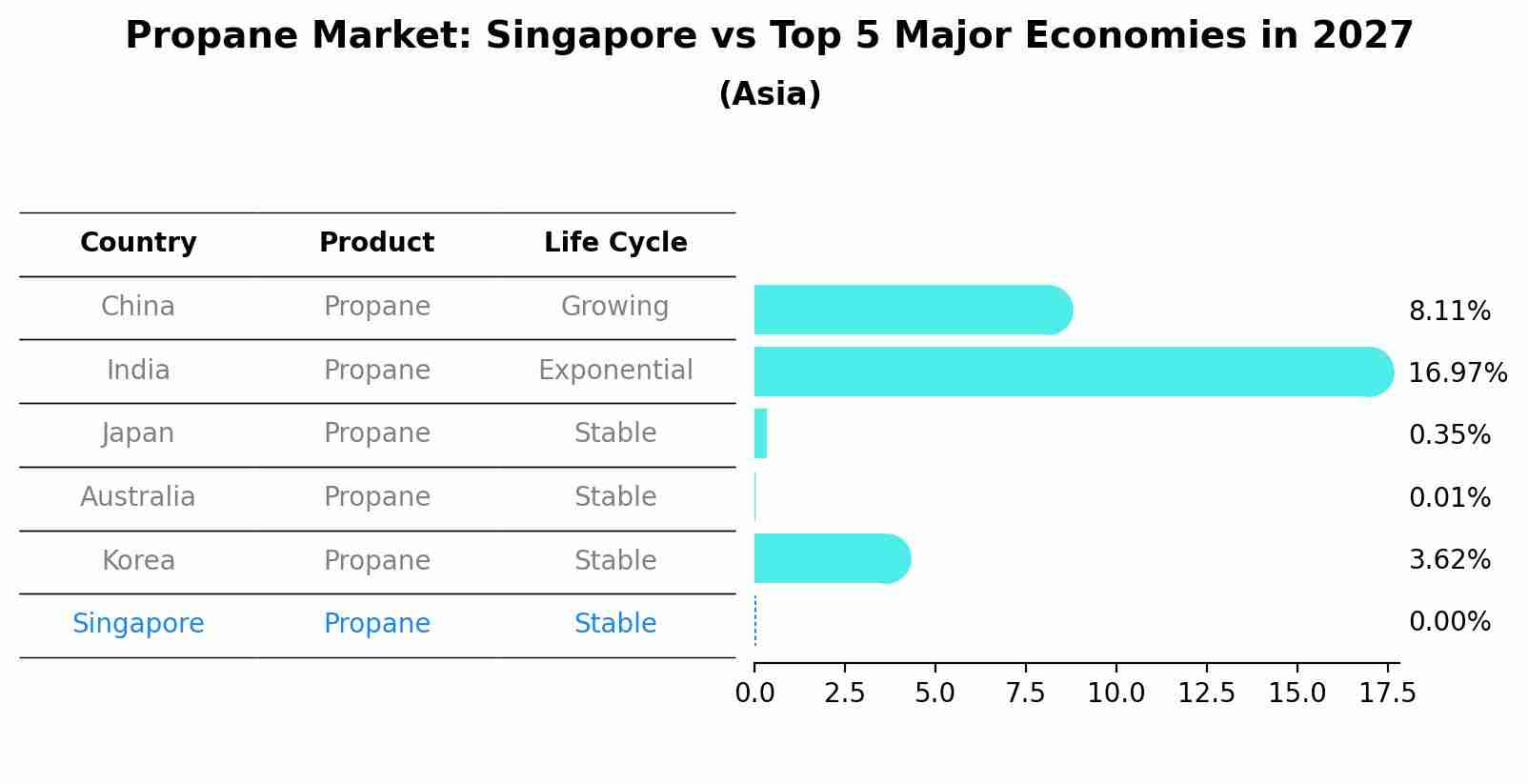
Propane Market: Singapore vs Top 5 Major Economies in 2027 (Asia)
By 2027, the Propane market in Singapore is anticipated to reach a growth rate of 0.00%, as part of an increasingly competitive Asia region, where China remains at the forefront, supported by India, Japan, Australia and South Korea, driving innovations and market adoption across sectors.
Singapore Propane Market Synopsis
The propane market in Singapore is closely linked to its use in various industrial applications, including heating, cooking, and as a fuel source for vehicles. With Singapore efforts to reduce greenhouse gas emissions and transition to cleaner energy sources, the market for propane may see moderate growth. The versatility of propane makes it a valuable energy source in residential, commercial, and industrial settings, and its demand is likely to be influenced by economic and environmental factors.
Drivers of the Market
The Singapore Propane market is influenced by a combination of factors, including industrial and domestic applications. Propane is widely used in cooking, heating, and as a fuel for vehicles and industrial equipment. Singapore industrial sector relies on propane for various processes, including cutting, brazing, and welding. The country`s continuous industrial growth, coupled with its commitment to cleaner fuels, is expected to drive the demand for propane in the foreseeable future.
Challenges of the Market
The Singapore propane market grapples with several challenges, primarily driven by the need for a reliable energy source while addressing environmental concerns. One key challenge is ensuring a stable supply of propane, as Singapore relies heavily on imports. Global geopolitical tensions and market volatility can impact pricing and supply security. The transition to cleaner energy sources and the reduction of greenhouse gas emissions pose a challenge to propane as a fossil fuel. Moreover, safety regulations and infrastructure development are critical concerns for the safe handling and storage of propane. The market`s future success may depend on innovative applications, such as propane in power generation, to address environmental concerns and diversify usage.
COVID-19 Impact on the Market
The Singapore Propane market faced challenges during the pandemic as disruptions in global energy markets influenced propane prices. Propane is used in various applications, including heating, cooking, and transportation. Companies had to adapt to changing market dynamics and focus on cost management. As economic activities normalize and energy demand stabilizes, the propane market outlook is expected to improve gradually.
Key Players in the Market
The Singapore Propane market is influenced by factors such as industrial applications and household consumption. Key players in this market include ExxonMobil, SHV Energy, and Shell Gas.
Key Highlights of the Report:
- Singapore Propane Market Outlook
- Market Size of Singapore Propane Market, 2025
- Forecast of Singapore Propane Market, 2032
- Historical Data and Forecast of Singapore Propane Revenues & Volume for the Period 2022-2032F
- Singapore Propane Market Trend Evolution
- Singapore Propane Market Drivers and Challenges
- Singapore Propane Price Trends
- Singapore Propane Porter's Five Forces
- Singapore Propane Industry Life Cycle
- Historical Data and Forecast of Singapore Propane Market Revenues & Volume By Applications for the Period 2022-2032F
- Historical Data and Forecast of Singapore Propane Market Revenues & Volume By Industrial for the Period 2022-2032F
- Historical Data and Forecast of Singapore Propane Market Revenues & Volume By Commercial for the Period 2022-2032F
- Historical Data and Forecast of Singapore Propane Market Revenues & Volume By Residential for the Period 2022-2032F
- Historical Data and Forecast of Singapore Propane Market Revenues & Volume By Transportation for the Period 2022-2032F
- Historical Data and Forecast of Singapore Propane Market Revenues & Volume By Agriculture for the Period 2022-2032F
- Historical Data and Forecast of Singapore Propane Market Revenues & Volume By Chemicals and Refineries for the Period 2022-2032F
- Singapore Propane Import Export Trade Statistics
- Market Opportunity Assessment By Applications
- Singapore Propane Top Companies Market Share
- Singapore Propane Competitive Benchmarking By Technical and Operational Parameters
- Singapore Propane Company Profiles
- Singapore Propane Key Strategic Recommendations






































