Singapore Sports Shoes Market Growth Rate
According to 6Wresearch internal database and industry insights, the Singapore Sports Shoes Market is growing at a compound annual growth rate (CAGR) of 5.85% during the forecast period (2026-2032).
Singapore Sports Shoes Market Year-wise Growth Rate and Key Drivers
This graph highlights how the Singapore Sports Shoes Market has steadily grown over the past five years, supported by major growth factors.
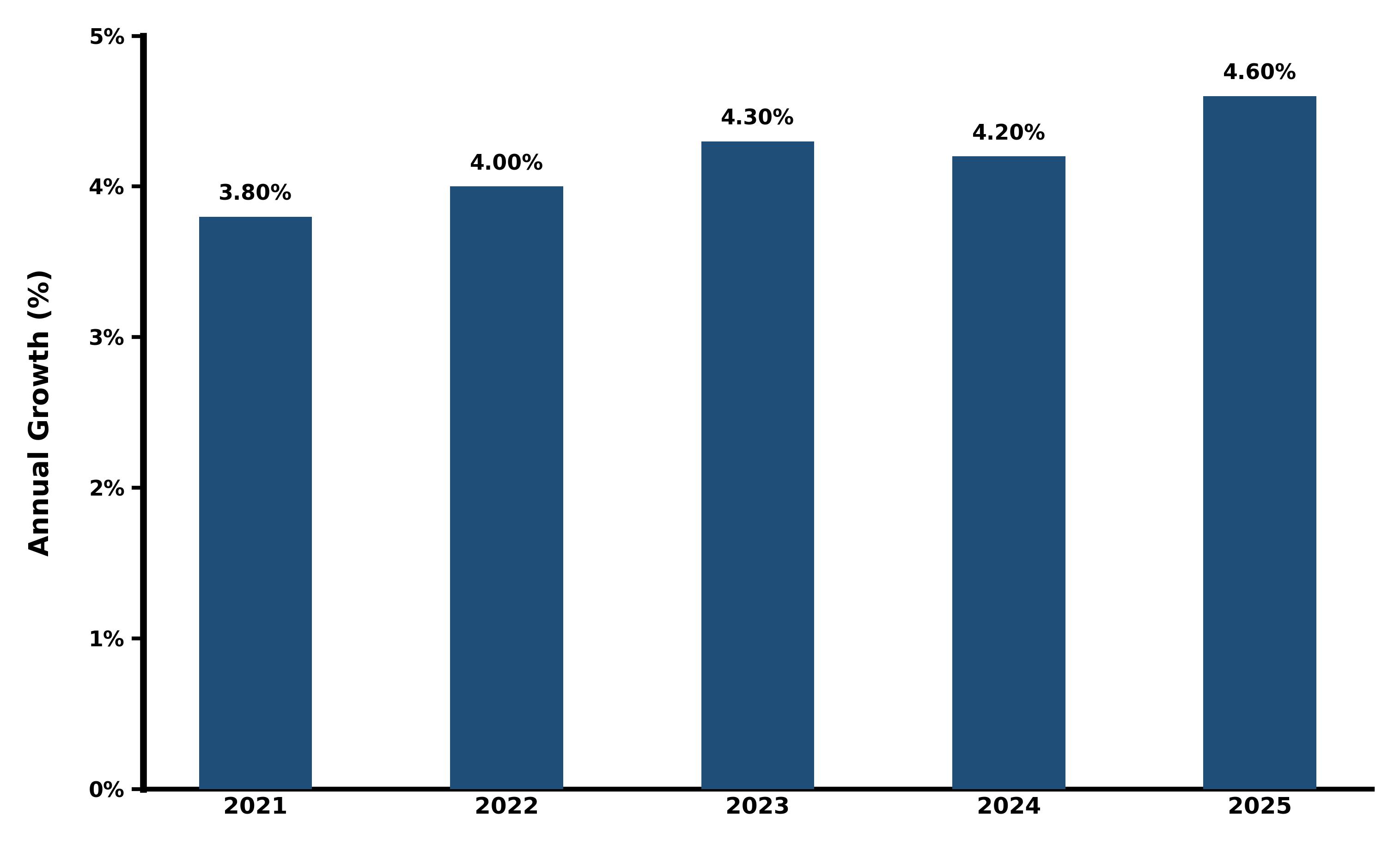
The table below presents the year‑wise growth rates along with the key drivers influencing the market
| Years | Est. Annual Growth in % | Growth Drivers |
| 2021 | 3.8% | Increasing awareness of fitness and wellness trends. |
| 2022 | 4% | Rise in sports and outdoor activities among millennials and Gen Z. |
| 2023 | 4.3% | Growth of sports shoe retail through online platforms and mobile apps. |
| 2024 | 4.2% | Rising demand for fashionable and performance-oriented sports shoes among the urban population. |
| 2025 | 4.6% | Increasing participation in sports, fitness, and recreational activities. |
Topics Covered in the Singapore Sports Shoes Market Report
The Singapore Sports Shoes Market report thoroughly covers the market by categories, distribution channels, types of shoes, and end-users. The market report provides an unbiased and detailed analysis of ongoing market trends, opportunities/high growth areas, and market drivers, which would help stakeholders devise and align their market strategies according to the current and future market dynamics.
Singapore Sports Shoes Market Highlights
| Report Name | Singapore Sports Shoes Market |
| Forecast Period | 2026-2032 |
| CAGR | 5.85% |
| Growing Sector | E-Commerce |
Singapore Sports Shoes Market Synopsis
The Singapore Sports Shoes Market will experience consistent growth as customers demand fashionable shoes that provide high comfort and durability and sustainable features. The market expansion is supported by two factors which include increased fitness participation and growing demand for premium branded footwear. The market currently expands through online retail and e-commerce which provides better product access while businesses implement eco-friendly production methods to satisfy rising consumer demand for sustainable products. The market development during the forecast period results from these trends which support market growth and overall evolution.
Evaluation of Growth Drivers in the Singapore Sports Shoes Market
Below mentioned are some growth drivers and their impact on market dynamics:
| Drivers | Primary Segments Affected | Why It Matters |
| Rising Fitness and Sports Participation | Types of Sports Shoes (Running, Training, Casual) | Increases demand for footwear catering to active lifestyles. |
| E-commerce & Online Retail Growth | Distribution Channels (Online Stores, Retailers) | Expands market access and convenience for consumers. |
| Consumer Preference for Sustainable Products | Materials, Shoe Types | This is due to increased knowledge regarding the use of harmful products. |
| Technological Advancements in Footwear | Sports Shoe Features (Cushioning, Lightweight, Breathable Materials) | Increases product functionality, attracting performance-driven consumers. |
| Branding & Premium Offerings | Sports Shoe Brands (Nike, Adidas, Puma) | Consumers tends to buy from trusted brands providing high quality shoes. |
The Singapore Sports Shoes Market is projected to grow significantly, with a CAGR of 5.85% during the forecast period of 2026-2032. The Singapore Sports Shoes Market experiences its main expansion through rising demand for stylish athletic shoes which provide superior performance to urban shoppers. The increasing number of people who join sports and fitness activities and recreational sports creates a demand for dedicated athletic footwear. The growth of online retail platforms together with e-commerce expansion creates improved access to sports footwear which grows in popularity through technological progress in lightweight and breathable and environmentally friendly materials. The increasing popularity of sustainable footwear and eco-friendly footwear designs creates a shift in consumer behavior which drives market expansion.
Evaluation of Restraints in the Singapore Sports Shoes Market
Below mentioned are some major restraints and their influence on market dynamics:
| Restraints | Primary Segments Affected | What This Means |
| High Price Sensitivity | Types of Sports Shoes (Premium, Affordable) | Impedes mass-market adoption of premium and branded shoes. |
| Competition from Alternative Footwear | Casual Shoes, Sneakers | Rivalry with non-performance footwear reduces demand for sports shoes. |
| Imported Shoe Prices | Distribution Channels | Costs related to imported goods can affect pricing strategy. |
| Limited Awareness of Sustainable Practices | Shoe Materials | Slows down the transition to eco-friendly manufacturing. |
| Counterfeit Products | Types of Sports Shoes, Brands | Availability of counterfeit shoes reduces brand loyalty and negatively impacts market growth. |
Singapore Sports Shoes Market Challenges
The Singapore Sports Shoes Market needs to deal with multiple challenges which exist as customers show high price sensitivity and they prefer to buy only basic products whereas they show interest in purchasing premium items and existence of other footwear options which include casual shoes and sneakers. The pricing methods for imports face restrictions as imported shoe prices determine their pricing structure yet customers lack knowledge about sustainable practices which hinders the progress towards eco-friendly materials. The existence of counterfeit products has a negative effect on both brand loyalty and market expansion. The market faces these challenges which create instability and prevent customers from adopting expensive innovative sustainable footwear products.
Singapore Sports Shoes Market Trends
Some major trends contributing to the Singapore Sports Shoes Market Growth are:
- Sustainability and Eco-Conscious Products: The consumers are increasingly preferring for more eco-friendly and sustainable products due to increased wariness regarding the environmental concern.
- Technological Innovations in Footwear: The growth in tech advancement such as light weight, durable and moisture protection shoes are expected to have more preference by the consumers.
- Customization and Personalization: It can be seen that there is an emerging demand for customized and premium shoes by the high income consumer base.
Investment Opportunities in the Singapore Sports Shoes Market
Here are some investment opportunities in the Singapore Sports Shoes Industry:
- Sustainable Footwear Production: With consumers leaning towards eco-friendly products, investing in sustainable shoe manufacturing methods and materials presents a promising opportunity.
- E-commerce Platforms: The online retail platforms are encouraging the market expansion by providing with ease of accessibility and wide range product offerings.
- Collaborations with Fitness and Sports Brands: Partnerships with fitness and sports centers can further boost brand visibility and help tap into the growing fitness market.
Top 5 Leading Players in the Singapore Sports Shoes Market
Here are some top companies contributing to the Singapore Sports Shoes Market Share:
1. Nike
| Company Name | Nike |
| Headquarters | Beaverton, Oregon, US |
| Established | 1964 |
| Website | Click Here |
Nike is a global leader in the sports shoes market, offering a wide range of performance-oriented shoes for various sports and fitness activities. They continue to innovate in technology and sustainable materials, maintaining a strong market presence in Singapore.
2. Adidas
| Company Name | Adidas |
| Headquarters | Herzogenaurach, Germany |
| Established | 1949 |
| Website | Click Here |
Adidas is another major player in the sports shoes market, known for its technologically advanced footwear and commitment to sustainability. The company offers a diverse range of sports shoes, including running, training, and casual footwear, appealing to a wide consumer base.
3. Puma
| Company Name | Puma |
| Headquarters | Herzogenaurach, Germany |
| Established | 1948 |
| Website | Click Here |
Puma is a renowned brand in the sports shoes market, focusing on stylish and functional designs for various sports and casual activities. Their products cater to athletes and fashion-forward consumers alike.
4. Under Armour
| Company Name | Under Armour |
| Headquarters | Baltimore, Maryland, US |
| Established | 1996 |
| Website | Click Here |
Under Armour focuses on performance-driven footwear with features such as breathability, durability, and comfort. The brand continues to gain traction among consumers who prioritize technology in their sports shoes.
5. New Balance
| Company Name | New Balance |
| Headquarters | Boston, Massachusetts, US |
| Established | 1906 |
| Website | Click Here |
New Balance is a major player in the Singapore sports shoes market, known for producing high-quality, performance-oriented footwear that emphasizes comfort and support for athletes.
Government Regulations Introduced in the Singapore Sports Shoes Market
According to Singaporean government data, the market is well regulated by multiple government policies ensuring the expansion of the industry. The Singapore Food Agency SFA and the National Environment Agency (NEA) provide eco-friendly packaging and product disposal regulations. Other than that, the Singapore Green Plan 2030 system promotes sustainability goals while reducing greenhouse gas emissions. Also, the market needs to adopt environmentally friendly practices, as consumer products must pass strict quality tests. For the continued growth of the industry, the government encourages companies to increasingly invest in new technologies for making the product quality high.
Future Insights of the Singapore Sports Shoes Market
The Singapore Sports Shoes Market exhibits strong growth potential as increasing fitness participation and demand for sustainable innovative footwear products drive market expansion. E-commerce platforms will further boost market expansion by providing with wide range product offerings and convenience of purchase. Furthermore , technological advancements in footwear through smart features and eco-friendly materials will attract eco -conscious consumer base. The market will see increased interest in premium, branded sports shoes, with an increasing focus on customization. The market will experience continuous growth during the forecast period as sustainability and performance remain essential trends.
Market Segmentation Analysis
The report offers a comprehensive study of the subsequent market segments and their leading categories.
Men’s Sports Shoes to Dominate the Market – By Gender Type
According to Guneet Kaur, Senior Research Analyst, 6Wresearch, the market for men's sports shoes has become the most important segment because people now want to buy the shoes which provide both athletic performance and daily comfort to wear.
Online Distribution to Dominate the Market – By Distribution Channel
The online distribution channel is the fastest-growing segment as customers now prefer shopping online and get access to more products and enjoy lower prices. The rising popularity of e-commerce platforms allows customers to find and buy sports shoes which expands market accessibility.
Key attractiveness of the report
- 10 Years Market Numbers.
- Historical Data Starting from 2022 to 2025.
- Base Year: 2025
- Forecast Data until 2032.
- Key Performance Indicators Impacting the Market.
- Major Upcoming Developments and Projects.
Key Highlights of the Report:
- Singapore Sports Shoes Market Outlook
- Market Size of Singapore Sports Shoes Market, 2025
- Forecast of Singapore Sports Shoes Market, 2032
- Historical Data and Forecast of Singapore Sports Shoes Revenues & Volume for the Period 2022-2032
- Singapore Sports Shoes Market Trend Evolution
- Singapore Sports Shoes Market Drivers and Challenges
- Singapore Sports Shoes Price Trends
- Singapore Sports Shoes Porter's Five Forces
- Singapore Sports Shoes Industry Life Cycle
- Historical Data and Forecast of Singapore Sports Shoes Market Revenues & Volume By Gender Type for the Period 2022-2032
- Historical Data and Forecast of Singapore Sports Shoes Market Revenues & Volume By Men for the Period 2022-2032
- Historical Data and Forecast of Singapore Sports Shoes Market Revenues & Volume By Women for the Period 2022-2032
- Historical Data and Forecast of Singapore Sports Shoes Market Revenues & Volume By Kids for the Period 2022-2032
- Historical Data and Forecast of Singapore Sports Shoes Market Revenues & Volume By Distribution Channel for the Period 2022-2032
- Historical Data and Forecast of Singapore Sports Shoes Market Revenues & Volume By Online for the Period 2022-2032
- Historical Data and Forecast of Singapore Sports Shoes Market Revenues & Volume By Offline for the Period 2022-2032
- Singapore Sports Shoes Import Export Trade Statistics
- Market Opportunity Assessment By Gender Type
- Market Opportunity Assessment By Distribution Channel
- Singapore Sports Shoes Top Companies Market Share
- Singapore Sports Shoes Competitive Benchmarking By Technical and Operational Parameters
- Singapore Sports Shoes Company Profiles
- Singapore Sports Shoes Key Strategic Recommendations
Market covered
The report subsequently covers the market by following segments and subsegments.
By Type of Shoe
- Running Shoes
- Training Shoes
- Casual Shoes
- Others
By Distribution Channel
- Online Stores
- Retail Stores
By End-User
- Men
- Women
- Children






































