Singapore Sweet Biscuits Market Size, Share & Growth Rate
The Singapore Sweet Biscuits Market was estimated at USD 371 Million in 2025 and is projected to reach USD 542 Million by 2032, growing at a CAGR of 5.6% from 2026 to 2032. This growth trajectory is primarily driven by a surge in consumer snacking habits, where sweet biscuits are increasingly favored for their convenience and flavor diversity. Additionally, the introduction of innovative formulations that include healthier ingredients is capturing the attention of health-conscious consumers, further boosting market demand.
Singapore Sweet Biscuits Market Year-wise Growth Rate and Key Drivers
This graph highlights how the Singapore Sweet Biscuits Market has steadily grown over the years, supported by major growth factors.
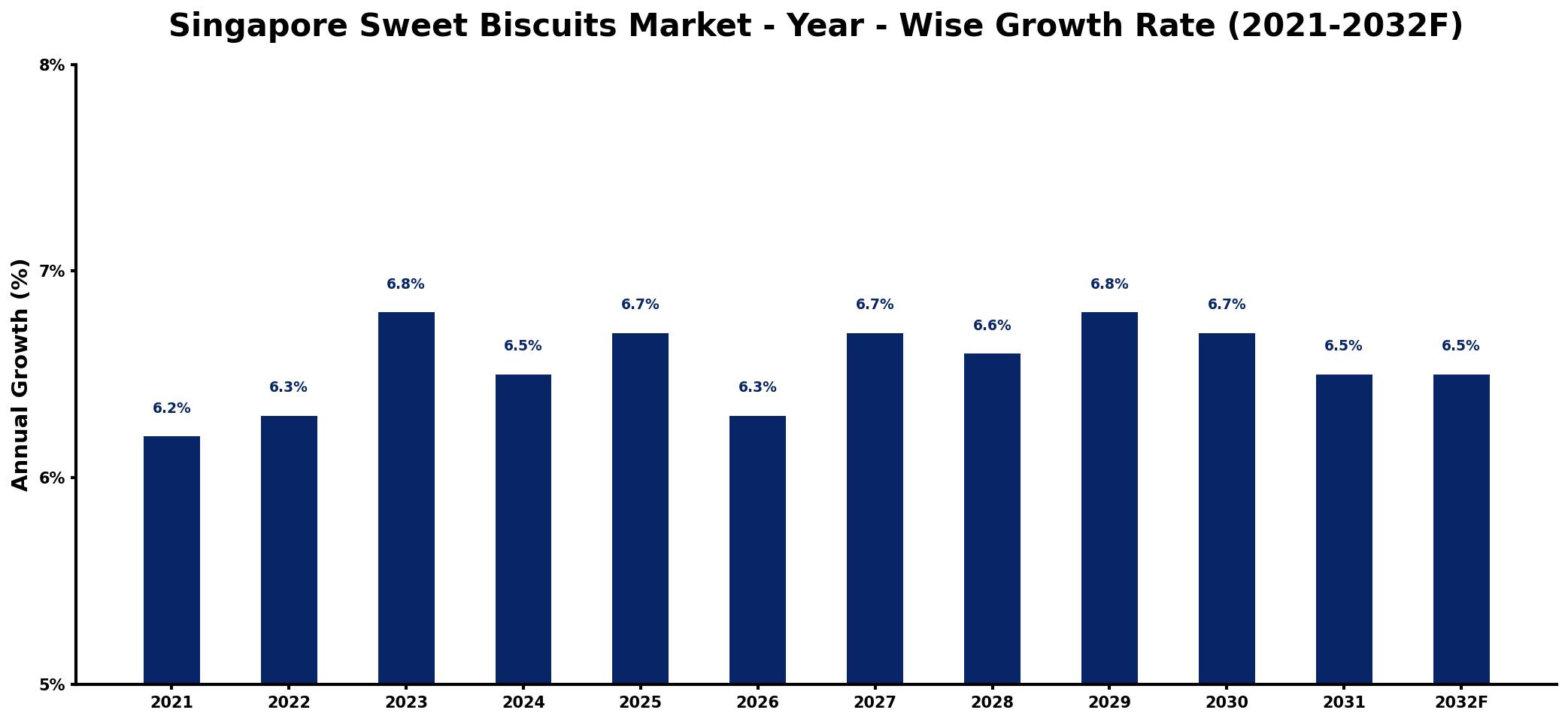
The table below presents the year‑wise growth rates along with the key drivers influencing the market
| Year | Growth Rate | Major Drivers |
| 2021 | 6.2% | Rising consumer health consciousness |
| 2022 | 6.3% | Increased disposable income levels |
| 2023 | 6.8% | Growing demand for convenience snacks |
| 2024 | 6.5% | Expansion of retail distribution channels |
| 2025 | 6.7% | Surge in online shopping trends |
| 2026 | 6.3% | Diversification of product offerings |
| 2027 | 6.7% | Innovative packaging solutions emerging |
| 2028 | 6.6% | Increased focus on sustainability practices |
| 2029 | 6.8% | Growing popularity of artisanal products |
| 2030 | 6.7% | Enhanced marketing strategies implemented |
| 2031 | 6.5% | Expansion into new demographic segments |
| 2032 | 6.5% | Rising interest in premium products |
Note: Market size estimations and growth projections presented in this report are based on 6Wresearch's proprietary forecasting methodology, utilizing the latest available industry data, government publications, and primary research inputs.
Singapore Sweet Biscuits Market Synopsis
The strongest force shaping the Singapore Sweet Biscuits Market right now is the evolving consumer preference for healthier snack options. As lifestyles become busier, consumers are gravitating towards sweet biscuits that are not only indulgent but also align with their nutritional aspirations.
The market is characterized by an array of flavors and formats, appealing to a diverse demographic. The nostalgia associated with traditional sweet biscuits, paired with modern twists, helps maintain their status as a beloved snack choice across all age groups.
Singapore Sweet Biscuits Market Key Takeaways
- The market is projected to witness significant growth driven by health-conscious innovations.
- Product diversity, from flavors to packaging, plays a crucial role in attracting various consumer segments.
- The increasing popularity of on-the-go snacks fuels demand for sweet biscuits in convenient packaging.
- Healthier reformulations are becoming essential to meet the rising demand for guilt-free indulgence.
- Competitive pressures from alternative snack options challenge traditional sweet biscuit sales.
Evaluation of Restraints in Singapore Sweet Biscuits Market
Despite the promising outlook for the Singapore Sweet Biscuits Market, several restraints could hinder its progress. One significant limitation is the rising consumer demand for healthier snacks, leading to increased pressure on manufacturers to reformulate products. As preferences shift towards lower sugar and more natural ingredients, traditional sweet biscuits may struggle to compete against a backdrop of healthier alternatives like granola bars and fruit snacks. Additionally, the crowded snack market requires continuous innovation and differentiation, which could strain resources and challenge companies to keep pace with consumer expectations.
Singapore Sweet Biscuits Market Trends
Current trends indicate a growing focus on health-oriented ingredients in sweet biscuits, with a significant rise in demand for whole grains, natural sweeteners, and functional components such as added fiber and protein. The market is also witnessing creative flavor combinations and limited-edition offerings that cater to adventurous palates. Moreover, the rise of e-commerce platforms is facilitating broader reach and accessibility, changing how consumers purchase their favorite snacks.
Singapore Sweet Biscuits Market Opportunities
There are genuine growth opportunities in the Singapore Sweet Biscuits Market, particularly in the realm of health and wellness. Companies can capitalize on consumer demand for nutritious snacks by investing in R&D to create innovative sweet biscuits that are both tasty and healthy. Furthermore, leveraging online sales channels can enhance brand visibility and accessibility, particularly among younger consumers who prefer convenient shopping experiences. Additionally, partnerships with cafes and restaurants can provide new avenues for product placement and visibility.
Government Initiatives in the Singapore Sweet Biscuits Market
The Singaporean government has been proactive in promoting healthier eating habits among its population. Various public health campaigns encourage reduced sugar intake and increased consumption of whole grains. These initiatives are pivotal in shaping the regulatory landscape, as they may influence product formulations and marketing strategies within the sweet biscuits market. Furthermore, support for local food production and innovation programs can enhance the sustainability and competitiveness of Singaporean snack manufacturers.
Future Insights of the Singapore Sweet Biscuits Market
Looking ahead to 2026-2032, the Singapore Sweet Biscuits Market is poised for continued growth, with a notable shift towards healthier alternatives. As manufacturers adapt to evolving consumer preferences, the integration of functional ingredients and more transparent labeling will likely be crucial. The market's ability to innovate while maintaining the traditional indulgence that sweet biscuits offer will define its trajectory. The rise of online shopping is also expected to reshape purchasing behaviors, making accessibility a key factor for success.
Singapore Sweet Biscuits Market Latest Developments (2025 - 2026)
In recent months, the sweet biscuits market has seen a surge in the launch of products featuring novel flavors and healthier ingredient profiles. Manufacturers are increasingly focusing on sustainability in their packaging to appeal to environmentally conscious consumers. Collaborative marketing campaigns with local cafes and lifestyle brands have emerged, showcasing the versatility of sweet biscuits in various culinary applications. The impact of online retail growth is also evident, with many brands investing in digital marketing to enhance their visibility and reach.
Singapore Sweet Biscuits Market - Key Attractiveness of the Report
- 10 Years of Market Numbers
- Historical Data Starting from 2022 to 2025
- Base Year: 2025
- Forecast Data until 2032
- Key Performance Indicators Impacting the Market
- Major Upcoming Developments and Projects
Key Highlights of the Report:
- Singapore Sweet Biscuits Market Outlook
- Market Size of Singapore Sweet Biscuits Market, 2025
- Forecast of Singapore Sweet Biscuits Market, 2032
- Historical Data and Forecast of Singapore Sweet Biscuits Revenues & Volume for the Period 2022-2032F
- Singapore Sweet Biscuits Market Trend Evolution
- Singapore Sweet Biscuits Market Drivers and Challenges
- Singapore Sweet Biscuits Price Trends
- Singapore Sweet Biscuits Porter's Five Forces
- Singapore Sweet Biscuits Industry Life Cycle
- Historical Data and Forecast of Singapore Sweet Biscuits Market Revenues & Volume By Product Type for the Period 2022-2032F
- Historical Data and Forecast of Singapore Sweet Biscuits Market Revenues & Volume By Chocolate-coated Biscuits for the Period 2022-2032F
- Historical Data and Forecast of Singapore Sweet Biscuits Market Revenues & Volume By Cookies for the Period 2022-2032F
- Historical Data and Forecast of Singapore Sweet Biscuits Market Revenues & Volume By Filled Biscuits for the Period 2022-2032F
- Historical Data and Forecast of Singapore Sweet Biscuits Market Revenues & Volume By Plain Biscuits for the Period 2022-2032F
- Historical Data and Forecast of Singapore Sweet Biscuits Market Revenues & Volume By Sandwich Biscuits for the Period 2022-2032F
- Historical Data and Forecast of Singapore Sweet Biscuits Market Revenues & Volume By Other Sweet Biscuits for the Period 2022-2032F
- Historical Data and Forecast of Singapore Sweet Biscuits Market Revenues & Volume By Distribution Channel for the Period 2022-2032F
- Historical Data and Forecast of Singapore Sweet Biscuits Market Revenues & Volume By Supermarkets/Hypermarkets for the Period 2022-2032F
- Historical Data and Forecast of Singapore Sweet Biscuits Market Revenues & Volume By Specialist Retailers for the Period 2022-2032F
- Historical Data and Forecast of Singapore Sweet Biscuits Market Revenues & Volume By Convenience Stores for the Period 2022-2032F
- Historical Data and Forecast of Singapore Sweet Biscuits Market Revenues & Volume By Online Stores for the Period 2022-2032F
- Historical Data and Forecast of Singapore Sweet Biscuits Market Revenues & Volume By Other Distribution Channels for the Period 2022-2032F
- Singapore Sweet Biscuits Import Export Trade Statistics
- Market Opportunity Assessment By Product Type
- Market Opportunity Assessment By Distribution Channel
- Singapore Sweet Biscuits Top Companies Market Share
- Singapore Sweet Biscuits Competitive Benchmarking By Technical and Operational Parameters
- Singapore Sweet Biscuits Company Profiles
- Singapore Sweet Biscuits Key Strategic Recommendations






































