Singapore Swimwear and Beachwear Market: Import Trend Analysis
In 2024, Singapore`s swimwear and beachwear market showed a notable increase in imports. The demand for a variety of styles and designs from international brands contributed to the growth in imports, reflecting consumers` preferences for diverse and trendy options.
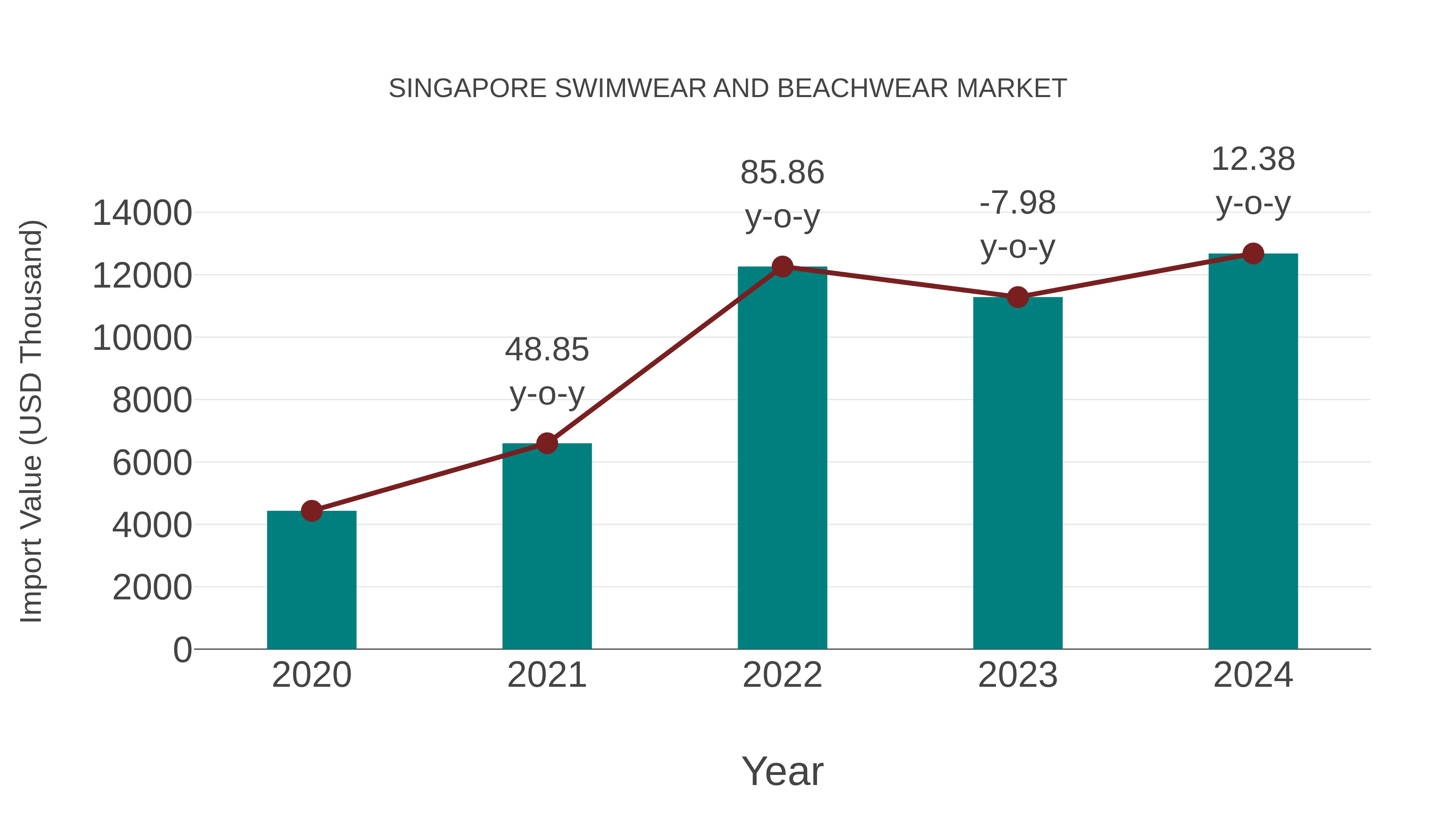
Singapore Swimwear and Beachwear Market Synopsis
The swimwear and beachwear market in Singapore has experienced notable growth due to the country`s tropical climate and coastal lifestyle. With a diverse range of beach destinations and an emphasis on wellness and leisure, swimwear has become a fashion statement rather than just functional attire. The market offers an array of styles, from traditional one-pieces to modern bikinis, catering to different body types and preferences. International and local swimwear brands have introduced innovative designs, incorporating technology to enhance comfort, sun protection, and durability. As beach culture and outdoor activities remain integral to Singapore lifestyle, the swimwear and beachwear market is poised to thrive, driven by fashion-conscious consumers and a focus on functional yet stylish designs.
Drivers of the Market
The Singapore hosiery market is influenced by several key drivers. Firstly, changing fashion trends and preferences play a crucial role, with consumers seeking stylish and comfortable hosiery options. Additionally, the growing awareness of the benefits of compression hosiery for health and wellness purposes, such as improving circulation and reducing fatigue, has boosted sales. Furthermore, the increasing number of women in the workforce and the need for formal attire in corporate settings have also contributed to the demand for hosiery products.
Challenges of the Market
The Singapore swimwear and beachwear market is impacted by seasonal demand and intense competition. Businesses need to continually update their designs to cater to changing fashion trends and preferences. Additionally, concerns about body image and sizing can affect consumer purchasing decisions, making it essential for companies to offer a wide range of sizes and styles. The market also faces environmental scrutiny, necessitating the use of sustainable materials and ethical manufacturing practices.
COVID-19 Impact on the Market
The COVID-19 pandemic had a mixed impact on the Singapore swimwear and beachwear market. While international travel restrictions limited beach vacations, local pool and beach visits surged as people sought recreational activities closer to home. Demand for swimwear with comfort and versatility, such as cover-ups and rash guards, increased. E-commerce platforms and social media marketing played a significant role in reaching consumers.
Key Players in the Market
The swimwear and beachwear market in Singapore is diverse, with international brands like Speedo, Roxy, and Billabong catering to beachgoers and water sports enthusiasts.
Key Highlights of the Report:
- Singapore Swimwear and Beachwear Market Outlook
- Market Size of Singapore Swimwear and Beachwear Market, 2025
- Forecast of Singapore Swimwear and Beachwear Market, 2032
- Historical Data and Forecast of Singapore Swimwear and Beachwear Revenues & Volume for the Period 2022-2032F
- Singapore Swimwear and Beachwear Market Trend Evolution
- Singapore Swimwear and Beachwear Market Drivers and Challenges
- Singapore Swimwear and Beachwear Price Trends
- Singapore Swimwear and Beachwear Porter's Five Forces
- Singapore Swimwear and Beachwear Industry Life Cycle
- Historical Data and Forecast of Singapore Swimwear and Beachwear Market Revenues & Volume By Type for the Period 2022-2032F
- Historical Data and Forecast of Singapore Swimwear and Beachwear Market Revenues & Volume By One-Piece Type for the Period 2022-2032F
- Historical Data and Forecast of Singapore Swimwear and Beachwear Market Revenues & Volume By Split Type for the Period 2022-2032F
- Historical Data and Forecast of Singapore Swimwear and Beachwear Market Revenues & Volume By Application for the Period 2022-2032F
- Historical Data and Forecast of Singapore Swimwear and Beachwear Market Revenues & Volume By Men for the Period 2022-2032F
- Historical Data and Forecast of Singapore Swimwear and Beachwear Market Revenues & Volume By Women for the Period 2022-2032F
- Singapore Swimwear and Beachwear Import Export Trade Statistics
- Market Opportunity Assessment By Type
- Market Opportunity Assessment By Application
- Singapore Swimwear and Beachwear Top Companies Market Share
- Singapore Swimwear and Beachwear Competitive Benchmarking By Technical and Operational Parameters
- Singapore Swimwear and Beachwear Company Profiles
- Singapore Swimwear and Beachwear Key Strategic Recommendations






































