Singapore Textile Finishing Chemicals Market: Import Trend Analysis
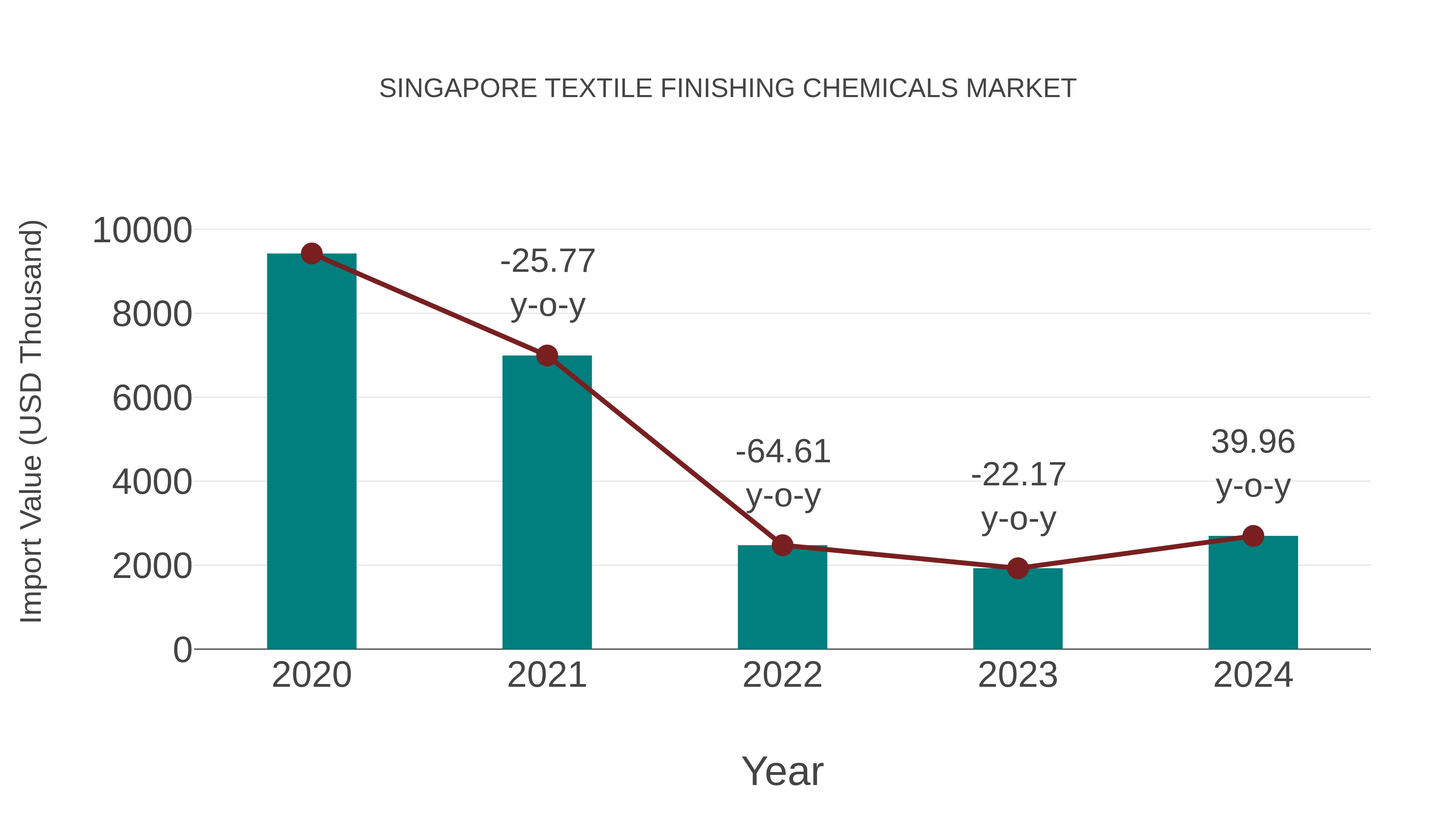
In 2024, Singapore`s textile finishing chemicals market saw a consistent upward trend in imports. This growth was driven by increasing demand for high-quality finished textiles in various industries. The market`s import data reflected a steady rise in the consumption of textile finishing chemicals during that period.
Singapore Textile Finishing Chemicals Market Overview
The textile finishing chemicals market in Singapore reflects the country`s dynamic textile and apparel industry. These chemicals are integral in enhancing the quality, appearance, and functionality of textiles, catering to diverse consumer demands. Singapore textile sector is known for its innovation and high-quality products, and this is made possible through the use of advanced finishing chemicals. The market is influenced by changing fashion trends, sustainability concerns, and an increasing focus on performance textiles. As Singapore remains a prominent player in the global textile market, the demand for textile finishing chemicals is set to continue, emphasizing the need for eco-friendly and sustainable solutions.
Drivers of the Market
The Singapore Textile Finishing Chemicals market is primarily driven by the textile industry`s need for advanced chemical solutions to enhance the aesthetics and performance of fabrics. Textile finishing chemicals encompass a wide range of products, such as softeners, wrinkle resistors, and flame retardants, which provide functionality and appeal to textiles. As consumers increasingly seek high-quality and sustainable textiles, the demand for innovative finishing chemicals is expected to rise, promoting the growth of this market.
Challenges of the Market
The Singapore Textile Finishing Chemicals Market faces challenges in meeting evolving consumer preferences for sustainable and eco-friendly textiles. As sustainability gains importance, the market must develop innovative finishing chemicals that are less harmful to the environment. Additionally, stringent regulations regarding the use of certain chemicals in textile manufacturing pose compliance challenges. Market players need to invest in research and development to formulate eco-friendly and compliant solutions while maintaining product performance.
Covid-19 impact of the Market
The COVID-19 pandemic influenced the Singapore textile finishing chemicals market, as fluctuations in consumer demand and supply chain disruptions impacted the textile industry. The market adapted by focusing on innovative and sustainable finishing solutions to cater to changing consumer preferences. As Singapore textile industry gradually recovered, the market continued to evolve and align with shifting industry dynamics.
Leading Players of the Market
Key players in the Singapore textile finishing chemicals market include Huntsman, DyStar, Archroma, and local distributors like Pulcra Chemicals. These companies offer a wide range of chemicals for textile finishing, contributing to the growth of the textile industry in Singapore.
Key Highlights of the Report:
- Singapore Textile Finishing Chemicals Market Outlook
- Market Size of Singapore Textile Finishing Chemicals Market, 2025
- Forecast of Singapore Textile Finishing Chemicals Market, 2032
- Historical Data and Forecast of Singapore Textile Finishing Chemicals Revenues & Volume for the Period 2022-2032F
- Singapore Textile Finishing Chemicals Market Trend Evolution
- Singapore Textile Finishing Chemicals Market Drivers and Challenges
- Singapore Textile Finishing Chemicals Price Trends
- Singapore Textile Finishing Chemicals Porter's Five Forces
- Singapore Textile Finishing Chemicals Industry Life Cycle
- Historical Data and Forecast of Singapore Textile Finishing Chemicals Market Revenues & Volume By Type for the Period 2022-2032F
- Historical Data and Forecast of Singapore Textile Finishing Chemicals Market Revenues & Volume By Softening Finishes for the Period 2022-2032F
- Historical Data and Forecast of Singapore Textile Finishing Chemicals Market Revenues & Volume By Repellent Finishes for the Period 2022-2032F
- Historical Data and Forecast of Singapore Textile Finishing Chemicals Market Revenues & Volume By Wrinkle Free Finishes for the Period 2022-2032F
- Historical Data and Forecast of Singapore Textile Finishing Chemicals Market Revenues & Volume By Coating Finishes for the Period 2022-2032F
- Historical Data and Forecast of Singapore Textile Finishing Chemicals Market Revenues & Volume By Mothproofing Finishes for the Period 2022-2032F
- Historical Data and Forecast of Singapore Textile Finishing Chemicals Market Revenues & Volume By Process for the Period 2022-2032F
- Historical Data and Forecast of Singapore Textile Finishing Chemicals Market Revenues & Volume By Pad-Dry Cure Process for the Period 2022-2032F
- Historical Data and Forecast of Singapore Textile Finishing Chemicals Market Revenues & Volume By Exhaust Dyeing Process for the Period 2022-2032F
- Singapore Textile Finishing Chemicals Import Export Trade Statistics
- Market Opportunity Assessment By Type
- Market Opportunity Assessment By Process
- Singapore Textile Finishing Chemicals Top Companies Market Share
- Singapore Textile Finishing Chemicals Competitive Benchmarking By Technical and Operational Parameters
- Singapore Textile Finishing Chemicals Company Profiles
- Singapore Textile Finishing Chemicals Key Strategic Recommendations






































