Singapore Viscose Filament Yarns Market Size, Share & Growth Rate
The Singapore Viscose Filament Yarns Market was estimated at USD 1338 Million in 2025 and is projected to reach USD 1906 Million by 2032, growing at a CAGR of 5.2% from 2026 to 2032. This promising growth trajectory is being propelled by the burgeoning fashion industry in Singapore, characterized by a palpable shift towards sustainable and eco-friendly fabrics. As consumers actively seek materials that align with their environmental values, viscose filament yarns stand out due to their natural cellulose origins and biodegradable properties.
Singapore Viscose Filament Yarns Market Year-wise Growth Rate and Key Drivers
This graph highlights how the Singapore Viscose Filament Yarns Market has steadily grown over the years, supported by major growth factors.
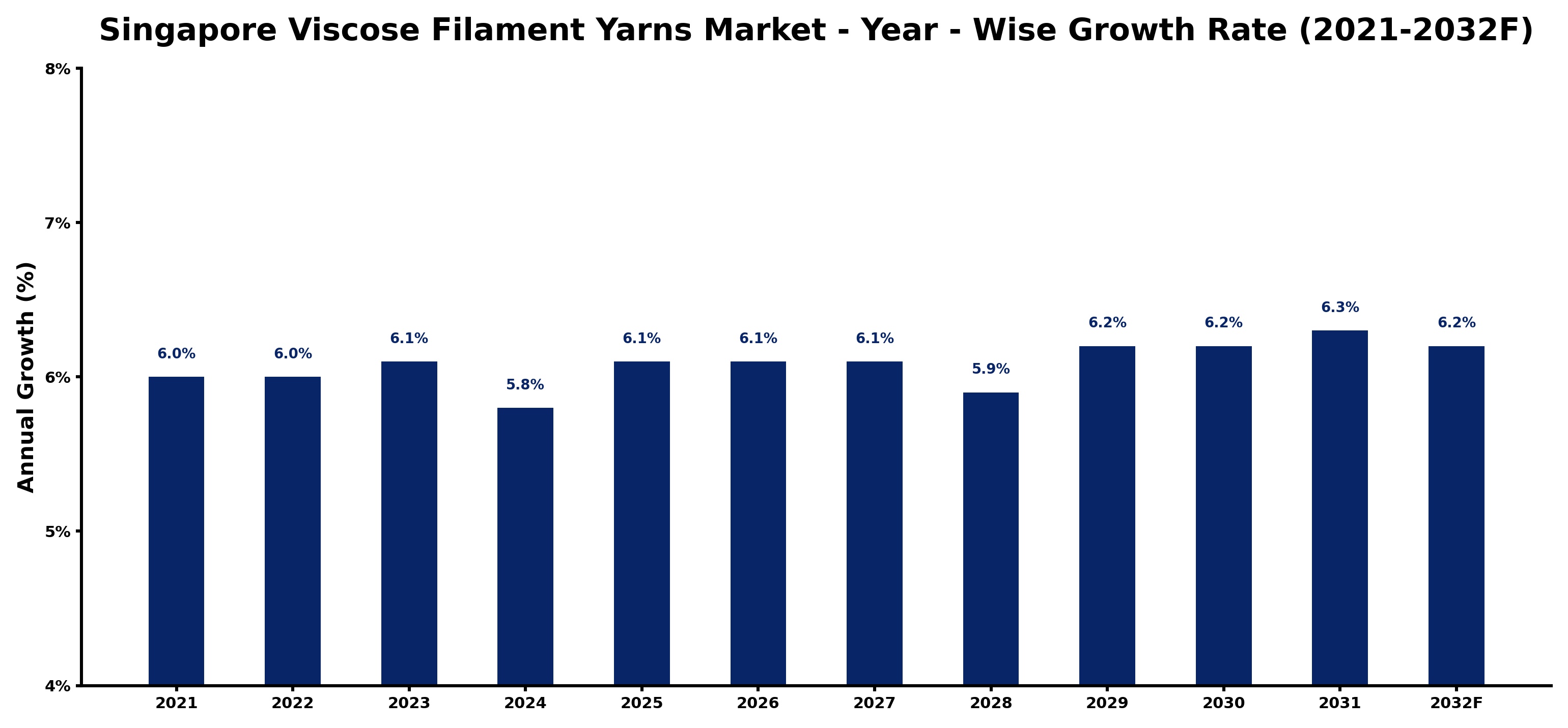
The table below presents the year‑wise growth rates along with the key drivers influencing the market
| Year | Growth Rate | Major Drivers |
| 2021 | 6.0% | Advanced weaving technology boosts demand for high performance yarns |
| 2022 | 6.0% | Advanced fiber processing technologies boosted filament yarn production efficiency |
| 2023 | 6.1% | Advanced spinning technology adoption boosted filament yarn production capacity |
| 2024 | 5.8% | Improved textile manufacturing capacity spurred demand for viscose yarns |
| 2025 | 6.1% | Strategic manufacturing investments in sustainability boost filament yarn production |
| 2026 | 6.1% | Filament yarn production expansion drives textile manufacturing investments |
| 2027 | 6.1% | Export driven innovations in viscose filament production technology boost output |
| 2028 | 5.9% | New viscose production facilities boosted local yarn supply chains |
| 2029 | 6.2% | Domestic textile manufacturers ramp up viscose yarn production capacity |
| 2030 | 6.2% | Manufacturing investments in fiber production facilities boost supply chain capacity |
| 2031 | 6.3% | Textile machinery upgrades boost viscose filament yarn production capacity |
| 2032 | 6.2% | Higher demand for eco friendly textiles boosts yarn production capacity |
Note - Market size estimations and growth projections presented in this report are based on 6Wresearch’s advanced forecasting approach, validated with industry datasets as of June 2026.
Singapore Viscose Filament Yarns Market Synopsis
The strongest force currently shaping the Singapore viscose filament yarns market is the escalating demand for sustainable textiles. With increasing consumer awareness regarding the ecological impact of materials used in clothing, viscose yarns are being recognized as a viable alternative that offers both style and environmental responsibility.
This market is also witnessing a significant shift towards responsible manufacturing practices, as brands strive to minimize their environmental footprint. The softness, sheen, and versatile applications of viscose filament yarns in apparel and home furnishings enhance their appeal, making them a preferred choice among designers and consumers alike.
Singapore Viscose Filament Yarns Market Key Takeaways
- The market is experiencing a shift towards sustainability, driving demand for eco-friendly fabrics.
- Viscose filament yarns are valued for their softness and biodegradability, appealing to environmentally conscious consumers.
- The Singapore fashion industry's growth is a key driver behind the increasing usage of viscose filament yarns.
- Challenges related to sustainability and environmental practices need to be addressed for long-term growth.
- Post-COVID-19 recovery is expected to reinvigorate demand as consumer spending in textiles rebounds.
Evaluation of Restraints in Singapore Viscose Filament Yarns Market
Despite the promising growth trajectory, the Singapore viscose filament yarns market faces significant restraints primarily related to environmental concerns. Increasing scrutiny surrounding chemical usage in production processes poses a challenge, as consumers demand transparency and sustainability from brands. Furthermore, the industry must navigate complex regulatory requirements tied to waste management and resource utilization, which can hinder operational efficiencies and raise production costs. Addressing these challenges will be crucial for maintaining competitive advantage and ensuring long-term growth.
Singapore Viscose Filament Yarns Market Trends
A notable trend is the integration of advanced manufacturing techniques aimed at enhancing sustainability in the production of viscose filament yarns. Innovations in recycling processes and the use of sustainably sourced raw materials are gaining traction. Additionally, the rise of digital fashion and online retail platforms is expanding the reach of viscose filament yarns, encouraging brands to adopt versatile designs that cater to a wider audience. The growing popularity of athleisure and eco-conscious fashion is also driving demand for this category of yarns.
Singapore Viscose Filament Yarns Market Opportunities
The market presents significant growth and investment opportunities, particularly in the realm of sustainable fashion. Brands that prioritize eco-friendly production processes and transparent supply chains are poised to capture the attention of a growing demographic that values sustainability. Additionally, expansion into emerging markets and the development of innovative products, such as blended fibers that enhance the functional properties of viscose yarns, are likely to further drive market growth.
Government Initiatives in the Singapore Viscose Filament Yarns Market
The Singapore government has been actively promoting sustainable practices within the textile industry through various initiatives and policies. Supportive programs aimed at encouraging the adoption of eco-friendly technologies and funding for sustainable fashion initiatives are creating a favorable environment for growth. Furthermore, government-backed campaigns to raise awareness about sustainable textiles among consumers are expected to drive demand for viscose filament yarns, aligning with national goals for environmental responsibility.
Future Insights of the Singapore Viscose Filament Yarns Market
Looking ahead to the period from 2026 to 2032, the Singapore viscose filament yarns market is expected to continue its upward trajectory. This growth will be driven by the sustained interest in sustainable fashion and the increasing preference for textiles that are both stylish and environmentally responsible. Technological advancements in production methods and materials will play a crucial role in overcoming current challenges related to sustainability. As market dynamics evolve, companies that adapt to consumer preferences and innovate responsibly will likely thrive.
Singapore Viscose Filament Yarns Market Latest Developments (May 2025 - June 2026)
Recent developments in the Singapore viscose filament yarns market indicate a heightened focus on sustainability, with several brands launching initiatives aimed at reducing environmental impact. Collaborations between textile manufacturers and sustainability-focused organizations are on the rise, promoting responsible sourcing and production practices. Additionally, market players are increasingly adopting digital platforms for marketing and sales, enhancing consumer engagement and accessibility to viscose filament yarn products.
Singapore Viscose Filament Yarns Market - Key Attractiveness of the Report
- 10 Years of Market Numbers
- Historical Data Starting from 2022 to 2025
- Base Year: 2025
- Forecast Data until 2032
- Key Performance Indicators Impacting the Market
- Major Upcoming Developments and Projects
Key Highlights of the Report:
- Singapore Viscose Filament Yarns Market Outlook
- Market Size of Singapore Viscose Filament Yarns Market, 2025
- Forecast of Singapore Viscose Filament Yarns Market, 2032
- Historical Data and Forecast of Singapore Viscose Filament Yarns Revenues & Volume for the Period 2022-2032F
- Singapore Viscose Filament Yarns Market Trend Evolution
- Singapore Viscose Filament Yarns Market Drivers and Challenges
- Singapore Viscose Filament Yarns Price Trends
- Singapore Viscose Filament Yarns Porter's Five Forces
- Singapore Viscose Filament Yarns Industry Life Cycle
- Historical Data and Forecast of Singapore Viscose Filament Yarns Market Revenues & Volume By Type for the Period 2022-2032F
- Historical Data and Forecast of Singapore Viscose Filament Yarns Market Revenues & Volume By Continuous for the Period 2022-2032F
- Historical Data and Forecast of Singapore Viscose Filament Yarns Market Revenues & Volume By Semi-contunuous for the Period 2022-2032F
- Historical Data and Forecast of Singapore Viscose Filament Yarns Market Revenues & Volume By Application for the Period 2022-2032F
- Historical Data and Forecast of Singapore Viscose Filament Yarns Market Revenues & Volume By Garment industry for the Period 2022-2032F
- Historical Data and Forecast of Singapore Viscose Filament Yarns Market Revenues & Volume By Auto industry for the Period 2022-2032F
- Historical Data and Forecast of Singapore Viscose Filament Yarns Market Revenues & Volume By other for the Period 2022-2032F
- Singapore Viscose Filament Yarns Import Export Trade Statistics
- Market Opportunity Assessment By Type
- Market Opportunity Assessment By Application
- Singapore Viscose Filament Yarns Top Companies Market Share
- Singapore Viscose Filament Yarns Competitive Benchmarking By Technical and Operational Parameters
- Singapore Viscose Filament Yarns Company Profiles
- Singapore Viscose Filament Yarns Key Strategic Recommendations






































