Singapore Waterproof Clothing Market Summary
The singapore waterproof clothing market was estimated at USD 294 Million in 2025 and is projected to reach USD 388 Million by 2032, growing at a CAGR of 5.0% from 2026 to 2032.
Singapore Waterproof Clothing Market Year-wise Growth Rate and Key Drivers
This graph highlights how the Singapore Waterproof Clothing Market has steadily grown over the past five years, supported by major growth factors.
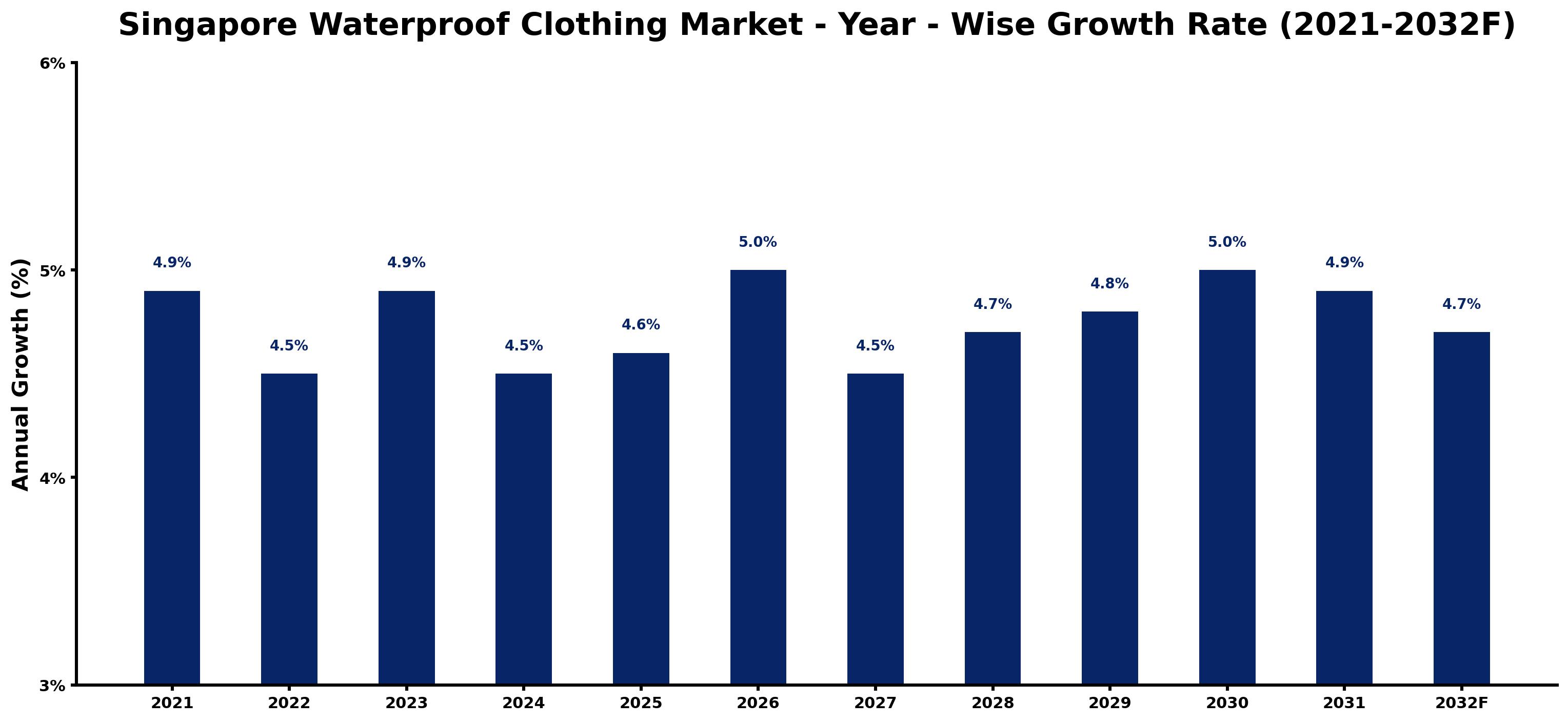
The table below presents the year wise growth rates along with the key drivers influencing the market
| Year | Growth Rate | Major Drivers |
| 2021 | 4.9% | Post-lockdown retail projects boost consumer interest in outdoor activities and waterproof gear. |
| 2022 | 4.5% | Local climate challenges intensify, enhancing the need for quality waterproof clothing options. |
| 2023 | 4.9% | Urban lifestyle transformations increase demand for multifunctional outdoor and travel apparel. |
| 2024 | 4.5% | Emerging eco-conscious consumer base favors sustainable waterproof clothing materials and brands. |
| 2025 | 4.6% | Travel restrictions ease, propelling outdoor exploration and subsequently waterproof gear purchases. |
| 2026 | 5.0% | Technological innovations in fabric manufacturing improve waterproofing features and durability significantly. |
| 2027 | 4.5% | E-commerce growth offers consumers a wider range of waterproof clothing choices online. |
| 2028 | 4.7% | Collaboration between brands and local designers enhances market visibility and product appeal. |
| 2029 | 4.8% | Increased participation in outdoor sports leads to higher sales of specialized waterproof gear. |
| 2030 | 5.0% | Corporate wellness programs promote outdoor activities, spurring demand for waterproof activewear. |
| 2031 | 4.9% | Local events and festivals focused on nature encourage community engagement with waterproof products. |
| 2032 | 4.7% | Continued urbanization fosters interest in stylish yet functional waterproof clothing for city dwellers. |
Note - Market size estimations and growth projections presented in this report are based on 6Wresearch's advanced forecasting approach, validated with industry datasets as of June 2026.
Singapore Waterproof Clothing Market Synopsis
The Singapore Waterproof Clothing Market is projected to reach 5.0% and witness significant growth during the forecast period (2026-2032). This growth is driven by an increasing consumer focus on outdoor activities, coupled with advancements in waterproof material technology which enhance comfort and performance. As urban and recreational landscapes evolve, the demand for effective and stylish waterproof apparel rises, marking a transformative period in this market.
Singapore Waterproof Clothing Market Growth Drivers
The Singapore waterproof clothing market is bolstered by several notable growth drivers:
- Increasing disposable income among consumers allows for spending on high-quality waterproof apparel that offers better protection and comfort during outdoor activities.
- A rising trend towards health and fitness leads individuals to engage more frequently in outdoor recreational activities, thus promoting the demand for specialized clothing that can withstand varying environmental conditions.
- Technological advancements in fabric production, such as the introduction of waterproof and breathable materials, are enhancing product performance, which is appealing to a broader audience.
- The growing influence of online retail platforms facilitates access to a wider range of products, often at competitive prices, encouraging consumers to explore waterproof clothing options.
- A shift in consumer mindset towards preparedness for unpredictable weather conditions prompts an increased investment in effective waterproof clothing.
Singapore Waterproof Clothing Market Trends and Opportunities
Several trends and opportunities are currently shaping the Singapore waterproof clothing market:
- Heightened environmental awareness is leading consumers to seek eco-friendly waterproof clothing options, creating opportunities for brands to innovate with sustainable materials.
- The fusion of fashion and functionality in design is becoming increasingly popular, which encourages brands to develop aesthetically pleasing waterproof clothing, thus appealing to style-conscious consumers.
- Collaboration between outdoor brands and fashion designers presents opportunities for limited-edition collections, appealing to niche markets interested in unique waterproof apparel.
- Emergence of smart fabrics integrated with technology to enhance user experience, such as moisture-wicking properties and temperature regulation, is expected to gain traction.
- Increased investment in local manufacturing and supply chains can enhance product availability and reduce lead times, benefiting consumers while stimulating the local economy.
Singapore Waterproof Clothing Market Challenges and Restraints
Despite its growth potential, the Singapore waterproof clothing market faces several challenges:
- The high cost associated with durable waterproof clothing can deter some consumers, limiting market penetration among budget-conscious buyers.
- Limited availability of eco-friendly and biodegradable materials for waterproof clothing hampers the growth of sustainable fashion options in the sector.
- Market penetration rates for technologically advanced waterproof garments remain relatively low, indicating a need for consumer education regarding the benefits of these innovations.
- Competition from lower-cost alternatives in the region might undermine the premium segments of the market, affecting overall pricing strategies.
- Seasonality of weather patterns can lead to fluctuations in demand, necessitating inventory management strategies to mitigate excess stock during off-peak periods.
Singapore Waterproof Clothing Market Government Investment and Initiatives
The Singapore government plays a vital role in shaping the waterproof clothing market through various initiatives:
- Investment in R&D for textile innovations promotes the development of advanced waterproof materials, enhancing the local apparel industry's competitiveness.
- Public spending on outdoor recreational facilities encourages participation in active lifestyles, indirectly increasing demand for waterproof clothing.
- Government regulations supporting sustainable manufacturing practices push companies towards adopting eco-friendly materials, resonating with consumer preferences.
- Incentives for startups within the fashion technology space stimulate innovation and collaboration between tech firms and apparel manufacturers.
- Promotion of local fashion events helps raise awareness about the Singapore waterproof clothing market, providing a platform for brands to showcase their products and innovations.
Singapore Waterproof Clothing Market Latest Developments (May 2025 - June 2026)
The period from May 2025 to June 2026 has been marked by significant developments within the Singapore waterproof clothing market:
- Brands have responded to consumer demand for sustainability by launching new lines of eco-friendly waterproof clothing, leveraging biodegradable materials.
- The integration of smart textiles featuring moisture management and temperature control has gained traction, capturing the interest of consumers seeking enhanced performance.
- Online sales channels have expanded, with many companies optimizing their platforms to improve user experience and product accessibility.
- Increased collaborations between domestic brands and global entities have introduced new product offerings, broadening the market landscape.
- Awareness campaigns highlighting the benefits of waterproof apparel during Singapore's unpredictable weather have effectively boosted consumer engagement.
Singapore Waterproof Clothing Market - Key Attractiveness of the Report
- 10 Years of Market Numbers
- Historical Data Starting from 2022 to 2025
- Base Year: 2025
- Forecast Data until 2032
- Key Performance Indicators Impacting the Market
- Major Upcoming Developments and Projects
The market is expected to witness a CAGR of 5.3% during the forecast period from 2026-2032.
Key drivers include rising disposable incomes, increased participation in outdoor activities, and advancements in waterproof fabric technology.
The pandemic disrupted international trade and manufacturing, impacting supplies. However, it also led to increased interest in outdoor activities, which has since benefited the market.
Challenges include high product costs, limited availability of sustainable materials, and the need for greater consumer education on advanced waterproof clothing technologies.
Key Highlights of the Report:
- Singapore Waterproof Clothing Market Outlook
- Market Size of Singapore Waterproof Clothing Market, 2025
- Forecast of Singapore Waterproof Clothing Market, 2032F
- Historical Data and Forecast of Singapore Waterproof Clothing Revenues & Volume for the Period 2022-2032F
- Singapore Waterproof Clothing Market Trend Evolution
- Singapore Waterproof Clothing Market Drivers and Challenges
- Singapore Waterproof Clothing Price Trends
- Singapore Waterproof Clothing Porter's Five Forces
- Singapore Waterproof Clothing Industry Life Cycle
- Historical Data and Forecast of Singapore Waterproof Clothing Market Revenues & Volume By Raw Material for the Period 2022-2032F
- Historical Data and Forecast of Singapore Waterproof Clothing Market Revenues & Volume By ePTFE for the Period 2022-2032F
- Historical Data and Forecast of Singapore Waterproof Clothing Market Revenues & Volume By Polyurethane for the Period 2022-2032F
- Historical Data and Forecast of Singapore Waterproof Clothing Market Revenues & Volume By Polyester for the Period 2022-2032F
- Historical Data and Forecast of Singapore Waterproof Clothing Market Revenues & Volume By Others for the Period 2022-2032F
- Historical Data and Forecast of Singapore Waterproof Clothing Market Revenues & Volume By Fabric for the Period 2022-2032F
- Historical Data and Forecast of Singapore Waterproof Clothing Market Revenues & Volume By Densely Woven for the Period 2022-2032F
- Historical Data and Forecast of Singapore Waterproof Clothing Market Revenues & Volume By Membrane for the Period 2022-2032F
- Historical Data and Forecast of Singapore Waterproof Clothing Market Revenues & Volume By Coated for the Period 2022-2032F
- Historical Data and Forecast of Singapore Waterproof Clothing Market Revenues & Volume By Application for the Period 2022-2032F
- Historical Data and Forecast of Singapore Waterproof Clothing Market Revenues & Volume By General Clothing & Accessories for the Period 2022-2032F
- Historical Data and Forecast of Singapore Waterproof Clothing Market Revenues & Volume By Sports Goods for the Period 2022-2032F
- Historical Data and Forecast of Singapore Waterproof Clothing Market Revenues & Volume By Protective Clothing for the Period 2022-2032F
- Historical Data and Forecast of Singapore Waterproof Clothing Market Revenues & Volume By Others for the Period 2022-2032F
- Singapore Waterproof Clothing Import Export Trade Statistics
- Market Opportunity Assessment By Raw Material
- Market Opportunity Assessment By Fabric
- Market Opportunity Assessment By Application
- Singapore Waterproof Clothing Top Companies Market Share
- Singapore Waterproof Clothing Competitive Benchmarking By Technical and Operational Parameters
- Singapore Waterproof Clothing Company Profiles
- Singapore Waterproof Clothing Key Strategic Recommendations






































