Singapore Whipping Cream Market Size, Share & Growth Rate
The Singapore Whipping Cream Market was estimated at USD 207 Million in 2025 and is projected to reach USD 273 Million by 2032, growing at a CAGR of 4.0% from 2026 to 2032. This growth trajectory is primarily fueled by the escalating interest in baking, alongside a flourishing café culture, leading to increased demand for high-quality desserts and coffee beverages. The ongoing expansion of the food and beverage sector, including a rise in restaurants and bakeries, further reinforces this positive market outlook.
Singapore Whipping Cream Market Year-wise Growth Rate and Key Drivers
This graph highlights how the Singapore Whipping Cream Market has steadily grown over the years, supported by major growth factors.
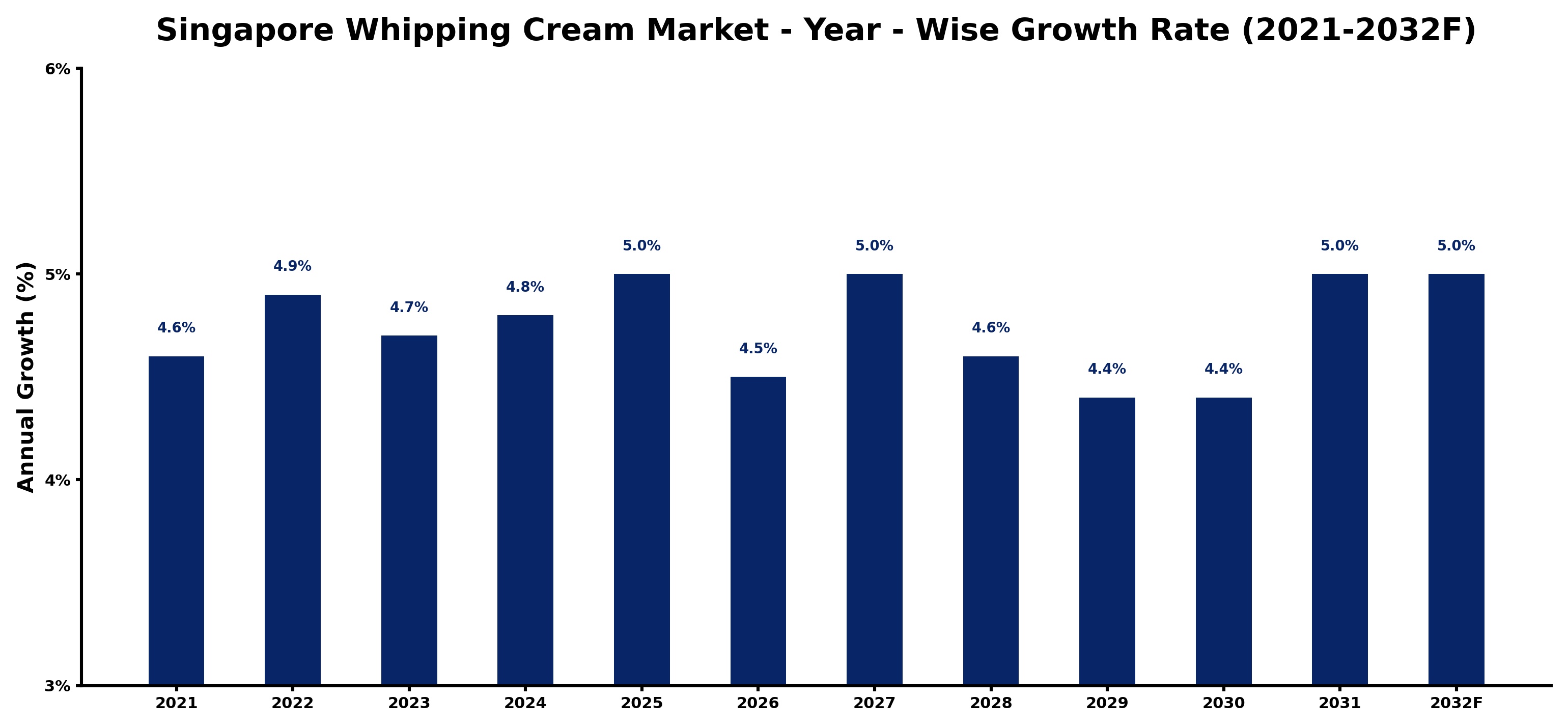
The table below presents the year‑wise growth rates along with the key drivers influencing the market
| Year | Growth Rate | Major Drivers |
| 2021 | 4.6% | Home baking trends increased demand |
| 2022 | 4.9% | Café culture expanded consumer base |
| 2023 | 4.7% | Health-conscious desserts gained popularity |
| 2024 | 4.8% | Innovative recipes drove usage growth |
| 2025 | 5.0% | Plant-based alternatives entered market |
| 2026 | 4.5% | Seasonal products attracted new customers |
| 2027 | 5.0% | Gourmet food trends influenced purchases |
| 2028 | 4.6% | Social media recipes inspired creativity |
| 2029 | 4.4% | Food delivery services increased convenience |
| 2030 | 4.4% | Local sourcing enhanced product appeal |
| 2031 | 5.0% | Artisanal brands gained consumer loyalty |
| 2032 | 5.0% | Sustainability initiatives attracted attention |
Note - Market size estimations and growth projections presented in this report are based on 6Wresearch's advanced forecasting approach, validated with industry datasets as of June 2026.
Singapore Whipping Cream Market Synopsis
The whipping cream market in Singapore is characterized by a vibrant demand for gourmet and artisanal products, reflecting the nation's culinary innovation. As baking becomes more entrenched in both professional kitchens and home environments, whipping cream's role as a crucial ingredient has solidified, catering to both the health-conscious and indulgent consumers.
Moreover, the recent surge in home-based baking, influenced by a growing consumer trend toward homemade treats, has played a vital role in boosting the market. Smaller packaging options introduced by manufacturers have made whipping cream more accessible to budding home bakers and coffee enthusiasts alike, enhancing its appeal in everyday culinary practices.
Singapore Whipping Cream Market Key Takeaways
- The market is experiencing a notable shift towards innovative packaging and flavors, catering to evolving consumer preferences.
- Home baking and café culture are pivotal growth drivers, expanding the demand for whipping cream in both domestic and commercial settings.
- Market players are increasingly focused on product quality and versatility, showcasing whipping cream's applications beyond traditional uses.
- Recent consumer behaviors indicate a lasting interest in convenience and smaller portions due to the COVID-19 pandemic.
- Regulatory support in the food sector is likely to enhance market dynamics further, fostering growth opportunities.
Evaluation of Restraints in Singapore Whipping Cream Market
Despite its promising outlook, the Singapore whipping cream market faces certain restraints. A significant challenge is the fierce competition from alternative toppings that appeal to health-conscious consumers. Additionally, the consumer base for baking and dessert preparation remains somewhat limited, necessitating efforts to broaden awareness of whipping cream's culinary versatility. Quality control and extending shelf-life present ongoing challenges for manufacturers, underscoring the need for continued innovation and improvements in processing technologies.
Singapore Whipping Cream Market Trends
Current trends in the Singapore whipping cream market reveal a marked increase in the interest surrounding plant-based alternatives, alongside traditional dairy products. Consumers are becoming more adventurous, experimenting with flavors and infusions, such as vanilla or chocolate variations, to enhance their culinary experiences. Additionally, a growing trend of premiumization is observed, where consumers are willing to pay more for high-quality, artisanal products, elevating the standard for whipping cream offerings in the region.
Singapore Whipping Cream Market Opportunities
The Singapore whipping cream market is ripe with opportunities for growth and investment. The rising popularity of baking classes and workshops can be harnessed by brands to promote their products, aligning with educational initiatives that attract new home bakers. Additionally, the expansion of online sales channels presents a unique opportunity to reach a broader audience. Innovations in health-conscious formulations, such as low-fat or lactose-free whipping cream, could further entice a larger consumer base, capitalizing on the trend towards healthier eating.
Government Initiatives in the Singapore Whipping Cream Market
Government initiatives aimed at enhancing the food and beverage sector in Singapore play a crucial role in the whipping cream market. Policies encouraging innovation, sustainability, and the expansion of local food production are fostering an environment ripe for growth. Public spending on food safety regulations ensures high standards for all food products, including whipping cream, providing confidence to consumers. Support for small and medium-sized enterprises (SMEs) also enables niche producers to enter the market more easily, encouraging diversity and innovation.
Future Insights of the Singapore Whipping Cream Market
Looking ahead to 2026-2032, the Singapore whipping cream market is expected to maintain a robust growth trajectory, driven by the sustained interest in gourmet baking and premium coffee experiences. As consumer preferences shift towards versatile, high-quality ingredients, manufacturers are likely to introduce new product lines that cater to diverse culinary applications. Moreover, with ongoing advancements in technology and sustainability efforts, the industry is poised for transformation, promising a dynamic and competitive market landscape.
Singapore Whipping Cream Market Latest Developments (May 2025 - June 2026)
The latest developments in the Singapore whipping cream market indicate a strong emphasis on product innovation and sustainability. Recent efforts have focused on the introduction of eco-friendly packaging options aimed at reducing environmental impact. Additionally, key players are actively engaging with consumers through digital platforms, utilizing social media to showcase creative recipes and applications for whipping cream. These strategic marketing initiatives are set to enhance brand visibility and foster greater consumer engagement in the market.
Singapore Whipping Cream Market - Key Attractiveness of the Report
- 10 Years of Market Numbers
- Historical Data Starting from 2022 to 2025
- Base Year: 2025
- Forecast Data until 2032
- Key Performance Indicators Impacting the Market
- Major Upcoming Developments and Projects
Key Highlights of the Report:
- Singapore Whipping Cream Market Outlook
- Market Size of Singapore Whipping Cream Market, 2025
- Forecast of Singapore Whipping Cream Market, 2032
- Historical Data and Forecast of Singapore Whipping Cream Revenues & Volume for the Period 2022-2032F
- Singapore Whipping Cream Market Trend Evolution
- Singapore Whipping Cream Market Drivers and Challenges
- Singapore Whipping Cream Price Trends
- Singapore Whipping Cream Porter's Five Forces
- Singapore Whipping Cream Industry Life Cycle
- Historical Data and Forecast of Singapore Whipping Cream Market Revenues & Volume By Product for the Period 2022-2032F
- Historical Data and Forecast of Singapore Whipping Cream Market Revenues & Volume By Dairy for the Period 2022-2032F
- Historical Data and Forecast of Singapore Whipping Cream Market Revenues & Volume By Non-Dairy for the Period 2022-2032F
- Historical Data and Forecast of Singapore Whipping Cream Market Revenues & Volume By Application for the Period 2022-2032F
- Historical Data and Forecast of Singapore Whipping Cream Market Revenues & Volume By B2B for the Period 2022-2032F
- Historical Data and Forecast of Singapore Whipping Cream Market Revenues & Volume By B2C for the Period 2022-2032F
- Historical Data and Forecast of Singapore Whipping Cream Market Revenues & Volume By Distribution Channel for the Period 2022-2032F
- Historical Data and Forecast of Singapore Whipping Cream Market Revenues & Volume By Warehouse Clubs for the Period 2022-2032F
- Historical Data and Forecast of Singapore Whipping Cream Market Revenues & Volume By Variety Stores for the Period 2022-2032F
- Historical Data and Forecast of Singapore Whipping Cream Market Revenues & Volume By Department Stores for the Period 2022-2032F
- Historical Data and Forecast of Singapore Whipping Cream Market Revenues & Volume By Online Retail for the Period 2022-2032F
- Historical Data and Forecast of Singapore Whipping Cream Market Revenues & Volume By Convenience Stores for the Period 2022-2032F
- Historical Data and Forecast of Singapore Whipping Cream Market Revenues & Volume By Supermarkets and Hypermarket for the Period 2022-2032F
- Historical Data and Forecast of Singapore Whipping Cream Market Revenues & Volume By Specialist Retailers for the Period 2022-2032F
- Historical Data and Forecast of Singapore Whipping Cream Market Revenues & Volume By Others for the Period 2022-2032F
- Singapore Whipping Cream Import Export Trade Statistics
- Market Opportunity Assessment By Product
- Market Opportunity Assessment By Application
- Market Opportunity Assessment By Distribution Channel
- Singapore Whipping Cream Top Companies Market Share
- Singapore Whipping Cream Competitive Benchmarking By Technical and Operational Parameters
- Singapore Whipping Cream Company Profiles
- Singapore Whipping Cream Key Strategic Recommendations






































