Slovakia Cake Mixes Market Top 5 Importing Countries and Market Competition (HHI) Analysis
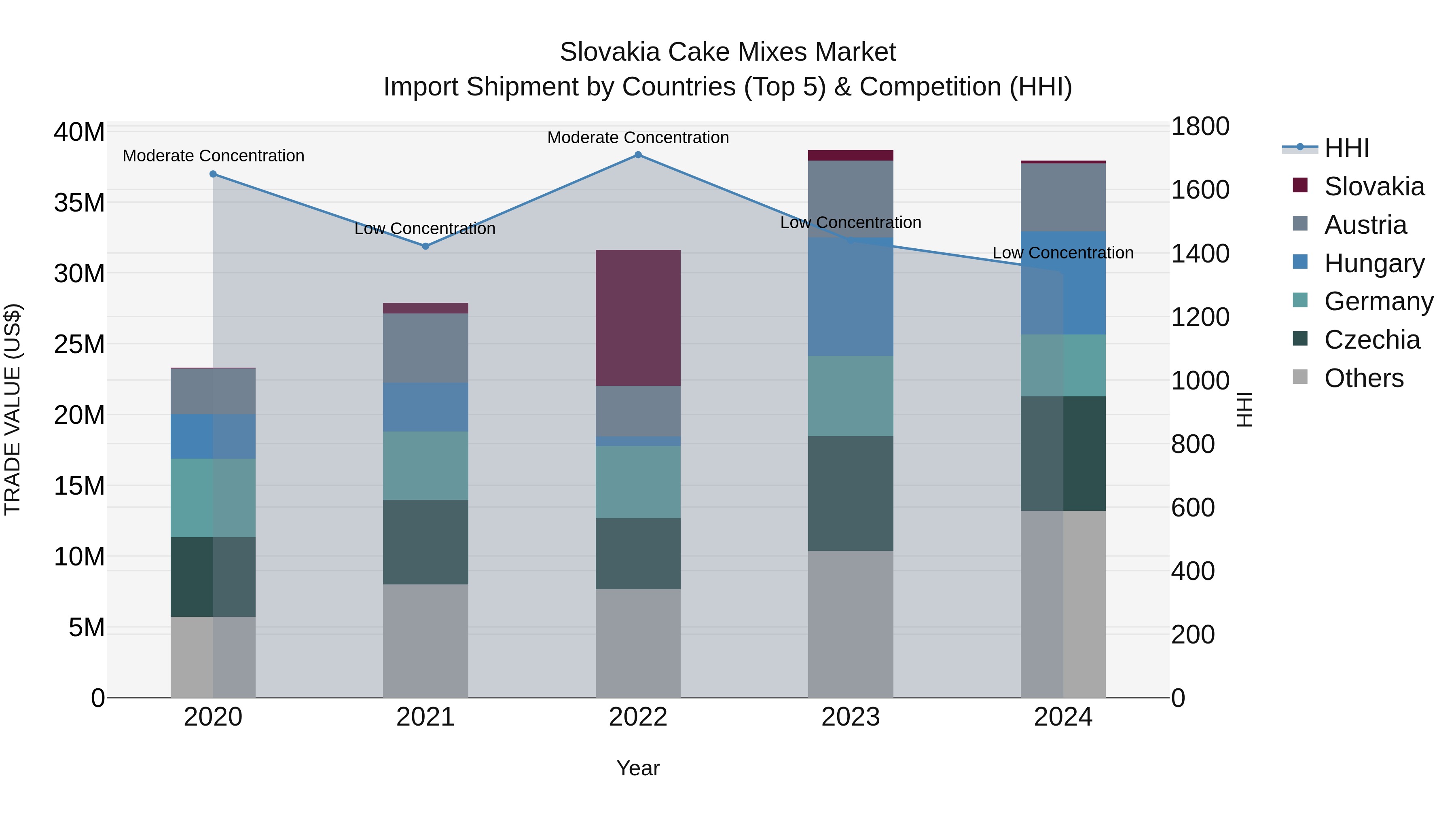
In 2024, Slovakia continued to witness a steady influx of cake mixes import shipments, with top exporters including Czechia, Hungary, Austria, Romania, and Germany. The Market Top 5 Importing Countries and Market Competition (HHI) Analysis remained highly competitive with a low concentration, indicating a diverse range of suppliers catering to Slovakian demand. Despite a slight dip in growth rate from 2023 to 2024, the compound annual growth rate (CAGR) from 2020 to 2024 stood strong at 12.96%, reflecting sustained interest and consumption of cake mixes in the Slovakian Market Top 5 Importing Countries and Market Competition (HHI) Analysis.
Slovakia Cake Mixes Market Overview
The Slovakia cake mixes market is experiencing steady growth due to the increasing demand for convenient baking solutions among consumers. The market is characterized by a wide range of product offerings, including traditional, premium, and health-conscious options to cater to different consumer preferences. Key players in the market are focusing on product innovation, such as gluten-free and organic cake mixes, to attract health-conscious consumers. Additionally, the growing trend of home baking and DIY projects has further fueled the demand for cake mixes in Slovakia. The market is highly competitive, with players competing based on product quality, pricing, and brand reputation. Overall, the Slovakia cake mixes market is projected to continue its growth trajectory, driven by consumer convenience and evolving tastes and preferences.
Slovakia Cake Mixes Market Trends
In the Slovakia Cake Mixes Market, one prominent trend is the growing demand for premium and specialized cake mixes. Consumers are increasingly seeking high-quality and innovative products that offer convenience while also delivering unique and indulgent flavors. Additionally, there is a rising interest in healthier options, such as organic, gluten-free, and vegan cake mixes, reflecting the overall health and wellness trend in the food industry. The market is also witnessing a surge in online sales of cake mixes, driven by the convenience and variety offered by e-commerce platforms. Manufacturers are responding to these trends by introducing new product formulations, flavors, and packaging designs to cater to the evolving preferences of consumers in the Slovakia Cake Mixes Market.
Slovakia Cake Mixes Market Challenges
In the Slovakia Cake Mixes Market, challenges include increasing competition from both domestic and international brands, fluctuating raw material prices, changing consumer preferences towards healthier and more natural products, and the need for constant innovation to capture consumer interest. Additionally, economic uncertainties and regulatory changes can impact market dynamics. Maintaining product quality and consistency while keeping prices competitive is crucial for success in this market. Companies also need to focus on effective marketing strategies to differentiate themselves and build brand loyalty in a crowded marketplace. Overall, navigating these challenges requires a deep understanding of the market landscape, consumer behavior, and a proactive approach towards adapting to changing trends and demands.
Slovakia Cake Mixes Market Investment Opportunities
The Slovakia Cake Mixes Market presents promising investment opportunities due to the growing consumer interest in convenient baking solutions. With a rising trend of home baking, there is a demand for high-quality cake mixes that offer convenience and consistency. Investors can capitalize on this trend by investing in innovative product development to cater to evolving consumer preferences, such as organic or gluten-free options. Additionally, strategic partnerships with supermarkets or online retailers can help reach a wider customer base. Investing in marketing initiatives to promote the ease of baking with cake mixes and highlighting unique selling points can also drive sales growth. Overall, the Slovakia Cake Mixes Market offers opportunities for investors to tap into the increasing demand for convenient baking solutions in the country.
Slovakia Cake Mixes Market Government Policy
Government policies in Slovakia related to the cake mixes market primarily focus on food safety regulations, labeling requirements, and import/export regulations. The Slovak Republic has strict laws in place to ensure that all cake mixes meet certain quality and safety standards before they can be sold to consumers. Additionally, labeling requirements mandate that all cake mixes must display accurate information about ingredients, nutritional content, and allergen warnings to protect consumers with food sensitivities. Import/export regulations also play a role in governing the cake mixes market, ensuring that products meet customs requirements and adhere to international trade agreements. Overall, these government policies aim to safeguard consumer health and promote fair competition within the Slovakia cake mixes market.
Slovakia Cake Mixes Market Future Outlook
The Slovakia Cake Mixes Market is expected to witness steady growth in the coming years, driven by increasing consumer preference for convenience products, busy lifestyles, and a growing interest in baking at home. The market is likely to be influenced by the rising trend of indulgence, gifting culture, and the popularity of baking as a hobby. Innovative product launches, such as gluten-free, organic, and premium cake mixes, are anticipated to attract a wider consumer base. Additionally, the expanding retail sector and e-commerce platforms are projected to provide further avenues for market growth. However, factors like health consciousness, price sensitivity, and competition from homemade cakes may pose challenges. Overall, the Slovakia Cake Mixes Market is poised for expansion with potential opportunities for manufacturers to cater to evolving consumer preferences and demand.
Key Highlights of the Report:
- Slovakia Cake Mixes Market Outlook
- Market Size of Slovakia Cake Mixes Market, 2021
- Forecast of Slovakia Cake Mixes Market, 2031
- Historical Data and Forecast of Slovakia Cake Mixes Revenues & Volume for the Period 2021 - 2031
- Slovakia Cake Mixes Market Trend Evolution
- Slovakia Cake Mixes Market Drivers and Challenges
- Slovakia Cake Mixes Price Trends
- Slovakia Cake Mixes Porter's Five Forces
- Slovakia Cake Mixes Industry Life Cycle
- Historical Data and Forecast of Slovakia Cake Mixes Market Revenues & Volume By Flavor for the Period 2021 - 2031
- Historical Data and Forecast of Slovakia Cake Mixes Market Revenues & Volume By Chocolate for the Period 2021 - 2031
- Historical Data and Forecast of Slovakia Cake Mixes Market Revenues & Volume By Vanilla for the Period 2021 - 2031
- Historical Data and Forecast of Slovakia Cake Mixes Market Revenues & Volume By Fruit for the Period 2021 - 2031
- Historical Data and Forecast of Slovakia Cake Mixes Market Revenues & Volume By Others for the Period 2021 - 2031
- Historical Data and Forecast of Slovakia Cake Mixes Market Revenues & Volume By Distribution Channel for the Period 2021 - 2031
- Historical Data and Forecast of Slovakia Cake Mixes Market Revenues & Volume By Online for the Period 2021 - 2031
- Historical Data and Forecast of Slovakia Cake Mixes Market Revenues & Volume By Offline for the Period 2021 - 2031
- Slovakia Cake Mixes Import Export Trade Statistics
- Market Opportunity Assessment By Flavor
- Market Opportunity Assessment By Distribution Channel
- Slovakia Cake Mixes Top Companies Market Share
- Slovakia Cake Mixes Competitive Benchmarking By Technical and Operational Parameters
- Slovakia Cake Mixes Company Profiles
- Slovakia Cake Mixes Key Strategic Recommendations






































