Slovakia Decentralized Identity Market Size & Growth Rate (2026-2032)
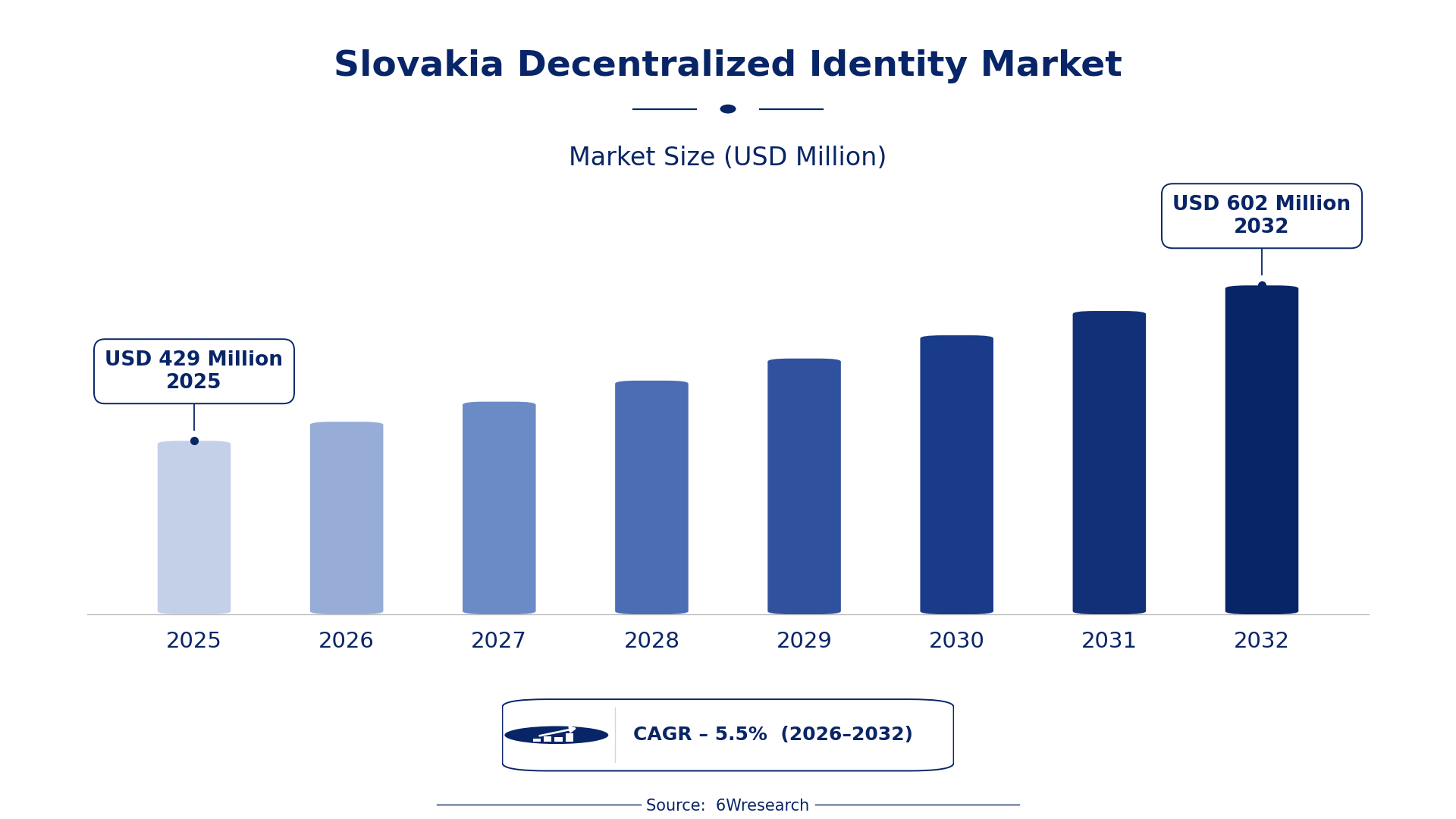
The Slovakia Decentralized Identity Market was estimated at USD 429 Million in 2025 and is projected to reach USD 602 Million by 2032, growing at a CAGR of 5.5% from 2026 to 2032.
Slovakia Decentralized Identity Market Synopsis
As digital transformation takes center stage in Slovakia, the demand for decentralized identity solutions has emerged as a crucial focal point. With a growing emphasis on personal data ownership, both individuals and organizations are increasingly opting for technologies that empower them to safeguard their identities while minimizing risks of data misuse.
The shift towards decentralized identity is largely driven by concerns over data breaches and the inadequacy of traditional identity verification methods. As the government supports the rollout of digital identity frameworks, adoption across sectors such as finance, healthcare, and public services is set to accelerate, offering a promising outlook for the market.
Slovakia Decentralized Identity Market Year-wise Growth Rate and Key Drivers
This graph illustrates the annual growth rates of the Slovakia Decentralized Identity Market from 2021 to 2032, highlighting a steady upward trajectory and projected expansion over the forecast period.
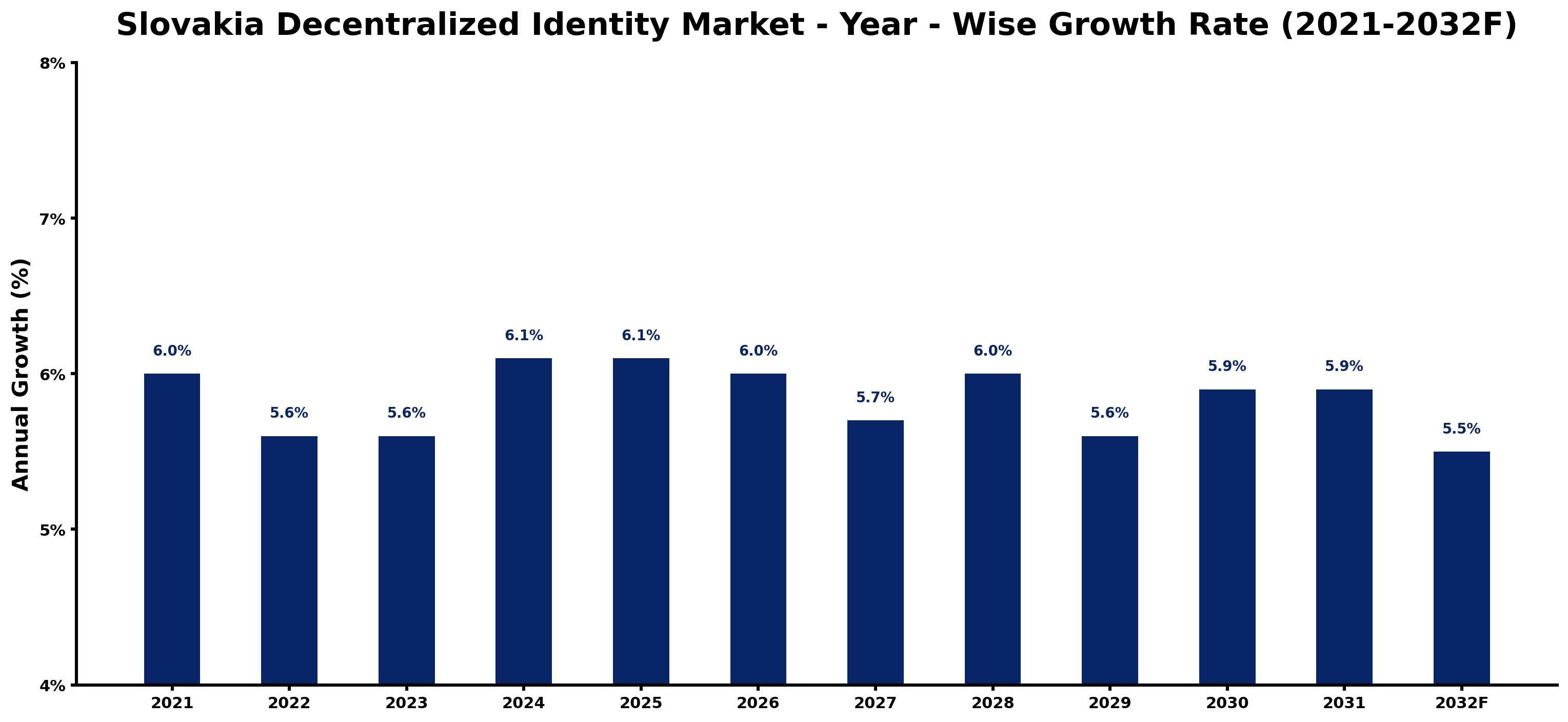
The table below presents the year‑wise growth rates along with the key drivers influencing the market
| Year | Growth Rate | Major Drivers |
| 2021 | 6.0% | Slovak National Bank promotes digital identity frameworks. |
| 2022 | 5.6% | Increased adoption of biometrics in government services. |
| 2023 | 5.6% | EU Digital Identity Wallet initiative boosts local demand. |
| 2024 | 6.1% | Regulatory support for KYC compliance enhances sector growth. |
| 2025 | 6.1% | Rise in remote services necessitates secure identity solutions. |
| 2026 | 6.0% | Local startups innovating in decentralized identity technologies. |
| 2027 | 5.7% | Cybersecurity regulations spark demand for identity verification. |
| 2028 | 6.0% | Growing public awareness of data protection rights. |
| 2029 | 5.6% | Rising personal data breaches drive secure identity solutions. |
| 2030 | 5.9% | Digital nomad policies increase demand for digital identities. |
| 2031 | 5.9% | Collaboration between tech firms and government agencies. |
| 2032 | 5.5% | Focus on GDPR compliance fuels decentralized identity adoption. |
Note: Market size estimations and growth projections presented in this report are based on 6Wresearch's proprietary forecasting methodology, utilizing the latest available industry data, government publications, and primary research inputs.
Slovakia Decentralized Identity Market Key Takeaways
Below are some of the specific key takeaways from the market, including:
- Growing awareness of data privacy is prompting organizations to explore decentralized identity solutions.
- Self-sovereign identity systems are gaining traction among consumers and businesses alike.
- Government initiatives are playing a vital role in shaping the market’s regulatory environment.
- Interoperability among decentralized identity systems is becoming a critical requirement for adoption.
- Investors are increasingly looking at startups focusing on blockchain-based identity solutions.
Evaluation of Restraints in Slovakia Decentralized Identity Market
Despite its potential, the Slovakia Decentralized Identity Market faces several restraints that could impede its growth trajectory. A major barrier is the limited understanding of decentralized identity technologies among businesses and consumers, leading to slow adoption rates. Concerns regarding data privacy, security, and the need for standardized protocols also pose challenges. Furthermore, the existing regulatory frameworks can sometimes be cumbersome, making it difficult for companies to innovate and scale their solutions.
Slovakia Decentralized Identity Market Trends
One prominent trend is the increasing demand for self-sovereign identity solutions, which provide individuals with greater control over their data. This trend is coupled with advancements in blockchain technology that enable secure and verifiable identity management. Organizations are also pursuing interoperability, allowing decentralized identity systems to function across different sectors seamlessly. Enhanced regulatory compliance, particularly in response to data protection laws like GDPR, is further driving the market's evolution.
Slovakia Decentralized Identity Market Opportunities
Investment opportunities in the Slovakia Decentralized Identity Market are diverse. Companies focused on developing blockchain-powered identity solutions stand to benefit from increasing market demand. Collaborations with government bodies for public sector projects can also yield substantial returns. Furthermore, as awareness of decentralized identity grows, ventures that offer educational programs or user-friendly applications will likely attract attention and funding.
Government Initiatives in the Slovakia Decentralized Identity Market
The Slovak government is actively fostering the development of decentralized identity solutions as part of its digital transformation strategy. Recognizing the importance of user control over personal data, the government is implementing policies that promote secure digital identity frameworks. This initiative not only aims to enhance privacy and security for citizens but also seeks to establish trust in digital transactions and interactions across various sectors.
- A recently completed initiative includes a nationwide pilot program aimed at testing self-sovereign identity solutions in public services.
- Currently, the government is collaborating with technology firms to develop a standardized framework for digital identity verification expected to enhance user experience.
- A planned public-private partnership is set to launch in late 2026, focused on integrating decentralized identity systems into the healthcare sector.
- The government is also working on updating its regulatory guidelines to ensure compliance with evolving EU data protection standards, scheduled for implementation in early 2026.
- Ongoing consultations with stakeholders aim to refine the approach towards decentralized identity solutions, ensuring they meet national security requirements.
Future Insights of the Slovakia Decentralized Identity Market
Looking ahead to 2026-2032, the Slovakia Decentralized Identity Market is set for notable growth. Factors such as rising regulatory pressures and heightened consumer awareness will drive the market towards broader acceptance. Innovations in technologies like biometrics and decentralized verification will likely enhance identity management solutions. As sectors continue to embrace digital transformation, the transition to decentralized systems will become more pronounced, providing substantial opportunities for stakeholders.
Slovakia Decentralized Identity Market Latest Developments
In recent months, the Slovakia Decentralized Identity Market has seen an uptick in activities focused on innovation and collaboration. Various organizations are stepping up their efforts to integrate decentralized identity solutions into their operations, spurred by the pressing need for secure and privacy-focused identity management.
- A major technology vendor announced its pilot project in early 2025 to explore blockchain-based identity verification solutions in financial services.
- In Q2 2025, an initiative aimed at creating public awareness about decentralized identity solutions was launched, receiving positive feedback.
- A leading regional operator is currently underway with a project to enhance its authentication processes using decentralized identity technologies, expected to complete in mid-2026.
- A new partnership was formed in early 2025 between several startups to develop a self-sovereign identity platform tailored for the healthcare sector.
- Plans for an upcoming conference focusing on decentralized identity innovations are in the works, scheduled for late 2026, bringing together stakeholders from various sectors.
Slovakia Decentralized Identity Market - Key Attractiveness of the Report
- 10 Years of Market Numbers
- Historical Data Starting from 2022 to 2025
- Base Year: 2025
- Forecast Data until 2032
- Key Performance Indicators Impacting the Market
- Major Upcoming Developments and Projects
Key Highlights of the Report:
- Slovakia Decentralized Identity Market Outlook
- Market Size of Slovakia Decentralized Identity Market, 2025
- Forecast of Slovakia Decentralized Identity Market, 2032
- Historical Data and Forecast of Slovakia Decentralized Identity Revenues & Volume for the Period 2022-2032F
- Slovakia Decentralized Identity Market Trend Evolution
- Slovakia Decentralized Identity Market Drivers and Challenges
- Slovakia Decentralized Identity Price Trends
- Slovakia Decentralized Identity Porter's Five Forces
- Slovakia Decentralized Identity Industry Life Cycle
- Historical Data and Forecast of Slovakia Decentralized Identity Market Revenues & Volume By Vertical for the Period 2022-2032F
- Historical Data and Forecast of Slovakia Decentralized Identity Market Revenues & Volume By BFSI for the Period 2022-2032F
- Historical Data and Forecast of Slovakia Decentralized Identity Market Revenues & Volume By Government for the Period 2022-2032F
- Historical Data and Forecast of Slovakia Decentralized Identity Market Revenues & Volume By Healthcare and Life Sciences for the Period 2022-2032F
- Historical Data and Forecast of Slovakia Decentralized Identity Market Revenues & Volume By Retail and eCommerce for the Period 2022-2032F
- Historical Data and Forecast of Slovakia Decentralized Identity Market Revenues & Volume By Telecom and IT for the Period 2022-2032F
- Historical Data and Forecast of Slovakia Decentralized Identity Market Revenues & Volume By Transport and Logistics for the Period 2022-2032F
- Historical Data and Forecast of Slovakia Decentralized Identity Market Revenues & Volume By Real Estate for the Period 2022-2032F
- Historical Data and Forecast of Slovakia BFSI Decentralized Identity Market Revenues & Volume By Others for the Period 2022-2032F
- Historical Data and Forecast of Slovakia Decentralized Identity Market Revenues & Volume By Identity Type for the Period 2022-2032F
- Historical Data and Forecast of Slovakia Decentralized Identity Market Revenues & Volume By Non- biometrics for the Period 2022-2032F
- Historical Data and Forecast of Slovakia Decentralized Identity Market Revenues & Volume By Biometrics for the Period 2022-2032F
- Historical Data and Forecast of Slovakia Decentralized Identity Market Revenues & Volume By End User for the Period 2022-2032F
- Historical Data and Forecast of Slovakia Decentralized Identity Market Revenues & Volume By Enterprises for the Period 2022-2032F
- Historical Data and Forecast of Slovakia Decentralized Identity Market Revenues & Volume By Individual for the Period 2022-2032F
- Historical Data and Forecast of Slovakia Decentralized Identity Market Revenues & Volume By Organization Size for the Period 2022-2032F
- Historical Data and Forecast of Slovakia Decentralized Identity Market Revenues & Volume By Large Enterprises for the Period 2022-2032F
- Historical Data and Forecast of Slovakia Decentralized Identity Market Revenues & Volume By SMEs for the Period 2022-2032F
- Slovakia Decentralized Identity Import Export Trade Statistics
- Market Opportunity Assessment By Vertical
- Market Opportunity Assessment By Identity Type
- Market Opportunity Assessment By End User
- Market Opportunity Assessment By Organization Size
- Slovakia Decentralized Identity Top Companies Market Share
- Slovakia Decentralized Identity Competitive Benchmarking By Technical and Operational Parameters
- Slovakia Decentralized Identity Company Profiles
- Slovakia Decentralized Identity Key Strategic Recommendations






































