Slovakia Dyes Market Size (2020-2030)
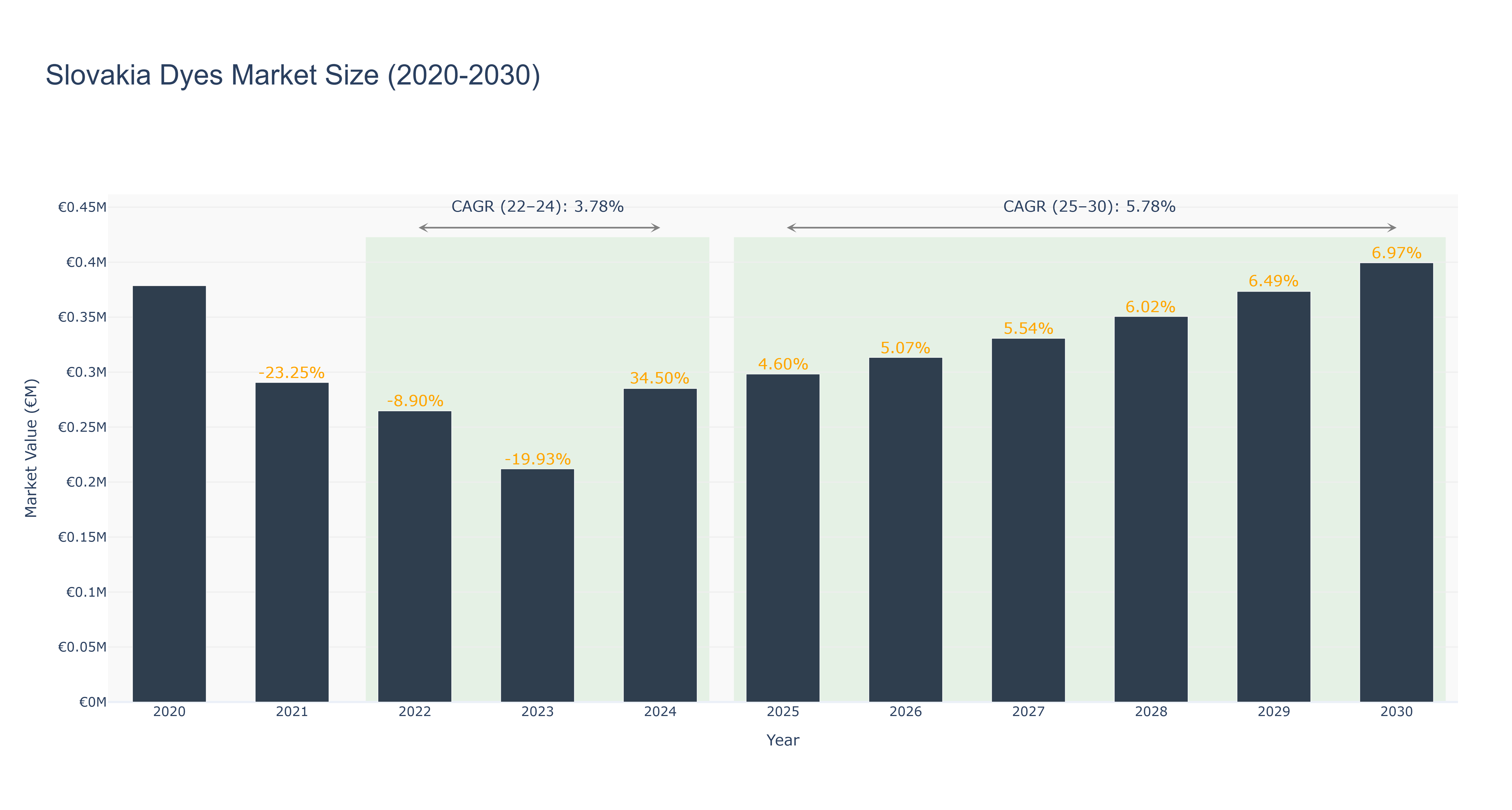
Slovakia Dyes Market has seen fluctuations in market size over the years. The peak market size of €0.40 million is forecasted for 2030. From 2020 to 2024, the market size ranged from €0.26 million to €0.30 million, showing a mix of decline and growth. The CAGR for the period 2022-24 stands at 3.78%, while for 2025-30, it is projected at 5.78%. The market experienced a decline in 2023 due to economic challenges but rebounded strongly in 2024 with a growth of 34.50%. Moving forward, the industry drivers such as increasing demand for eco-friendly dyes and technological advancements are expected to fuel market growth. Additionally, upcoming collaborations between local dye manufacturers and international fashion brands are anticipated to drive innovation and market expansion in the near future.
Slovakia Dyes Market: Production & Trade Performance (2019-2025)
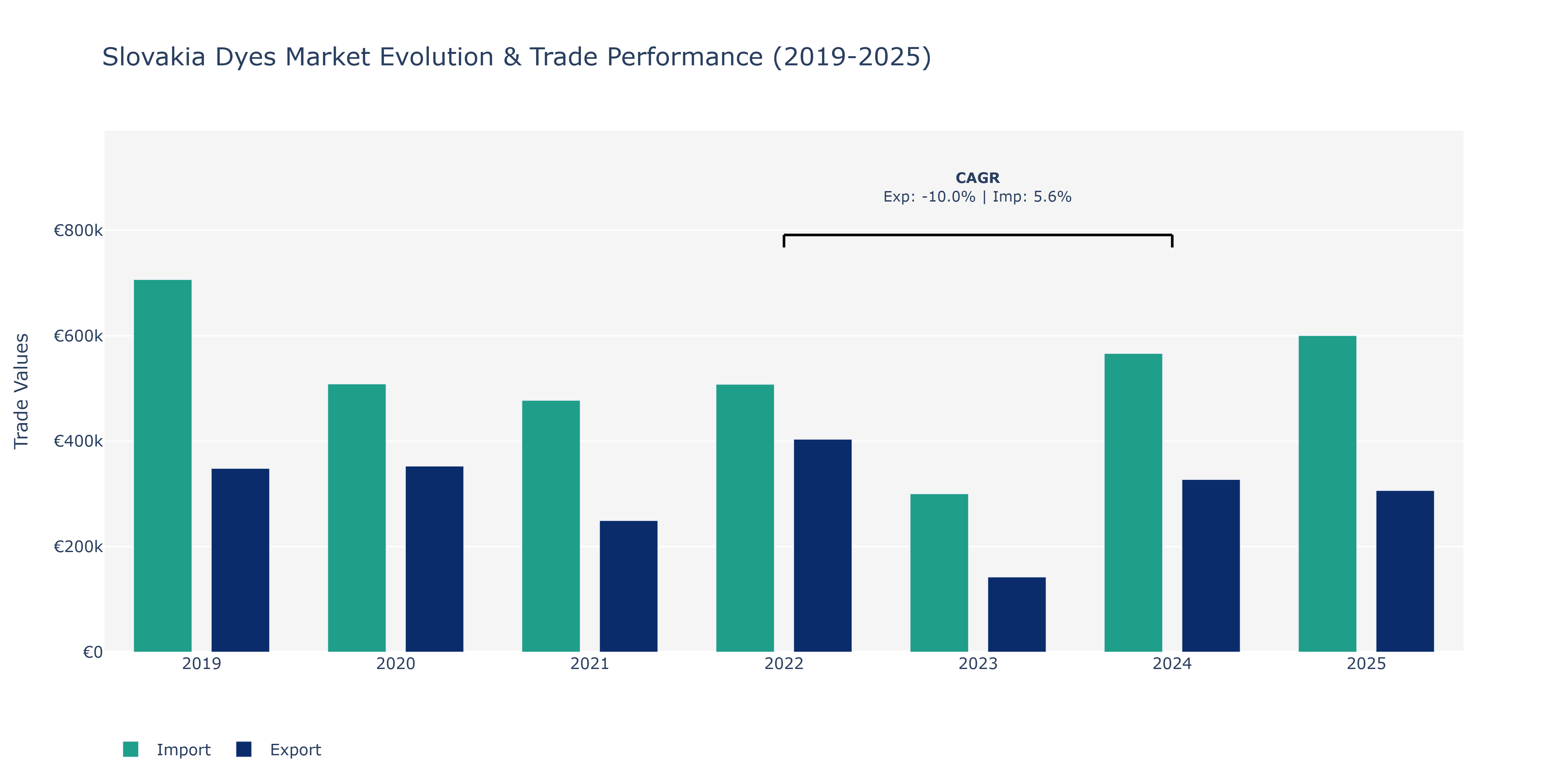
The Slovakia Dyes Market witnessed varied trends in Exports and Imports from 2019 to 2025. Exports started at €348.2 thousand in 2019, experienced a peak in 2022 at €403.61 thousand, and then dropped notably to €142.18 thousand in 2023 before rebounding to €306.29 thousand in 2025. On the other hand, Imports began at a higher level of €706.48 thousand in 2019, decreased to €300.17 thousand in 2023, and rose to €600.27 thousand in 2025. The fluctuations in Exports could be attributed to changing global demand for dyes, possibly influenced by shifts in fashion trends or environmental regulations impacting the industry. The rise in Imports post-2023 might indicate increased demand for raw materials or specialized dyes not produced domestically. These developments align with market reports suggesting a growing focus on eco-friendly dyes and sustainable practices driving international dye trade.
Key Highlights of the Report:
- Slovakia Dyes Market Outlook
- Market Size of Slovakia Dyes Market, 2025
- Forecast of Slovakia Dyes Market, 2032
- Historical Data and Forecast of Slovakia Dyes Revenues & Volume for the Period 2022 - 2032
- Slovakia Dyes Market Trend Evolution
- Slovakia Dyes Market Drivers and Challenges
- Slovakia Dyes Price Trends
- Slovakia Dyes Porter's Five Forces
- Slovakia Dyes Industry Life Cycle
- Historical Data and Forecast of Slovakia Dyes Market Revenues & Volume By Product Type for the Period 2022 - 2032
- Historical Data and Forecast of Slovakia Dyes Market Revenues & Volume By Reactive Dyes for the Period 2022 - 2032
- Historical Data and Forecast of Slovakia Dyes Market Revenues & Volume By Disperse Dyes for the Period 2022 - 2032
- Historical Data and Forecast of Slovakia Dyes Market Revenues & Volume By Vat Dyes for the Period 2022 - 2032
- Historical Data and Forecast of Slovakia Dyes Market Revenues & Volume By Direct Dyes for the Period 2022 - 2032
- Historical Data and Forecast of Slovakia Dyes Market Revenues & Volume By Acid Dyes for the Period 2022 - 2032
- Historical Data and Forecast of Slovakia Dyes Market Revenues & Volume By Other Dyes for the Period 2022 - 2032
- Historical Data and Forecast of Slovakia Dyes Market Revenues & Volume By Application for the Period 2022 - 2032
- Historical Data and Forecast of Slovakia Dyes Market Revenues & Volume By Textile for the Period 2022 - 2032
- Historical Data and Forecast of Slovakia Dyes Market Revenues & Volume By Leather for the Period 2022 - 2032
- Historical Data and Forecast of Slovakia Dyes Market Revenues & Volume By Paper for the Period 2022 - 2032
- Historical Data and Forecast of Slovakia Dyes Market Revenues & Volume By Printing Inks for the Period 2022 - 2032
- Historical Data and Forecast of Slovakia Dyes Market Revenues & Volume By Other for the Period 2022 - 2032
- Slovakia Dyes Import Export Trade Statistics
- Market Opportunity Assessment By Product Type
- Market Opportunity Assessment By Application
- Slovakia Dyes Top Companies Market Share
- Slovakia Dyes Competitive Benchmarking By Technical and Operational Parameters
- Slovakia Dyes Company Profiles
- Slovakia Dyes Key Strategic Recommendations






































