Slovakia Energy Bar Market Top 5 Importing Countries and Market Competition (HHI) Analysis
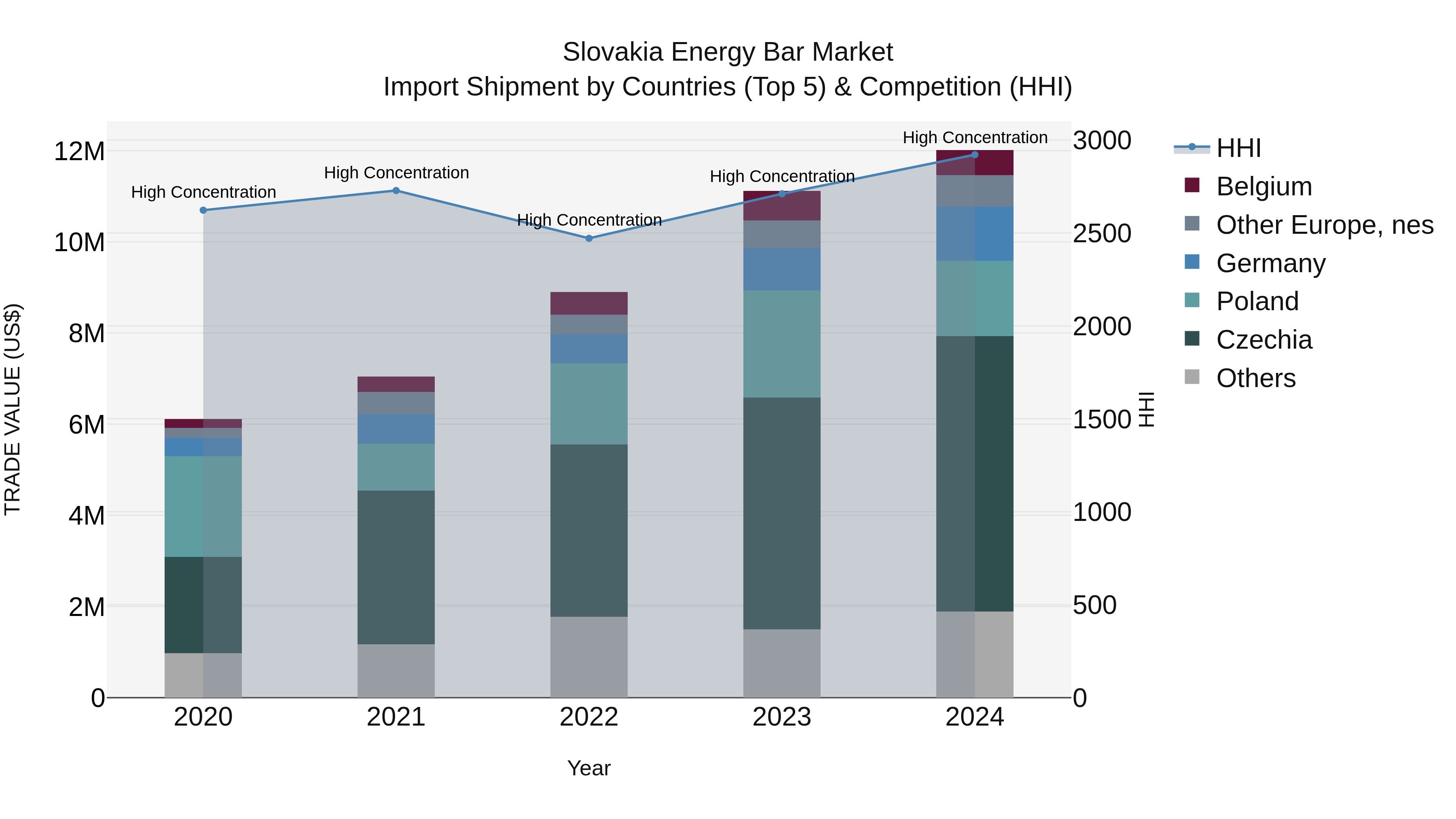
In 2024, Slovakia continued to witness strong growth in energy bar import shipments, with top exporting countries being Czechia, Poland, Germany, and other European nations. The Market Top 5 Importing Countries and Market Competition (HHI) Analysis concentration, as measured by the HHI, remained high, indicating a competitive environment. The impressive compound annual growth rate (CAGR) of 18.37% from 2020 to 2024 reflects the increasing popularity of energy bars among Slovakian consumers. Moreover, the growth rate of 8.04% from 2023 to 2024 suggests sustained momentum in the Market Top 5 Importing Countries and Market Competition (HHI) Analysis, with Spain emerging as a notable player in supplying energy bars to Slovakia.
Slovakia Energy Bar Market Overview
The Slovakia Energy Bar Market is witnessing significant growth driven by the rising health consciousness among consumers seeking convenient and nutritious snack options. Energy bars are gaining popularity as on-the-go snacks, meal replacements, and pre/post-workout fuel. Key players in the market are focusing on product innovation, offering a variety of flavors, organic and natural ingredients, and catering to specific dietary preferences such as gluten-free, vegan, and high protein. The market is also influenced by the increasing trend of sports and fitness activities, driving demand for performance-boosting snacks. Distribution channels include supermarkets, convenience stores, online retail, and specialty health stores. With a growing emphasis on health and wellness, the Slovakia Energy Bar Market is poised for continued expansion and diversification in the coming years.
Slovakia Energy Bar Market Trends and Opportunities
The Slovakia Energy Bar Market is experiencing a growing demand for healthier and convenient snack options among consumers looking for on-the-go nutrition. Key trends include the rising popularity of plant-based and organic energy bars, as well as products with added functional ingredients such as probiotics, adaptogens, and superfoods. Opportunities lie in targeting specific consumer segments such as athletes, fitness enthusiasts, and health-conscious individuals through effective marketing strategies and product innovation. With an increasing focus on health and wellness, there is potential for partnerships with gyms, sports clubs, and health food stores to expand distribution channels and reach a wider audience. Additionally, emphasizing sustainability and eco-friendly packaging can further differentiate brands in the competitive market landscape.
Slovakia Energy Bar Market Challenges
In the Slovakia Energy Bar Market, some challenges include increasing competition from both domestic and international brands, a lack of consumer awareness and education about the benefits of energy bars compared to traditional snacks, and the need for innovative marketing strategies to differentiate products in a saturated market. Additionally, fluctuating raw material prices and regulatory hurdles could impact production costs and pricing strategies for energy bar manufacturers in Slovakia. To succeed in this competitive landscape, companies may need to focus on product differentiation, invest in marketing campaigns to educate consumers, and adapt to changing consumer preferences for healthier and sustainable snack options.
Slovakia Energy Bar Market Drivers
The Slovakia Energy Bar Market is primarily driven by the increasing awareness among consumers regarding the importance of health and wellness, leading to a growing demand for convenient and nutritious on-the-go snack options. Additionally, the rising trend of active lifestyles and fitness enthusiasts seeking quick energy boosts has fueled the demand for energy bars in Slovakia. The market is also influenced by the availability of a wide range of flavors and formulations catering to various dietary preferences such as gluten-free, vegan, and organic options. Furthermore, aggressive marketing strategies by key players, expanding distribution channels, and innovative product launches are contributing to the overall growth of the Slovakia Energy Bar Market.
Slovakia Energy Bar Market Government Policy
The Slovakia government has implemented various policies to promote the growth and sustainability of the energy bar market. These policies include providing incentives for companies to invest in renewable energy sources for energy bar production, such as solar or wind power. Additionally, there are regulations in place to ensure the quality and safety of energy bars, including labeling requirements and restrictions on certain ingredients. The government also supports research and development efforts in the energy bar industry to encourage innovation and the development of new, healthier products. Overall, these policies aim to foster a competitive market while promoting environmental sustainability and consumer protection in the Slovakia energy bar market.
Slovakia Energy Bar Market Future Outlook
The Slovakia Energy Bar Market is poised for steady growth in the coming years due to increasing consumer awareness of the importance of healthy and convenient snack options. With a growing emphasis on health and wellness among the population, there is a rising demand for energy bars as a convenient on-the-go source of nutrition. The market is also benefiting from the trend of active lifestyles and fitness consciousness among consumers. Innovative product offerings, such as plant-based and organic energy bars, are likely to gain popularity as consumers seek healthier options. Moreover, the expanding distribution channels and marketing efforts by key players in the market are expected to further drive growth. Overall, the Slovakia Energy Bar Market is forecasted to experience sustained growth in the foreseeable future.
Key Highlights of the Report:
- Slovakia Energy Bar Market Outlook
- Market Size of Slovakia Energy Bar Market, 2024
- Forecast of Slovakia Energy Bar Market, 2031
- Historical Data and Forecast of Slovakia Energy Bar Revenues & Volume for the Period 2021- 2031
- Slovakia Energy Bar Market Trend Evolution
- Slovakia Energy Bar Market Drivers and Challenges
- Slovakia Energy Bar Price Trends
- Slovakia Energy Bar Porter's Five Forces
- Slovakia Energy Bar Industry Life Cycle
- Historical Data and Forecast of Slovakia Energy Bar Market Revenues & Volume By Distribution Channel for the Period 2021- 2031
- Historical Data and Forecast of Slovakia Energy Bar Market Revenues & Volume By Supermarkets/Hypermarkets for the Period 2021- 2031
- Historical Data and Forecast of Slovakia Energy Bar Market Revenues & Volume By Convenience Stores for the Period 2021- 2031
- Historical Data and Forecast of Slovakia Energy Bar Market Revenues & Volume By Specialty Stores for the Period 2021- 2031
- Historical Data and Forecast of Slovakia Energy Bar Market Revenues & Volume By Online Retail Stores for the Period 2021- 2031
- Historical Data and Forecast of Slovakia Energy Bar Market Revenues & Volume By Other for the Period 2021- 2031
- Slovakia Energy Bar Import Export Trade Statistics
- Market Opportunity Assessment By Distribution Channel
- Slovakia Energy Bar Top Companies Market Share
- Slovakia Energy Bar Competitive Benchmarking By Technical and Operational Parameters
- Slovakia Energy Bar Company Profiles
- Slovakia Energy Bar Key Strategic Recommendations






































