Slovakia Ergonomic Chair Market Size, Share & Growth Rate
The Slovakia Ergonomic Chair Market was estimated at USD 1026 Million in 2025 and is projected to reach USD 1908 Million by 2032, growing at a CAGR of 9.3% from 2026 to 2032. This growth is primarily driven by heightened awareness of ergonomic solutions in workplaces, as companies increasingly prioritize employee health and productivity. Moreover, the shift towards remote working arrangements has amplified the demand for versatile and adaptive ergonomic seating solutions across various sectors in Slovakia.
Slovakia Ergonomic Chair Market Year-wise Growth Rate and Key Drivers
This graph highlights how the Slovakia Ergonomic Chair Market has steadily grown over the years, supported by major growth factors.
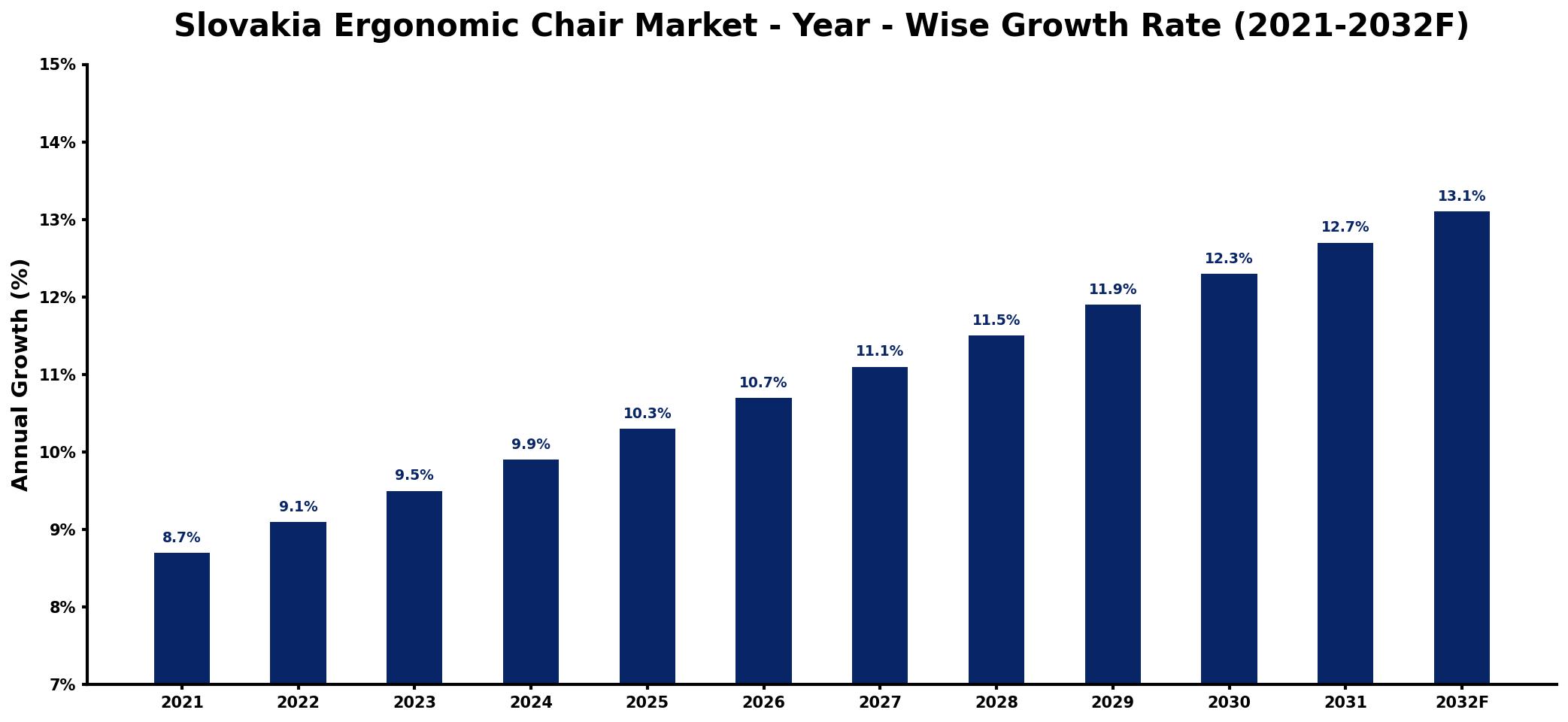
The table below presents the year‑wise growth rates along with the key drivers influencing the market
| Year | Growth Rate | Major Drivers |
| 2021 | 8.7% | Remote work adoption increases demand |
| 2022 | 9.1% | Health awareness drives workplace investments |
| 2023 | 9.5% | Corporate wellness programs gain traction |
| 2024 | 9.9% | Rising focus on employee comfort |
| 2025 | 10.3% | Innovative designs attract new customers |
| 2026 | 10.7% | Sustainability trends influence purchase decisions |
| 2027 | 11.1% | Technological advancements enhance functionality |
| 2028 | 11.5% | Aging population necessitates better support |
| 2029 | 11.9% | Workplace safety regulations promote upgrades |
| 2030 | 12.3% | Increased disposable income boosts spending |
| 2031 | 12.7% | Remote collaboration tools drive sales |
| 2032 | 13.1% | Customization options appeal to consumers |
Note: Market size estimations and growth projections presented in this report are based on 6Wresearch's proprietary forecasting methodology, utilizing the latest available industry data, government publications, and primary research inputs.
Slovakia Ergonomic Chair Market Synopsis
The demand for ergonomic chairs in Slovakia is increasingly influenced by corporate wellness initiatives aimed at enhancing employee comfort and reducing workplace-related health issues. As the workforce becomes more educated about the long-term benefits of ergonomically designed furniture, organizations are investing more in high-quality ergonomic solutions that cater to their teams.
Conversely, manufacturers are adapting to consumer preferences by offering a diverse range of ergonomic chairs equipped with customizable features such as adjustable lumbar support and breathable materials. This responsive approach ensures that companies can meet the evolving needs of employees, paving the way for sustained market growth.
Slovakia Ergonomic Chair Market Key Takeaways
- The increasing focus on employee health and comfort is driving the demand for ergonomic chairs.
- Online sales channels are expanding, enhancing accessibility for consumers seeking ergonomic solutions.
- Sustainability trends are encouraging manufacturers to incorporate eco-friendly materials in chair designs.
- The rise of remote work is creating new opportunities for ergonomic furniture tailored for home offices.
- Innovations in ergonomic design are continuously evolving, promoting better posture and comfort.
Evaluation of Restraints in Slovakia Ergonomic Chair Market
Despite the encouraging growth trajectory, the Slovakia ergonomic chair market faces notable challenges. The relatively small market size limits scalability for many manufacturers, making it harder to justify substantial investments. Furthermore, a general lack of consumer awareness about the benefits of ergonomic seating can lead to hesitance in adoption. Compounding these issues is intense competition from international brands, necessitating ongoing product innovation and differentiation to capture and retain market share. Economic fluctuations may also impact consumer spending, further influencing market dynamics.
Slovakia Ergonomic Chair Market Trends
A key trend in the Slovakia Ergonomic Chair Market is the shift towards sustainable materials, as consumers increasingly demand environmentally friendly products. Manufacturers are creatively utilizing recycled materials and implementing eco-conscious practices in their production processes. Additionally, the market is witnessing growing interest in features that enhance adaptability, such as multifunctional designs that cater to different work environments, be it an office or a home setting. This flexibility is essential as hybrid work models become more prevalent.
Slovakia Ergonomic Chair Market Opportunities
With the rise in awareness regarding workplace ergonomics, there are significant investment opportunities within the Slovakia Ergonomic Chair Market. Companies can capitalize on this momentum by developing innovative, customizable chair solutions that specifically address the unique needs of Slovakian businesses. Furthermore, leveraging digital marketing and e-commerce strategies can broaden the reach and appeal of ergonomic offerings, allowing manufacturers to connect with a more extensive consumer base.
Government Initiatives in the Slovakia Ergonomic Chair Market
The Slovakian government is actively promoting workplace safety and health through various policies that encourage the use of ergonomic furniture. Employers are often mandated to provide ergonomic seating to minimize risks of musculoskeletal disorders, aligning with broader EU directives on occupational health. Financial incentives, such as subsidies for businesses investing in ergonomic solutions, further bolster these initiatives, aiming to enhance the overall work environment across the country.
Future Insights of the Slovakia Ergonomic Chair Market
Looking ahead to 2026-2032, the Slovakia Ergonomic Chair Market is poised for robust growth fueled by evolving workplace dynamics and a sustained focus on employee wellness. As more organizations recognize the benefits of ergonomic seating, demand will likely escalate, leading to continuous innovations in design and functionality. The trend towards remote working will also persist, ensuring that ergonomic solutions remain a crucial component of home office setups and traditional workspaces alike.
Slovakia Ergonomic Chair Market Latest Developments (2025 - 2026)
Recent developments in the Slovakia Ergonomic Chair Market indicate a rising integration of smart technology into chair designs, with features that monitor posture and provide real-time feedback. Additionally, manufacturers are increasingly partnering with wellness programs to offer bundled ergonomic solutions, catering to businesses aiming to enhance employee health. The market is also witnessing a surge in customizable options, allowing users to select features that best suit their individual preferences and requirements.
Slovakia Ergonomic Chair Market - Key Attractiveness of the Report
- 10 Years of Market Numbers
- Historical Data Starting from 2022 to 2025
- Base Year: 2025
- Forecast Data until 2032
- Key Performance Indicators Impacting the Market
- Major Upcoming Developments and Projects
Key Highlights of the Report:
- Slovakia Ergonomic Chair Market Outlook
- Market Size of Slovakia Ergonomic Chair Market, 2025
- Forecast of Slovakia Ergonomic Chair Market, 2032
- Historical Data and Forecast of Slovakia Ergonomic Chair Revenues & Volume for the Period 2022-2032F
- Slovakia Ergonomic Chair Market Trend Evolution
- Slovakia Ergonomic Chair Market Drivers and Challenges
- Slovakia Ergonomic Chair Price Trends
- Slovakia Ergonomic Chair Porter's Five Forces
- Slovakia Ergonomic Chair Industry Life Cycle
- Historical Data and Forecast of Slovakia Ergonomic Chair Market Revenues & Volume By Application for the Period 2022-2032F
- Historical Data and Forecast of Slovakia Ergonomic Chair Market Revenues & Volume By Enterprise Procurement for the Period 2022-2032F
- Historical Data and Forecast of Slovakia Ergonomic Chair Market Revenues & Volume By Government Procurement for the Period 2022-2032F
- Historical Data and Forecast of Slovakia Ergonomic Chair Market Revenues & Volume By School Procurement for the Period 2022-2032F
- Historical Data and Forecast of Slovakia Ergonomic Chair Market Revenues & Volume By Individual Procurement for the Period 2022-2032F
- Historical Data and Forecast of Slovakia Ergonomic Chair Market Revenues & Volume By Other for the Period 2022-2032F
- Slovakia Ergonomic Chair Import Export Trade Statistics
- Market Opportunity Assessment By Application
- Slovakia Ergonomic Chair Top Companies Market Share
- Slovakia Ergonomic Chair Competitive Benchmarking By Technical and Operational Parameters
- Slovakia Ergonomic Chair Company Profiles
- Slovakia Ergonomic Chair Key Strategic Recommendations






































