Slovakia Jaw Crusher Market Size (2020-2030)
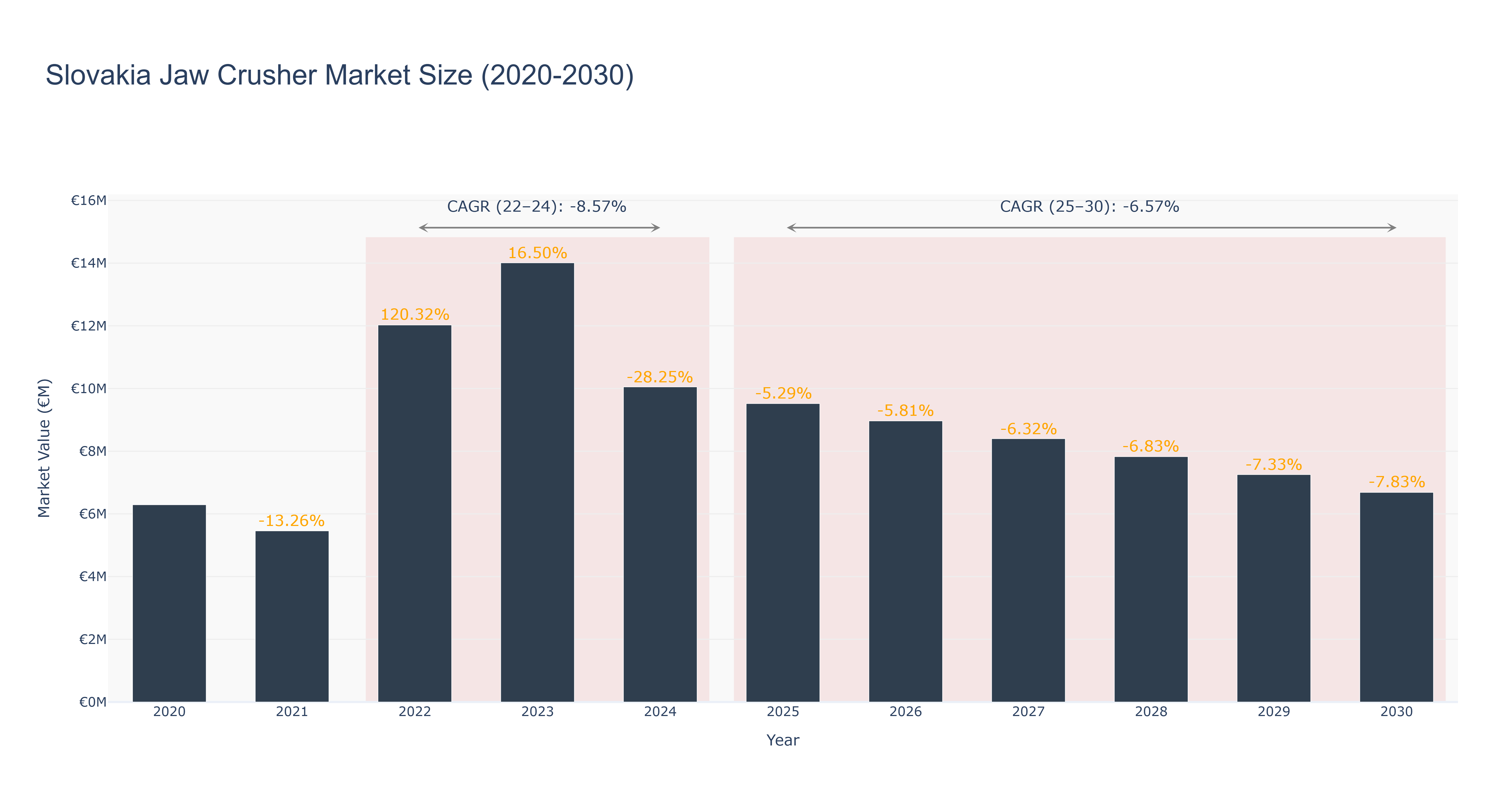
The Slovakia Jaw Crusher Market experienced significant fluctuations between 2020 and 2024, peaking in 2022 with a market size of €12.03 million, following a remarkable growth of 120.32% from the previous year. However, this was followed by a sharp decline to €10.05 million in 2024, reflecting a CAGR of -8.57% over the actual period. Looking ahead to the forecasted years from 2025 to 2030, the market is projected to continue its downward trend, with sizes decreasing from €9.52 million in 2025 to €6.69 million by 2030, resulting in a CAGR of -6.57%. Key industry drivers for the observed volatility include fluctuating construction activities, changing regulations, and technological advancements in crushing technologies. While there are no specific upcoming projects highlighted, macroeconomic factors such as infrastructure investment and environmental regulations will likely shape the market dynamics in the coming years.
Slovakia Jaw Crusher Market: Production & Trade Performance (2019-2025)
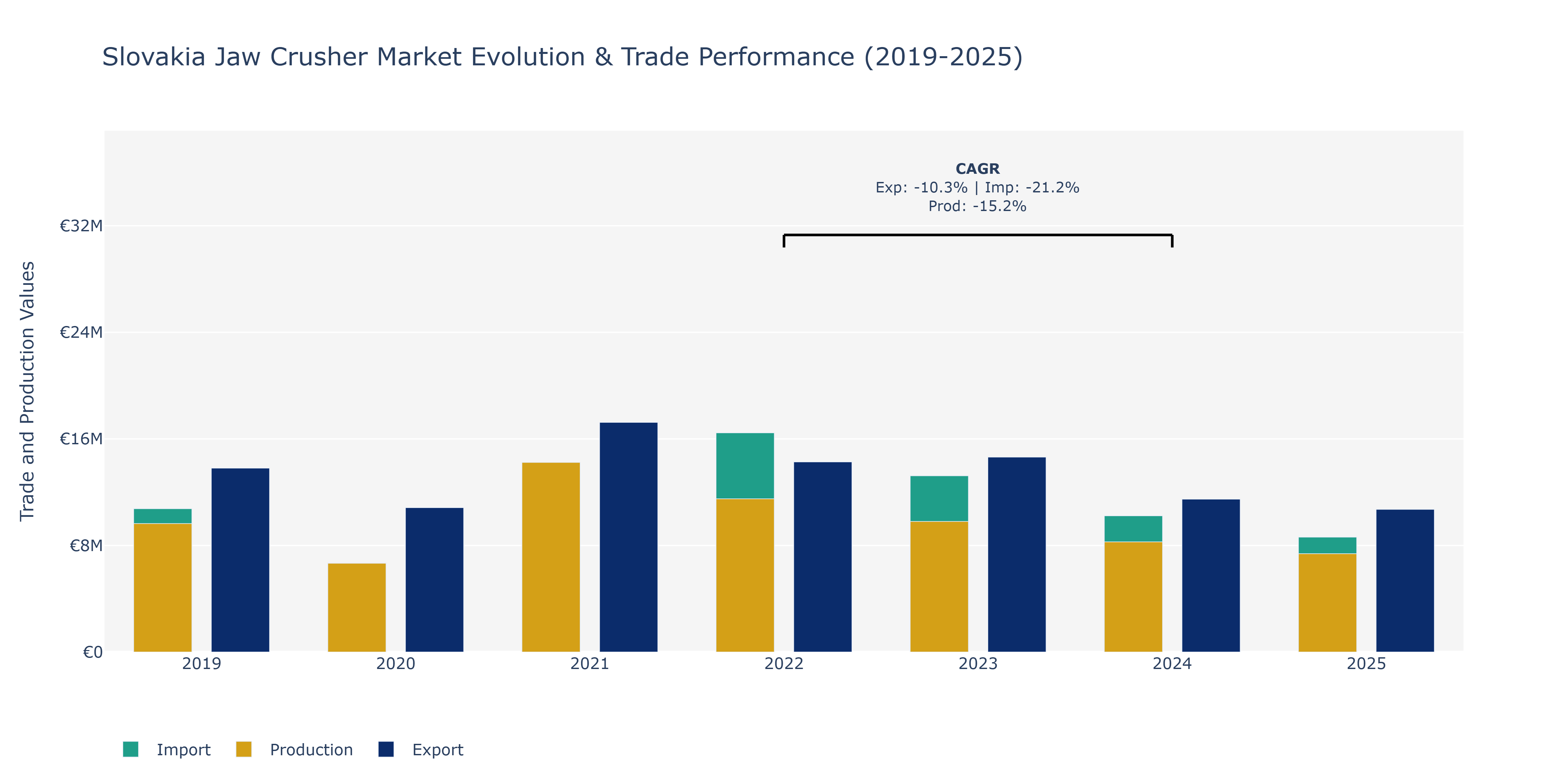
Between 2019 and 2025, the Slovakia Jaw Crusher Market witnessed fluctuations in Exports, Imports, and Production. Exports peaked in 2021 at €17.24 million, driven by increased demand and possibly new market penetration strategies. However, by 2025, exports decreased to around €10.71 million, indicating potential challenges in maintaining market share. Imports followed a similar trend, reaching €16.45 million in 2022 before dropping to approximately €8.62 million in 2025. This decline could be attributed to shifts in global supply chains and fluctuations in raw material costs. Production levels also fluctuated, with a peak of €14.23 million in 2021 followed by a decline to around €7.38 million in 2025. Factors such as technological advancements impacting demand for jaw crushers and macroeconomic conditions could have influenced these trends. The negative CAGR for exports, imports, and production suggests the market faced challenges in maintaining growth during the period analyzed. Further research into market dynamics and competitive landscapes could provide insights into these fluctuations.
Key Highlights of the Report:
- Slovakia Jaw Crusher Market Outlook
- Market Size of Slovakia Jaw Crusher Market, 2025
- Forecast of Slovakia Jaw Crusher Market, 2032
- Historical Data and Forecast of Slovakia Jaw Crusher Revenues & Volume for the Period 2022 - 2032F
- Slovakia Jaw Crusher Market Trend Evolution
- Slovakia Jaw Crusher Market Drivers and Challenges
- Slovakia Jaw Crusher Price Trends
- Slovakia Jaw Crusher Porter's Five Forces
- Slovakia Jaw Crusher Industry Life Cycle
- Historical Data and Forecast of Slovakia Jaw Crusher Market Revenues & Volume By Product Type for the Period 2022 - 2032F
- Historical Data and Forecast of Slovakia Jaw Crusher Market Revenues & Volume By Single Toggle Jaw Crusher for the Period 2022 - 2032F
- Historical Data and Forecast of Slovakia Jaw Crusher Market Revenues & Volume By Double Toggle Jaw Crusher for the Period 2022 - 2032F
- Historical Data and Forecast of Slovakia Jaw Crusher Market Revenues & Volume By Mobility for the Period 2022 - 2032F
- Historical Data and Forecast of Slovakia Jaw Crusher Market Revenues & Volume By Stationary for the Period 2022 - 2032F
- Historical Data and Forecast of Slovakia Jaw Crusher Market Revenues & Volume By Portable for the Period 2022 - 2032F
- Historical Data and Forecast of Slovakia Jaw Crusher Market Revenues & Volume By Application for the Period 2022 - 2032F
- Historical Data and Forecast of Slovakia Jaw Crusher Market Revenues & Volume By Mining for the Period 2022 - 2032F
- Historical Data and Forecast of Slovakia Jaw Crusher Market Revenues & Volume By Construction for the Period 2022 - 2032F
- Historical Data and Forecast of Slovakia Jaw Crusher Market Revenues & Volume By Recycling for the Period 2022 - 2032F
- Historical Data and Forecast of Slovakia Jaw Crusher Market Revenues & Volume By Power Source for the Period 2022 - 2032F
- Historical Data and Forecast of Slovakia Jaw Crusher Market Revenues & Volume By Electric for the Period 2022 - 2032F
- Historical Data and Forecast of Slovakia Jaw Crusher Market Revenues & Volume By Diesel for the Period 2022 - 2032F
- Slovakia Jaw Crusher Import Export Trade Statistics
- Market Opportunity Assessment By Product Type
- Market Opportunity Assessment By Mobility
- Market Opportunity Assessment By Application
- Market Opportunity Assessment By Power Source
- Slovakia Jaw Crusher Top Companies Market Share
- Slovakia Jaw Crusher Competitive Benchmarking By Technical and Operational Parameters
- Slovakia Jaw Crusher Company Profiles
- Slovakia Jaw Crusher Key Strategic Recommendations






































