Slovakia Linen Yarn Market Size (2020-2030)
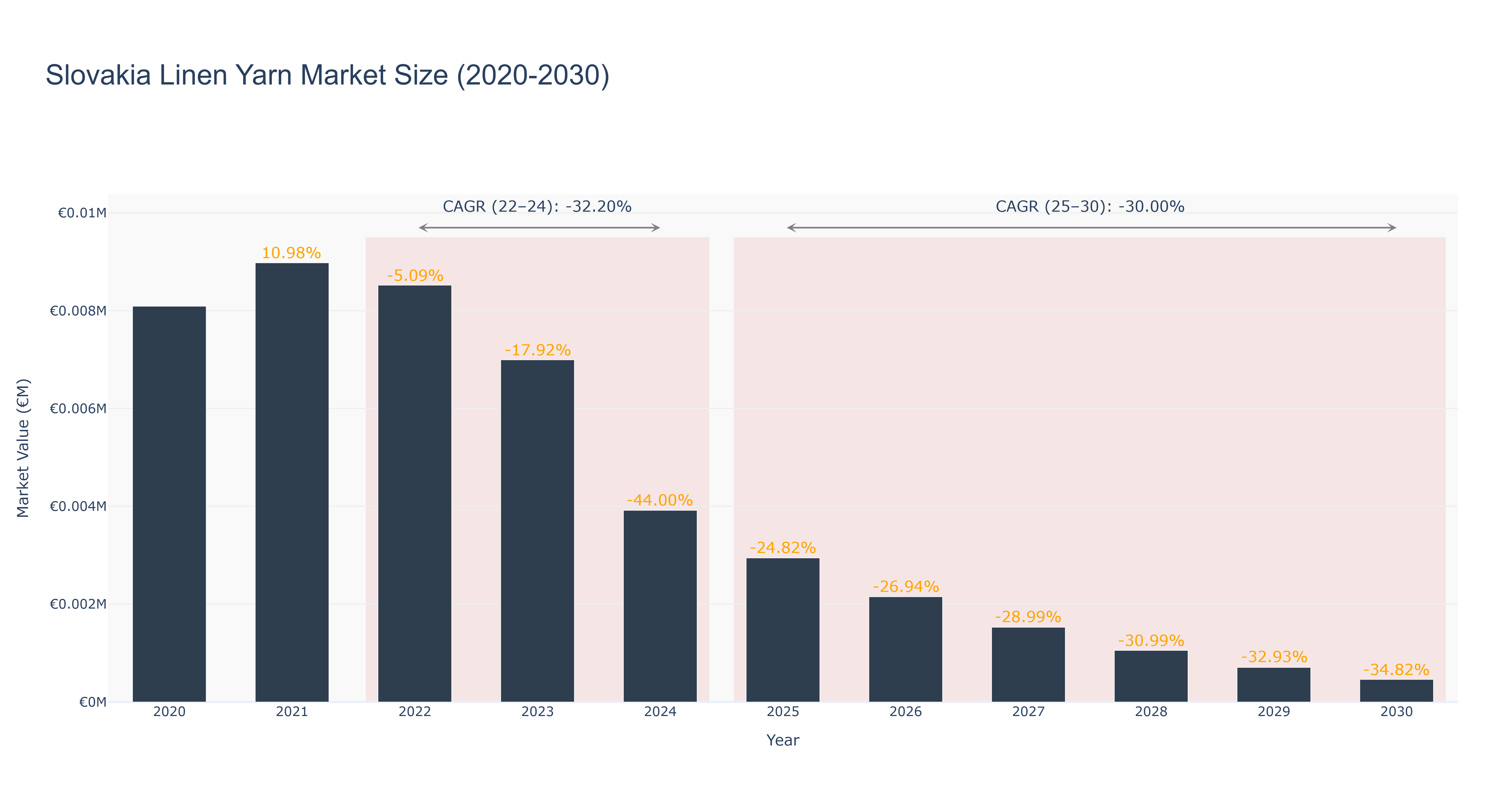
The Slovakia Linen Yarn Market is experiencing a significant downward trajectory, characterized by a peak market size of €8.98 thousand in 2021, followed by a decline to €3.92 thousand by 2024. The actual market data from 2022 to 2024 reveals a compounded annual growth rate (CAGR) of -32.20%, driven by decreased demand for linen products and increased competition from synthetic alternatives. The forecasted period from 2025 to 2030 suggests a continued contraction, with projected market sizes shrinking from €2.94 thousand in 2025 to €460.88 in 2030, reflecting a CAGR of -30.00%. This decline can be attributed to ongoing shifts in consumer preferences and economic pressures affecting textile production. While there are no specific upcoming projects mentioned that may revitalize the market, macroeconomic factors such as sustainability trends and innovations in textile manufacturing could potentially influence future recovery efforts.
Slovakia Linen Yarn Market: Production & Trade Performance (2019-2025)
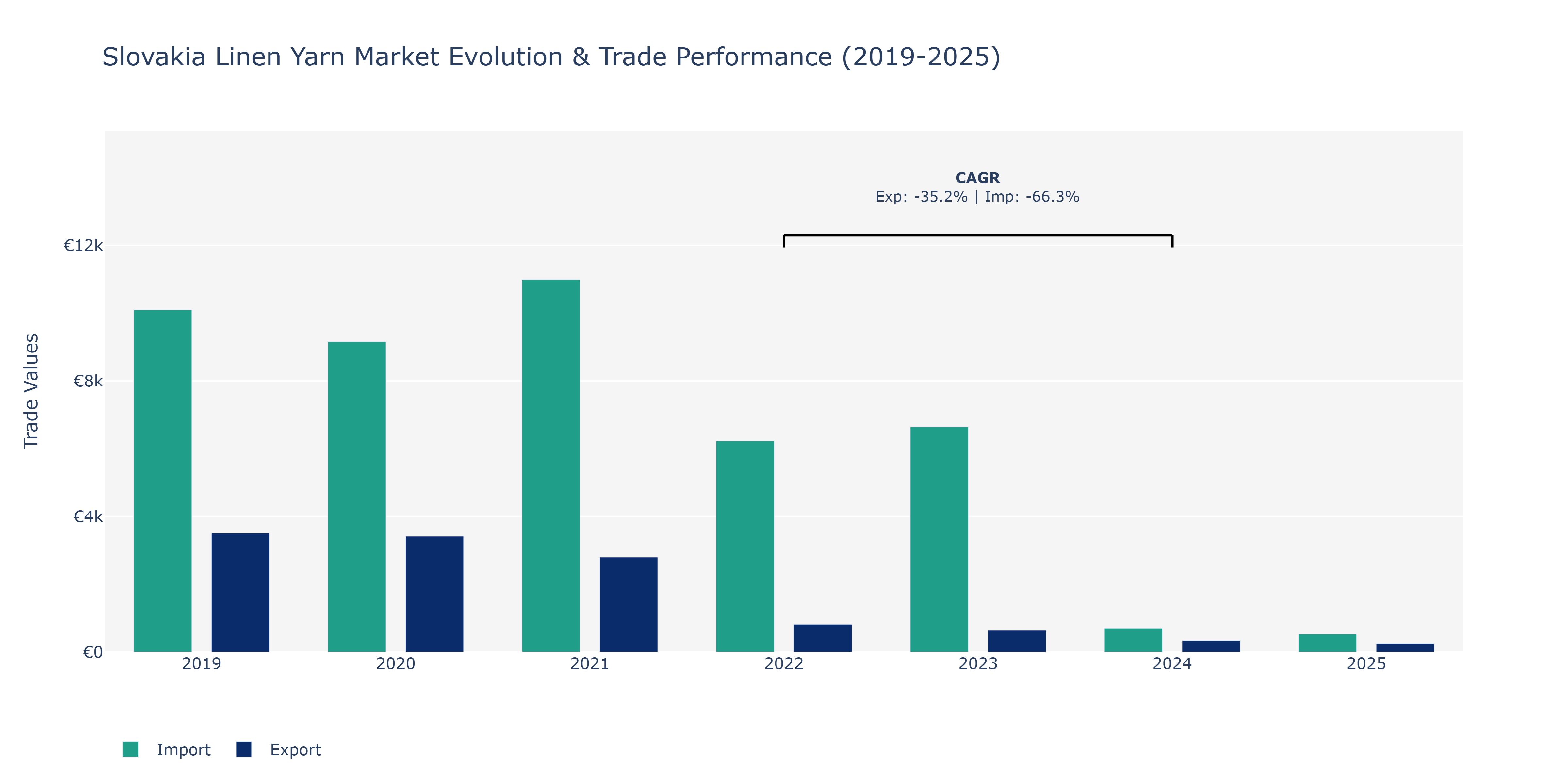
In the Slovakia Linen Yarn Market, exports experienced a gradual decline from €3.51 thousand in 2019 to €260 thousand in 2025. This decrease can be attributed to various factors such as changing consumer preferences, increased competition, or shifts in global demand dynamics. On the other hand, imports fluctuated over the years, reaching €10.1 thousand in 2019 before dropping to €531 thousand in 2025. The notable peak in imports in 2021 may indicate a period of heightened demand for linen yarn products in the domestic market. The sharp decline in imports post-2021 could be a result of supply chain disruptions, trade policies, or evolving market conditions. The CAGR for exports between 2022 and 2024 was -35.16%, while imports experienced a more significant decline at -66.32%, reflecting the challenging market conditions during that period. To mitigate these fluctuations, industry players in the Slovakia Linen Yarn Market may consider diversifying product offerings, exploring new markets, or enhancing operational efficiencies to adapt to changing market dynamics and secure sustainable growth.
Slovakia Linen Yarn Market Overview
The Slovakia Linen Yarn Market is witnessing steady growth due to the increasing demand for sustainable and eco-friendly textiles. Linen yarn, known for its durability and breathability, is preferred by consumers seeking natural fiber alternatives. The market is driven by the growing awareness of environmental issues and the shift towards organic and sustainable products. Key players in the Slovakia Linen Yarn Market include textile manufacturers, retailers, and online platforms offering a variety of linen yarn products. The market is also influenced by fashion trends promoting a more natural and organic aesthetic. Overall, the Slovakia Linen Yarn Market is poised for further expansion as consumers continue to prioritize sustainability and quality in their textile choices.
Slovakia Linen Yarn Market Trends
The Slovakia Linen Yarn Market is experiencing a trend towards sustainable and eco-friendly products, with an increasing demand for linen yarn due to its biodegradability and minimal environmental impact compared to synthetic fibers. Consumers are also seeking natural and breathable materials, driving the popularity of linen yarn in various applications such as clothing, home textiles, and accessories. Additionally, there is a growing interest in locally sourced and artisanal linen yarn products, reflecting a preference for high-quality and unique items. Manufacturers in the Slovakia Linen Yarn Market are focusing on enhancing product quality, exploring innovative processing techniques, and promoting transparency in their supply chains to cater to the evolving preferences of environmentally-conscious consumers.
Slovakia Linen Yarn Market Challenges
In the Slovakia Linen Yarn Market, some challenges that are commonly faced include fluctuating raw material prices, intense competition from synthetic fibers, and limited awareness and demand for linen yarn among consumers. The volatility of raw material prices can impact the production costs for linen yarn manufacturers, making it difficult to maintain stable pricing and profitability. Additionally, synthetic fibers often offer lower costs and more consistent quality, posing a competitive threat to linen yarn producers. Furthermore, there is a need to educate consumers about the benefits and versatility of linen yarn in order to increase its demand and market share. Overcoming these challenges may require strategic pricing, innovative marketing efforts, and product differentiation to establish a stronger position in the market.
Slovakia Linen Yarn Market Investment Opportunities
Investment opportunities in the Slovakia Linen Yarn Market include the potential for growth due to increasing demand for sustainable and eco-friendly textiles. Linen yarn is known for its durability, breathability, and natural properties, making it a popular choice among consumers looking for environmentally conscious products. As the awareness of sustainability continues to rise, there is a growing market for linen yarn in various industries such as fashion, home textiles, and industrial applications. Investors could consider opportunities in linen yarn production facilities, technology innovations for more efficient processing, and marketing strategies to target the eco-conscious consumer segment. With the right investment and strategic planning, the Slovakia Linen Yarn Market presents a promising avenue for capitalizing on the growing demand for sustainable textiles.
Slovakia Linen Yarn Market Government Policy
The Slovakia Linen Yarn Market is influenced by various government policies, including regulations on textile manufacturing and trade agreements. Slovakia is a member of the European Union, which means that the market is subject to EU trade policies and regulations. The government may also have specific policies related to the textile industry, such as environmental regulations or labor laws. In order to stay competitive in the global market, companies in Slovakia may need to comply with these policies while also taking advantage of any incentives or subsidies offered by the government to support the industry. Overall, government policies play a significant role in shaping the operating environment for the Slovakia Linen Yarn Market, influencing factors such as production costs, market access, and sustainability practices.
Slovakia Linen Yarn Market Future Outlook
The future outlook for the Slovakia Linen Yarn Market appears promising, driven by increasing demand for sustainable and eco-friendly textiles. Linen yarn is gaining popularity due to its natural properties such as breathability, moisture-wicking, and durability, making it a preferred choice among consumers. The growing trend towards sustainable fashion and eco-conscious purchasing decisions is expected to further boost the demand for linen yarn in Slovakia. Additionally, the versatility of linen yarn in various applications such as clothing, home textiles, and accessories provides ample opportunities for market expansion. However, challenges such as fluctuating raw material prices and competition from other natural and synthetic fibers may impact market growth. Overall, the Slovakia Linen Yarn Market is poised for steady growth in the coming years, driven by consumer preferences for sustainable and high-quality textiles.
Key Highlights of the Report:
- Slovakia Linen Yarn Market Outlook
- Market Size of Slovakia Linen Yarn Market, 2024
- Forecast of Slovakia Linen Yarn Market, 2031
- Historical Data and Forecast of Slovakia Linen Yarn Revenues & Volume for the Period 2021 - 2031
- Slovakia Linen Yarn Market Trend Evolution
- Slovakia Linen Yarn Market Drivers and Challenges
- Slovakia Linen Yarn Price Trends
- Slovakia Linen Yarn Porter's Five Forces
- Slovakia Linen Yarn Industry Life Cycle
- Historical Data and Forecast of Slovakia Linen Yarn Market Revenues & Volume By Products for the Period 2021 - 2031
- Historical Data and Forecast of Slovakia Linen Yarn Market Revenues & Volume By Dry spun yarn for the Period 2021 - 2031
- Historical Data and Forecast of Slovakia Linen Yarn Market Revenues & Volume By Wet spun yarn for the Period 2021 - 2031
- Historical Data and Forecast of Slovakia Linen Yarn Market Revenues & Volume By Blended yarn for the Period 2021 - 2031
- Historical Data and Forecast of Slovakia Linen Yarn Market Revenues & Volume By Applications for the Period 2021 - 2031
- Historical Data and Forecast of Slovakia Linen Yarn Market Revenues & Volume By Clothings for the Period 2021 - 2031
- Historical Data and Forecast of Slovakia Linen Yarn Market Revenues & Volume By Beddings for the Period 2021 - 2031
- Historical Data and Forecast of Slovakia Linen Yarn Market Revenues & Volume By Others for the Period 2021 - 2031
- Slovakia Linen Yarn Import Export Trade Statistics
- Market Opportunity Assessment By Products
- Market Opportunity Assessment By Applications
- Slovakia Linen Yarn Top Companies Market Share
- Slovakia Linen Yarn Competitive Benchmarking By Technical and Operational Parameters
- Slovakia Linen Yarn Company Profiles
- Slovakia Linen Yarn Key Strategic Recommendations






































