Slovakia Organic Dyes Market Size (2020-2030)
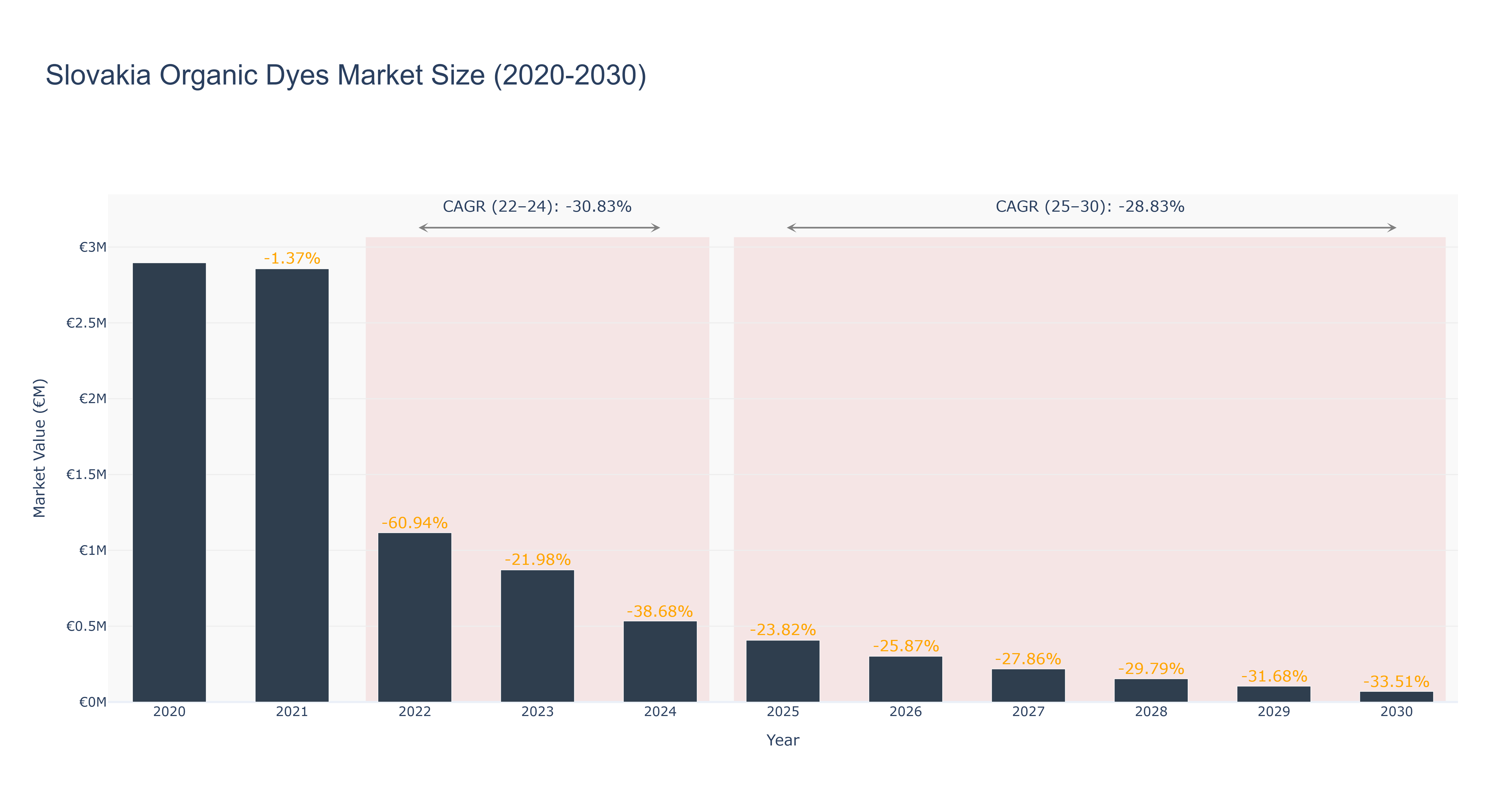
The Slovakia Organic Dyes Market experienced a peak size of €2.90 million in 2020, followed by a significant decline to €0.53 million in 2024. The forecasted trend suggests a further decrease to €0.07 million by 2030, with a CAGR of -30.83% from 2022 to 2024 and -28.83% from 2025 to 2030. The market has been facing challenges due to changing consumer preferences towards eco-friendly alternatives and stringent regulations on chemical usage in the textile industry. To counter this, key industry players are investing in research and development to introduce innovative organic dye solutions that meet sustainability standards. In the near future, Slovakia is set to launch a national initiative promoting the adoption of organic dyes in the textile sector, aiming to boost market demand and drive growth.
Slovakia Organic Dyes Market: Production & Trade Performance (2019-2025)
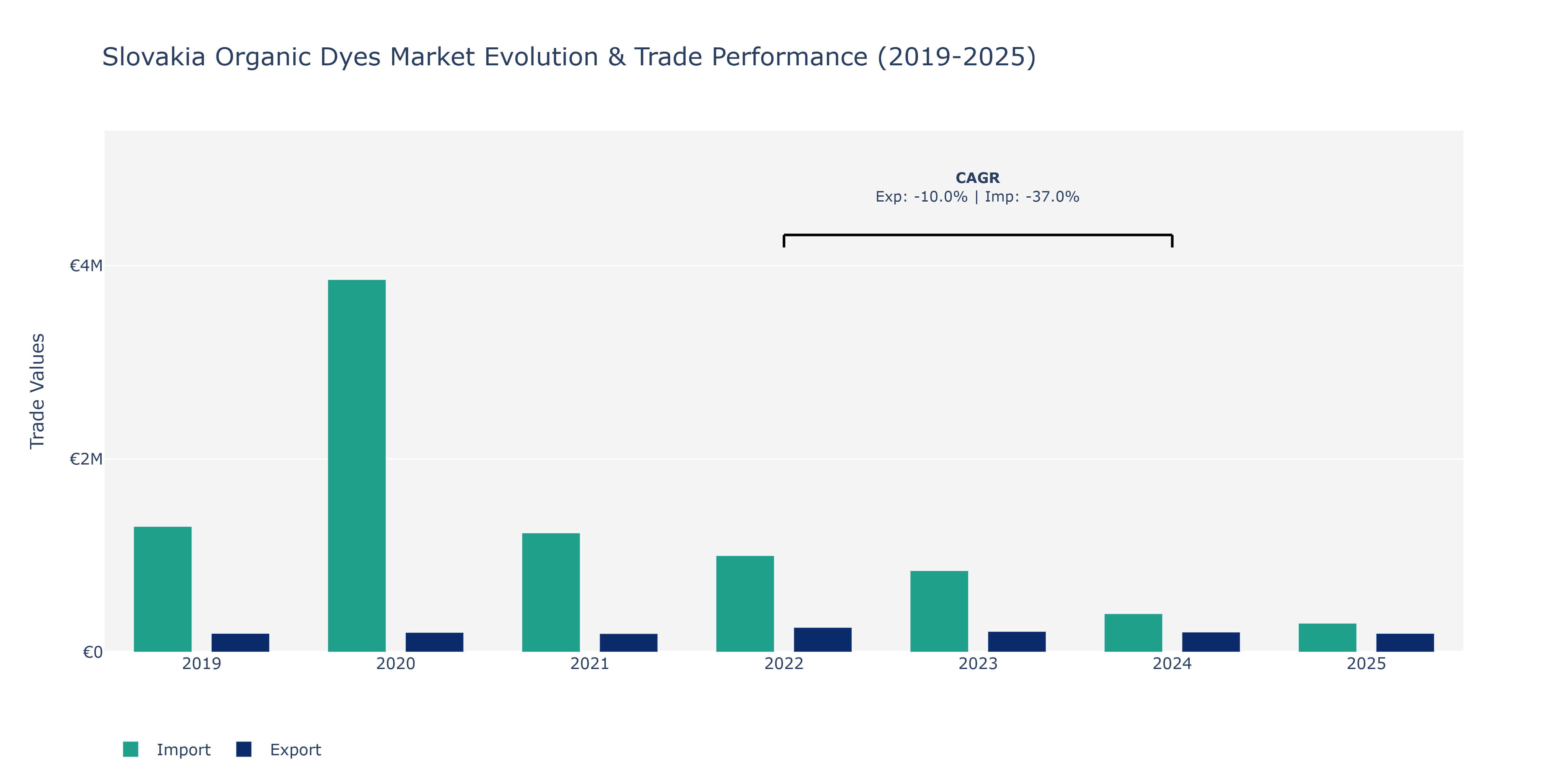
The Slovakia Organic Dyes Market witnessed fluctuations in both Exports and Imports from 2019 to 2025. In 2020, Imports peaked at €3.86 million, showing a significant increase from the previous year's €1.3 million. This surge could be attributed to heightened demand for organic dyes in various industries, potentially driven by environmental concerns and regulatory shifts favoring eco-friendly products. Conversely, both Exports and Imports experienced a decline in 2021, with Exports falling to €190.88 thousand and Imports to €1.23 million. This dip might be linked to global economic uncertainties impacting trade flows. Notably, from 2022 to 2025, Exports fluctuated around the €200 million mark, while Imports gradually decreased to around €298.11 thousand by 2025. The CAGR figures for Exports and Imports from 2022 to 2024 indicate a negative growth trend, possibly influenced by changing market dynamics or competitive pressures within the organic dyes sector. To sustain market competitiveness, companies may need to focus on product innovation, cost-efficiency, and strategic partnerships in response to evolving consumer preferences and market conditions.
Slovakia Organic Dyes Market Synopsis
The Slovakia organic dyes market is experiencing steady growth due to the increasing demand for eco-friendly and sustainable products. Organic dyes, derived from natural sources such as plants, minerals, and insects, are preferred over synthetic dyes for their non-toxic nature and minimal environmental impact. The textile industry is a major consumer of organic dyes, as consumers are becoming more conscious of the chemicals used in their clothing. Additionally, the food and beverage industry is also driving the demand for organic dyes for natural food coloring. With a growing emphasis on sustainability and environmental responsibility, the Slovakia organic dyes market is projected to continue its upward trajectory, presenting opportunities for both domestic and international suppliers to cater to the increasing demand for organic products in various industries.
Slovakia Organic Dyes Market Trends
In Slovakia, the organic dyes market is experiencing a notable shift towards eco-friendly and sustainable products. Consumers are increasingly seeking organic dyes derived from natural sources such as plants and minerals, driven by growing awareness of environmental concerns and health considerations. This trend is also reflected in the textile and cosmetics industries, where demand for organic dyes is rising due to their non-toxic and biodegradable properties. Manufacturers in the Slovakia organic dyes market are responding to this trend by developing innovative and environmentally friendly dyeing processes to meet the changing consumer preferences. Additionally, the market is witnessing a surge in research and development activities focused on enhancing the performance and color range of organic dyes, further fueling the market growth in the country.
Slovakia Organic Dyes Market Challenges
In the Slovakia Organic Dyes Market, some challenges include increasing competition from imported dyes, which may offer lower prices due to lower production costs in other regions. Additionally, the market may face regulatory hurdles related to environmental and safety standards for the production and use of organic dyes. Limited awareness and understanding of the benefits of organic dyes among consumers and businesses could also hinder market growth. Moreover, fluctuations in raw material prices and uncertainties in the global supply chain may impact the cost-effectiveness of organic dyes production in Slovakia. To overcome these challenges, market players may need to focus on innovation, sustainability, and building strong relationships with customers to differentiate their products and create a competitive edge in the market.
Slovakia Organic Dyes Market Investment Opportunities
In the Slovakia Organic Dyes Market, there are promising investment opportunities due to the increasing demand for eco-friendly and sustainable products. Organic dyes are gaining popularity as consumers are becoming more conscious of environmental issues and seeking non-toxic alternatives to conventional dyes. Investing in companies that specialize in organic dyes production or distribution could be lucrative, as the market is expected to grow with the rising trend towards organic and natural products in various industries such as textiles, cosmetics, and food. Additionally, with the government`s focus on promoting sustainability and supporting green initiatives, investing in the Slovakia Organic Dyes Market aligns well with the current market trends and future prospects for environmentally-friendly products.
Jordan Agar Market Government Policies
In Slovakia, the government has implemented various policies to regulate the organic dyes market. These policies focus on ensuring the safety and quality of organic dyes used in various industries, including textiles, cosmetics, and food. The government has set strict standards for the production, labeling, and usage of organic dyes to protect consumers and the environment. Additionally, there are regulations in place to promote sustainable practices in the organic dyes market, encouraging manufacturers to adopt eco-friendly production methods and reduce their environmental impact. Overall, the government`s policies aim to foster a transparent and responsible organic dyes market in Slovakia while promoting innovation and competitiveness in the industry.
Slovakia Organic Dyes Market Future Outlook
The future outlook for the Slovakia Organic Dyes Market appears positive, driven by increasing consumer awareness and demand for environmentally friendly and sustainable products. The market is expected to witness steady growth due to the rising adoption of organic dyes in various industries such as textiles, food & beverages, and cosmetics. Additionally, stringent regulations promoting the use of eco-friendly products are likely to further boost the market. Innovation in organic dye production techniques and a shift towards natural and plant-based sources for dyes are anticipated to drive market growth. Overall, the Slovakia Organic Dyes Market is poised for expansion in the coming years as sustainability and eco-consciousness become key factors influencing consumer choices and industry practices.
Key Highlights of the Report:
- Slovakia Organic Dyes Market Outlook
- Market Size of Slovakia Organic Dyes Market, 2021
- Forecast of Slovakia Organic Dyes Market, 2031
- Historical Data and Forecast of Slovakia Organic Dyes Revenues & Volume for the Period 2018 - 2031
- Slovakia Organic Dyes Market Trend Evolution
- Slovakia Organic Dyes Market Drivers and Challenges
- Slovakia Organic Dyes Price Trends
- Slovakia Organic Dyes Porter's Five Forces
- Slovakia Organic Dyes Industry Life Cycle
- Historical Data and Forecast of Slovakia Organic Dyes Market Revenues & Volume By Product Type for the Period 2018 - 2031
- Historical Data and Forecast of Slovakia Organic Dyes Market Revenues & Volume By Acid for the Period 2018 - 2031
- Historical Data and Forecast of Slovakia Organic Dyes Market Revenues & Volume By Basic for the Period 2018 - 2031
- Historical Data and Forecast of Slovakia Organic Dyes Market Revenues & Volume By Reactive for the Period 2018 - 2031
- Historical Data and Forecast of Slovakia Organic Dyes Market Revenues & Volume By Direct for the Period 2018 - 2031
- Historical Data and Forecast of Slovakia Organic Dyes Market Revenues & Volume By Disperse for the Period 2018 - 2031
- Historical Data and Forecast of Slovakia Organic Dyes Market Revenues & Volume By Sulphur for the Period 2018 - 2031
- Historical Data and Forecast of Slovakia Organic Dyes Market Revenues & Volume By Others for the Period 2018 - 2031
- Historical Data and Forecast of Slovakia Organic Dyes Market Revenues & Volume By Application for the Period 2018 - 2031
- Historical Data and Forecast of Slovakia Organic Dyes Market Revenues & Volume By Paints and Coatings for the Period 2018 - 2031
- Historical Data and Forecast of Slovakia Organic Dyes Market Revenues & Volume By Textile for the Period 2018 - 2031
- Historical Data and Forecast of Slovakia Organic Dyes Market Revenues & Volume By Plastics for the Period 2018 - 2031
- Historical Data and Forecast of Slovakia Organic Dyes Market Revenues & Volume By Printing Inks for the Period 2018 - 2031
- Historical Data and Forecast of Slovakia Organic Dyes Market Revenues & Volume By Others for the Period 2018 - 2031
- Slovakia Organic Dyes Import Export Trade Statistics
- Market Opportunity Assessment By Product Type
- Market Opportunity Assessment By Application
- Slovakia Organic Dyes Top Companies Market Share
- Slovakia Organic Dyes Competitive Benchmarking By Technical and Operational Parameters
- Slovakia Organic Dyes Company Profiles
- Slovakia Organic Dyes Key Strategic Recommendations






































